AI integration for backlog grooming connects directly to your ALM platform's core data objects—Epics, Features, and User Stories in Jira or Azure DevOps, or Projects, Issues, and Milestones in GitHub. The integration typically uses the platform's REST API or webhooks to listen for newly created or updated items. An AI agent then processes the natural language description, historical similar tickets, and linked requirements documents to generate structured outputs. These outputs are written back as comments, custom fields, or child tasks, enriching the work item before the grooming session begins. This surface-level automation keeps the workflow inside the tools your team already uses, avoiding context switching.

Integration
AI for Backlog Grooming and User Story Refinement
Automate backlog hygiene and story refinement in Jira, Azure Boards, and GitHub Projects using AI to analyze epics, suggest acceptance criteria, estimate points, and flag dependencies.
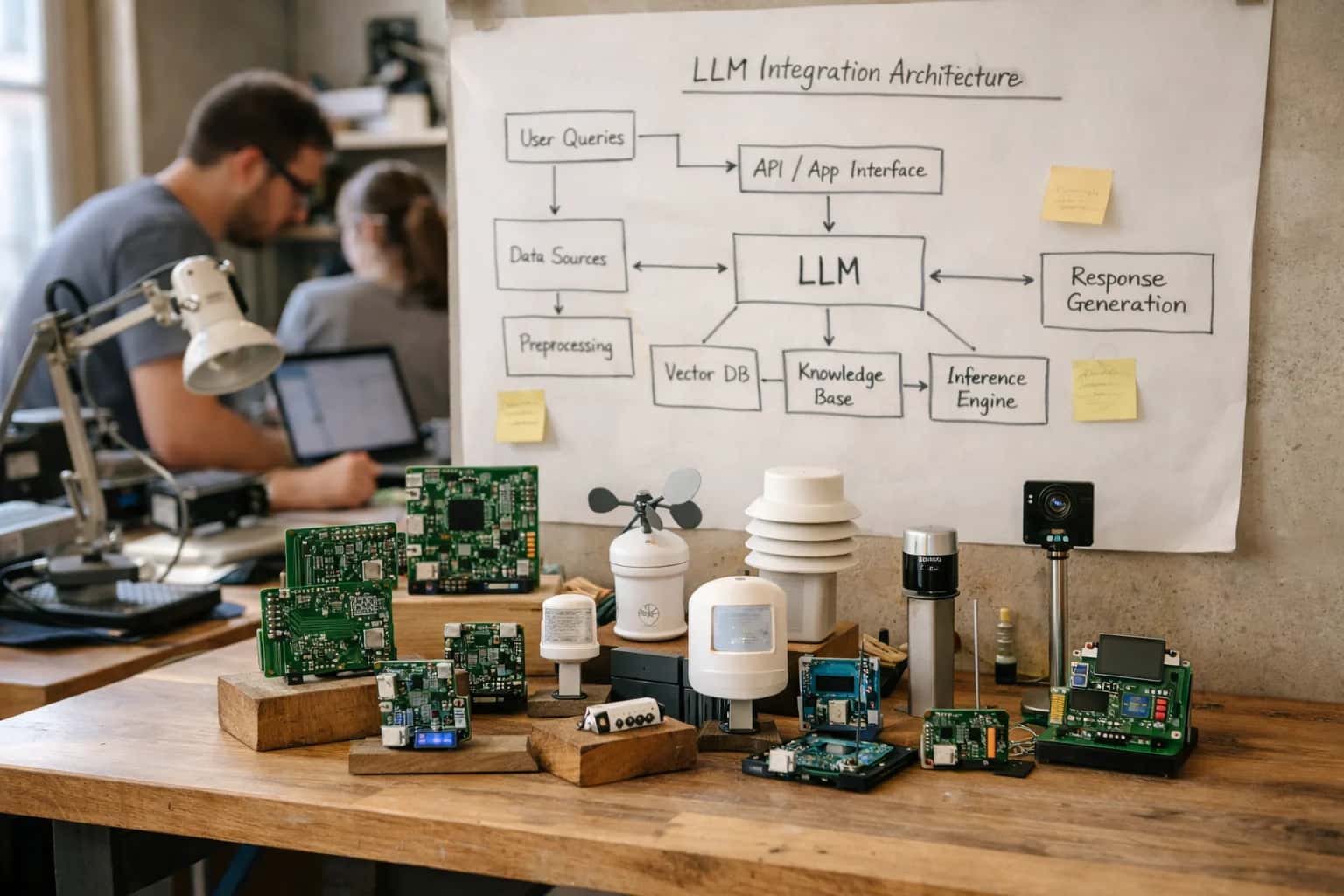
ARCHITECTURE FOR AUTOMATED USER STORY PREPARATION
Where AI Fits into Backlog Grooming and Refinement
A practical guide to embedding AI into Jira, Azure Boards, and GitHub Projects to automate story analysis, acceptance criteria generation, and dependency mapping.
High-value use cases focus on reducing manual, repetitive analysis: suggesting acceptance criteria based on the "As a... I want..." narrative, estimating story points by comparing complexity and scope to historical completed tickets, and identifying dependencies by analyzing mentions of other systems, APIs, or modules in the description. For example, a story titled "Add user preference for email notification frequency" might trigger an AI to suggest criteria for UI validation, backend API updates, and a dependency check on the user profile service—all appended as a checklist to the Jira ticket. The impact is measured in hours saved per sprint on manual ticket prep and more consistent, actionable stories ready for team discussion.
A production rollout should start with a pilot project or team. Governance is critical: implement a human-in-the-loop approval step where the AI's suggestions are posted as a draft comment or attached to a custom AI_Generated field, requiring a product owner or tech lead to review and accept. Audit trails should log which model generated the suggestion and when. Over time, as confidence grows, you can automate the acceptance of low-risk suggestions (like tagging based on keywords). For teams using GitHub Projects, the integration can also analyze linked pull requests and commit messages to flag discrepancies between the implemented code and the original story intent, adding a layer of quality assurance to the refinement process.
PLATFORM SURFACES
AI Touchpoints in Jira, Azure DevOps, and GitHub
Work Items and Backlog Management
AI connects directly to Jira's core data model via its REST API and webhooks. The primary surfaces for backlog grooming are Issues, Epics, and the Backlog view.
Key integration points include:
- Issue Description & Comments: Analyze unstructured text to suggest acceptance criteria, identify hidden dependencies, or flag ambiguous requirements.
- Custom Fields: Enrich story points (
Story Points) or priority (Priority) fields by comparing the new issue's description to historical, similarly-sized work items. - Automation Rules (Jira Automation): Trigger AI analysis when an issue transitions to
Backlogor is linked to an Epic. The AI can post analysis results as a comment or update fields automatically. - Jira Query Language (JQL): Use AI to generate or refine complex JQL filters for backlog views, such as "show me all stories with missing acceptance criteria in the next sprint."
Implementation typically involves a middleware service that listens for webhooks, calls an LLM with the issue context, and posts back structured suggestions.
APPLICATION LIFECYCLE MANAGEMENT PLATFORMS
High-Value AI Use Cases for Backlog Refinement
Move beyond manual grooming sessions. Integrate AI directly into your Jira, Azure Boards, or GitHub Projects workflow to analyze, enrich, and prioritize backlog items with context and consistency.
01
Automated Acceptance Criteria Generation
AI analyzes the user story description and linked requirements to draft specific, testable acceptance criteria. This ensures stories are 'ready for development' faster and reduces back-and-forth between product and engineering teams.
Hours -> Minutes
Drafting time
02
Context-Aware Story Point Estimation
Instead of relying on gut feel, AI suggests story points by analyzing the story's text, linked files, historical data on similar tickets, and the implementing team's past velocity. It flags high-variance items for team discussion.
1 sprint
Velocity stabilization
03
Cross-Platform Dependency Detection
AI scans the backlog and active sprints across Jira projects, GitHub repositories, and Azure DevOps to identify hidden dependencies. It surfaces blocking relationships, architecture impacts, and required sequencing before planning.
Batch -> Real-time
Risk visibility
04
Epic Breakdown & Subtask Suggestion
For large epics, AI proposes a logical breakdown into smaller, actionable user stories or tasks. It references similar past epics and common architectural patterns to create a more accurate initial work breakdown structure.
Same day
Initial breakdown
05
Backlog Health & Duplication Audit
AI continuously analyzes the entire backlog to flag duplicate or overlapping stories, identify stale items lacking activity, and suggest candidates for archival. This keeps the backlog actionable and reduces noise.
06
AI-Powered Grooming Session Assistant
An AI agent pre-reads the grooming agenda, summarizes each story with key questions, and provides real-time answers during the meeting based on linked commits, PRs, and documentation. Integrates with Zoom or Teams.
30%
Meeting time reduction
PRACTICAL AUTOMATION PATTERNS
Example AI-Assisted Refinement Workflows
These workflows illustrate how AI agents can be integrated into your existing ALM platform to automate the tedious parts of backlog grooming and story refinement, allowing your product and engineering teams to focus on higher-value decisions.
Trigger: A new Epic is created or an existing Epic's description is updated in Jira, Azure Boards, or GitHub Projects.
Context Pulled: The AI agent retrieves the Epic's title, detailed description, linked documents (e.g., Confluence pages, PRDs), and historical acceptance criteria from similar, completed stories.
AI Action: Using a structured prompt, the LLM analyzes the business goal and scope to generate a draft set of 5-8 specific, testable acceptance criteria. The output is formatted as a bulleted list.
System Update: The draft criteria are posted as a comment on the Epic or attached as a field (e.g., a custom AI Draft AC field in Jira). A @mention notifies the Product Owner.
Human Review Point: The Product Owner reviews, edits, and approves the criteria. They can use a simple "Approve" button (via a Slack/Teams bot or a Jira Automation rule) to copy the finalized criteria into the official Acceptance Criteria field, closing the AI-suggested loop.
FROM EPIC TO READY-TO-WORK
Implementation Architecture: Data Flow and Guardrails
A secure, governed workflow to transform raw ideas into refined, actionable user stories using your existing ALM data.
The integration connects to your Jira, Azure Boards, or GitHub Projects API to pull backlog items (Epics, Features, placeholder Stories) based on a configured query or sprint filter. For each item, the system extracts the title, description, comments, and linked artifacts (like Confluence pages or PRs). This raw data is passed through a pre-processing layer that redacts sensitive information (e.g., keys, PII) and chunks large documents before sending a secure payload to the LLM (e.g., Azure OpenAI, Anthropic Claude).
Using a structured prompt chain, the AI analyzes the input to: 1) Decompose large epics into candidate user stories, 2) Suggest clear acceptance criteria and definition-of-done checklists, 3) Identify potential dependencies on other tickets or teams, and 4) Propose a relative story point estimate (e.g., T-shirt size) based on historical patterns. The output is a structured JSON object that maps back to your platform's data model, ready for review.
Results are never auto-committed. They are surfaced in a side-panel UI within the ALM tool or sent to a dedicated review queue (e.g., a Slack channel or Microsoft Teams tab) for a product owner or tech lead. The human reviewer can accept, edit, or reject suggestions with a single click, which triggers the system to update the original work item via API. All suggestions, edits, and approvals are logged to an audit trail for compliance and to fine-tune future model performance. This creates a closed-loop, human-in-the-process workflow that augments—rather than replaces—critical product judgment.
IMPLEMENTATION PATTERNS
Code and Payload Examples
Jira Automation Webhook Handler
When a new user story is created or an epic is updated, a Jira Automation rule can send the issue data to an AI service for analysis. The handler receives a JSON payload, enriches it with linked issues, and calls an LLM to generate suggestions.
Example Payload from Jira:
json{ "webhookEvent": "jira:issue_updated", "issue": { "key": "PROJ-123", "fields": { "summary": "Improve checkout page load time", "description": "Users report slow loading on the cart page...", "issuetype": { "name": "Story" }, "project": { "key": "PROJ" } } } }
Python Handler Logic: The service extracts the description, fetches related stories from the same epic via Jira REST API, and constructs a prompt asking for acceptance criteria and dependency analysis. The response is posted back as a Jira comment or updates a custom field.
AI FOR BACKLOG GROOMING AND USER STORY REFINEMENT
Realistic Time Savings and Operational Impact
How AI integration reduces manual effort and improves quality in backlog management workflows for Jira, Azure Boards, and GitHub Projects.
| Workflow Step | Manual Process | AI-Assisted Process | Impact & Notes |
|---|---|---|---|
Epic & Story Analysis | Product Manager reads and annotates 50+ tickets | AI pre-analyzes tickets, surfaces themes and gaps | Reduces prep time from 2-3 hours to 30-45 minutes |
Acceptance Criteria Drafting | Manual creation per story, often inconsistent | AI suggests initial criteria based on description and similar past stories | Cuts drafting time from 15-20 min/story to 5 min/story for review |
Story Point Estimation | Team debate based on incomplete historical context | AI provides a data-driven sizing suggestion using past similar completed work | Reduces estimation meeting time by 30-40%; provides a consistent baseline |
Dependency Identification | Manual mapping in spreadsheets or whiteboards | AI scans linked issues, commit history, and architecture docs to flag potential blockers | Shifts from reactive discovery to proactive flagging, catching 60-70% of dependencies pre-refinement |
Backlog Prioritization | PM sorts based on intuition and stakeholder pressure | AI scores tickets based on business value keywords, bug severity, and strategic alignment | Provides a data-backed starting order; PM retains final decision authority |
Refinement Meeting Facilitation | Team reads tickets aloud, discusses ambiguities | AI generates a concise pre-read summary and highlights key discussion questions | Meetings focus on debate, not reading; reduces meeting duration by 25% |
Definition of Ready (DoR) Compliance Check | Manual checklist review before sprint planning | AI automatically checks new stories against team DoR rules (e.g., has acceptance criteria, linked designs) | Automates gatekeeping, ensures 100% of backlog items are pre-vetted |
ARCHITECTING FOR CONTROL AND CONFIDENCE
Governance, Security, and Phased Rollout
Integrating AI into backlog management requires a secure, auditable, and incremental approach to ensure trust and adoption.
Start by defining a clear data perimeter. AI agents should only access specific Jira projects, Azure Boards areas, or GitHub repositories via scoped API tokens with read-only or comment-only permissions. Use a secure middleware layer to broker calls between your ALM platform's webhooks (for new or updated issues) and your AI service, ensuring user context, story point fields, and acceptance criteria are passed securely without exposing internal credentials. All AI-generated suggestions—like draft acceptance criteria or dependency flags—should be written as comments or stored in a custom field clearly marked as AI-Suggested to maintain a transparent audit trail of human vs. machine input.
Roll out in phases, beginning with a pilot project. Phase 1 could automate the generation of acceptance criteria for new stories in a single team's Jira backlog, with all outputs requiring a product owner's review and approval before moving to Ready. Phase 2 might introduce AI-assisted story point estimation, where the model analyzes historical cycle time and issue complexity to suggest a point range, but the final assignment remains a team voting activity. Phase 3 could enable proactive dependency detection by having the AI cross-reference new epic descriptions against existing work in Azure Boards or GitHub Projects, creating linked issues as a draft for review.
Governance is critical. Establish a review board to regularly evaluate the AI's suggestions for accuracy and bias, especially in estimation. Implement a feedback loop where developers and product managers can thumbs-up/down AI comments, feeding data to retune prompts. For regulated industries, ensure all AI interactions are logged alongside standard ALM audit trails, and that generated content does not inadvertently include sensitive data from linked commits or comments. This controlled, iterative path turns AI from a disruptive force into a predictable team member that augments—never replaces—critical human judgment in the refinement process.
Enabling Efficiency, Speed & Accuracy
Intelligent Analysis, Decision & Execution
We build AI systems for teams that need search across company data, workflow automation across tools, or AI features inside products and internal software.
Talk to Us
Search across company data
Give teams answers from docs, tickets, runbooks, and product data with sources and permissions.
Useful when people spend too long searching or get different answers from different systems.
Enterprise searchRAGPermissions
Read more
Automate internal workflows
Use AI to route work, draft outputs, trigger actions, and keep approvals and logs in place.
Useful when repetitive work moves across multiple tools and teams.
AI agentsWorkflow automationGovernance
Read more
Add AI to products and internal tools
Build assistants, guided actions, or decision support into the software your team or customers already use.
Useful when AI needs to be part of the product, not a separate tool.
AI integrationDecision supportModel routing
Read moreAI FOR BACKLOG GROOMING AND USER STORY REFINEMENT
Frequently Asked Questions
Practical answers for engineering leaders and product managers implementing AI to automate backlog analysis, story point estimation, and acceptance criteria generation in Jira, Azure Boards, and GitHub Projects.
The AI agent connects to your ALM platform's APIs to retrieve the necessary context for analysis. For a typical user story refinement workflow, it pulls:
- The target work item: The epic, feature, or user story description, title, and any existing comments.
- Related artifacts: Linked pull requests, commit messages, design documents (from Confluence or Wiki), and previously closed, similar tickets.
- Historical data: Completed stories from the last 3-6 sprints, including their final story points, actual cycle time, and acceptance criteria.
- Team context: Current sprint velocity, team member capacity (if available via the API), and definitions of done.
The agent constructs a prompt with this structured context, asking the LLM to perform specific tasks like dependency identification or point suggestion. No sensitive code or PII should be in ticket descriptions for this use case. The process typically uses a service account with read-only access to the relevant project boards and repositories.

About the author
Prasad Kumkar
CEO & MD, Inference Systems
Prasad Kumkar is the CEO & MD of Inference Systems and writes about AI systems architecture, LLM infrastructure, model serving, evaluation, and production deployment. Over 5+ years, he has worked across computer vision models, L5 autonomous vehicle systems, and LLM research, with a focus on taking complex AI ideas into real-world engineering systems.
His work and writing cover AI systems, large language models, AI agents, multimodal systems, autonomous systems, inference optimization, RAG, evaluation, and production AI engineering.
LinkedIn
Limited slotsGet a Free AI Consultation
Partnered with leading AI, data, and software stack.





How We Work
Custom AI workflows for your Business
One-fit-all AI don't work for modern businesses. At Inferensys, we aim to understand your business & custom requirements; which we use to define most efficient agentic workflows, the data, and the tools for your business.
01
Review the use case
We understand the task, the users, and where AI can actually help.
Read more02
Pick the right approach
We define what needs search, automation, or product integration.
Read more03
Build the first useful version
We implement the part that proves the value first.
Read more04
Improve from there
We add the checks and visibility needed to keep it useful.
Read moreThe first call is a practical review of your use case and the right next step.
Talk to Us