AI integrates with Lever Interview Scheduling by acting as an orchestration layer between Lever's candidate stages, your team's calendar systems (Google Workspace, Microsoft 365), and the candidate. The core touchpoints are Lever's interview and feedback objects, its webhook events (e.g., interview_scheduled), and the REST API for updating candidate events and notes. An AI agent listens for a candidate moving to a scheduling stage, accesses panelist availability via calendar APIs, proposes optimal times, sends calendar invites, and posts the confirmed details back to the Lever candidate record—all within the same approval and audit trail.

Integration
AI Integration with Lever Interview Scheduling
A technical blueprint for building an AI-powered interview scheduler that plugs into Lever's API and webhooks to automate panel coordination, calendar invites, and candidate event updates, turning hours of manual work into minutes.
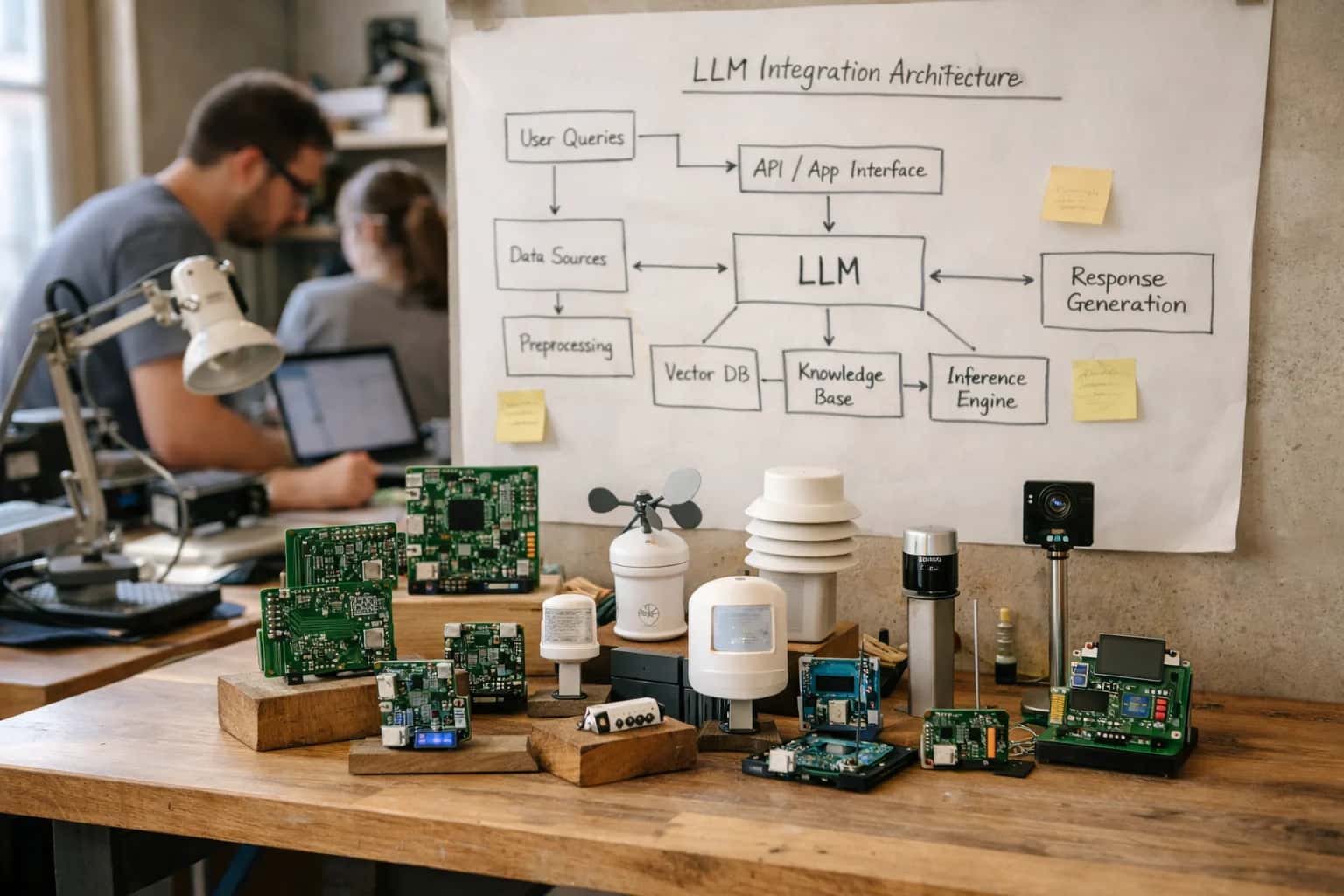
ARCHITECTURE AND ROLLOUT
Where AI Fits into Lever Interview Scheduling
A technical blueprint for embedding AI agents into Lever's scheduling workflows to automate panel coordination and reduce manual overhead.
The high-value implementation is a multi-step AI agent that handles exceptions. For example: 1) It parses the job requisition in Lever to identify required interviewers. 2) It checks real-time calendar free/busy data, respecting timezone rules. 3) It sends a personalized email to the candidate with a few time options via Lever's email framework. 4) Upon candidate reply, it books the rooms and sends Outlook/Google Calendar invites. 5) It updates the Lever interview collection and triggers preparation materials to interviewers. This reduces the typical 5-7 email thread to a single, automated workflow, turning a 30-minute manual task into a background process.
Rollout should start with a single, high-volume team or role type. Governance is critical: the AI must log all scheduling decisions and escalate conflicts (like last-minute declines) to a human recruiter via a Slack/Teams alert. Implement a human-in-the-loop review for executive-level hires initially. Use Lever's webhook retry logic and idempotent API calls to ensure reliability. The goal isn't full autonomy but dramatically reducing low-touch coordination, letting recruiters focus on candidate experience and interviewer preparation instead of calendar Tetris.
IMPLEMENTATION PATTERNS
Lever Touchpoints for AI Scheduling
The Foundation for Intelligent Scheduling
AI scheduling agents need structured context to operate effectively. In Lever, this data is accessed via the Candidate, Requisition, and User APIs.
Key Data Points for Scheduling:
- Candidate Profile: Name, email, current interview stage, and any scheduling notes from recruiters.
- Requisition Details: Hiring manager, interview panel members (linked Lever users), role title, and location/timezone.
- Panelist Information: Lever User IDs, roles (e.g., "Hiring Manager", "Technical Interviewer"), and email addresses for calendar coordination.
A typical integration fetches this data via a webhook (e.g., interview.created) or a scheduled sync, then enriches it for the scheduling engine. The AI uses this to personalize communication, identify required attendees, and respect role-based interview sequences defined in the hiring process.
LEVER ATS
High-Value Use Cases for AI-Powered Scheduling
Integrating AI with Lever's scheduling module automates the complex logistics of panel interviews, reducing manual coordination and accelerating time-to-offer. These are the most impactful patterns to implement.
01
Automated Panel Availability Finder
An AI agent ingests Lever candidate stage data and queries connected calendars (Google Workspace, Microsoft 365) via their APIs to identify optimal time slots for all required interviewers. It respects role-based priority (e.g., hiring manager first) and avoids scheduling conflicts, proposing 2-3 options.
Hours -> Minutes
Coordination time
02
Intelligent Calendar Invite Orchestration
Upon slot confirmation, the system automatically sends personalized calendar invites to the candidate and all panelists. It pulls role-specific interview guides from a knowledge base and attaches them to the invite, ensuring everyone is prepared. Updates the Lever candidate event in real-time via API.
Zero Manual Steps
Invite workflow
03
Dynamic Rescheduling & Buffer Management
When a cancellation occurs (detected via calendar webhook or Lever status change), the AI immediately assesses impact. For critical interviews, it finds the next available slot using the original logic, sends new invites, and updates Lever. For less critical ones, it may trigger a human-in-the-loop review.
Same-Day Recovery
For cancellations
04
Candidate Self-Service Scheduling
Embed a secure scheduling interface into Lever's candidate portal. The AI presents available slots based on real-time panel calendars and Lever-defined stage requirements. The candidate books directly, which triggers the full invite orchestration and stage progression automatically, creating a seamless experience.
24/7 Availability
For candidates
05
Interview No-Show Prediction & Mitigation
Analyzes historical Lever data and external signals (e.g., time zone differences, last-minute calendar declines) to flag interviews at high risk of no-shows. Proactively triggers mitigation: an automated reminder sequence to the candidate, an alert to the recruiter, or scheduling a backup interviewer.
Reduce Friction
In candidate journey
06
Post-Interview Feedback Nudge Automation
Immediately after an interview's scheduled end time, the AI system triggers automated, personalized requests for feedback via Slack, MS Teams, or email, linking directly to the Lever feedback form. It synthesizes submitted feedback into a draft summary for the hiring manager, accelerating debriefs.
Faster Debriefs
Accelerate decisioning
IMPLEMENTATION PATTERNS
Example AI Scheduling Workflows
These workflows demonstrate how AI agents can automate the complex coordination of panel interviews within Lever, replacing manual back-and-forth with a systematic, API-driven process. Each pattern is triggered by a candidate stage change and results in a fully scheduled interview event in Lever.
Trigger: Candidate is moved to the "On-site Interview" stage in Lever.
Context Pulled:
- The AI agent calls the Lever API to fetch the candidate's profile, job requisition ID, and the hiring team members (interviewers) assigned to the requisition.
- For each interviewer, the agent queries their connected calendar system (e.g., Google Calendar, Microsoft Graph) via OAuth to retrieve availability for the next 5-7 business days.
- The agent reads the job requisition's custom field for
interview_duration(e.g., 60 minutes) andrequired_interviewers(e.g., "Hiring Manager, Tech Lead, Culture Add").
Agent Action:
- The agent uses a constraint-satisfaction algorithm to find the earliest time slot where all required interviewers are available consecutively.
- It drafts a calendar event with:
- Title:
Interview: [Candidate Name] - [Job Title] - Description: Includes the candidate's Lever profile link, resume summary, and the interview focus for each panel member.
- Google Meet or Teams link auto-generated.
- Title:
System Update:
- The agent sends calendar invites to all panelists via their respective calendar APIs.
- It creates a new
interviewevent in the Lever candidate's timeline viaPOST /candidates/{candidate_id}/events. The event includes the start/end time, video conference link, and attaches each interviewer's Lever user ID. - An internal note is added to the candidate in Lever: "Final panel scheduled for [date/time] with [list of interviewers]. Calendar invites sent."
Human Review Point: If the agent cannot find a suitable slot within 48 hours, it escalates to the recruiting coordinator via a Slack message with a summary of conflicts, suggesting manual override.
FROM MANUAL COORDINATION TO AUTOMATED SCHEDULING
Implementation Architecture & Data Flow
A production-ready AI scheduler for Lever connects calendar APIs, candidate data, and interview panel availability to automate event creation and status updates.
The integration architecture centers on a middleware agent that listens for Lever webhooks (e.g., interview_stage.entered) and orchestrates the scheduling workflow. When a candidate moves to an interview stage, the agent fetches the requisition details and configured interview panel from Lever's REST API. It then queries the calendar availability for each panelist—typically via Microsoft Graph API or Google Calendar API—using service accounts with delegated permissions. The core AI logic analyzes the aggregated free/busy slots, applies business rules (e.g., "panel interview requires 3 people for 60 minutes"), and proposes optimal time slots.
Once a slot is selected (either by the AI agent based on configurable rules or via a human-in-the-loop approval), the system performs a series of atomic updates: 1) It creates a calendar event for all participants, attaching the Lever candidate link and job description in the details. 2) It sends calendar invites. 3) It creates a corresponding Lever "External Event" via the API, linking it to the candidate's profile to maintain a single source of truth within the ATS. This event populates the candidate's timeline and can trigger downstream Lever automations. The entire flow is logged with candidate ID, panelist emails, and the chosen time for auditability.
Rollout should follow a phased approach, starting with a single team or requisition type. Governance is critical: the AI agent must respect interviewer opt-out flags stored in Lever custom fields and adhere to configured buffer times between interviews. Implement a dead-letter queue to handle failures—like a panelist's calendar becoming unavailable after slot selection—and route exceptions to a recruiting coordinator. This architecture reduces manual back-and-forth from hours to minutes, while keeping Lever as the system of record and maintaining full visibility for recruiters and hiring managers.
IMPLEMENTATION PATTERNS
Code & Payload Examples
Listening for Lever Stage Changes
When a candidate moves to a stage like "Interview" or "On-site", Lever can fire a webhook. Your AI scheduler service listens for this event, extracts candidate and job details, and initiates the coordination workflow.
Example Webhook Payload from Lever:
json{ "action": "stage_change", "payload": { "application_id": "abc123", "candidate_id": "def456", "candidate_name": "Jane Doe", "candidate_email": "[email protected]", "job_id": "job789", "job_name": "Senior Software Engineer", "new_stage": "On-site Interview", "hiring_team": [ {"user_id": "user1", "email": "[email protected]"}, {"user_id": "user2", "email": "[email protected]"} ] } }
Your service validates the payload, confirms the target stage requires scheduling, and proceeds to the next step.
AI-ASSISTED INTERVIEW SCHEDULING
Realistic Time Savings & Operational Impact
How AI integration transforms manual interview coordination in Lever, reducing administrative burden and accelerating time-to-fill.
| Workflow Step | Before AI | After AI | Implementation Notes |
|---|---|---|---|
Panel Availability Coordination | Manual email chains and calendar checks (30-60 min per candidate) | AI agent queries calendars via API and proposes optimal slots (<5 min) | Integrates with Google Workspace or Microsoft 365; respects role-based interview panels |
Calendar Invite Generation & Dispatch | Manual creation and sending of 3-5 invites per candidate (15-20 min) | Automated generation and dispatch via Lever Events API (2-3 min) | Invites include Lever candidate link, job description, and standardized prep materials |
Candidate Communication & Confirmation | Recruiter manually sends 2-3 emails for scheduling and reminders | AI-driven status updates and reminders via Lever candidate email (automated) | Maintains human-in-the-loop for exceptions and complex rescheduling requests |
Lever Stage & Event Updates | Manual entry of interview details into Lever candidate profile (5-10 min) | Automatic sync of confirmed interview details to Lever (real-time) | Webhook-triggered updates ensure system of record accuracy |
Interviewer Briefing Preparation | Recruiter compiles candidate resume and notes for each panelist (10-15 min) | AI auto-generates briefing doc from Lever profile and job req (1-2 min) | Briefing includes candidate summary, role-specific highlights, and suggested questions |
Reschedule & Exception Handling | Complete manual restart of coordination process (30+ min) | AI proposes alternative slots based on updated availability (5-10 min) | Agent flags conflicts for recruiter review, preventing double-booking |
Post-Interview Feedback Nudges | Recruiter manually emails each interviewer for feedback | Automated reminder sent via Lever Feedback API 1 hour post-interview | Increases feedback submission rate, speeding up debrief and next steps |
ARCHITECTING FOR SCALE AND CONTROL
Governance, Security & Phased Rollout
A production-ready AI scheduler for Lever requires deliberate controls, secure data handling, and a phased rollout to ensure adoption and trust.
Start with a pilot workflow and strict RBAC. Begin by automating interview scheduling for a single, high-volume role or a specific hiring team. Configure the AI agent to operate with the permissions of a dedicated service account in Lever, scoped to only access relevant candidate records, interview panels, and calendar resources. Use Lever's webhooks (e.g., candidate.stage_change) to trigger the scheduler only for approved stages, ensuring the AI doesn't act on candidates prematurely. All actions—calendar invites sent, Lever events created—should be logged to a dedicated audit trail with the external_id of the triggering candidate for full traceability.
Secure the data flow between systems. Candidate PII, interviewer details, and calendar availability are sensitive. The integration architecture must ensure data in transit is encrypted and that any temporary processing data in the AI layer is ephemeral. The scheduler should call Lever's REST API using OAuth 2.0 and interact with Google Calendar or Microsoft Graph via secure service accounts. Avoid persisting full candidate profiles; instead, pass only the necessary fields (name, role, interview stage, panelist emails) for the specific scheduling task. For enterprises, this data flow can be isolated within a private cloud or VPC.
Implement a phased rollout with human-in-the-loop gates.
- Phase 1 (Observation): The AI suggests schedules and sends them for manual review and approval in Lever before any calendar invites go out. This builds trust in the AI's logic.
- Phase 2 (Assisted): The AI executes scheduling for non-critical interviews but flags conflicts or exceptions (e.g., senior executive panels) for human review.
- Phase 3 (Autonomous): The AI handles full scheduling for defined workflows, with a clear escalation path to recruiters via Slack or email alerts for edge cases.
Continuous monitoring of key metrics—like reduction in scheduling lag, interviewer acceptance rates, and candidate satisfaction scores—will guide the rollout pace and justify expansion to other teams.
Enabling Efficiency, Speed & Accuracy
Intelligent Analysis, Decision & Execution
We build AI systems for teams that need search across company data, workflow automation across tools, or AI features inside products and internal software.
Talk to Us
Search across company data
Give teams answers from docs, tickets, runbooks, and product data with sources and permissions.
Useful when people spend too long searching or get different answers from different systems.
Enterprise searchRAGPermissions
Read more
Automate internal workflows
Use AI to route work, draft outputs, trigger actions, and keep approvals and logs in place.
Useful when repetitive work moves across multiple tools and teams.
AI agentsWorkflow automationGovernance
Read more
Add AI to products and internal tools
Build assistants, guided actions, or decision support into the software your team or customers already use.
Useful when AI needs to be part of the product, not a separate tool.
AI integrationDecision supportModel routing
Read moreIMPLEMENTATION DETAILS
Frequently Asked Questions
Common technical and operational questions about building an AI scheduler for Lever that coordinates panel availability, sends calendar invites, and updates candidate events.
The integration uses Lever's REST API and webhooks to gather context.
- Trigger: A candidate is moved to an "Interview Scheduling" stage in Lever, or a scheduling webhook is fired from a custom Lever action.
- Data Pull: The agent calls Lever's API to fetch:
- Candidate details (name, email, position, requisition ID)
- Hiring panel members (from the
hiring_teamon the requisition or a custom field) - Any existing notes about scheduling constraints or preferences.
- Availability Context: For each panelist, the agent checks their connected calendar (e.g., Google Calendar via its API) for free/busy slots within a defined window (e.g., next 5 business days).
Payload Example (Lever API - Fetch Requisition):
httpGET /v1/requisitions/{requisition_id} Authorization: Bearer {your_lever_api_key}
The agent parses the response to identify the hiring_team and their Lever user IDs, which are mapped to external calendar emails via a secure configuration store.

About the author
Prasad Kumkar
CEO & MD, Inference Systems
Prasad Kumkar is the CEO & MD of Inference Systems and writes about AI systems architecture, LLM infrastructure, model serving, evaluation, and production deployment. Over 5+ years, he has worked across computer vision models, L5 autonomous vehicle systems, and LLM research, with a focus on taking complex AI ideas into real-world engineering systems.
His work and writing cover AI systems, large language models, AI agents, multimodal systems, autonomous systems, inference optimization, RAG, evaluation, and production AI engineering.
LinkedIn
Limited slotsGet a Free AI Consultation
Partnered with leading AI, data, and software stack.





How We Work
Custom AI workflows for your Business
One-fit-all AI don't work for modern businesses. At Inferensys, we aim to understand your business & custom requirements; which we use to define most efficient agentic workflows, the data, and the tools for your business.
01
Review the use case
We understand the task, the users, and where AI can actually help.
Read more02
Pick the right approach
We define what needs search, automation, or product integration.
Read more03
Build the first useful version
We implement the part that proves the value first.
Read more04
Improve from there
We add the checks and visibility needed to keep it useful.
Read moreThe first call is a practical review of your use case and the right next step.
Talk to Us