AI integrates into Workable's feedback workflow by acting as a post-interview processing layer, triggered via Workable's webhooks for candidate stage changes (e.g., interview.completed). When an interview is marked complete, the system automatically pulls the unstructured notes from each interviewer's feedback form in Workable's Candidate Feedback object via the REST API. The AI's primary role is to transform this collection of free-text notes into a unified, structured assessment, addressing the common pain points of inconsistent formats, missed key points, and delayed consensus.

Integration
AI Integration for Workable Feedback Collection
Automate the collection, synthesis, and summarization of interviewer feedback in Workable using AI to create unified candidate assessments, reduce manual review time, and accelerate hiring decisions.
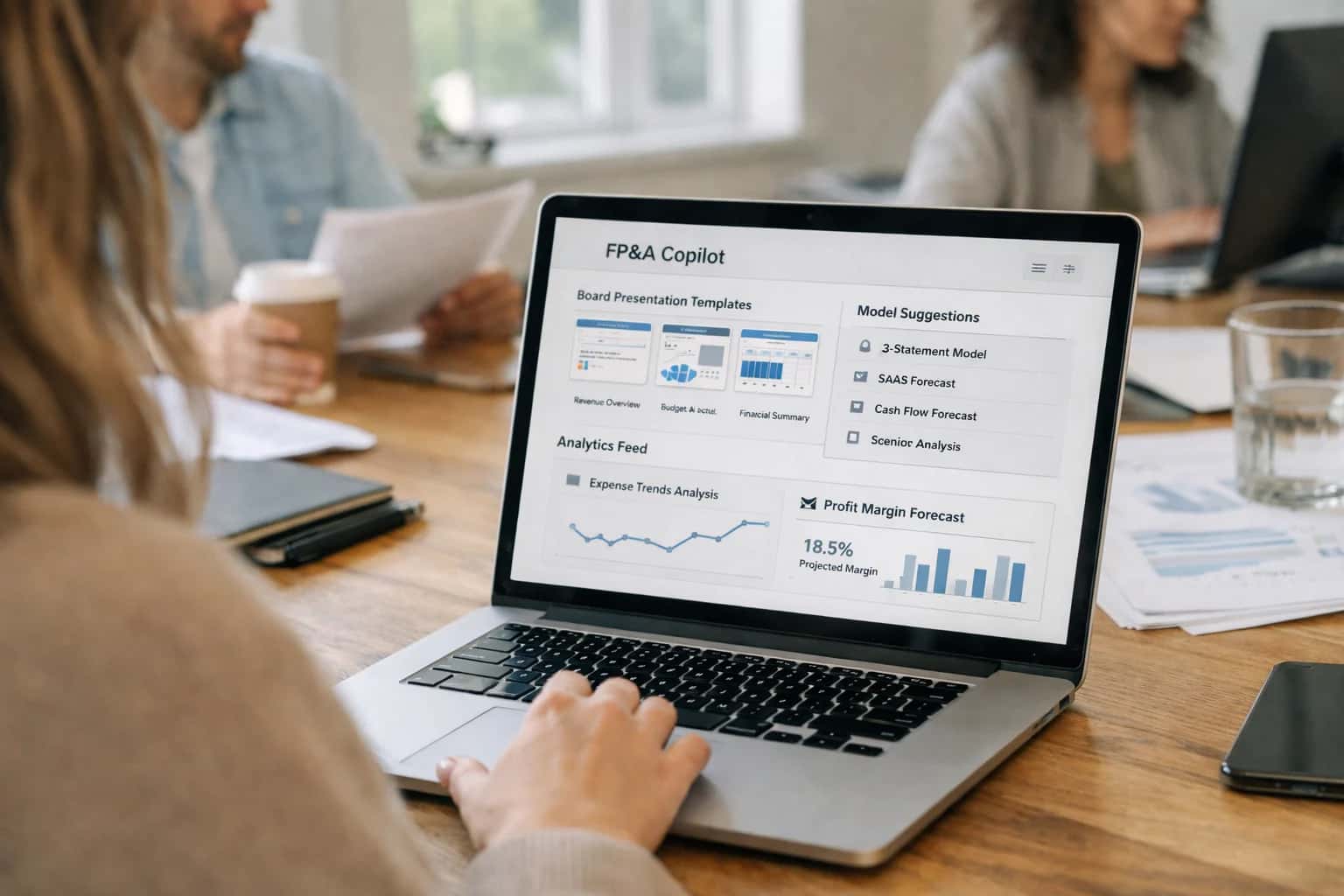
ARCHITECTURE FOR AUTOMATED SYNTHESIS
Where AI Fits into Workable's Feedback Workflow
A technical blueprint for using AI to collect, structure, and summarize interviewer feedback directly within Workable's hiring pipeline.
The implementation typically follows a multi-step pattern: 1) Data Ingestion: The integration listens for the webhook event, fetches all associated feedback, and extracts key metadata (interviewer role, interview type, candidate ID). 2) Synthesis & Summarization: An LLM processes the notes, identifying and reconciling themes on strengths, concerns, skill assessments, and red flags. It outputs a concise summary and can populate a custom scorecard field in Workable. 3) Workflow Trigger: Based on the synthesized summary and confidence scores, the system can automatically advance the candidate, flag for hiring manager review, or trigger a follow-up calibration meeting in the recruiter's calendar.
For governance, the integration should maintain a human-in-the-loop for final decisions. The AI-generated summary is written back to Workable as a note or a custom field (e.g., AI_Feedback_Summary), with a clear audit trail linking it to the source feedback. This allows recruiters and hiring managers to review the source material and the AI's synthesis side-by-side, ensuring accountability. Rollout is best done in phases, starting with a pilot team where the AI acts as a silent copilot, its summaries used alongside manual processes to build trust and refine prompts before enabling automated stage transitions.
WHERE AI CONNECTS TO THE INTERVIEW WORKFLOW
Key Workable Surfaces for AI Feedback Integration
The Primary Feedback Surface
AI integration targets the Candidate Stage object, specifically the Scorecard and Feedback fields attached to each interview. This is where structured and unstructured notes from hiring managers and panelists are stored.
Integration Points:
- Webhook Events: Listen for
stage.changedorcandidate.stage_changedevents to trigger AI processing when a candidate moves into or out of an interview stage. - REST API: Use the
GET /candidates/{id}endpoint with?expand[]=stage_changesto retrieve all scorecard data and free-text feedback notes for a completed interview round. - Custom Fields: Write AI-generated summaries (e.g.,
ai_feedback_summary,ai_sentiment_score) back to the candidate or job record as custom fields for easy reporting and decision support.
Typical Payload: The AI agent receives candidate name, job title, interviewer names, structured ratings (if any), and the collected free-text comments to synthesize.
WORKABLE INTEGRATION PATTERNS
High-Value Use Cases for AI-Powered Feedback
Automating the collection and synthesis of interviewer feedback in Workable transforms a manual, time-consuming process into a structured, actionable asset. These patterns connect AI to Workable's candidate stages, notes, and scorecards via API to deliver immediate recruiter and hiring manager value.
01
Automated Feedback Synthesis
An AI agent monitors Workable for new interviewer notes attached to a candidate. It reads all unstructured feedback, identifies key themes (strengths, concerns, skill assessments), and generates a unified summary paragraph. This summary is posted back to the candidate's profile as a private note, giving the recruiter a consolidated view in minutes instead of hours spent manually collating.
Hours -> Minutes
Feedback consolidation
02
Scorecard Population & Gap Detection
Integrate AI with Workable's scorecard or custom fields. The system extracts quantitative ratings and qualitative comments from interviewer feedback, then populates the relevant scorecard fields automatically. It can also flag discrepancies—like one interviewer rating 'communication' as 5/5 while another rates it 2/5—and prompt the recruiter for review before proceeding.
Batch -> Real-time
Scorecard updates
03
Hiring Manager Briefing Automation
When all interview feedback is submitted and synthesized, an AI workflow triggers. It pulls the candidate summary, scorecard data, and job requisition details from Workable to generate a structured briefing document. This document is emailed to the hiring manager or posted to a Slack channel via webhook, ensuring a data-driven, consistent handoff for debrief and decision meetings.
Same day
Debrief readiness
04
Feedback Quality & Completeness Nudges
An AI agent analyzes submitted feedback for vague language (e.g., 'good fit'), missing required fields, or contradictions with the interview guide. It then sends automated, polite nudges to interviewers via email or Slack—sourced from Workable's data—requesting clarification or additional detail before the recruiter review, raising the overall quality of input.
05
Candidate-Specific Question Generation for Final Rounds
For candidates advancing to final-stage interviews, AI reviews all prior synthesized feedback to identify open questions or areas needing deeper exploration. It then generates a tailored set of 3-5 suggested questions for the next interviewer, which are automatically added to the interviewer's calendar invite or as a note in the candidate's Workable profile.
1 sprint
Interview cycle reduction
06
Bias & Consistency Analysis
A governance-focused workflow where AI analyzes feedback across all interviewers for a given role, flagging potential unconscious bias patterns (e.g., overemphasis on 'culture fit' for certain demographics) or inconsistent evaluation criteria. Reports are generated for the recruiting lead, supporting fairer hiring practices and more calibrated interviewer training. This operates on anonymized, aggregated data pulled via Workable's API.
IMPLEMENTATION PATTERNS
Example AI Feedback Automation Workflows
These workflows illustrate how to connect AI agents to Workable's feedback system to automate the collection, synthesis, and actioning of interviewer notes, turning fragmented input into a unified candidate assessment.
Trigger: A candidate's stage in Workable is moved to 'Feedback' or a scheduled interview event's end time passes, triggering a webhook.
Context Pulled: The AI agent uses the Workable API to fetch:
- The candidate's profile and resume.
- The job requisition details and scorecard.
- All notes and ratings from interviewers linked to the event.
AI Agent Action: A multi-step LLM call is executed:
- Summarize: Condenses individual interviewer notes into key themes (strengths, concerns, skill assessments).
- Score: Maps verbal feedback to the requisition's scorecard dimensions (e.g., 'Technical Skill', 'Culture Fit'), generating a quantitative score where possible.
- Highlight Discrepancies: Flags significant contradictions between interviewers (e.g., one says 'strong communicator,' another says 'unclear').
- Draft Recommendation: Generates a concise summary paragraph and a suggested next step (e.g., 'Move to Final Round', 'Reject', 'Schedule for additional technical screen').
System Update: The synthesized summary and scores are posted back to Workable via the API as a note on the candidate, tagged as [AI Synthesis]. The suggested action can also populate a custom field to guide the recruiter.
Human Review Point: The recruiter or hiring manager reviews the AI-generated summary and recommendation in Workable before proceeding. The system logs the reviewer's final decision for model feedback.
AUTOMATED FEEDBACK SYNTHESIS
Implementation Architecture: Data Flow & System Design
A secure, event-driven architecture for collecting, summarizing, and surfacing interviewer feedback within Workable's existing workflow.
The integration is triggered by a Workable webhook fired when an interview is marked as completed in the system. This webhook payload, containing the candidate ID, job ID, and interviewer email(s), is sent to a secure API endpoint. The system then uses the Workable REST API to fetch the unstructured feedback notes from the interviews and scorecards endpoints. This raw text—often a mix of bullet points, paragraphs, and ratings—is the primary input for the AI synthesis engine.
The core AI processing occurs in a managed, isolated service. The raw feedback for a single candidate is collated and sent to a large language model (LLM) via a secure, governed API call. A system prompt instructs the model to synthesize a unified assessment, highlighting areas of consensus, key strengths/weaknesses, and any critical red flags or endorsements. The output is a structured summary, which is then posted back to Workable via the API, typically as a private note on the candidate profile or by populating a custom feedback_summary field. This keeps the AI-generated insight within Workable's native audit trail and access controls.
Governance is built into the flow. All LLM calls are logged with the candidate ID for traceability. A human-in-the-loop approval step can be configured before the summary is written back to Workable, allowing a recruiting coordinator or hiring manager to review and edit. The system is designed for incremental rollout: start with a single job department, monitor summary quality and user adoption, then scale. This architecture ensures the AI augments—rather than disrupts—the existing feedback collection process, turning fragmented notes into actionable intelligence for hiring decisions.
IMPLEMENTATION PATTERNS
Code & Payload Examples
Ingesting Feedback via Webhook
When an interviewer submits feedback in Workable, a webhook payload is sent to your AI service. This Python FastAPI endpoint receives the event, validates it, and places the raw feedback data into a processing queue. The key is to handle the feedback_submitted event type and extract the candidate ID, job ID, and the unstructured feedback text from the nested JSON.
pythonfrom fastapi import FastAPI, HTTPException, BackgroundTasks from pydantic import BaseModel from typing import Optional import httpx app = FastAPI() class WorkableWebhook(BaseModel): event: str data: dict @app.post("/webhooks/workable/feedback") async def handle_feedback_webhook( payload: WorkableWebhook, background_tasks: BackgroundTasks ): if payload.event != "feedback_submitted": return {"status": "ignored"} candidate_id = payload.data.get("candidate", {}).get("id") job_id = payload.data.get("job", {}).get("id") feedback_text = payload.data.get("feedback", {}).get("body") if not all([candidate_id, job_id, feedback_text]): raise HTTPException(status_code=400, detail="Invalid payload") # Add task to background queue for AI processing background_tasks.add_task( process_feedback_summary, candidate_id=candidate_id, job_id=job_id, raw_feedback=feedback_text ) return {"status": "accepted"}
AI-POWERED FEEDBACK SYNTHESIS
Realistic Time Savings & Operational Impact
How AI integration transforms the manual, fragmented process of collecting and reviewing interviewer feedback in Workable into a structured, accelerated workflow.
| Workflow Stage | Before AI | After AI | Key Notes |
|---|---|---|---|
Feedback Collection Window | 24-72 hours post-interview | Same-day completion | AI sends automated nudges and provides a structured submission form |
Feedback Review & Synthesis | Manual reading and summarization of 3-5 notes (30-60 mins) | AI generates a unified summary in <2 minutes | Recruiter reviews AI summary, edits as needed, and attaches to candidate record |
Candidate Scoring Consistency | Subjective, varies by interviewer | AI extracts and normalizes scores into a structured rubric | Highlights scoring discrepancies for hiring manager review |
Debrief Meeting Preparation | Manual compilation of notes and scores (20-30 mins) | AI-generated debrief packet is ready instantly | Packet includes summary, scores, key quotes, and recommended discussion points |
Feedback Loop to Interviewers | Ad-hoc or non-existent | Automated, personalized thank-you with key insights | Improves interviewer engagement and quality of future feedback |
Data Entry into Workable | Manual update of scorecard fields | Automated via API based on AI-extracted data | Ensures candidate records are always up-to-date with structured feedback |
Overall Process Duration | Next-day or later debrief | Same-day debrief possible | Accelerates time-to-offer and improves candidate experience |
PRODUCTION ARCHITECTURE FOR FEEDBACK AUTOMATION
Governance, Security & Phased Rollout
A structured approach to implementing AI-driven feedback synthesis in Workable that prioritizes control, compliance, and recruiter adoption.
Implementing AI for feedback collection requires a secure, event-driven architecture. The typical pattern listens for Workable webhooks (e.g., interview.completed or candidate.stage_changed) to trigger an AI agent. This agent fetches the unstructured feedback notes from the interviews and scorecards API endpoints, along with the candidate's job and profile data for context. The synthesis occurs in a secure, isolated environment—never sending raw PII to a third-party LLM without proper anonymization or a data processing agreement. The resulting unified assessment is posted back to Workable as a private note on the candidate record or a custom field, with a clear [AI Summary] label and a link to the original, unaltered feedback for auditability.
A phased rollout is critical for adoption and risk management. Start with a pilot for a single, low-risk role or hiring team. Configure the system to generate summaries but require a recruiter or hiring manager to review and approve the AI output before it becomes visible in the candidate record. This "human-in-the-loop" gate builds trust and provides a feedback loop to tune prompts. In Phase 2, automate posting for approved workflows while maintaining a full audit log of all AI actions—which agent generated the summary, from which source notes, and when. Finally, expand to broader roles, using the pilot data to demonstrate impact: reducing the time to consolidate panel feedback from hours to minutes and ensuring no critical insights are buried in lengthy notes.
Governance focuses on control and compliance. Establish clear ownership: Recruiting Operations owns the workflow, IT/Engineering manages the integration security, and Legal/HR approves the data handling and output use. Implement role-based access so only authorized users can view or trigger AI summaries. For regulated industries, ensure the system can be configured to exclude certain roles or data points from AI processing. Regularly review the audit logs and sample summaries for quality and bias. The goal is not to replace human judgment but to augment it with a consistent, immediate synthesis tool, turning post-interview deliberation from a days-long email chain into a structured, actionable document available in the ATS within minutes of the last interview ending.
Enabling Efficiency, Speed & Accuracy
Intelligent Analysis, Decision & Execution
We build AI systems for teams that need search across company data, workflow automation across tools, or AI features inside products and internal software.
Talk to Us
Search across company data
Give teams answers from docs, tickets, runbooks, and product data with sources and permissions.
Useful when people spend too long searching or get different answers from different systems.
Enterprise searchRAGPermissions
Read more
Automate internal workflows
Use AI to route work, draft outputs, trigger actions, and keep approvals and logs in place.
Useful when repetitive work moves across multiple tools and teams.
AI agentsWorkflow automationGovernance
Read more
Add AI to products and internal tools
Build assistants, guided actions, or decision support into the software your team or customers already use.
Useful when AI needs to be part of the product, not a separate tool.
AI integrationDecision supportModel routing
Read moreIMPLEMENTATION BLUEPRINT
Frequently Asked Questions
Practical questions for engineering and talent leaders planning to automate interviewer feedback collection and synthesis within Workable.
The integration listens for Workable's stage_change webhook, specifically when a candidate moves to a stage like Interview or Evaluation. Upon receiving the webhook payload, the system checks for newly submitted feedback forms via the Workable API (GET /candidates/{id}/feedback).
Typical payload check:
json{ "action": "stage_change", "payload": { "candidate": { "id": 123456, "name": "Jane Doe", "job": { "id": 789, "title": "Senior Software Engineer" } }, "to_stage": "Evaluation" } }
Once new, unprocessed feedback is detected, the agent is triggered to begin synthesis.

About the author
Prasad Kumkar
CEO & MD, Inference Systems
Prasad Kumkar is the CEO & MD of Inference Systems and writes about AI systems architecture, LLM infrastructure, model serving, evaluation, and production deployment. Over 5+ years, he has worked across computer vision models, L5 autonomous vehicle systems, and LLM research, with a focus on taking complex AI ideas into real-world engineering systems.
His work and writing cover AI systems, large language models, AI agents, multimodal systems, autonomous systems, inference optimization, RAG, evaluation, and production AI engineering.
LinkedIn
Limited slotsGet a Free AI Consultation
Partnered with leading AI, data, and software stack.





How We Work
Custom AI workflows for your Business
One-fit-all AI don't work for modern businesses. At Inferensys, we aim to understand your business & custom requirements; which we use to define most efficient agentic workflows, the data, and the tools for your business.
01
Review the use case
We understand the task, the users, and where AI can actually help.
Read more02
Pick the right approach
We define what needs search, automation, or product integration.
Read more03
Build the first useful version
We implement the part that proves the value first.
Read more04
Improve from there
We add the checks and visibility needed to keep it useful.
Read moreThe first call is a practical review of your use case and the right next step.
Talk to Us