For global enterprises, iCIMS serves as the central system of record for requisitions, candidates, and hiring workflows across dozens of countries. AI integration here isn't about replacing iCIMS but injecting intelligence into its core data objects and automations. The primary surfaces for integration are the Candidate Profile, Job Requisition, and Communication History objects, augmented via iCIMS' REST API and webhooks. AI agents can operate on inbound applications to perform initial localization—checking for required regional documentation, normalizing education credentials, and flagging visa sponsorship needs—before a recruiter ever sees the profile. This pre-screening layer, triggered by the application.created webhook, reduces manual triage by 40-60% for high-volume roles.

Integration
AI Integration for iCIMS Global Hiring
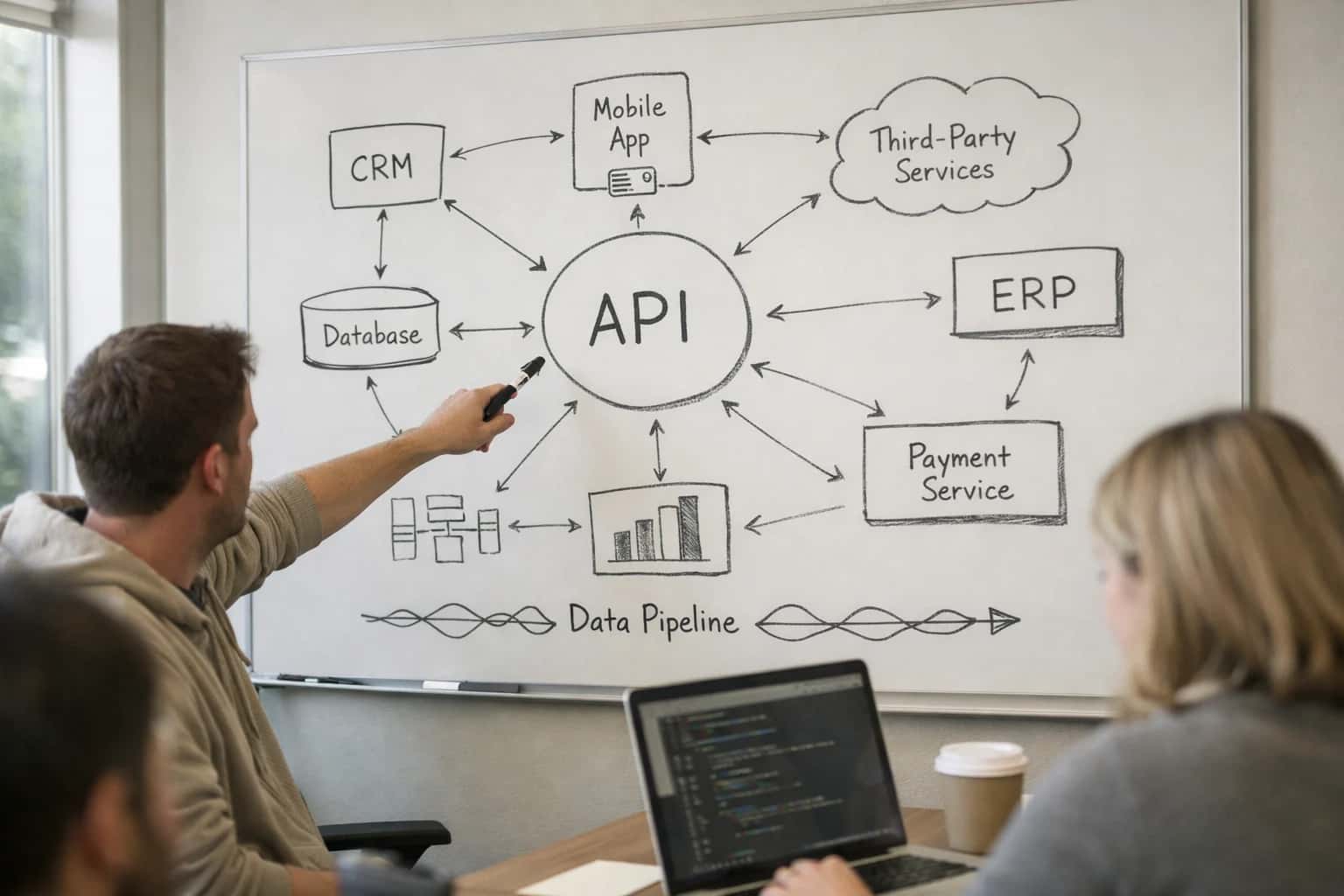
Where AI Fits in Global iCIMS Hiring
A technical blueprint for embedding AI into iCIMS to manage the unique complexities of multinational hiring operations.
Implementation focuses on three parallel workflows: compliance-aware screening, localized communication orchestration, and cross-region analytics. A screening agent, for example, uses the requisition.country and requisition.custom_fields to apply region-specific rules, updating the candidate's custom_field score. A communication agent then uses the candidate's preferred_language field to draft and send personalized, legally compliant status updates via iCIMS' email framework, logging all interactions. For reporting, an analytics agent periodically queries the API to synthesize hiring metrics across locales, generating executive summaries that highlight bottlenecks in specific regions, such as prolonged background checks in Germany or offer acceptance rates in APAC.
Rollout requires a phased, country-by-country approach due to varying data privacy laws (GDPR, PDPA, etc.). Start with a single region, implementing a human-in-the-loop review queue in iCIMS for all AI-recommended actions before progressing to fully automated workflows. Governance is critical: all AI interactions must write detailed audit logs to a custom_object for compliance reviews, and model outputs should be regularly evaluated for bias across demographic segments. The goal is a unified hiring operation where iCIMS remains the workflow engine, but AI handles the complexity of scale and localization, turning global hiring from a logistical challenge into a competitive advantage. For foundational patterns, see our guide on AI Integration for Applicant Tracking Platforms.
Key iCIMS Surfaces for AI Integration
Core Data Model for AI Enrichment
The Candidate and Requisition objects are the central data model for any AI integration. This is where you attach scores, summaries, and automated insights.
Key integration surfaces:
- Custom Fields: Use iCIMS custom fields (text, number, picklist) to store AI-generated outputs like
match_score,skills_summary, orcompliance_risk_flag. This keeps AI data native and reportable. - Candidate Profile API: Enrich profiles by pulling data from resumes, parsing with AI for skills and experience, and updating the profile via
POST /v2/candidates/{id}. This powers automated candidate rediscovery. - Requisition Matching: Use the Requisition API to fetch job descriptions and requirements. An AI agent can then score active candidates in the talent pool against new requisitions, updating their
candidate_job_matchcustom field. - Notes & Attachments: AI can generate structured summaries of candidate interactions or parsed resume data and post them as notes via the API, creating an audit trail for recruiter review.
High-Value AI Use Cases for Global iCIMS
For global enterprises using iCIMS, AI integration targets high-volume, compliance-sensitive workflows where manual processes create bottlenecks, localization overhead, and reporting gaps. These patterns connect to iCIMS APIs, webhooks, and data model to automate core hiring operations.
Automated Global Resume Screening & Localization
AI parses resumes from any region, extracts skills and experience, and maps them to a unified global competency framework. It translates and normalizes education credentials (e.g., 'Licenciatura' to 'Bachelor's') and localizes the match score for each job requisition, populating custom fields in the iCIMS candidate profile.
Cross-Border Compliance & Right-to-Work Checks
An AI agent reviews candidate-provided documents and profile data against country-specific immigration and labor regulations. It flags potential visa sponsorship requirements, validates work authorization formats, and triggers iCIMS workflow alerts for HRBP review, reducing legal risk in international hiring.
Multi-Language Candidate Communication Agent
An AI-powered chatbot integrates with the iCIMS career site and candidate portal to handle FAQs, application status updates, and interview scheduling in the candidate's preferred language. It uses iCIMS' API to fetch real-time status and update candidate records, providing a localized experience at scale.
Global Talent Pool Intelligence & Rediscovery
AI continuously analyzes iCIMS talent pools across all regions, semantically tagging candidates by skills, location preferences, and past interactions. When a new requisition is created, it automatically surfaces and ranks suitable past applicants, triggering personalized, localized outreach sequences via iCIMS communications.
Consolidated Cross-Region Hiring Analytics
AI aggregates hiring data from disparate iCIMS instances or regional configurations to generate unified executive reports. It translates local metrics (e.g., time-to-fill per region), detects global pipeline bottlenecks, and provides natural-language insights on diversity, source effectiveness, and cost-per-hire across geographies.
Localized Offer & Contract Generation Workflow
AI assists in generating offer letters and contracts that comply with local employment law templates. It pulls data from the iCIMS job requisition and candidate offer details, inserts region-specific clauses (probation, notice periods), and routes the document through iCIMS approval workflows for local HR and legal sign-off.
Example Global Hiring Workflows with AI
For multinational organizations using iCIMS, AI integration must address regional compliance, localized communication, and centralized reporting. These workflows illustrate how to embed intelligence into the global talent acquisition lifecycle, connecting to iCIMS requisitions, candidate records, and communication modules.
Trigger: A recruiter in the EMEA region creates or updates a job requisition in iCIMS for a role in Germany.
Context Pulled: The AI agent retrieves the requisition details (job title, location, department, proposed salary range) via the iCIMS REST API (GET /v1/jobs/{id}).
Agent Action: The agent cross-references the data against a governed knowledge base of regional labor laws (e.g., German Works Constitution Act, GDPR hiring provisions, mandatory benefits). It uses a classification model to flag potential compliance gaps.
System Update: The agent posts findings back to iCIMS as private notes on the requisition record and creates a custom field (compliance_check_status) with values like "Review Required - Probation Period Limits". It can also trigger an alert to the regional HRBP via iCIMS alerts or a connected Slack channel.
Human Review Point: The agent does not block publication. It flags issues for human review, ensuring the legal team or local HR validates any critical changes before the job is posted externally.
Implementation Architecture: Data Flow & Guardrails
A production-ready architecture for embedding AI into iCIMS to manage global hiring's unique data, compliance, and workflow complexities.
A global AI integration for iCIMS is built on a centralized orchestration layer that sits between iCIMS Talent Cloud APIs and your chosen LLM services (e.g., OpenAI, Anthropic, Azure OpenAI). This layer ingests events from iCIMS webhooks—such as application.created, candidate.stage_changed, or job.created—and routes them to specialized AI agents. Each agent is scoped to a specific workflow: a Compliance Agent checks candidate data against regional hiring regulations stored in a policy database; a Localization Agent adapts communications using country-specific templates and tone guidelines; and a Reporting Agent aggregates cross-region funnel data, normalizing metrics like time-to-fill by geography. Processed outputs are written back to iCIMS via its REST API, updating custom fields (e.g., ai_compliance_status), triggering automated actions, or enriching candidate and requisition records.
Data flow is governed by strict geofencing and PII handling rules. Candidate resumes, profiles, and communications are processed only in approved cloud regions, with sensitive fields (national ID, birth date) optionally masked or redacted before LLM calls. The orchestration layer maintains a full audit log of all AI interactions—including the prompt sent, the model used, the raw response, and the final action taken—which is written to a secure data store and can be linked back to the iCIMS candidate.id for compliance reviews. For high-volume regions, the system uses queue-based processing (e.g., Amazon SQS, RabbitMQ) to handle spikes in application intake, ensuring SLAs are met without overloading iCIMS APIs.
Rollout follows a phased, geography-first approach. Pilot the integration in a single, lower-risk region to validate data quality, agent accuracy, and user adoption. Use iCIMS' role-based permissions to control which recruiters and hiring managers see AI-generated insights or can trigger automated workflows. Establish a human-in-the-loop review for critical decisions, such as compliance flags or offer letter generation, where AI suggestions require a recruiter's approval within the iCIMS interface before proceeding. This controlled implementation minimizes risk while delivering tangible efficiency gains—turning manual, multi-day compliance checks into same-day reviews and enabling consistent, localized candidate communication at scale.
Code & Payload Examples
Trigger AI Analysis on New Application
When a candidate submits an application, iCIMS can POST a webhook to your AI service. This payload contains the candidate ID and job requisition details, triggering an automated resume screening workflow.
Example Webhook Payload from iCIMS:
json{ "event": "candidate.application.submitted", "data": { "candidate_id": "123456", "requisition_id": "REQ-789", "timestamp": "2024-05-15T10:30:00Z", "application_id": "APP-654321" } }
Python Handler Logic: Your service fetches the full candidate profile and resume via the iCIMS REST API, runs AI analysis for skills matching and compliance pre-checks, and then updates a custom field on the candidate record with a match score and flag for review.
This pattern enables real-time, automated triage for global hiring volumes, ensuring applications are scored against regional role requirements immediately.
Realistic Time Savings & Operational Impact
This table illustrates the operational impact of integrating AI into core iCIMS workflows for global hiring, focusing on time savings, process acceleration, and risk reduction.
| Workflow / Metric | Before AI Integration | After AI Integration | Implementation Notes |
|---|---|---|---|
Resume Screening for High-Volume Roles | Manual review: 15-30 minutes per candidate | Assisted scoring & ranking: 2-5 minutes per candidate | AI provides a ranked shortlist; human recruiter makes final review and selection. |
Compliance & Right-to-Work Check Triage | Manual document collection & verification: Next business day | Automated document parsing & flagging: Same-day initial review | AI extracts and validates key fields from uploaded documents; compliance team reviews flagged exceptions. |
Localized Candidate Communication | Manual drafting & translation for each region | Template-based generation & localization assist: 80% draft completion | AI generates comms using approved templates and regional language rules; recruiter reviews and personalizes. |
Cross-Region Hiring Report Generation | Manual data aggregation from multiple iCIMS instances: 4-8 hours weekly | Automated data pull & narrative summary: 1 hour weekly | AI agent queries iCIMS APIs, consolidates metrics, and drafts an executive summary for review. |
Interview Scheduling Across Time Zones | Manual back-and-forth via email: 10+ messages per candidate | AI-assisted scheduler proposing slots: 2-3 message exchange | AI reads panel calendars, suggests optimal slots in local times, and updates iCIMS candidate events. |
Candidate Experience Chat Support | Limited to business hours or manual email | 24/7 FAQ & status chatbot with human handoff | AI chatbot handles common queries; complex issues are escalated to recruiters with full context in iCIMS. |
Audit Trail for Global Hiring Actions | Manual log compilation for compliance audits | Automated activity logging & discrepancy flagging | AI monitors iCIMS audit logs and candidate stage changes, generating a pre-audit report for legal review. |
Governance, Security & Phased Rollout
A production-ready AI integration for iCIMS requires a governance-first approach, designed for global compliance and controlled adoption.
An enterprise iCIMS integration is built on a secure middleware layer that sits between your Talent Cloud instance and AI services. This layer handles authentication via iCIMS' REST API and OAuth, manages secure webhook ingestion for events like application.created or candidate.stage_change, and orchestrates AI workflows. Sensitive candidate PII is processed in-memory or within your VPC; prompts are engineered to avoid retaining personal data in model contexts. All AI-generated outputs—such as localized communication drafts, compliance flags, or candidate scores—are written back to iCIMS as custom field data or activity records, creating a full audit trail within the platform's native logging.
Rollout follows a phased, risk-aware model. Phase 1 typically automates a single, high-volume, low-risk workflow like application acknowledgment and localization, where an AI agent generates and sends first-touch emails in the candidate's preferred language, triggered from the iCIMS Candidate object. Phase 2 introduces intelligence into screening, such as parsing resumes against requisition Skill fields and populating a match_score custom field, but keeps a human recruiter as the final decision gate. Phase 3 expands to complex, multi-region workflows like automated right-to-work or credential verification checks, where AI agents call external compliance APIs and update iCIMS Background Check statuses, requiring tight integration with iCIMS' Onboarding module.
Governance is managed through a centralized prompt registry and model configuration layer. This ensures that all AI interactions—whether for generating interview questions in Germany or summarizing candidate feedback in Japan—use approved, compliance-reviewed templates. Role-based access in iCIMS controls who can view AI-generated data (e.g., AI_Match_Score field permissions). Performance and bias are monitored by comparing AI-recommended shortlists against human hiring outcomes, with regular reviews scheduled in iCIMS' Reporting dashboard. This structured approach allows global talent teams to gain efficiency without compromising on compliance or candidate experience, turning iCIMS into an intelligent, self-improving hiring hub.
Enabling Efficiency, Speed & Accuracy
Intelligent Analysis, Decision & Execution
We build AI systems for teams that need search across company data, workflow automation across tools, or AI features inside products and internal software.
Talk to Us
Search across company data
Give teams answers from docs, tickets, runbooks, and product data with sources and permissions.
Useful when people spend too long searching or get different answers from different systems.

Automate internal workflows
Use AI to route work, draft outputs, trigger actions, and keep approvals and logs in place.
Useful when repetitive work moves across multiple tools and teams.

Add AI to products and internal tools
Build assistants, guided actions, or decision support into the software your team or customers already use.
Useful when AI needs to be part of the product, not a separate tool.
FAQs: AI Integration for iCIMS Global Hiring
Technical and operational questions for enterprise teams planning AI integrations within the iCIMS Talent Cloud for global hiring workflows.
Global hiring introduces strict data sovereignty requirements (e.g., GDPR, PIPL, CCPA). A compliant AI integration for iCIMS must:
- Architect for Data Locality: Deploy inference endpoints or processing queues in the same cloud region as your iCIMS instance's primary data store. Never route candidate PII from the EU to a US-based LLM API by default.
- Implement Field-Level Filtering: Before sending data to an AI model, programmatically filter or pseudonymize fields based on the candidate's detected location and your data policies. Use iCIMS' candidate address or custom field data to trigger these rules.
- Leverage iCIMS' Security Model: Ensure your integration service principal or API user only has scoped permissions (
Candidate Read,Job Read) to necessary modules, never broadAdminaccess. Audit logs must trace which candidate record triggered an AI action. - Choose Compliant AI Services: Opt for LLM providers offering regional deployments and signing Data Processing Addendums (DPAs). For highly sensitive workflows, consider on-premise or VPC-hosted open-source models.
Example Payload Filtering Logic:
json{ "candidate_id": "12345", "region": "EU", "data_for_ai": { "skills": ["Python", "Project Management"], "years_experience": 8, "job_title": "Senior Developer" // PII like name, email, phone are excluded for EU candidates } }

About the author
Prasad Kumkar
CEO & MD, Inference Systems
Prasad Kumkar is the CEO & MD of Inference Systems and writes about AI systems architecture, LLM infrastructure, model serving, evaluation, and production deployment. Over 5+ years, he has worked across computer vision models, L5 autonomous vehicle systems, and LLM research, with a focus on taking complex AI ideas into real-world engineering systems.
His work and writing cover AI systems, large language models, AI agents, multimodal systems, autonomous systems, inference optimization, RAG, evaluation, and production AI engineering.
Partnered with leading AI, data, and software stack.





How We Work
Custom AI workflows for your Business
One-fit-all AI don't work for modern businesses. At Inferensys, we aim to understand your business & custom requirements; which we use to define most efficient agentic workflows, the data, and the tools for your business.
01
Review the use case
We understand the task, the users, and where AI can actually help.
Read more02
Pick the right approach
We define what needs search, automation, or product integration.
Read more03
Build the first useful version
We implement the part that proves the value first.
Read more04
Improve from there
We add the checks and visibility needed to keep it useful.
Read moreThe first call is a practical review of your use case and the right next step.
Talk to Us