
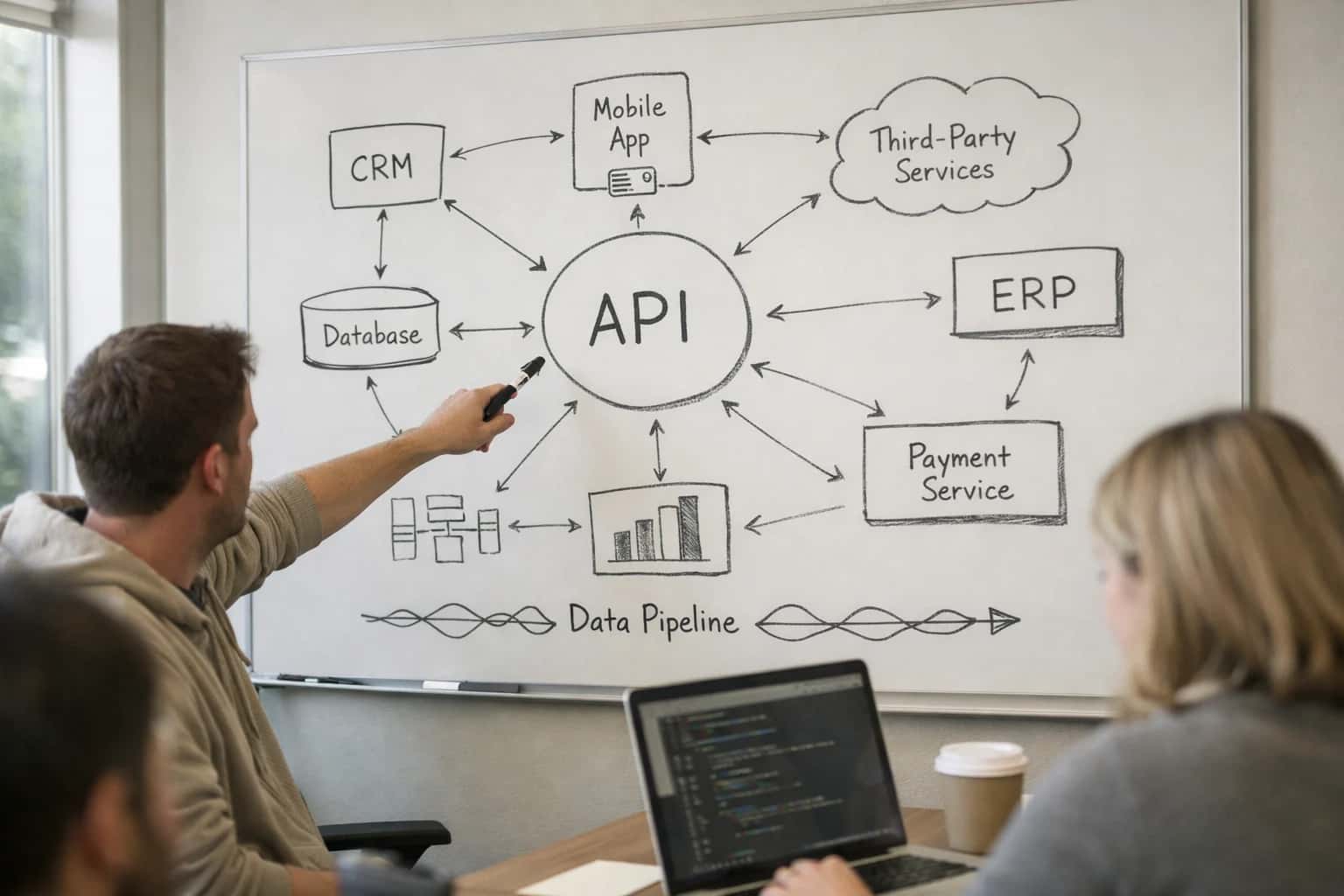
WSO2 Micro Integrator serves as the orchestration engine for legacy systems, often handling flat files, EDI, or SOAP/XML payloads. AI fits into its mediation sequences—specifically within custom mediators, message processors, and inbound/outbound endpoints—to inject intelligence where data transformations and routing decisions happen. Key integration points include:
- Content-Based Router Mediators: Use an LLM to analyze unstructured message content (e.g., invoice descriptions, support notes) and dynamically set routing properties or
messageTypeheaders. - PayloadFactory Mediators: Call an AI service to enrich or validate data before transformation, such as normalizing inconsistent product codes or extracting entities from free-text fields to populate a structured XML/JSON output.
- Callout Mediators: Make synchronous HTTP requests to external AI inference endpoints (e.g., for sentiment scoring, PII detection, or data classification) and incorporate the results into the integration flow.
- Message Stores and Processors: For async patterns, store incoming messages and use a scheduled message processor to batch-send them to an AI service for bulk processing, like validating thousands of order lines against a new pricing model.









