In production LLM systems, your data is as critical as your model weights. A fine-tuning dataset for a customer support agent or the document chunks in a RAG pipeline directly determine output quality and business risk. Without versioning, you cannot reliably answer essential questions: Which dataset version produced this model? What knowledge was in the vector store when this incorrect answer was generated? Can we roll back to last week's high-performing corpus? Integrating Weights & Biases Data Versioning creates an immutable lineage, linking every model inference and agent decision back to the exact data snapshot that influenced it.

Integration
AI Integration with Weights and Biases Data Versioning
Implement governed, versioned datasets for LLM fine-tuning and RAG evaluation using W&B Artifacts. Track lineage, enable rollbacks, and ensure reproducibility across AI development teams.
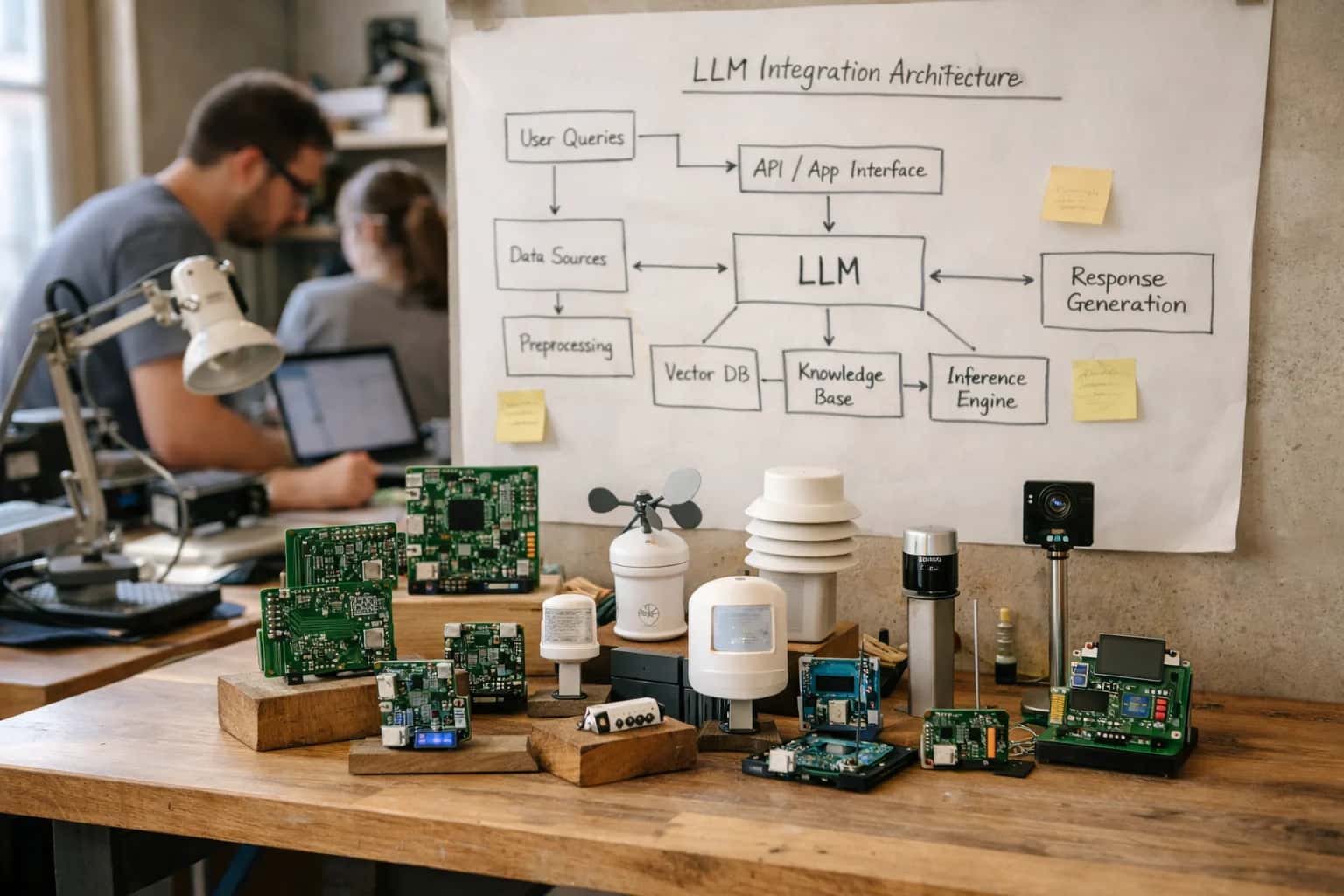
REPRODUCIBLE AI OPERATIONS
Why Version Your AI Data Like Code?
Treating your fine-tuning datasets and RAG knowledge bases as versioned artifacts is the foundation of reliable, auditable LLM applications.
Implementation involves instrumenting your data preparation pipelines. For fine-tuning workflows, log your curated prompt-completion pairs, synthetic data, and labeling metadata as a W&B Artifact. For RAG systems, version your source documents, chunking strategy, and the resulting vector store index. This enables:
- Reproducibility: Recreate any past model or retrieval state by checking out a specific dataset artifact version.
- Rollback & Recovery: If a new data ingestion introduces errors or toxicity, instantly revert to a prior, validated version.
- Impact Analysis: Correlate changes in LLM performance metrics in Arize AI or LangSmith with specific dataset changes to pinpoint root causes.
Rollout requires treating data pipelines as first-class CI/CD citizens. Store your data transformation code (e.g., LangChain document loaders, cleaning scripts) in Git, and use the W&B SDK to automatically create and version artifacts upon pipeline success. Enforce governance gates by integrating with Credo AI to require reviews before promoting a new dataset version to production. This disciplined approach transforms data from a static asset into a managed, auditable component, providing the control needed for regulated use cases in finance, healthcare, and legal sectors where data provenance is non-negotiable.
INTEGRATION SURFACES
Where W&B Data Versioning Connects to Your AI Pipeline
Versioning Training Data for LLM Fine-Tuning
Track the exact datasets used to fine-tune foundation models, ensuring reproducibility and enabling rollbacks. W&B Data Versioning (formerly W&B Artifacts) connects directly to your data preparation pipelines, logging raw source data, cleaned datasets, and instruction-tuning formats.
Key Integration Points:
- Log dataset artifacts from preprocessing scripts (Pandas, Hugging Face
datasets). - Version training/validation/test splits with metadata like size, source, and cleaning steps.
- Link dataset versions to specific model training runs in W&B Experiments.
- Trigger alerts if data quality metrics (e.g., label distribution, text length) drift beyond thresholds.
This creates an immutable lineage: a production model can be traced back to the exact data slices that created it, critical for debugging performance issues or responding to regulatory audits.
WEIGHTS & BIASES INTEGRATION PATTERNS
High-Value Use Cases for Versioned AI Data
Versioning datasets with Weights & Biases (W&B) transforms AI development from a black-box experiment into a reproducible, auditable engineering discipline. These patterns show where to integrate W&B Data Versioning to govern LLM fine-tuning and RAG pipelines.
01
Reproducible Fine-Tuning Pipelines
Version the exact dataset used for each LLM fine-tuning job within your CI/CD pipeline. Link the dataset artifact in W&B to the resulting model in the Model Registry. This creates an immutable lineage, enabling one-click rollback to a previous dataset version if a new fine-tune degrades performance or introduces bias.
1 sprint
Debug time saved
02
Governed RAG Knowledge Base Updates
Treat your RAG source documents as versioned datasets. When updating a knowledge base, create a new W&B artifact version. Automatically trigger embedding and indexing jobs, and log the new vector store index as a linked artifact. This allows A/B testing retrieval accuracy between document versions and instant rollback if new content introduces hallucinations.
Batch -> Tracked
Update process
03
Auditable Training Data for Regulated Use Cases
For LLMs in finance or healthcare, maintain W&B dataset versions as the single source of truth for compliance audits. Each version documents the provenance, cleaning steps, and labeling methodology. Integrate with Credo AI to automatically attach the dataset lineage to risk assessments, proving the data's suitability for high-stakes model training.
Same day
Evidence assembly
04
Collaborative Dataset Curation & QA Workflows
Use W&B Artifacts to stage candidate datasets for LLM training. Data scientists can iterate on sampling, augmentation, and labeling, creating successive artifact versions. Integrate with annotation tools (Labelbox, Scale) and project management (Jira) to link QA tickets directly to dataset versions that resolved specific data quality issues.
Hours -> Minutes
Issue triage
05
Root Cause Analysis for Model Performance Drift
When Arize AI detects a drop in production LLM accuracy, trace the issue back through the model version in W&B to its training dataset artifact. Compare the data distribution of the problematic production inputs against the versioned training set to identify concept drift or missing data coverage, informing the next dataset curation cycle.
Batch -> Real-time
Analysis trigger
06
Synthetic Data Generation & Validation Tracking
Version synthetic datasets generated by LLMs (e.g., for data augmentation) as W&B artifacts. Log the generator prompts, parameters, and validation metrics (e.g., similarity to real data, diversity scores) as metadata. This creates a controlled pipeline for scaling training data while maintaining visibility into the synthetic data's characteristics and impact on model performance.
Tracked
Synthetic lineage
GOVERNED LLM DATA PIPELINES
Example Workflows: From Data Ingestion to Rollback
These workflows demonstrate how to integrate Weights & Biases Data Versioning into production LLM pipelines, creating auditable, reproducible data operations from ingestion to controlled rollback.
Trigger: Scheduled weekly job or manual trigger from a content management system.
Context/Data Pulled:
- New documents (PDFs, Confluence pages, support tickets) are pulled from source systems.
- A metadata manifest (source, timestamp, owner) is generated.
W&B Integration Action:
- The raw document collection is logged as a new W&B Artifact (
dataset:raw-documents-v1.2), linking to the manifest. - A preprocessing script (chunking, cleaning) runs, and its output is logged as a derived artifact (
dataset:processed-chunks-v1.2). - Embeddings are generated, and the final vector store index is logged as an artifact (
index:knowledge-base-v1.2).
System Update:
- The new vector index artifact is promoted to the
productionalias in W&B. - A CI/CD pipeline detects the alias change, downloads the new index, and deploys it to the RAG service.
Human Review Point: Before promoting the artifact to production, a data steward reviews the W&B artifact lineage and sample chunks in the W&B UI to validate data quality and absence of sensitive information.
REPRODUCIBLE AI WORKFLOWS
Implementation Architecture: Wiring Data Versioning into Your Stack
Integrate Weights & Biases Data Versioning to create auditable, rollback-ready pipelines for LLM fine-tuning and RAG evaluation.
A production-ready integration connects W&B Data Versioning to three key surfaces in your LLM stack: your fine-tuning data preparation pipeline, your vector store indexing jobs, and your evaluation dataset management. For fine-tuning, your ETL process should log each cleaned and formatted dataset as a W&B Artifact, capturing the exact data splits, preprocessing code, and source file hashes. For RAG, each run of your document chunking and embedding job creates a versioned artifact containing the chunking strategy, the embedding model ID, and a pointer to the resulting vector index in Pinecone or Weaviate. This creates a lineage where any production model prediction or retrieval can be traced back to the specific dataset version that influenced it.
The implementation typically involves instrumenting your existing Airflow, Kubeflow, or Metaflow pipelines with the wandb SDK. Key steps include:
- Artifact Creation: After data processing, log the output directory or dataset reference as a new artifact version using
wandb.Artifact(). - Lineage Linking: Use
artifact.add_reference()to link to source data artifacts or the model artifact from W&B Model Registry used for fine-tuning. - Metadata Logging: Attach critical metadata like
chunk_size,embedding_model,sample_count, anddata_quality_scoreto the artifact for filtering and comparison. - Triggering Downstream Jobs: Configure pipeline triggers or webhooks so that a new dataset version can automatically launch a new fine-tuning experiment or a canary re-indexing of a vector store.
Rollout and governance require treating dataset artifacts with the same rigor as code. Establish a promotion workflow where dataset artifacts move from staging to production aliases in W&B after validation checks. Integrate with your CI/CD system to require a linked, versioned dataset artifact for any model deployment ticket. The major operational benefit is the ability to perform a one-click rollback. If a drop in RAG accuracy is correlated with a new dataset version, you can revert the vector index to the previous artifact and update the production configuration, often resolving the issue within minutes instead of days of forensic data archaeology.
WEIGHTS & BIASES DATA VERSIONING
Code Patterns and SDK Examples
Logging Training and Evaluation Datasets
Track the exact datasets used for fine-tuning and RAG evaluation by logging them as W&B Artifacts. This creates an immutable lineage, linking model performance directly to the data that produced it. Use the wandb.Artifact API to version your datasets, whether they are stored locally, in cloud storage, or generated dynamically.
Key patterns include:
- Creating dataset artifacts with descriptive aliases (e.g.,
training:v5,eval:latest). - Adding metadata such as row counts, source URLs, and preprocessing hash.
- Referencing artifacts in your experiment runs, so the dataset version is logged alongside model metrics.
This enables reproducible experiments and safe rollbacks. If a new dataset version causes a performance drop, you can instantly revert to the prior Artifact version and retrain.
DATA VERSIONING FOR REPRODUCIBLE LLM WORKFLOWS
Operational Impact and Time Savings
This table compares the manual, ad-hoc processes for managing LLM training and evaluation data against a governed, automated workflow using Weights & Biases Data Versioning. The impact is measured in time saved, risk reduction, and operational efficiency for AI engineering teams.
| Workflow Stage | Before W&B Data Versioning | With W&B Data Versioning | Key Impact |
|---|---|---|---|
Dataset Preparation & Versioning | Manual file copies, spreadsheets, or ad-hoc S3 folders. No clear lineage. | Versioned datasets stored as W&B Artifacts with automatic lineage to code and experiments. | Eliminates 'which data did we use?' investigations. Enables one-click rollbacks. |
Fine-tuning Pipeline Execution | Manual coordination of data paths and model checkpoints. High risk of configuration drift. | Pipelines reference specific dataset artifact versions. Runs are automatically linked and logged. | Reproducibility jumps from <50% to >95%. Cuts debugging time for failed runs by 60-80%. |
RAG Knowledge Base Updates | Full re-indexing of entire document corpus for any change. No incremental tracking. | Vector store indexes built from versioned document artifacts. Track changes at the chunk level. | Reduces re-indexing compute costs by 70%+ for minor updates. Enables A/B testing of document sets. |
Evaluation & Benchmarking | Manual curation of test sets. Difficulty comparing model performance across different data snapshots. | Evaluation runs pinned to specific test set versions. Performance changes are isolated to model vs. data shifts. | Quantifies data contribution to performance deltas. Turns 'performance dropped' into actionable root cause. |
Collaboration & Handoff | Emailing data links or sharing internal paths. New team members spend days reconstructing environments. | Shared W&B projects with discoverable, versioned datasets. Artifacts are the source of truth. | Onboards new engineers in hours, not days. Enables asynchronous, auditable collaboration across teams. |
Compliance & Audit Response | Manual forensic gathering of data used for a specific model version. Process takes days to weeks. | Complete lineage from production model back to exact dataset version, code, and parameters in W&B. | Generates audit trails for regulated use cases in hours. Provides immutable evidence for internal reviews. |
Production Incident Investigation | Guessing if a data quality issue caused model degradation. No easy way to test with previous data versions. | Immediately roll back to last known-good dataset version and re-run inference for validation. | Reduces Mean Time to Resolution (MTTR) for data-related incidents from days to hours. |
PRODUCTION-READY DATA LINEAGE
Governance, Security, and Phased Rollout
Integrating Weights & Biases Data Versioning transforms LLM data management from an ad-hoc process into a governed, auditable workflow.
A production integration connects your data preparation pipelines—whether for fine-tuning or RAG—directly to W&B Artifacts. Each dataset version (raw source, cleaned, chunked, or augmented) is logged as a versioned artifact with metadata like source_commit_hash, preprocessing_parameters, and data_quality_metrics. This creates an immutable lineage, allowing you to trace any production model's output back to the exact data slices used for training or retrieval. For security, access to these artifacts is controlled via W&B's RBAC, ensuring only authorized data scientists and MLOps engineers can promote new dataset versions to production environments.
A phased rollout is critical. Start by versioning evaluation datasets and golden sets for RAG, establishing a baseline for system performance. Next, integrate versioning into your fine-tuning pipeline, treating training data with the same rigor as model code. Finally, automate the promotion of "certified" dataset versions through your CI/CD pipeline, using W&B's aliases (e.g., :prod) to point production inference services to the approved data. This enables safe rollbacks; if a new fine-tuned model underperforms, you can instantly revert to the prior model and its corresponding dataset version.
Governance is enforced through automated checks. Before a dataset artifact is marked as production-ready, validation jobs check for PII leakage, license compliance, and statistical drift from the previous version. These checks, along with the complete artifact lineage, are automatically documented, providing auditable evidence for compliance frameworks like NIST AI RMF. This structured approach turns data from a liability into a managed asset, reducing the risk of "data decay" silently degrading your LLM applications and giving engineering leaders confidence in their AI systems' reproducibility.
Enabling Efficiency, Speed & Accuracy
Intelligent Analysis, Decision & Execution
We build AI systems for teams that need search across company data, workflow automation across tools, or AI features inside products and internal software.
Talk to Us
Search across company data
Give teams answers from docs, tickets, runbooks, and product data with sources and permissions.
Useful when people spend too long searching or get different answers from different systems.
Enterprise searchRAGPermissions
Read more
Automate internal workflows
Use AI to route work, draft outputs, trigger actions, and keep approvals and logs in place.
Useful when repetitive work moves across multiple tools and teams.
AI agentsWorkflow automationGovernance
Read more
Add AI to products and internal tools
Build assistants, guided actions, or decision support into the software your team or customers already use.
Useful when AI needs to be part of the product, not a separate tool.
AI integrationDecision supportModel routing
Read moreW&B DATA VERSIONING INTEGRATION
Frequently Asked Questions
Common technical and operational questions about integrating Weights & Biases Data Versioning into enterprise LLM pipelines for fine-tuning and RAG.
The integration creates a reproducible lineage for your training data. Here's the typical workflow:
- Trigger & Ingestion: A new dataset is prepared (e.g., cleaned support tickets, labeled financial documents). Your data pipeline (Airflow, Kubeflow) or a manual process triggers the versioning job.
- Artifact Creation: The integration uses the W&B SDK (
wandb.Artifact) to create a new dataset artifact. Metadata (source, size, schema, hash) is logged automatically. - Storage & Linking: The artifact is stored in W&B (or linked to cloud storage like S3). It's linked to the specific W&B project and run.
- Model Training: Your fine-tuning script (using Hugging Face, OpenAI, etc.) references the specific dataset artifact version via its unique alias (e.g.,
support-tickets:v3). - Lineage Capture: The resulting fine-tuned model, logged as another artifact in W&B, has an explicit dependency link back to the exact dataset version used. This creates an immutable chain: Model v1.2 → Dataset v3.
This enables rollbacks. If model performance degrades, you can trace it to the dataset version and revert to a previous known-good version (support-tickets:v2).

About the author
Prasad Kumkar
CEO & MD, Inference Systems
Prasad Kumkar is the CEO & MD of Inference Systems and writes about AI systems architecture, LLM infrastructure, model serving, evaluation, and production deployment. Over 5+ years, he has worked across computer vision models, L5 autonomous vehicle systems, and LLM research, with a focus on taking complex AI ideas into real-world engineering systems.
His work and writing cover AI systems, large language models, AI agents, multimodal systems, autonomous systems, inference optimization, RAG, evaluation, and production AI engineering.
LinkedIn
Limited slotsGet a Free AI Consultation
Partnered with leading AI, data, and software stack.





How We Work
Custom AI workflows for your Business
One-fit-all AI don't work for modern businesses. At Inferensys, we aim to understand your business & custom requirements; which we use to define most efficient agentic workflows, the data, and the tools for your business.
01
Review the use case
We understand the task, the users, and where AI can actually help.
Read more02
Pick the right approach
We define what needs search, automation, or product integration.
Read more03
Build the first useful version
We implement the part that proves the value first.
Read more04
Improve from there
We add the checks and visibility needed to keep it useful.
Read moreThe first call is a practical review of your use case and the right next step.
Talk to Us