The Weights & Biases platform excels at tracking experiments, models, and artifacts, but the operational overhead of managing this data can become a bottleneck. AI automation scripts target the manual, repetitive tasks that emerge in a mature LLM lifecycle: archiving old runs to control cloud storage costs, generating standardized performance reports for stakeholder reviews, cleaning up orphaned artifacts, or programmatically promoting models based on validation metrics. These scripts act as a force multiplier for your MLOps team.

Integration
AI Integration with Weights and Biases Automation Scripts
Automate repetitive LLM lifecycle tasks using the Weights & Biases SDK. Build scripts for archiving experiments, generating reports, cleaning artifacts, and enforcing governance policies to scale your AI operations.
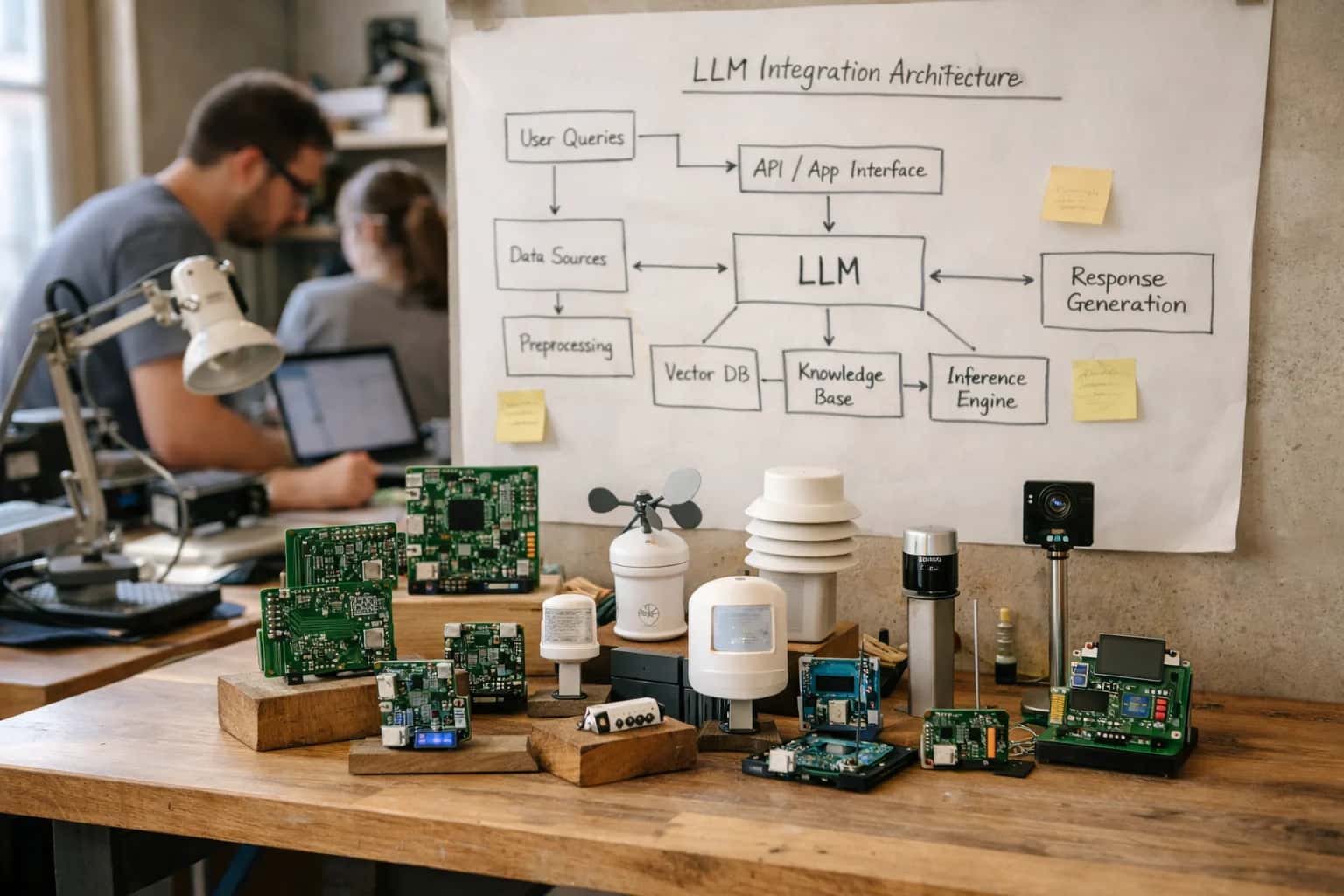
OPERATIONALIZING THE EXPERIMENTAL LOOP
Where AI Automation Fits in the W&B LLM Lifecycle
Scripting repetitive LLMOps tasks with the Weights & Biases SDK to free data scientists for higher-value model development and analysis.
Implementation typically involves Python scripts using the wandb SDK, scheduled via cron jobs, Airflow DAGs, or GitHub Actions. For example, a script might query the W&B API for runs older than 90 days, archive their files to cold storage, and update run metadata. Another could aggregate key metrics—like latency, cost, and evaluation scores—from the last month's experiments into a PDF report emailed to product leadership. The critical integration point is W&B's public API and Python SDK, which provides programmatic access to projects, runs, models, and artifacts.
Rollout requires careful governance. Scripts should run under a dedicated service account with scoped API permissions, and all actions must be logged back to W&B as new runs or to an internal audit system. Start by automating one high-friction task, such as monthly report generation, then expand. This approach turns W&B from a passive observability tool into an active, self-maintaining system of record for your LLM operations.
AUTOMATE REPETITIVE LLMOPS TASKS
Key W&B Surfaces for SDK Automation
Automate Experiment Cleanup and Archival
The W&B SDK provides programmatic access to manage the lifecycle of thousands of runs. Automation scripts can target runs based on filters like age, tags, or metrics to perform bulk operations.
Common Automation Scripts:
- Archive Old Experiments: Identify runs older than a specified date, tag them as
archived, and move associated artifacts to cold storage. This keeps the active project view clean and can reduce cloud storage costs. - Delete Failed Runs: Programmatically find runs with
state: "crashed"orfailedstatus and remove them after a grace period, cleaning up clutter from interrupted training jobs. - Bulk Tagging: Apply consistent tags (e.g.,
"baseline","hyperparameter-sweep") across runs based on configuration parameters logged inconfig, enabling better organization for large teams.
These scripts are typically triggered by cron jobs or as post-processing steps in CI/CD pipelines, ensuring the experiment tracking system remains performant and relevant.
W&B SDK AUTOMATION SCRIPTS
High-Value Automation Use Cases
Automate repetitive, manual tasks in the LLM lifecycle using the Weights & Biases SDK. These scripts reduce operational overhead, enforce governance, and free up data scientists and MLOps engineers for higher-value work.
01
Automated Experiment Archival & Cleanup
Scripts that periodically scan W&B projects for old, inactive, or low-value runs based on custom criteria (e.g., age, metric thresholds). Automatically archive runs to cold storage and delete associated artifacts to manage cloud costs and project clutter. Workflow: Scheduled job → SDK query → filter logic → archive/delete action → audit log.
Batch → Scheduled
Execution mode
02
Scheduled Model Registry Hygiene
Automate governance of the W&B Model Registry. Scripts can flag stale model versions not used in recent deployments, enforce naming conventions, update stage transitions based on external validation results, and generate cleanup recommendations for approval. Workflow: Registry scan → policy check → Jira ticket/Slack alert → (optional) automated staging.
1 sprint
Time saved per quarter
03
Cross-Project Report Generation
Generate standardized performance and cost reports by pulling data from multiple W&B projects. Consolidate metrics like total GPU hours, token costs, and experiment counts across teams. Output formatted summaries (PDF, Markdown) to Slack, Confluence, or email for stakeholder reviews. Workflow: Multi-project SDK query → data aggregation → template rendering → distribution.
Hours → Minutes
Report creation
04
Artifact Dependency & Lineage Audits
Scripts that traverse the dependency graph of W&B Artifacts to answer critical questions: "Which production models use this outdated dataset?" or "What runs will be affected if I delete this base model?" Essential for impact analysis before changes and for building reproducible lineage documentation. Workflow: Start artifact → recursive SDK queries → graph output → impact report.
05
Automated Sweep Configuration & Launch
Dynamically generate and launch W&B Sweeps based on external triggers. For example, when a new dataset version is registered, a script automatically creates a hyperparameter sweep configured for that data, launches it on a GPU cluster, and notifies the team. Enforces consistent tuning practices. Workflow: Event trigger (e.g., new dataset) → config generation → sweep launch → notification.
Same day
Tuning kick-off
06
RBAC & Project Permission Sync
Keep W&B team and project permissions in sync with external systems like Okta or GitHub Teams. Scripts add/remove users, adjust project access levels, and audit permissions against a source of truth. Crucial for security compliance in large organizations with frequent team changes. Workflow: Sync from IdP → diff calculation → SDK permission updates → audit log.
W&B SDK SCRIPTS
Example Automation Workflows
Automating repetitive LLM lifecycle tasks with Weights & Biases scripts reduces manual toil, enforces governance, and frees teams for higher-value work. Below are concrete workflows for production-ready automation.
Trigger: Scheduled cron job (e.g., weekly).
Context/Data Pulled: Script queries the W&B API for runs and models older than a configurable threshold (e.g., 90 days) and tagged as development or staging.
Model/Agent Action: A Python script using the wandb SDK:
- Authenticates using service account credentials.
- Fetches runs and models matching the age and tag criteria.
- For each item, it:
- Downloads a summary artifact (e.g., final metrics, model card).
- Archives the full run data to cold storage (e.g., S3 Glacier).
- Updates the W&B entity with an
archived: truetag and a link to the storage location. - Optionally deletes heavy artifacts from W&B to control cloud costs.
System Update/Next Step: Logs the archiving report (counts, errors) to a central dashboard and sends a summary to a Slack channel. Failed items are added to a retry queue.
Human Review Point: A monthly report is generated for stakeholders to review archiving policies and confirm no critical experiments were removed prematurely.
AUTOMATING THE LLM LIFECYCLE
Implementation Architecture & Data Flow
A practical blueprint for integrating Weights & Biases SDK scripts into production LLM pipelines to automate governance and operational tasks.
The integration connects to the W&B Public API and SDK to execute scheduled or event-driven scripts that manage the LLM lifecycle. Core automation targets include:
- Experiment & Run Management: Scripts archive old experiments based on custom criteria (age, metric performance, project status) using the
wandb.Api()interface, moving them to cold storage to control costs and clutter. - Artifact Cleanup: Programs identify and delete unused model artifacts, datasets, or vector store indexes from the W&B registry, enforcing retention policies and freeing up storage.
- Report Generation: Automation pulls key metrics—like monthly inference costs, model performance drift, or A/B test results—from the W&B
runsandartifactsendpoints to populate standardized reports for stakeholders.
Implementation typically involves a lightweight orchestration layer (e.g., a scheduled Airflow DAG, GitHub Action, or Kubernetes CronJob) that executes Python scripts using service account credentials. These scripts authenticate via W&B API keys stored in a secrets manager, query for target objects using filters, and perform the governed actions. For example, an archiving script might:
- Query all runs in a project older than 90 days with a
state="finished". - For each run, download summary metrics and log files to a cloud storage bucket (e.g., S3).
- Call
wandb.Api().delete_run(run_id)to remove it from the active UI, updating a customartifactto log the archival transaction for audit. This turns manual, periodic maintenance into a reliable, auditable process.
Rollout and governance require careful permission scoping and dry-run modes. Initial deployments should use W&B's service account type with narrowly scoped permissions (e.g., only delete on specific projects) and implement a mandatory dry-run flag that logs intended actions without execution. Integration with monitoring (like sending script execution logs and error alerts to Datadog or PagerDuty) ensures operations teams can verify automation health. This approach not only saves engineering hours but also enforces consistent lifecycle policies across teams, a key requirement for enterprises scaling their LLM portfolios. For related patterns on governing the models these scripts manage, see our guide on AI Integration with Weights and Biases for Model Governance.
WEIGHTS & BIASES AUTOMATION
Code Patterns & SDK Snippets
Automating Experiment Archival
Managing hundreds of LLM experiment runs in W&B can clutter the UI and incur storage costs. Use the W&B SDK to programmatically archive or delete old runs based on custom criteria like age, tags, or performance metrics. This script typically runs on a schedule (e.g., weekly via cron or Airflow) and integrates with your team's tagging conventions to safely preserve important runs while cleaning up noise.
pythonimport wandb import datetime # Initialize API api = wandb.Api() # Fetch runs from a specific project project = api.project("llm-fine-tuning", entity="your-team") runs = project.runs cutoff_date = datetime.datetime.now() - datetime.timedelta(days=90) for run in runs: if run.created_at < cutoff_date and run.tags and "baseline" not in run.tags: # Archive the run (or run.delete() for permanent removal) run.archived = True run.update() print(f"Archived run: {run.id}")
AUTOMATING LLMOPS WITH W&B SCRIPTS
Realistic Time Savings & Operational Impact
How automating repetitive LLM lifecycle tasks with Weights & Biases SDK scripts translates to tangible time savings and operational improvements for MLOps teams.
| Task / Workflow | Manual Process | Automated with W&B Scripts | Operational Impact & Notes |
|---|---|---|---|
Archive Old Experiments | Manual review and deletion via UI, 2-4 hours monthly | Scheduled script execution, <5 minutes monthly | Reduces clutter, enforces data retention policy, eliminates human error |
Generate Monthly LLM Cost & Performance Reports | Manual data export, spreadsheet manipulation, 1-2 days monthly | Script aggregates W&B data, auto-generates PDF/Slack report, <1 hour monthly | Frees up data scientists for analysis; provides consistent, timely stakeholder updates |
Clean Up Unused Model Artifacts & Datasets | Periodic manual audit, risk of deleting active dependencies | Script identifies unused artifacts by last access, safe deletion with dry-run option | Direct storage cost savings; maintains organized model registry |
Promote Models from Staging to Production Registry | Manual version tagging, checklist verification, Jira ticket updates | Script validates metrics against gates, auto-tags version, posts to Slack channel | Accelerates deployment cycle; ensures consistent promotion criteria are met |
Sync Experiment Metadata to Internal Wiki/CMDB | Copy-paste from W&B UI to Confluence/ServiceNow, 30+ mins per major experiment | Script parses W&B run data, formats, and pushes via API on experiment completion | Maintains always-updated central record for audits and team discovery |
Notify Team of Failed or Anomalous Training Runs | Relies on engineer monitoring logs or sporadic email checks | Script monitors W&B for run failures or metric outliers, alerts via PagerDuty/Slack | Reduces mean time to detection (MTTD) for pipeline issues from hours to minutes |
Pre-populate New Project Templates with Standard Metrics & Tags | Manual project setup, copying dashboards, ~1 hour per new project | Script uses W&B API to clone template projects with team-specific settings | Enforces standardization; accelerates onboarding for new LLM initiatives |
OPERATIONALIZING AUTOMATION SCRIPTS
Governance, Security, and Phased Rollout
Implementing secure, governed, and incremental automation for your LLM lifecycle with Weights & Biases.
Automation scripts built with the W&B SDK—for tasks like archiving old runs, cleaning up artifacts, or generating compliance reports—must be treated as production code with appropriate access controls and audit trails. We implement these scripts as containerized jobs or scheduled functions (e.g., AWS Lambda, GitHub Actions) that use service accounts with scoped W&B API permissions via environment variables or a secrets manager. Each script logs its execution start, end, and any modifications to the W&B project (e.g., run archived, artifact deleted) as a new W&B run itself, creating an immutable audit log of all automated actions for compliance reviews.
A phased rollout is critical to prevent unintended data loss or service disruption. We start by executing scripts in a dry-run mode against a dedicated sandbox project, logging proposed changes without applying them. The first production phase targets non-critical data, such as experiments older than 12 months, with a manual approval step (e.g., a Slack notification with a summary of actions requiring a \approve response) before execution. Subsequent phases expand automation to more frequent tasks (weekly report generation) and broader datasets, with automated health checks that verify script success and roll back changes if errors exceed a defined threshold.
Governance is enforced by integrating these automation workflows with your existing CI/CD and ticketing systems. Script changes are version-controlled in Git, and deployments trigger a review that includes validation of the W&B API query logic to prevent overly broad deletions. For high-stakes operations, we can integrate with platforms like Credo AI to perform a risk assessment on the script's logic and required permissions before deployment. This layered approach ensures your LLM operations become more efficient without introducing unmanaged risk or losing visibility into your model development lineage.
Enabling Efficiency, Speed & Accuracy
Intelligent Analysis, Decision & Execution
We build AI systems for teams that need search across company data, workflow automation across tools, or AI features inside products and internal software.
Talk to Us
Search across company data
Give teams answers from docs, tickets, runbooks, and product data with sources and permissions.
Useful when people spend too long searching or get different answers from different systems.
Enterprise searchRAGPermissions
Read more
Automate internal workflows
Use AI to route work, draft outputs, trigger actions, and keep approvals and logs in place.
Useful when repetitive work moves across multiple tools and teams.
AI agentsWorkflow automationGovernance
Read more
Add AI to products and internal tools
Build assistants, guided actions, or decision support into the software your team or customers already use.
Useful when AI needs to be part of the product, not a separate tool.
AI integrationDecision supportModel routing
Read moreW&B AUTOMATION SCRIPTS
Frequently Asked Questions
Practical questions for teams building automated scripts to manage the LLM lifecycle using the Weights & Biases SDK.
A common script triggers weekly to archive experiments older than a set date or meeting specific criteria.
Typical Script Flow:
- Trigger: Scheduled cron job or Airflow DAG runs weekly.
- Context Pulled: Script uses the W&B SDK (
wandb.Api()) to list all runs in a project, filtering bycreated_atdate and tags (e.g.,state: "finished"). - Automated Action: For each qualifying run, the script:
- Calls
run.delete()to archive it (moves to trash). - Logs the action (run ID, name, deletion time) to a separate W&B run for auditability.
- Calls
- System Update: A summary report (total archived, errors) is posted to a Slack channel via webhook.
- Human Review Point: Runs tagged as
"keep"or belonging to a specific user group are excluded. The script can be configured to send a preview list for manual approval before execution in sensitive projects.

About the author
Prasad Kumkar
CEO & MD, Inference Systems
Prasad Kumkar is the CEO & MD of Inference Systems and writes about AI systems architecture, LLM infrastructure, model serving, evaluation, and production deployment. Over 5+ years, he has worked across computer vision models, L5 autonomous vehicle systems, and LLM research, with a focus on taking complex AI ideas into real-world engineering systems.
His work and writing cover AI systems, large language models, AI agents, multimodal systems, autonomous systems, inference optimization, RAG, evaluation, and production AI engineering.
LinkedIn
Limited slotsGet a Free AI Consultation
Partnered with leading AI, data, and software stack.





How We Work
Custom AI workflows for your Business
One-fit-all AI don't work for modern businesses. At Inferensys, we aim to understand your business & custom requirements; which we use to define most efficient agentic workflows, the data, and the tools for your business.
01
Review the use case
We understand the task, the users, and where AI can actually help.
Read more02
Pick the right approach
We define what needs search, automation, or product integration.
Read more03
Build the first useful version
We implement the part that proves the value first.
Read more04
Improve from there
We add the checks and visibility needed to keep it useful.
Read moreThe first call is a practical review of your use case and the right next step.
Talk to Us