
Inferensys

Integration

AI Integration with Credo AI Regulatory Reporting

Configure Credo AI to automate the generation of standardized regulatory reports by aggregating governance data from all your LLM applications, turning weeks of manual evidence collection into scheduled, auditable deliverables.
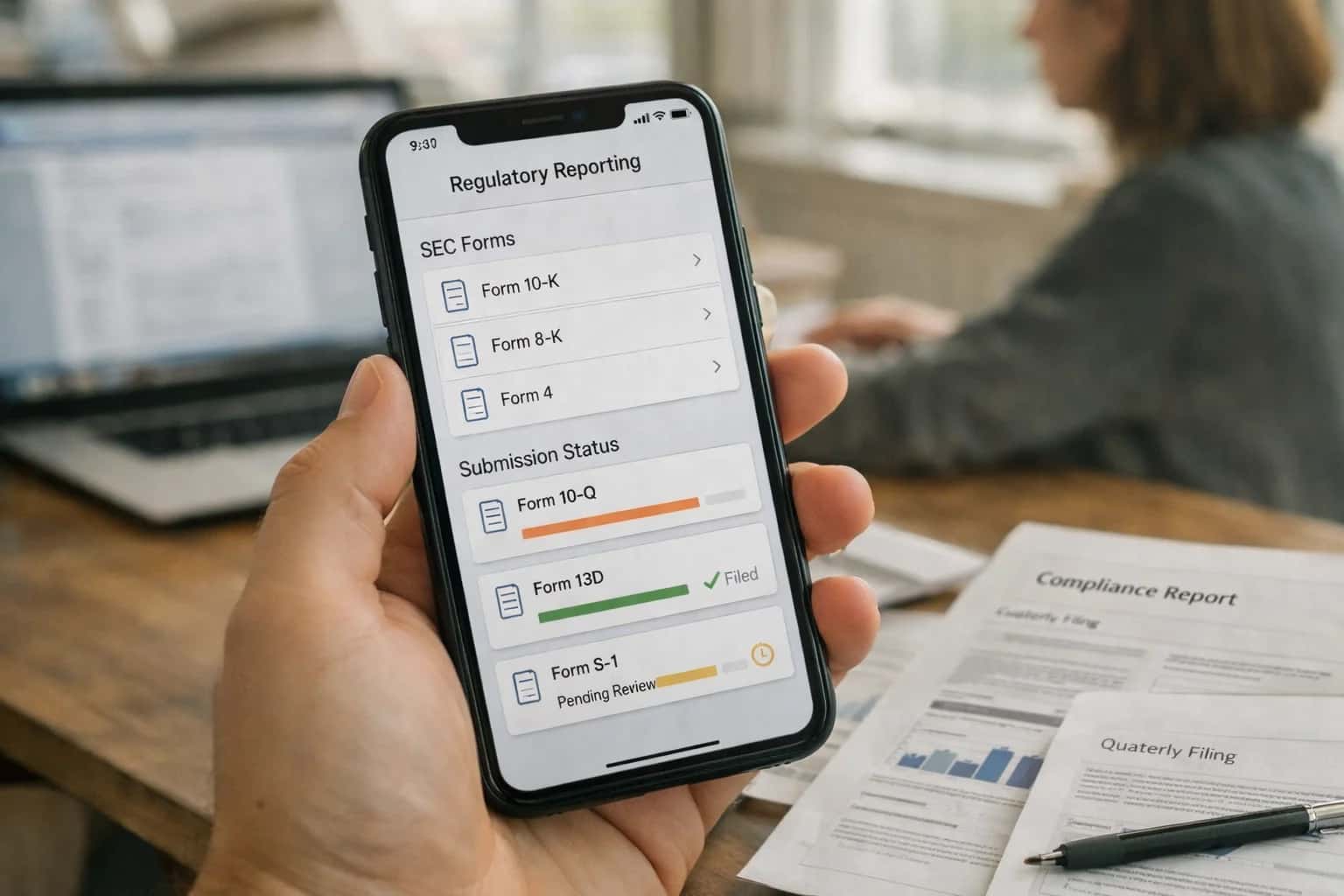
Compliance team using AI for regulatory reporting on laptop, SEC templates visible, modern office desk setup.
ARCHITECTING AI GOVERNANCE FOR AUDIT TRAILS

From Manual Evidence Gathering to Automated Regulatory Reporting

Integrate Credo AI to automate the aggregation of governance data and generation of standardized reports for financial, healthcare, and other regulated authorities.

Manual evidence collection for AI regulatory compliance—spanning model cards, risk assessments, audit logs, and performance metrics—is a high-effort, error-prone process that slows down AI deployment cycles and creates audit risk. Credo AI acts as the central system of record, but its value is unlocked by automated data ingestion from your LLM toolchain. This integration connects Credo AI's evidence framework to sources like:

  • Weights & Biases for model lineage, experiment parameters, and promotion records.
  • Arize AI for production performance metrics, drift alerts, and data quality scores.
  • LangChain/LangSmith for prompt versions, chain execution traces, and tool-calling logs.
  • Internal CI/CD (e.g., GitHub Actions, Jenkins) for deployment approvals and code commits.
  • Vector Databases (Pinecone, Weaviate) for RAG index versioning and access logs.

The integration architecture typically involves setting up credentialed API connections or webhook listeners from these source systems into Credo AI's evidence collection endpoints. For each regulated LLM use case (e.g., a customer support chatbot in a financial institution), you map the required evidence points from frameworks like NIST AI RMF or the EU AI Act to specific data fields in the source systems. A nightly orchestration job (using Airflow or a similar scheduler) can then:

  1. Query source APIs for new evidence since the last run.
  2. Transform payloads into Credo AI's standardized evidence schema.
  3. Submit batches, tagging each piece of evidence with the relevant AI application, model version, and control ID.
  4. Log any ingestion failures for operational review. This creates a continuously updated, queryable evidence base, replacing quarterly manual spreadsheet exercises with a real-time compliance posture.

Rollout requires careful stakeholder alignment and phased evidence mapping. Start with a single high-priority LLM application and its corresponding regulatory framework. Work backwards from the required report sections to identify the 10-15 most critical evidence types. Implement those connectors first, validating that the ingested data in Credo AI accurately reflects the source systems. Governance teams can then use Credo AI's reporting engine to generate draft regulator-ready documents, which are typically exported as PDFs or Word files for final legal review. This process turns a multi-week evidence scramble into a same-day reporting capability, providing auditors with immutable, timestamped proof of controls. For ongoing operations, integrate Credo AI's compliance status dashboards with internal reporting tools like Power BI or executive scorecards, and set up alerts for any evidence gaps that could indicate a control failure.

REGULATORY REPORTING INTEGRATION SURFACES

Where Credo AI Connects to Your LLM Governance Stack

Ingest Model Lineage for Audit Trails

Credo AI connects directly to your model registries (Weights & Biases, MLflow) and CI/CD pipelines to capture the complete lineage of any LLM promoted to production. For regulatory reporting, this automates evidence collection for:

  • Base Model Provenance: Vendor, version, and license.
  • Fine-Tuning Metadata: Training dataset sources, hyperparameters, and evaluation scores.
  • Deployment Artifacts: Container image hashes, inference endpoint configurations, and promotion approvals.

This data populates Credo AI's System Cards and provides the immutable audit trail required by frameworks like the EU AI Act. Integration is typically via webhook listeners on registry events or API calls from pipeline scripts.

AUTOMATED COMPLIANCE EVIDENCE FOR FINANCE, HEALTHCARE, AND LEGAL

High-Value Regulatory Reporting Use Cases

Credo AI centralizes governance data from disparate LLM applications to automate the generation of standardized reports for financial authorities (SEC, FINRA), healthcare bodies (FDA, HIPAA), and other regulators. These cards detail where AI integration connects evidence collection to specific regulatory workflows.

01

Automated Model Inventory & Risk Tiering for Regulators

Integrate Credo AI with internal model registries (Weights & Biases, MLflow) and deployment platforms to auto-populate a centralized inventory of all production LLMs. Credo AI applies risk tiering logic based on use case impact and data sensitivity, generating a continuously updated register for internal audits and regulatory disclosure (e.g., EU AI Act, SEC AI disclosures).

Weeks -> Real-time
Inventory accuracy
02

Evidence Pack Generation for Model Change Approvals

Connect Credo AI to CI/CD pipelines (GitHub Actions, Jenkins) and monitoring tools (Arize AI). For any LLM model promotion or prompt update, automatically compile an evidence pack including performance benchmarks, drift reports, bias assessments, and stakeholder approvals. This creates an immutable audit trail for internal change boards and external examiners.

1 sprint
Approval cycle reduction
03

Continuous Fairness & Bias Monitoring Reports

Pipe inference logs and user feedback from LLM applications into Credo AI's bias detection modules. Generate periodic fairness reports segmented by protected attributes, showing disparity metrics and mitigation actions. These reports satisfy regulatory expectations (e.g., CFPB, EEOC) for algorithmic fairness and provide defensible documentation for compliance teams.

Batch -> Continuous
Monitoring cadence
04

Incident Response & Breach Documentation Workflow

Integrate Credo AI with alerting systems (PagerDuty, ServiceNow) to automatically capture details of any LLM performance incident, security event, or policy violation. Trigger a structured incident workflow that documents root cause, impacted decisions, remediation steps, and stakeholder notifications—formatting output for regulatory breach reporting timelines.

Hours -> Minutes
Initial report assembly
05

Third-Party AI Vendor Risk Assessment Aggregation

For enterprises using embedded AI from vendors (e.g., Salesforce Einstein, OpenAI), use Credo AI to standardize and aggregate vendor-provided SOC 2 reports, model cards, and compliance questionnaires. Map vendor controls to internal policy frameworks, generating a unified third-party risk assessment for procurement, legal, and regulator reviews.

Manual -> Automated
Vendor review process
06

Executive Attestation & Board Reporting Packages

Configure Credo AI to pull key risk indicators (KRIs) from monitoring dashboards, incident logs, and control test results. Auto-generate quarterly or annual AI governance packages for the Board or C-suite, including risk heat maps, policy exception reports, and investment justifications—structured to meet financial regulator expectations for senior oversight.

Same day
Report generation
IMPLEMENTATION PATTERNS

Example Automated Reporting Workflows

These workflows illustrate how to connect Credo AI's governance data to automated reporting pipelines for financial, healthcare, and other regulated sectors. Each pattern includes triggers, data aggregation, report generation, and review steps.

Trigger: Scheduled cron job (e.g., last week of the quarter).

Context/Data Pulled:

  1. Query Credo AI's API for all LLM applications tagged with risk-tier: high and business-unit: lending.
  2. For each application, retrieve:
    • Latest risk assessment score and mitigation status.
    • Policy violation counts from the last 90 days (e.g., fairness threshold breaches).
    • Associated model versions from the integrated Weights & Biases registry.
    • Performance metrics (accuracy, drift) from the linked Arize AI monitoring instance.

Model/Agent Action:

  • A reporting agent structures the aggregated data into a pre-defined JSON schema.
  • An LLM (governed by the same pipeline) is prompted with this schema and a regulatory template (e.g., SR 11-7 guidelines) to generate a narrative executive summary and findings section.

System Update/Next Step:

  • The structured data and generated narrative are compiled into a PDF/Word report using a document generation service (e.g., DocRaptor, Pandoc).
  • The report artifact is versioned and stored in a secure repository (e.g., SharePoint, S3 with strict ACLs).

Human Review Point:

  • The draft report and a summary of changes from the prior quarter are sent via Credo AI's workflow engine to the Model Risk Governance committee for review and electronic sign-off before submission.
CONNECTING GOVERNANCE DATA TO REGULATORY OUTPUTS

Implementation Architecture: Data Flow and System Boundaries

A production architecture for generating standardized regulatory reports by aggregating governance data from across your LLM portfolio.

The integration connects Credo AI as a central governance aggregator to the various systems where LLMs are developed, deployed, and monitored. Core data flows include:

  • Ingestion from LLMOps Platforms: Credo AI pulls evidence and metrics via API from tools like Weights & Biases (model lineage, experiment metadata), Arize AI (performance drift, data quality scores), and LangChain/LangSmith (prompt versions, chain execution traces).
  • Extraction from Deployment Pipelines: CI/CD systems (e.g., GitHub Actions, Jenkins) push artifacts—such as model cards, risk assessments, and change approvals—to Credo AI's evidence repository upon promotion to staging or production.
  • Runtime Log Streaming: LLM inference endpoints (e.g., hosted on AWS SageMaker, Azure OpenAI) are configured to stream anonymized decision logs, policy check results, and input/output samples to Credo AI's audit trail, tagged by use case and risk tier.

Within Credo AI, this data is mapped to a Regulatory Reporting Template (e.g., for the EU AI Act, NIST AI RMF, or an internal audit framework). The system automates report generation by:

  1. Aggregating Evidence: Compiling model cards, performance dashboards, bias assessment results, and incident logs for a specified reporting period.
  2. Applying Framework Controls: Mapping the collected evidence to specific regulatory article requirements or control objectives defined in Credo AI's policy library.
  3. Generating Draft Reports: Producing a structured document (PDF, DOCX) or JSON payload with executive summaries, evidence attachments, and compliance gap analyses.
  4. Orchestrating Review Workflows: Routing the draft report through a configured approval chain in Credo AI, integrating with enterprise systems like ServiceNow or Jira for stakeholder sign-off before final submission.

Rollout follows a phased approach, starting with a single high-visibility LLM use case (e.g., a customer support chatbot) to validate the data pipeline and report format. Governance is maintained by treating the Credo AI configuration—report templates, evidence source mappings, approval workflows—as version-controlled infrastructure. The primary boundary to enforce is between raw inference logs (which may contain sensitive data) and the anonymized, aggregated evidence used for reporting; this is managed through pre-ingestion data masking in the streaming layer and strict RBAC within Credo AI itself.

CREDO AI REGULATORY REPORTING

Code and Configuration Examples

Automating Report Template Creation

Define a standardized regulatory report template (e.g., for a financial authority) by creating a ReportDefinition via Credo AI's API. This JSON payload specifies the governance data to aggregate, such as model risk scores, policy violation counts, and audit trail completeness metrics from across your LLM portfolio.

json
POST /api/v1/report_definitions
{
  "name": "Q1_LLM_Compliance_Report_FFIEC",
  "framework": "NIST AI RMF",
  "frequency": "quarterly",
  "sections": [
    {
      "title": "Model Inventory & Risk Posture",
      "metrics": [
        "credo.models.count_by_risk_tier",
        "credo.assessments.latest_score"
      ],
      "data_source": "credo_governance_platform"
    },
    {
      "title": "Policy Violations & Mitigations",
      "metrics": [
        "policy_engine.blocked_requests_last_quarter",
        "arize.drift.embedding_alert_count"
      ],
      "data_source": ["credo_policy_logs", "arize_ai"]
    }
  ]
}

This programmatic setup ensures consistent, version-controlled report structures that pull from integrated monitoring tools like Arize AI and W&B.

CREDO AI REGULATORY REPORTING

Time Saved and Operational Impact

How integrating Credo AI for automated regulatory reporting reduces manual effort and accelerates compliance cycles for enterprise LLM applications.

MetricBefore AIAfter AINotes

Evidence collection for a single model

Manual, cross-team emails and spreadsheets (2-3 days)

Automated data pull from integrated systems (2-3 hours)

Sources include W&B, Arize AI, model registries, and deployment logs

Compiling a quarterly regulatory report

Manual consolidation and formatting (1-2 weeks)

Template-driven auto-generation (same day)

Reports align to frameworks like NIST AI RMF or EU AI Act

Risk assessment for a new LLM use case

Manual questionnaire and stakeholder review (1 week)

Pre-populated assessment with integrated architecture data (1-2 days)

Links to Jira tickets, Confluence docs, and system diagrams

Audit trail verification for compliance review

Manual log sampling and correlation (3-5 days)

Immutable, queryable decision logs from runtime (hours)

Logs capture inputs, outputs, policy checks, and model versions

Stakeholder sign-off workflow

Email chains and manual tracking (scattered)

Integrated approval flows with ServiceNow or Jira (tracked)

Automated reminders and status dashboards for legal, security, and product teams

Updating controls for a new regulation

Manual policy mapping and gap analysis (weeks)

Framework mapping and automated gap reports in Credo AI (days)

Continuously monitors against EU AI Act, US EO, ISO 42001 updates

Generating a model card or system card

Drafted from scratch by data scientists (days)

Auto-generated from linked metadata and experiments (hours)

Pulls data from W&B model registry, code repos, and performance monitors

PRODUCTION-READY INTEGRATION

Governance, Security, and Phased Rollout

Integrating Credo AI for regulatory reporting requires a secure, auditable architecture and a controlled rollout to manage risk and ensure compliance.

The integration architecture connects your LLM inference endpoints and vector stores to Credo AI's governance platform via secure APIs. For each regulated application—such as a customer support agent in Zendesk or a document summarizer in SharePoint—you instrument the application to log key governance data: model inputs/outputs, the specific prompt version used, retrieval sources for RAG, and any policy checks performed. This data is streamed to a secure, internal queue (e.g., Apache Kafka or AWS Kinesis) before being batched and sent to Credo AI's ingestion API. This decoupled design ensures production LLM performance is not impacted by reporting latency and provides a buffer for data validation.

Security is enforced at multiple layers: all data in transit is encrypted, and sensitive fields like PII are hashed or redacted before leaving your environment using pre-processing agents. Credo AI is configured to map this ingested data to its Regulatory Reporting Modules, aligning LLM activity with frameworks like the EU AI Act or NIST AI RMF. You define report templates for specific regulators (e.g., a quarterly submission for a financial authority) that aggregate evidence of controls—such as drift monitoring from Arize AI, model version lineage from Weights & Biases, and human review rates—into standardized formats.

Rollout follows a phased, risk-based approach. Start with a single, lower-risk LLM use case in a non-production environment to validate the data pipeline and report accuracy. Then, expand to a controlled production pilot, perhaps a internal HR chatbot in Workday, enabling Credo AI's reporting for that application only. This phased approach allows your compliance, legal, and AI engineering teams to verify the audit trail, refine data mappings, and establish review workflows before scaling to all regulated LLMs. Governance is maintained by integrating Credo AI's approval workflows with your existing ticketing system (e.g., ServiceNow), ensuring any change to a reporting configuration or model promotion triggers the required stakeholder review.

IMPLEMENTATION AND GOVERNANCE

Frequently Asked Questions

Practical questions for teams integrating Credo AI with production LLM applications to automate regulatory reporting for financial, healthcare, or other regulated sectors.

Credo AI aggregates governance data from across your LLM stack. A typical integration pulls from:

  • Model Registries & Experiment Trackers: Weights & Biases or MLflow for model lineage, versioning, and training metadata.
  • LLM Observability Platforms: Arize AI or LangSmith for inference logs, performance metrics (latency, cost), and evaluation scores.
  • Vector Databases & RAG Systems: Pinecone or Weaviate for retrieval accuracy metrics and chunk-level audit trails.
  • Application & Infrastructure Logs: Cloud monitoring (Datadog, Grafana) for system health, API gateway logs for usage, and CI/CD systems (GitHub Actions, Jenkins) for deployment evidence.
  • Policy & Risk Systems: Internal ticketing (Jira, ServiceNow) for risk assessment approvals and mitigation task status.

Credo AI uses APIs and webhooks to consolidate this data into a unified evidence base, which is then mapped to regulatory framework controls (e.g., EU AI Act, NIST AI RMF).

Prasad Kumkar

About the author

Prasad Kumkar

CEO & MD, Inference Systems

Prasad Kumkar is the CEO & MD of Inference Systems and writes about AI systems architecture, LLM infrastructure, model serving, evaluation, and production deployment. Over 5+ years, he has worked across computer vision models, L5 autonomous vehicle systems, and LLM research, with a focus on taking complex AI ideas into real-world engineering systems.

His work and writing cover AI systems, large language models, AI agents, multimodal systems, autonomous systems, inference optimization, RAG, evaluation, and production AI engineering.



