Credo AI sits as a policy and control layer above your core LLMOps infrastructure (LangChain, Weights & Biases, Arize AI). It ingests metadata from your model registry, experiment tracking, and production monitoring to map your live LLM applications—such as a customer support agent in Zendesk or a document summarizer in SharePoint—against a library of regulatory requirements. This creates a continuous inventory of your AI portfolio's compliance posture, identifying which use cases are high-risk based on their data sensitivity, user impact, and deployment scope.

Integration
AI Integration with Credo AI Regulatory Alignment
Automate continuous compliance for your LLM portfolio. Integrate Credo AI to monitor regulatory updates, assess AI applications against evolving frameworks, and generate actionable gap analyses—turning months of manual review into a managed, auditable process.
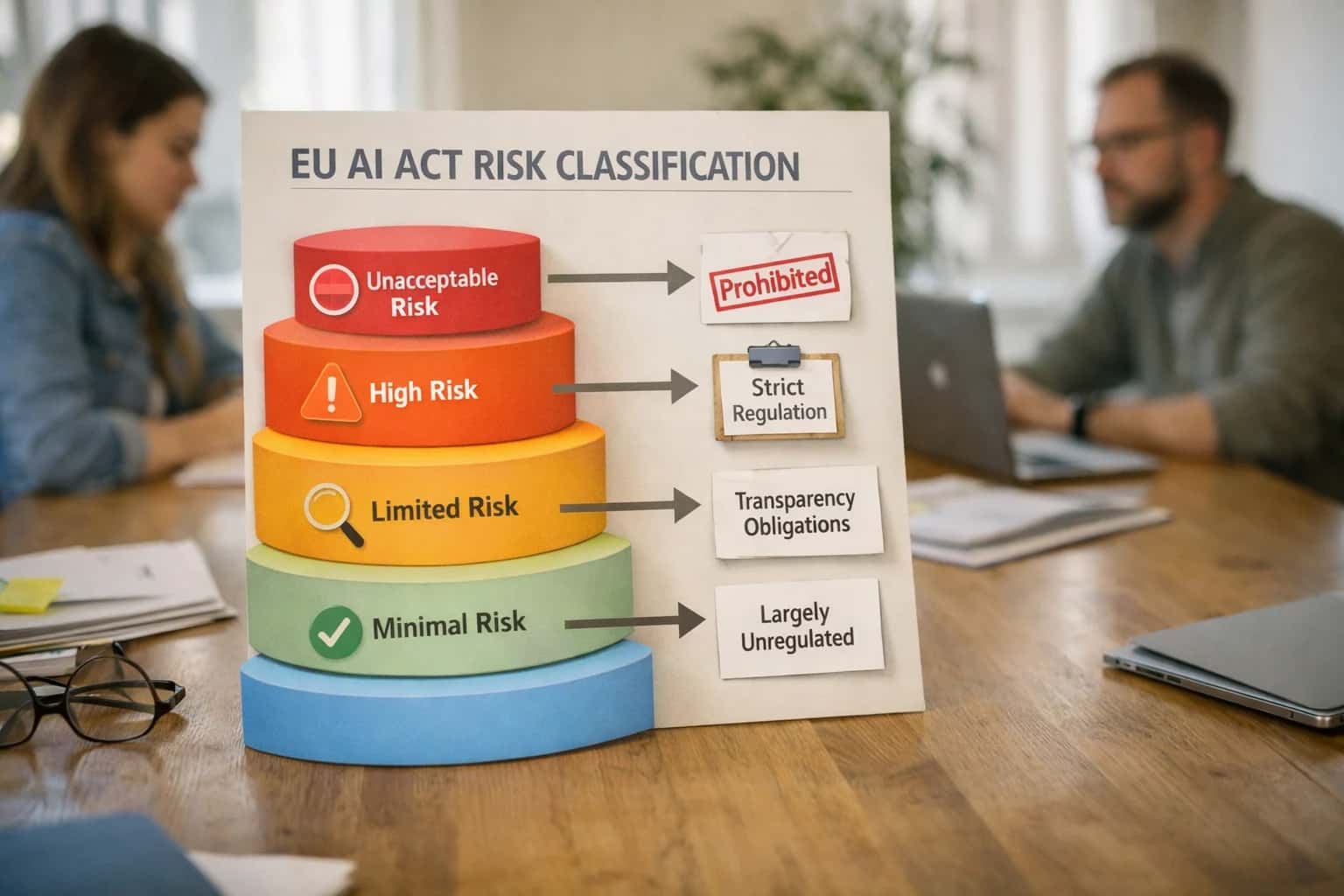
BEYOND MODEL MONITORING
Where AI Regulatory Alignment Fits in Your Governance Stack
Integrating Credo AI's regulatory alignment engine into your LLMOps pipeline to automate compliance gap analysis and remediation planning against evolving frameworks like the EU AI Act and NIST AI RMF.
The integration works by establishing bi-directional APIs between Credo AI and your LLM lifecycle tools. When a new model version is promoted in W&B Model Registry, or a new prompt chain is deployed via LangChain, Credo AI automatically triggers a regulatory impact assessment. It pulls the application's context (e.g., 'processes PII', 'makes loan recommendations') and scores it against the latest control frameworks. The output is a prioritized gap analysis report detailing missing evidence, failed controls, and specific remediation tasks—such as implementing a new output filter or adding a human review step—which can be routed as tickets to your engineering and compliance teams in Jira or ServiceNow.
For rollout, we architect this as a gated deployment pipeline. Before an LLM feature reaches production, the CI/CD process requires a passing score from Credo AI's policy engine. This check validates that the necessary documentation, testing evidence, and risk mitigations are in place. Post-deployment, Credo AI's continuous monitoring correlates performance drift alerts from Arize AI with compliance risks, ensuring a model accuracy drop doesn't inadvertently increase fairness or safety violations. This creates an immutable audit trail of decisions, evidence, and policy checks for internal reviews and regulator inquiries.
This integration shifts regulatory alignment from a periodic, manual audit to an automated, code-driven function. It allows your AI product teams to move quickly, with clear guardrails, while giving your Legal, Risk, and Compliance stakeholders a real-time dashboard into the organization's AI risk posture. The result is not just compliance, but operational resilience: when a new regulation is published, Credo AI can immediately assess its impact across your portfolio and generate a targeted remediation plan, turning a potential multi-quarter project into a managed, sprint-based workflow.
ARCHITECTING GOVERNANCE WORKFLOWS
Credo AI Modules for Regulatory Integration
Centralized Policy Management
Credo AI's Policy Library module serves as the single source of truth for AI governance rules. Integrate this repository with your LLM development pipeline to automatically attach relevant policies—such as "No PII in outputs" or "Fairness thresholds for lending decisions"—to new projects. This ensures every model deployment inherits the correct control set from day one.
Key Integration Points:
- Map library policies to specific LLM use cases (e.g., customer support, underwriting).
- Use the Credo AI API to pull active policies into CI/CD gates for automated compliance checks.
- Synchronize policy updates across all monitored models, triggering reassessments when regulations change.
This module transforms static policy documents into enforceable, version-controlled assets that travel with your AI applications.
CONTINUOUS COMPLIANCE AUTOMATION
High-Value Regulatory Alignment Use Cases
Integrate Credo AI with your LLM deployment pipelines to automate the monitoring, assessment, and reporting required to stay aligned with evolving AI regulations like the EU AI Act, NIST AI RMF, and sector-specific frameworks.
01
Automated Regulatory Gap Analysis
Continuously map your LLM application portfolio against updated regulatory control libraries in Credo AI. The system automatically identifies gaps in documentation, testing, or monitoring for high-risk use cases, generating prioritized remediation tickets in Jira or ServiceNow.
Weeks -> Days
Assessment cycle
02
Dynamic Risk Scoring & Policy Enforcement
Connect Credo AI's risk engine to live monitoring data from Arize AI or Weights & Biases. Automatically elevate risk scores for models showing performance drift or security events, and enforce runtime guardrails (e.g., block outputs with PII) before violations reach end-users.
Batch -> Real-time
Policy checks
03
Audit Trail Generation for High-Stakes Decisions
For LLMs used in lending, healthcare, or legal decisions, configure Credo AI to automatically capture immutable logs of model inputs, outputs, policy checks, and user overrides. Create a searchable, regulator-ready audit trail that links back to specific model versions and data lineages.
Manual -> Automated
Evidence collection
04
Automated Compliance Documentation
Leverage Credo AI to auto-generate model cards, system cards, and impact assessments by pulling metadata from integrated systems (W&B model registry, Arize monitoring, Git commits). Keep documentation synchronized with each model promotion, eliminating manual updates.
1 sprint
Documentation effort
05
Stakeholder Dashboards & Regulatory Reporting
Build role-based dashboards in Credo AI for Legal, Compliance, and Product teams, providing a real-time view of AI risk posture and control effectiveness across the LLM portfolio. Automate the generation of standardized reports for regulatory submissions.
Same day
Report readiness
06
Integrated Change Management for LLM Updates
Map Credo AI's governance workflows to enterprise ticketing systems. Any change to a production LLM—new prompt, fine-tuned model, RAG index—triggers a structured assessment requiring sign-off from Security, Privacy, and Legal teams before deployment, creating an auditable change record.
Formalized & Tracked
Approval process
AUTOMATED COMPLIANCE OPERATIONS
Example Regulatory Alignment Workflows
These workflows demonstrate how to connect Credo AI's governance engine to your LLM deployment pipelines and operational systems, automating the continuous monitoring and alignment of AI applications against evolving regulations like the EU AI Act and NIST AI RMF.
Trigger: A new Jira ticket is created in the 'AI Product Launch' project with the label LLM-New-Use-Case.
Workflow:
- A webhook from Jira triggers an internal orchestration service.
- The service pulls the ticket description, attached architecture diagrams from Confluence, and linked data inventory from Collibra.
- This context is formatted and sent to Credo AI's Assessment API, auto-populating a pre-configured 'High-Risk LLM Application' template.
- Credo AI's engine scores the use case based on:
- Data Sensitivity: Does it process PII, PHI, or financial data?
- Human Impact: Is it used for consequential decisions (e.g., hiring, lending)?
- Autonomy Level: Is it a fully autonomous agent or a human-in-the-loop assistant?
- The resulting risk score and preliminary gap analysis are posted back as a comment on the Jira ticket. A high-risk score automatically adds the
Legal-Review-Requiredlabel and assigns the ticket to the compliance team. - The assessment record in Credo AI is linked to the model version in the Weights & Biases Model Registry for full lineage.
Outcome: Product and engineering teams get immediate, structured feedback on regulatory risk before writing code, integrating governance into the SDLC.
CONTINUOUS REGULATORY ALIGNMENT
Implementation Architecture: Data Flow and System Connections
A production architecture for continuously assessing your LLM portfolio against evolving AI regulations using Credo AI.
The integration connects Credo AI's governance engine to your live LLM applications and development pipelines. Core data flows include:
- Inference Log Ingestion: Production LLM endpoints (e.g., OpenAI, Anthropic, self-hosted models) stream anonymized logs—prompts, completions, metadata—to a secure queue. A connector service batches and pushes these to Credo AI's Evidence API.
- Pipeline Metadata Sync: Your CI/CD system (GitHub Actions, GitLab CI) and model registry (Weights & Biases, MLflow) send events via webhook to Credo AI when a new model version, prompt template, or RAG index is promoted. This populates the Asset Inventory with lineage data.
- Control Framework Mapping: Credo AI's Regulatory Intelligence module is configured with the frameworks relevant to your industry (e.g., EU AI Act, NIST AI RMF, sector-specific guidelines). Its rule engine continuously maps your LLM assets and their associated risk scores to specific regulatory articles and controls.
For a new regulation, the system automates the gap analysis workflow:
- Credo AI's regulatory scanner flags a new requirement (e.g., "Article 10: High-risk AI systems shall be designed and developed with logging capabilities").
- The system cross-references this against your registered LLM applications tagged as
high-riskand their current evidence. - An automated Gap Report is generated, detailing which applications lack sufficient logging evidence, complete with severity scores and links to the specific inference endpoints.
- This report triggers a Remediation Plan task in your project management tool (Jira, ServiceNow) assigned to the responsible AI product owner or engineering lead.
- The plan includes technical specs—for example, enabling LangSmith tracing for a specific agent or configuring audit log retention in your vector database—to close the gap.
Rollout and governance for this system require a phased approach:
- Phase 1 (Discovery): Catalog all production LLM use cases in Credo AI, tagging them by risk level, data sensitivity, and business owner. Integrate with a single, high-priority inference endpoint for log ingestion.
- Phase 2 (Automation): Connect the remaining LLM endpoints and CI/CD pipelines. Establish automated weekly compliance dashboards in Credo AI for legal and risk teams.
- Phase 3 (Policy Enforcement): Integrate Credo AI's Policy Engine with deployment pipelines to act as a gating mechanism. Promotion to production for high-risk LLMs can require a passing risk score from a Credo AI assessment.
Key governance considerations include defining data anonymization standards before log ingestion, setting RBAC in Credo AI for different stakeholders (compliance vs. engineering), and establishing a review cadence for automated gap analyses to avoid alert fatigue.
CREDO AI REGULATORY ALIGNMENT
Integration Code and Payload Examples
Ingesting Regulatory Updates
Continuously monitor official sources (e.g., EUR-Lex, Federal Register) for new AI regulations. Use a scheduled job to fetch updates, parse text, and create structured payloads for Credo AI's assessment engine. The payload includes the regulation text, jurisdiction, effective date, and mapped control domains.
python# Example: Webhook payload for a new EU AI Act Annex update payload = { "source": "EUR-Lex", "regulation_id": "EU_AI_ACT_ANNEX_III_UPDATE_2025_04", "jurisdiction": "EU", "effective_date": "2025-10-01", "raw_text": "[Extracted regulation text...]", "mapped_domains": ["Transparency", "Human Oversight", "Data Governance"] } # POST to Credo AI's regulatory feed API response = requests.post( f"{CREDO_BASE_URL}/api/v1/regulatory/feeds", json=payload, headers={"Authorization": f"Bearer {API_KEY}"} )
This automation ensures your governance platform has the latest legal text to assess against your LLM portfolio.
AI GOVERNANCE WORKFLOWS
Operational Impact: Before and After Automation
How integrating Credo AI for regulatory alignment transforms manual, reactive compliance processes into automated, proactive governance.
| Governance Activity | Before AI Integration | After AI Integration | Implementation Notes |
|---|---|---|---|
Regulatory Change Monitoring | Manual tracking of news, blogs, and regulator sites | Automated alerts on relevant regulatory updates | Credo AI scans and classifies updates against your LLM portfolio |
Gap Analysis & Impact Assessment | Quarterly manual review by legal/compliance teams | Continuous, automated assessment against mapped controls | Generates real-time dashboards of compliance posture |
Remediation Planning | Ad-hoc spreadsheets and email threads | Structured, prioritized plans linked to Jira/ServiceNow | Plans auto-generated based on risk score and resource estimates |
Evidence Collection for Audits | Weeks of manual document gathering pre-audit | Continuous, automated evidence logging from integrated systems | Links to model registries, CI/CD pipelines, and monitoring tools |
Stakeholder Reporting | Static monthly PowerPoint decks | Dynamic, role-based dashboards in Credo AI | CISO, Legal, and Product heads get tailored views |
Policy Enforcement Checks | Manual code reviews and pre-launch checklists | Runtime guardrails and automated policy gates in CI/CD | Blocks deployments or outputs that violate configured policies |
Risk Scoring Updates | Annual or per-project manual reassessment | Dynamic scoring based on live model performance and drift data | Integrates with Arize AI/W&B for performance-informed risk levels |
OPERATIONALIZING REGULATORY COMPLIANCE
Governance, Data Handling, and Phased Rollout
A practical architecture for integrating Credo AI's regulatory intelligence into your LLM lifecycle, turning compliance from a point-in-time audit into a continuous, automated control plane.
Integrating Credo AI starts by mapping its Regulatory Intelligence Engine and Control Libraries to your existing LLM portfolio. This involves creating a system-of-record in Credo AI for each LLM application—linking it to the specific use case, data types, deployment environment, and responsible teams. For each application, you define the relevant regulatory frameworks (e.g., EU AI Act, NIST AI RMF, sector-specific FDA or FINRA guidelines). Credo AI then continuously monitors its regulatory database, automatically flagging new or updated requirements that apply to your registered use cases. The integration surfaces these as actionable gap analyses within your existing project management tools like Jira or ServiceNow, assigning remediation tasks to the appropriate engineering, legal, or product owners.
Data handling is governed through a policy-aware integration layer. This layer sits between your LLM inference endpoints (e.g., agents built with LangChain, custom apps) and Credo AI's Policy Engine. It programmatically submits metadata about each deployment—such as model version from Weights & Biases, performance metrics from Arize AI, and prompt templates—for automated risk scoring. For high-risk applications, you can configure the engine to enforce runtime guardrails, blocking deployments that violate pre-defined policies on data privacy, fairness, or transparency before they reach production. All assessments, decisions, and evidence (like model cards, bias audit reports, and data lineage from W&B) are captured in an immutable audit trail, creating a ready-to-share compliance record for internal reviews or external regulators.
A phased rollout is critical for adoption. Start with a pilot on a single, high-visibility LLM application, such as a customer-facing chatbot or an internal document summarization tool. In Phase 1, use Credo AI in assessment-only mode to generate baseline risk reports and identify control gaps without blocking deployments. Phase 2 introduces automated evidence collection, integrating Credo AI with your CI/CD pipeline to gather artifacts from GitHub, W&B, and Arize AI automatically. The final phase activates enforcement gates for net-new LLM projects, requiring a passing risk assessment from Credo AI as a mandatory step in the promotion to production. This crawl-walk-run approach builds organizational muscle memory, aligns engineering and compliance workflows, and de-risks the scaling of AI across the enterprise.
Enabling Efficiency, Speed & Accuracy
Intelligent Analysis, Decision & Execution
We build AI systems for teams that need search across company data, workflow automation across tools, or AI features inside products and internal software.
Talk to Us
Search across company data
Give teams answers from docs, tickets, runbooks, and product data with sources and permissions.
Useful when people spend too long searching or get different answers from different systems.
Enterprise searchRAGPermissions
Read more
Automate internal workflows
Use AI to route work, draft outputs, trigger actions, and keep approvals and logs in place.
Useful when repetitive work moves across multiple tools and teams.
AI agentsWorkflow automationGovernance
Read more
Add AI to products and internal tools
Build assistants, guided actions, or decision support into the software your team or customers already use.
Useful when AI needs to be part of the product, not a separate tool.
AI integrationDecision supportModel routing
Read moreCREDO AI REGULATORY ALIGNMENT
FAQ: Technical and Commercial Questions
Practical questions for teams integrating Credo AI to automate regulatory monitoring and compliance for their LLM portfolio.
The system automates regulatory intelligence through a multi-step workflow:
- Trigger & Ingestion: Scheduled crawlers or API clients pull updates from official sources (e.g., EU Publications Office, U.S. Federal Register, NIST updates, industry body feeds).
- Context/Data Pulled: Raw text documents (PDFs, HTML, XML) are retrieved. The integration uses an LLM with a retrieval-augmented generation (RAG) system over your internal policy library and past assessments to provide context.
- Model/Agent Action: A classification agent analyzes the document to:
- Determine relevance to your deployed LLM use cases (e.g., "high-risk" vs. "limited risk").
- Extract specific articles, control requirements, and deadlines.
- Map new requirements to your existing Credo AI control frameworks.
- System Update: Findings are structured as a "Regulatory Update" object in Credo AI, linked to affected applications and generating preliminary gap analysis tasks.
- Human Review Point: A compliance officer reviews the automated analysis, confirms mappings, and approves the initiation of formal assessment workflows in Credo AI.

About the author
Prasad Kumkar
CEO & MD, Inference Systems
Prasad Kumkar is the CEO & MD of Inference Systems and writes about AI systems architecture, LLM infrastructure, model serving, evaluation, and production deployment. Over 5+ years, he has worked across computer vision models, L5 autonomous vehicle systems, and LLM research, with a focus on taking complex AI ideas into real-world engineering systems.
His work and writing cover AI systems, large language models, AI agents, multimodal systems, autonomous systems, inference optimization, RAG, evaluation, and production AI engineering.
LinkedIn
Limited slotsGet a Free AI Consultation
Partnered with leading AI, data, and software stack.





How We Work
Custom AI workflows for your Business
One-fit-all AI don't work for modern businesses. At Inferensys, we aim to understand your business & custom requirements; which we use to define most efficient agentic workflows, the data, and the tools for your business.
01
Review the use case
We understand the task, the users, and where AI can actually help.
Read more02
Pick the right approach
We define what needs search, automation, or product integration.
Read more03
Build the first useful version
We implement the part that proves the value first.
Read more04
Improve from there
We add the checks and visibility needed to keep it useful.
Read moreThe first call is a practical review of your use case and the right next step.
Talk to Us