When an engineering team needs to update a production LLM—whether it's a new prompt template, a fine-tuned model version, or a change to a RAG index—the request should not bypass standard IT controls. This integration maps Credo AI's stakeholder review workflows, risk assessments, and policy checks directly into ServiceNow Change Management or Jira Software projects. A proposed model promotion triggers a formal change request (RFC), automatically populating it with risk scores, impact assessments, and required approvals from legal, security, and compliance stakeholders defined in Credo AI.

Integration
AI Integration with Credo AI Governance Workflows
Automate and enforce formal change management for LLM deployments by connecting Credo AI's governance platform to enterprise ticketing systems like ServiceNow and Jira. Map stakeholder reviews, risk assessments, and approval workflows to existing ITIL processes.
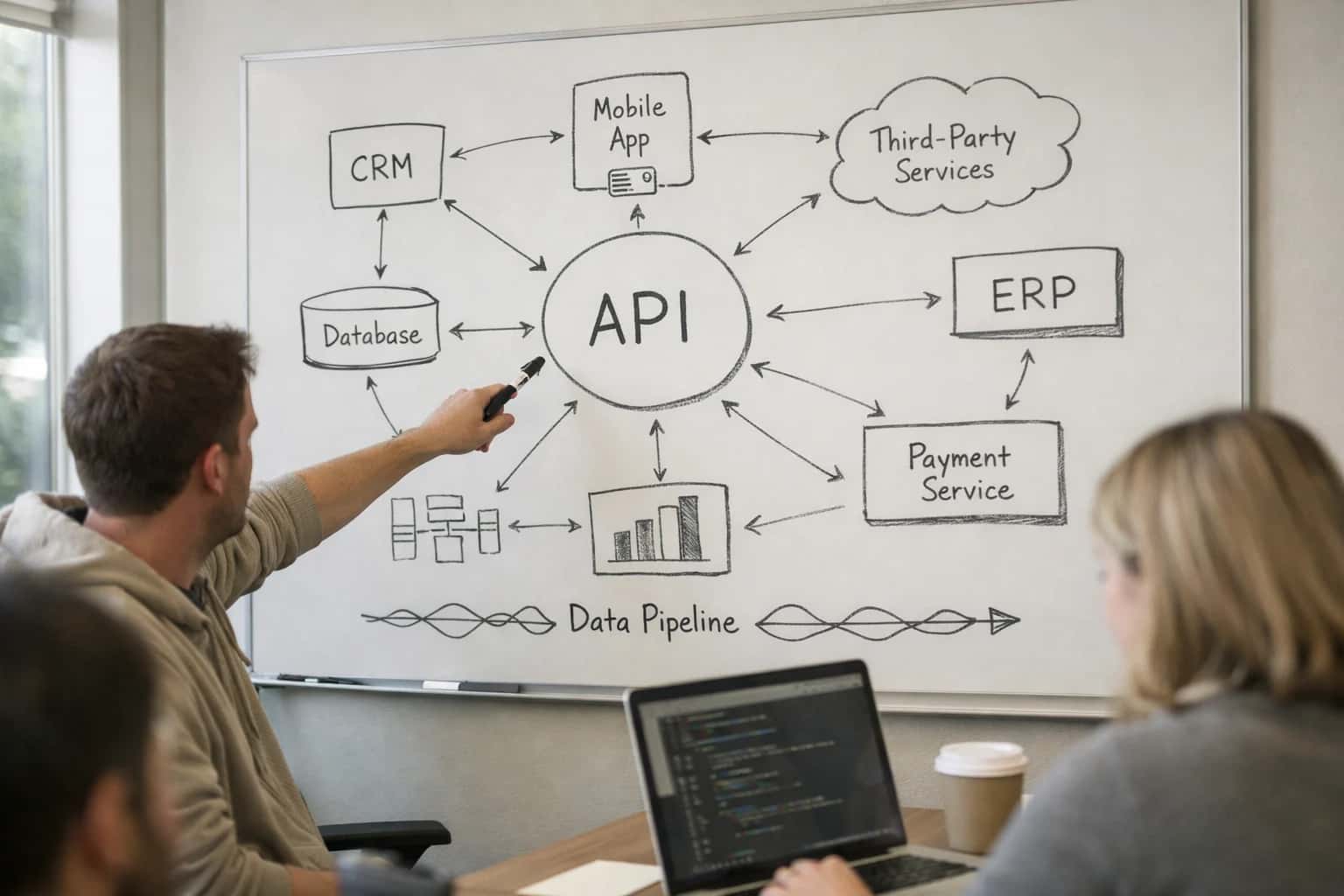
CONTROLLED DEPLOYMENT
Where AI Governance Meets Enterprise Change Management
Integrating Credo AI's policy and risk workflows with enterprise ticketing systems to enforce formal, auditable change management for LLM applications.
The implementation typically uses webhooks from Credo AI's Governance Platform API to create or update tickets in the ITSM system. Key payloads include the LLM application's risk tier, evidence of passing automated policy checks (e.g., bias detection, PII scanning), and a rollback plan. Approval gates in the ticketing system can be configured to require sign-off only after Credo AI's assessment shows a "Go" status, creating a unified audit trail across both platforms. This ensures that every model change has a corresponding CAB ticket, with all discussions, approvals, and deployment records linked.
Rollout involves configuring Credo AI's assessment templates and control libraries to match the organization's change management policy, then integrating the webhook with the ticketing system's REST API. For regulated industries, this creates an immutable lineage from a Jira ticket PROJ-123 to the exact model version, prompt hash, and compliance evidence in Credo AI, satisfying internal audit and external regulator requirements for controlled AI operations.
GOVERNANCE WORKFLOW AUTOMATION
Integration Touchpoints: Credo AI and Ticketing Systems
Model Change Intake via ServiceNow or Jira
When a data science team requests to deploy a new LLM model or update a prompt chain, the workflow starts as a ticket. Credo AI can be triggered via webhook from the ticketing system's CREATE event.
Typical Payload: The ticket includes fields for use_case_description, risk_tier, data_sensitivity, and proposed_model_version. A Credo AI assessment is automatically created, pulling context from linked architecture documents in Confluence. The ticket status moves to Awaiting Risk Assessment.
Integration Pattern: Use the ticketing system's automation rules to call the Credo AI API (POST /api/v1/assessments), passing the ticket ID as a foreign key. This creates a traceable link between the operational request and the governance record.
CREDO AI INTEGRATIONS
High-Value Use Cases for Automated AI Governance
Connecting Credo AI's policy and risk management workflows to enterprise ticketing and deployment systems ensures LLM changes follow formal, auditable processes. These integrations embed governance into the development lifecycle, not as an afterthought.
01
Automated Model Promotion Gates
Integrate Credo AI's risk assessments with CI/CD pipelines (GitHub Actions, Jenkins) to create automated go/no-go gates. Before a new LLM model or prompt version is promoted to staging/production, the pipeline calls Credo AI's API to verify all required controls (bias checks, policy adherence, documentation) are satisfied, blocking deployments that fail compliance.
1 sprint
Faster compliance review
02
Jira/ServiceNow Stakeholder Review Workflows
Map Credo AI's stakeholder review tasks directly to tickets in Jira or ServiceNow. When a new LLM use case is registered in Credo AI, it automatically creates a linked ticket for Legal, Security, and Compliance teams, centralizing approvals and evidence collection within existing enterprise workflows.
Batch -> Real-time
Approval coordination
03
Runtime Policy Enforcement & Audit Logging
Deploy Credo AI's policy engine as a runtime guardrail layer in front of LLM endpoints. Every inference call is evaluated against content, fairness, and data privacy policies. Violations are blocked, and detailed logs (input, output, violated rule) are sent back to Credo AI's audit trail for compliance reporting and root cause analysis.
04
Automated Regulatory Evidence Packing
Connect Credo AI to source control (Git), model registries (Weights & Biases), and monitoring tools (Arize AI). For audits or certifications (SOC 2, ISO 42001), automatically generate evidence packs by pulling model cards, test results, policy checks, and lineage data from integrated systems into Credo AI's structured reports.
Hours -> Minutes
Evidence compilation
05
Dynamic Risk Scoring with Live Monitoring
Create a feedback loop between Credo AI's risk register and LLM monitoring platforms. As Arize AI detects performance drift or W&B flags an experiment anomaly, Credo AI automatically updates the associated application's risk score and notifies owners via Slack or Microsoft Teams, triggering a re-assessment workflow.
06
Centralized Policy Library & Control Mapping
Use Credo AI as a single source of truth for AI policies. Integrate it with internal wikis (Confluence) and architecture diagrams to map specific technical controls (e.g., 'PII detection filter', 'output schema validation') to broader regulatory frameworks (NIST AI RMF, EU AI Act). Ensures consistent interpretation and implementation across engineering teams.
CREDO AI TO ENTERPRISE TICKETING
Example Governance Workflows: From Trigger to Closure
These workflows map Credo AI's governance controls to enterprise change management systems like ServiceNow or Jira, ensuring LLM model updates follow a formal, auditable process. Each example shows how a governance trigger in Credo AI creates a ticket, routes it for stakeholder review, and requires documented approval before a model can be promoted.
Trigger: A data scientist completes a W&B experiment run and registers a new model version in the W&B Model Registry, tagging it as a candidate for staging.
Credo AI Action: A webhook from W&B triggers a Credo AI Model Change assessment. Credo AI automatically:
- Pulls the model card, performance metrics, and training data summary from W&B.
- Scores the change against pre-configured risk policies (e.g., data sensitivity, intended use case).
- Determines the change requires a Standard review workflow.
Ticket Creation & Routing: Credo AI's ServiceNow integration creates a new Change Request (RFC) ticket via the ServiceNow REST API.
- Payload includes: Assessment ID, risk score, model metadata, and a deep link back to the full assessment in Credo AI.
- Ticket is assigned to: The
AI Governance Boardgroup in ServiceNow. - Approvers are auto-added: Based on the risk score and model use case, the ticket workflow requires approvals from the
Lead Data Scientist,Product Security Officer, andCompliance Manager.
Closure: Once all required stakeholders approve the ticket in ServiceNow, a webhook back to Credo AI updates the assessment status to Approved. This approval status is then read by the CI/CD pipeline (e.g., GitHub Actions) as a gating condition, allowing the model to be deployed to the production endpoint.
AUDITABLE CHANGE MANAGEMENT
Implementation Architecture: Webhooks, APIs, and Data Flow
Connecting Credo AI's governance workflows to enterprise ticketing systems like ServiceNow and Jira automates the approval process for LLM model changes.
The integration is triggered when a new model version, prompt template, or embedding configuration is ready for promotion in the MLOps pipeline. A webhook from your model registry (e.g., Weights & Biases) or CI/CD system sends a payload containing the model metadata, risk profile, and intended use case to Credo AI. Credo AI then automatically creates a structured Governance Assessment Ticket, populating fields for model lineage, impact level, and required stakeholder reviews based on pre-configured policies.
This ticket is pushed via Credo AI's REST API into the connected ServiceNow Change Management (CHG) module or Jira Software project. The ticket follows your existing ITIL or agile workflow: it routes to the AI Review Board, requiring approvals from Data Science, Security, Legal, and Product teams. Comments, attachments, and approval decisions made in the ticketing system are synchronized back to Credo AI via API callbacks, creating an immutable, linked audit trail. The integration ensures no model reaches production without the formal sign-offs your compliance framework demands.
Upon final approval in the ticketing system, a webhook signals Credo AI to update the model's governance status to 'Approved.' This event can then trigger the next step in your deployment pipeline, such as updating a model endpoint in Amazon SageMaker or promoting a prompt version in LangChain. The entire flow—from registry to ticket to deployment—is logged, providing a clear lineage for regulators and internal auditors. For rollback scenarios, a similar ticket can be auto-generated to document the remediation and approval for reverting to a previous model version.
AUTOMATING GOVERNANCE WORKFLOWS
Code and Payload Examples
Automating Assessment Creation
When a new model version is promoted in your CI/CD pipeline, you can automatically trigger a Credo AI assessment. This ensures no model reaches staging or production without initiating the formal review process. The payload includes metadata about the model, its intended use, and links to the experiment tracking run in Weights & Biases for lineage.
pythonimport requests # Trigger a new assessment in Credo AI assessment_payload = { "name": "LLM Chatbot v2.1 - Risk Assessment", "description": "New fine-tuned model for customer support agent.", "model_id": "gpt-4-turbo-0125-finetuned-support", "model_version": "v2.1", "use_case": "customer_support_agent", "risk_tier": "medium", "source_system": "jenkins", "build_url": "https://jenkins.example.com/job/llm-deploy/42", "lineage_url": "https://wandb.ai/team/project/runs/abc123", # Link to W&B run "stakeholders": ["[email protected]", "[email protected]"] } response = requests.post( "https://api.credo.ai/v1/assessments", json=assessment_payload, headers={"Authorization": "Bearer YOUR_CREDO_API_KEY"} ) assessment_id = response.json()["id"] print(f"Created assessment: {assessment_id}")
GOVERNANCE WORKFLOW AUTOMATION
Operational Impact: Before and After Integration
This table compares the manual, ad-hoc governance processes common before integrating Credo AI with enterprise ticketing systems against the automated, auditable workflows enabled by connecting Credo AI's policy engine to ServiceNow or Jira change management.
| Governance Activity | Before AI Integration | After AI Integration | Implementation Notes |
|---|---|---|---|
Model Change Request Submission | Email threads, shared spreadsheets, manual form collection | Structured intake via ServiceNow/Jira with pre-populated fields from model registry | Integrates with W&B Model Registry or internal catalog to auto-fill model metadata |
Stakeholder Review & Approval Routing | Manual email forwarding and calendar coordination for review meetings | Automated task assignment and escalation based on RACI matrix in Credo AI | Approval workflows map to organizational roles (Legal, Security, Compliance) with SLA tracking |
Risk Assessment Completion | Static PDF questionnaires filled out per model, often duplicated | Dynamic assessment powered by Credo AI templates, auto-scored based on use case and data | Pulls context from deployment pipelines (e.g., data sensitivity, user impact) to pre-populate risk tiers |
Evidence Collection for Controls | Manual screenshot gathering and document attachment in shared drives | Automated evidence logging from integrated systems (W&B experiments, Arize monitors, code repos) | Credo AI API ingests artifacts as controls are executed, creating immutable links |
Audit Trail Generation | Fragmented logs across email, meetings, and separate compliance tools | Unified, timestamped audit trail in Credo AI linked to the ServiceNow/Jira ticket ID | Every approval, comment, and status change is captured for regulator-ready reporting |
Policy Exception Management | Ad-hoc exceptions granted via email with no consistent tracking | Structured exception request workflow in ticketing system with mandatory justification and sunset date | Exception tickets automatically create follow-up tasks for review and policy update |
Go/No-Go Deployment Decision | Manual gate review meeting, often delayed waiting for final sign-off | Automated deployment gate checks Credo AI for 'Approved' status and completed artifacts | CI/CD pipeline (e.g., GitHub Actions) queries Credo AI API; blocks promotion if controls fail |
Post-Deployment Compliance Reporting | Quarterly manual report compilation for regulators or internal audit | On-demand report generation from Credo AI, filtered by time period, model, or framework | Reports can be auto-scheduled and delivered to stakeholder dashboards or document repositories |
FORMALIZING LLM CHANGE MANAGEMENT
Governance and Phased Rollout Considerations
Integrating Credo AI with enterprise ticketing systems like ServiceNow or Jira creates an auditable, policy-driven workflow for approving and deploying LLM changes.
The integration maps Credo AI's governance workflows—such as risk assessments, policy checks, and stakeholder approvals—directly to tickets in your ITSM platform. When a data scientist or ML engineer initiates a model change (e.g., a new fine-tuned adapter, updated prompt template, or embedding model), the system automatically creates a linked ServiceNow change_request or Jira issue. This ticket pre-populates with metadata from Credo AI: the proposed model version, associated risk score, impacted use cases, and required evidence. Approvers from Security, Legal, Compliance, and Product teams review within their familiar ticketing interface, with all comments, attachments, and decisions logged as part of an immutable audit trail.
A phased rollout is managed through this integrated governance layer. For example, a CHG001234 ticket for a new customer support agent model might follow this path: 1) Assessment Phase: Credo AI auto-generates a risk score based on data sensitivity and impact; 2) Approval Phase: Required stakeholders approve the ticket, with automated reminders and escalations; 3) Deployment Phase: Upon approval, the ticket status triggers a CI/CD pipeline via webhook to deploy the model to a staging or canary environment; 4) Monitoring Phase: Post-deployment, performance metrics from Arize AI or Weights & Biases are linked back to the ticket. Only after meeting predefined KPIs in the canary is a follow-up ticket created to request a full production rollout.
This approach ensures LLM changes follow the same rigorous change advisory board (CAB) processes as other critical IT systems. It prevents shadow AI deployments, provides clear accountability, and creates a defensible record for regulators. By treating model updates as formal changes, you reduce operational risk while accelerating safe innovation. For teams managing multiple models, this integration turns governance from a periodic checklist into a continuous, automated workflow embedded in the engineering lifecycle.
Enabling Efficiency, Speed & Accuracy
Intelligent Analysis, Decision & Execution
We build AI systems for teams that need search across company data, workflow automation across tools, or AI features inside products and internal software.
Talk to Us
Search across company data
Give teams answers from docs, tickets, runbooks, and product data with sources and permissions.
Useful when people spend too long searching or get different answers from different systems.
Enterprise searchRAGPermissions
Read more
Automate internal workflows
Use AI to route work, draft outputs, trigger actions, and keep approvals and logs in place.
Useful when repetitive work moves across multiple tools and teams.
AI agentsWorkflow automationGovernance
Read more
Add AI to products and internal tools
Build assistants, guided actions, or decision support into the software your team or customers already use.
Useful when AI needs to be part of the product, not a separate tool.
AI integrationDecision supportModel routing
Read moreCREDO AI GOVERNANCE WORKFLOW INTEGRATION
Frequently Asked Questions
Practical questions for engineering and compliance teams mapping Credo AI's policy and review workflows to enterprise ticketing systems like ServiceNow and Jira.
This workflow automates the initiation of a formal governance review when a new AI feature is proposed.
- Trigger: A developer or product manager creates a Jira ticket (e.g.,
LLM-45) with a specific label likeai-governance-reviewor uses a dedicated Jira issue type (e.g.,AI Model Request). - Context Pulled: A webhook from Jira sends the ticket payload (summary, description, attachments, reporter) to an orchestration service (like n8n or a custom middleware). This service extracts key details: intended use case, data types involved, and user impact level.
- Credo AI Action: The orchestration service calls the Credo AI API (
POST /api/v1/assessments) to create a new risk assessment. It maps the Jira ticket fields to pre-defined Credo AI assessment templates (e.g., "Customer-Facing Chatbot"). The Jira ticket key (LLM-45) is stored as an external ID in Credo AI for traceability. - System Update: Credo AI generates the initial assessment and automatically assigns it to predefined stakeholders (Legal, Security, Compliance) based on the use case. A comment is posted back to the Jira ticket with a link to the Credo AI assessment and the list of assigned reviewers.
- Human Review Point: Reviewers complete their sections in Credo AI. The orchestration service polls Credo AI for assessment status. Upon completion, the final risk score and approval status are written back to a custom Jira field (
AI Governance Status), and the ticket moves to the next development stage or is blocked if risks are too high.

About the author
Prasad Kumkar
CEO & MD, Inference Systems
Prasad Kumkar is the CEO & MD of Inference Systems and writes about AI systems architecture, LLM infrastructure, model serving, evaluation, and production deployment. Over 5+ years, he has worked across computer vision models, L5 autonomous vehicle systems, and LLM research, with a focus on taking complex AI ideas into real-world engineering systems.
His work and writing cover AI systems, large language models, AI agents, multimodal systems, autonomous systems, inference optimization, RAG, evaluation, and production AI engineering.
LinkedIn
Limited slotsGet a Free AI Consultation
Partnered with leading AI, data, and software stack.





How We Work
Custom AI workflows for your Business
One-fit-all AI don't work for modern businesses. At Inferensys, we aim to understand your business & custom requirements; which we use to define most efficient agentic workflows, the data, and the tools for your business.
01
Review the use case
We understand the task, the users, and where AI can actually help.
Read more02
Pick the right approach
We define what needs search, automation, or product integration.
Read more03
Build the first useful version
We implement the part that proves the value first.
Read more04
Improve from there
We add the checks and visibility needed to keep it useful.
Read moreThe first call is a practical review of your use case and the right next step.
Talk to Us