Think of your AI governance stack in three layers: the operational layer (LangChain, vector databases, model endpoints), the observability layer (Weights & Biases, Arize AI for monitoring and drift), and the policy and compliance layer (Credo AI). Credo AI sits at the top, ingesting data from the layers below to map live system behavior—like model performance from Arize or experiment lineage from W&B—against imported control frameworks such as ISO 42001 or the NIST AI RMF. This creates a closed loop where a drift alert in Arize can automatically trigger a control failure in Credo AI, requiring a documented remediation workflow before the model is cleared for continued use.

Integration
AI Integration with Credo AI Control Frameworks
Operationalize ISO 42001, NIST AI RMF, and EU AI Act compliance by mapping external frameworks to implemented technical and process controls within Credo AI for your LLM systems.
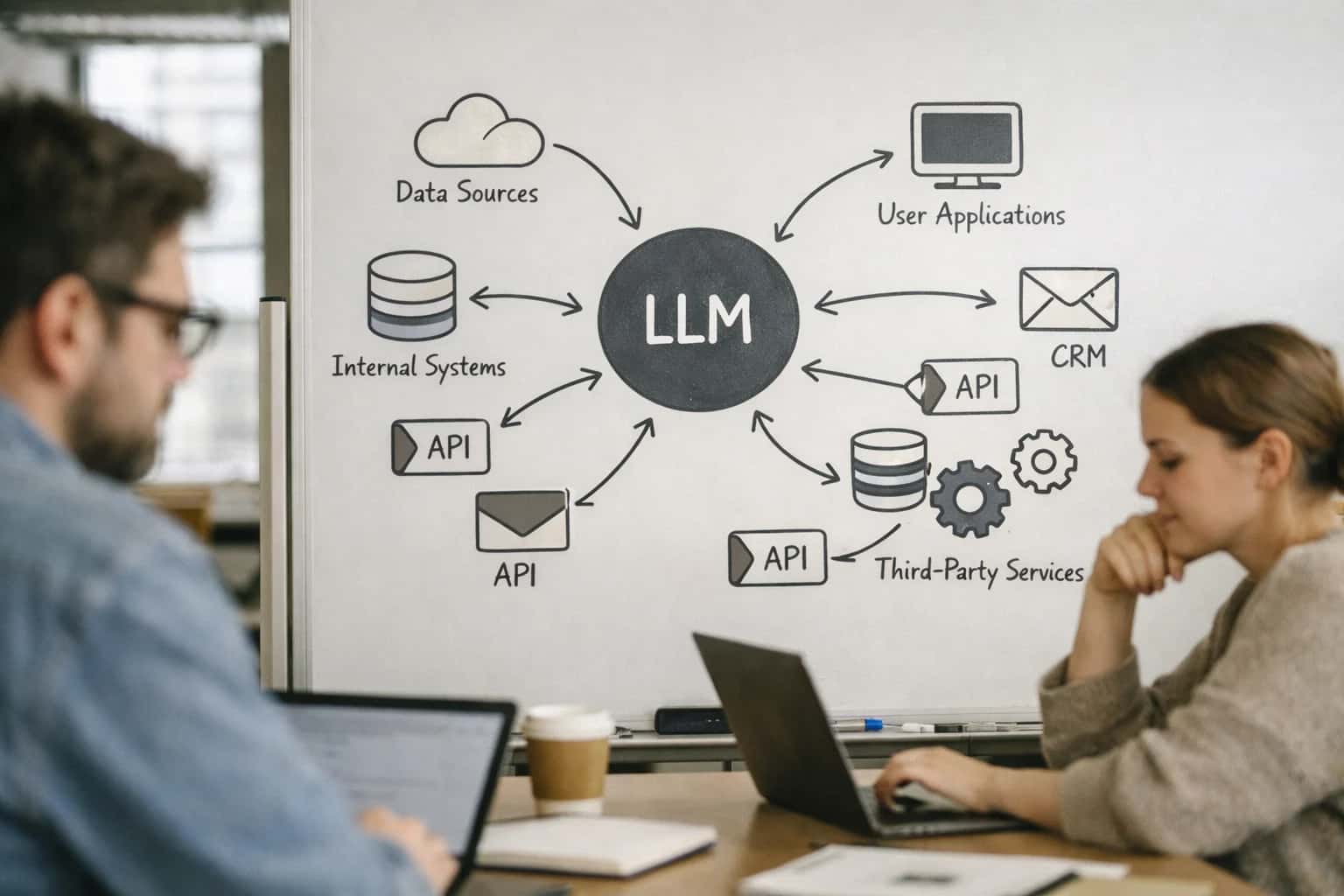
ARCHITECTURE
Where Control Framework Integration Fits in Your AI Governance Stack
Credo AI Control Frameworks provide the policy layer that translates high-level regulations into enforceable technical and process controls for your LLM systems.
Implementation involves two primary integration points. First, framework ingestion and customization: importing a standard framework into Credo AI and mapping its abstract controls (e.g., 'AI systems shall be transparent') to your specific technical measures, such as 'LLM outputs must include a citation for retrieved documents' or 'All prompts must be version-controlled in Git.' Second, evidence collection automation: configuring Credo AI to pull proof points from your integrated systems. This includes linking to the W&B model registry entry for a new fine-tuned LLM, ingesting Arize AI dashboards showing performance SLAs are met, or verifying that a LangSmith trace includes a human review step for high-risk classifications.
Rollout is use-case driven. Start by mapping a single high-impact LLM application—like a customer support agent—against a focused framework subset. Integrate Credo AI with your existing change management ticketing (Jira, ServiceNow) to gate model promotions on control assessments. For governance teams, this shifts compliance from a periodic, manual audit to a continuous, evidence-backed process embedded in the engineering lifecycle. The result is not just a report for regulators, but a live system that shows which controls are automated, which require manual review, and where your LLM portfolio has exposure.
CONTROL MAPPING & EVIDENCE AUTOMATION
Key Credo AI Surfaces for Framework Integration
Map Industry Standards to Technical Controls
Credo AI's core library contains pre-mapped controls from frameworks like ISO 42001, NIST AI RMF, and the EU AI Act. Integration involves mapping these abstract requirements to your specific LLM system's technical and process controls.
Key integration surfaces:
- Control Catalog API: Programmatically pull framework controls and map them to your internal control IDs (e.g., map "NIST AI RMF Govern > GV-1" to your "LLM-Prompt-Review-Board" Jira workflow).
- Custom Framework Builder: For internal policies, use the UI or API to define custom control families and requirements, creating a unified governance layer.
- Gap Analysis Dashboards: After mapping, Credo AI highlights control deficiencies, directing engineering effort to the highest-risk gaps in your LLMOps pipeline.
Effective integration here turns compliance from a manual checklist into a live, mapped system of record.
CREDO AI CONTROL FRAMEWORK IMPLEMENTATION
High-Value Use Cases for Framework Integration
Integrating Credo AI's governance platform automates risk management and compliance for LLM applications. These use cases map high-level policies to technical controls, creating auditable, scalable AI operations.
01
Automated Regulatory Reporting
Configure Credo AI to generate standardized compliance reports for financial, healthcare, or legal regulators. The system aggregates governance data—model cards, risk assessments, audit trails—from all deployed LLM applications, auto-populating templates for frameworks like the EU AI Act or NIST AI RMF. Workflow: Scheduled jobs pull evidence from integrated systems (W&B, Arize, model registries) into Credo AI, where a compliance officer reviews and certifies the final report.
Weeks -> Days
Report generation
02
Runtime Policy Enforcement Layer
Implement Credo AI's policy engines as a guardrail service that intercepts LLM requests and responses. Programmatically block outputs that violate content, fairness, or data privacy policies before they reach end-users. Integration: Deploy the policy service as a sidecar or proxy to your LLM inference endpoint. Map internal policies (e.g., 'no PII in outputs') to executable checks that analyze prompts and completions in real-time.
Batch -> Real-time
Policy checking
03
Dynamic Risk Scoring & Alerting
Create a live risk dashboard by connecting Credo AI's risk scoring to monitoring data from Arize AI or Weights & Biases. Model performance drift, security events, or data quality issues automatically elevate an application's risk score, triggering alerts and review workflows. Pattern: Credo AI ingests metrics via API, applies configurable scoring rules, and updates a central risk register. High-risk scores auto-create tickets in ServiceNow or Jira for the AI governance team.
Manual -> Automated
Risk assessment
04
Control Testing & Evidence Collection
Automate the testing of AI governance controls and collect immutable evidence for audits. Simulate adversarial prompts to verify content filters, run fairness tests on new model versions, and log all results in Credo AI. Workflow: Integrate with CI/CD pipelines (GitHub Actions, Jenkins) to run control tests on each model promotion. Pass/fail results and associated logs are stored as evidence, linked directly to the specific control in your imported framework (e.g., ISO 42001).
1 sprint
Audit prep time
05
Stakeholder Review Workflow Orchestration
Map Credo AI's approval workflows to enterprise ticketing systems to enforce a formal, auditable change management process for LLMs. When a new model is promoted, a workflow automatically routes risk assessments for sign-off from Security, Legal, and Product stakeholders. Integration: Credo AI creates and updates tasks in Jira or ServiceNow based on the workflow stage, with all comments and decisions logged back to the governance platform for a complete audit trail.
Hours -> Minutes
Review coordination
06
Framework Mapping & Gap Analysis
Use Credo AI to map your implemented technical and process controls to multiple external frameworks simultaneously (e.g., NIST AI RMF, EU AI Act, Singapore's Model Framework). The platform visualizes coverage gaps and generates remediation plans. Operational Value: Enables compliance teams to assess the impact of new regulations quickly, identifying which existing controls apply and where new ones need to be built, saving months of manual cross-referencing.
Same day
Regulatory impact analysis
IMPLEMENTATION PATTERNS
Example Control Mapping and Automation Workflows
These workflows demonstrate how to connect Credo AI's governance engine to live LLM systems, automating evidence collection, policy enforcement, and risk assessment. Each pattern is designed for production integration, linking technical controls to framework requirements.
Trigger: A new model version is promoted to the staging environment in the Weights & Biases Model Registry.
Workflow:
- A webhook from W&B triggers a Credo AI API call, creating a new
AI Systemrecord for the model version. - Credo AI pulls pre-configured metadata: model card, intended use case, data sensitivity classification, and deployment architecture from the registry.
- Based on the use case (e.g., 'Customer Support Agent'), Credo AI automatically attaches the relevant control framework (e.g., NIST AI RMF 1.0) and generates a tailored risk questionnaire.
- The system initiates an automated evidence collection routine:
- Calls the Arize AI API to verify baseline performance metrics and drift monitors are configured.
- Validates that LangSmith tracing is active and logging all prompts/completions.
- Checks that the model's API endpoint has runtime guardrails (e.g., content filters) enabled.
- Collected evidence and questionnaire answers auto-populate a risk score. If the score is below a defined threshold, the workflow automatically creates an approval task in the connected Jira or ServiceNow for the designated compliance officer.
- Upon Jira approval, Credo AI updates the model's governance status to
Approved for Productionand can trigger a webhook back to the CI/CD pipeline to proceed with the production deployment.
FROM POLICY TO PRODUCTION
Implementation Architecture: Connecting Frameworks to Controls
A practical blueprint for mapping Credo AI's governance frameworks to live LLM systems, creating an auditable, automated control plane.
The integration connects Credo AI's policy engine to your LLM deployment pipeline at three key control points: design-time risk assessment, runtime policy enforcement, and post-inference audit logging. At design-time, the system ingests your selected control frameworks (e.g., NIST AI RMF, ISO 42001) from Credo AI and maps them to technical artifacts. For a customer support agent, this might link the NIST "Validate" control to the specific prompt template version, retriever configuration, and output parser schema deployed in your LangChain application. This mapping creates a traceable lineage from abstract policy requirement to concrete implementation.
During runtime, the integration deploys Credo AI's guardrail APIs as a sidecar or middleware layer intercepting LLM calls. For each inference request, it executes configured policy checks—such as scanning for PII in prompts, checking response fairness scores, or validating that tool calls are within approved rate limits—before allowing the response to proceed to the end-user. Violations are logged back to Credo AI's audit trail with full context (session ID, user role, timestamp, policy ID) and can trigger automated workflows in ServiceNow or Jira for human review. This creates a closed-loop system where governance is not a manual checklist but an integrated, automated control layer.
Rollout follows a phased approach, starting with a single high-visibility LLM use case (e.g., an internal HR chatbot). We instrument the existing LangChain or custom application to stream inference logs (prompts, completions, token usage, tool calls) to Credo AI. Concurrently, the compliance team selects and customizes the relevant framework controls within the Credo AI UI. The technical integration then links these controls to the live data, enabling dashboards that show real-time compliance status. This phased start proves the model on a contained workflow before scaling governance across the entire LLM portfolio, ensuring the control framework adapts to operational reality rather than imposing theoretical overhead.
CREDO AI INTEGRATION PATTERNS
Code and Configuration Examples
Importing and Mapping Control Frameworks
Integrating Credo AI begins by programmatically importing a standard control framework (e.g., NIST AI RMF) and mapping it to your organization's implemented controls. This creates the foundational governance layer.
Example API Call to Create a Framework Mapping:
pythonimport requests # Define the mapping between NIST controls and your internal LLM safeguards framework_mapping_payload = { "framework_id": "nist-ai-rmf-1.0", "mappings": [ { "framework_control_id": "GOVERN-1.1", "internal_control_id": "LLM-POLICY-001", "evidence_source": "confluence://ai-governance/policies", "automated_test_id": "test_content_filter_validation" }, { "framework_control_id": "MEASURE-3.2", "internal_control_id": "MONITOR-DRIFT-005", "evidence_source": "arize_ai://alerts/embedding_drift", "automated_test_id": "daily_drift_check" } ] } response = requests.post( "https://api.credo.ai/v1/frameworks/mappings", json=framework_mapping_payload, headers={"Authorization": "Bearer YOUR_API_KEY"} )
This mapping links high-level framework requirements to specific technical checks and evidence sources, enabling automated compliance reporting.
AI GOVERNANCE MATURITY
Operational Impact: Before and After Framework Integration
How integrating Credo AI's control framework transforms the LLM governance lifecycle from a manual, reactive process into a scalable, proactive system.
| Governance Activity | Before AI (Manual) | After AI (Integrated) | Key Shift |
|---|---|---|---|
Control Framework Mapping | Spreadsheet-based, weeks of manual research and mapping | Automated import and customization of ISO 42001/NIST frameworks in days | Weeks -> Days |
Evidence Collection for Audits | Manual screenshot gathering and document chasing across teams | Automated evidence pull from integrated systems (W&B, Git, CI/CD) | Reactive scrambling -> Continuous, automated collection |
Risk Assessment for New LLM Use Case | Ad-hoc questionnaire, 2-3 week review cycle with legal/compliance | Pre-populated assessment from Jira/Confluence, automated scoring, 3-5 day cycle | Bottleneck -> Streamlined gate |
Policy Enforcement at Runtime | Post-hoc manual review of sample logs; violations caught late | Runtime guardrail layer blocks non-compliant outputs before reaching users | Detective control -> Preventive control |
Stakeholder Reporting & Dashboards | Static, quarterly PowerPoint decks manually compiled | Dynamic, role-based dashboards (CISO, Legal, Product) with live data | Periodic snapshot -> Real-time visibility |
Regulatory Alignment & Gap Analysis | Annual consultant-led review, high cost, lagging updates | Continuous monitoring of regulatory updates, automated gap analysis | Annual audit -> Continuous compliance posture |
Control Testing & Validation | Manual, sample-based testing of filters and fairness checks | Automated adversarial testing integrated into CI/CD, results logged as evidence | Spot checks -> Systematic validation |
FROM FRAMEWORK TO ENFORCEMENT
Governance and Phased Rollout Considerations
Implementing Credo AI is not a one-time configuration; it's an operational discipline integrated into your LLM development lifecycle.
A production rollout typically starts by mapping your high-risk LLM use cases (e.g., customer underwriting, clinical support, legal document review) to the relevant control frameworks within Credo AI, such as NIST AI RMF or ISO 42001. This involves creating a centralized policy library where each control—like "ensure outputs contain no PII" or "maintain an audit trail of all model inferences"—is linked to specific technical implementations in your stack, such as a pre-output PII redaction service or a logging pipeline to your data warehouse. The integration connects Credo AI's assessment engine to your CI/CD pipelines (e.g., GitHub Actions, GitLab CI) and model registries (e.g., Weights & Biases, MLflow), creating automated governance gates that can block a model promotion if its risk assessment is incomplete or if critical controls fail validation tests.
For phased adoption, we recommend a crawl-walk-run approach tied to model impact levels. Start in a non-production "crawl" phase by integrating Credo AI with your development and staging environments. Here, you automate evidence collection for non-critical controls, like logging experiment metadata from W&B or tracking prompt version history from LangSmith, building the muscle memory for governance workflows. The "walk" phase targets a single, lower-risk production LLM application. Integrate Credo AI's runtime policy engine via its API to perform real-time checks on a sample of inferences, logging violations to a dashboard without blocking traffic. This phase focuses on integrating with your incident management (PagerDuty, ServiceNow) and ticketing systems to route policy violations for human review, refining alert thresholds and response playbooks.
The final "run" phase expands enforcement to all regulated LLM use cases. This involves deep integrations where Credo AI becomes the system of record for AI compliance. Technical controls are enforced programmatically: a model serving endpoint (e.g., using VLLM or SageMaker) checks a runtime policy token from Credo AI before executing; data pipelines feeding RAG systems automatically tag documents with sensitivity classifications that Credo AI uses to enforce access policies; and all inference logs are streamed to Credo AI to populate immutable audit trails. Rollback procedures are codified, so if Credo AI detects a spike in policy violations or performance drift (via integration with Arize AI), it can automatically trigger alerts and, in severe cases, initiate a canary rollback through your deployment orchestration.
Ongoing governance requires the Credo AI integration to be a living part of your LLMOps. This means configuring its stakeholder dashboards to pull live data from monitoring tools (Arize AI for performance, W&B for costs) and mapping this data to risk scores. Compliance reports for internal audit or regulators are auto-generated by scheduling Credo AI's reporting engine to run quarterly, pulling evidence from the integrated systems. The key to sustained value is treating the Credo AI platform not as a separate compliance tool, but as the orchestrating layer for AI governance, where every model change, prompt update, and data pipeline shift is evaluated against a dynamic set of controls that evolve with your risk posture and regulatory landscape.
Enabling Efficiency, Speed & Accuracy
Intelligent Analysis, Decision & Execution
We build AI systems for teams that need search across company data, workflow automation across tools, or AI features inside products and internal software.
Talk to Us
Search across company data
Give teams answers from docs, tickets, runbooks, and product data with sources and permissions.
Useful when people spend too long searching or get different answers from different systems.
Enterprise searchRAGPermissions
Read more
Automate internal workflows
Use AI to route work, draft outputs, trigger actions, and keep approvals and logs in place.
Useful when repetitive work moves across multiple tools and teams.
AI agentsWorkflow automationGovernance
Read more
Add AI to products and internal tools
Build assistants, guided actions, or decision support into the software your team or customers already use.
Useful when AI needs to be part of the product, not a separate tool.
AI integrationDecision supportModel routing
Read moreIMPLEMENTATION GUIDANCE
Frequently Asked Questions on Credo AI Framework Integration
Practical questions from CTOs, AI leads, and compliance officers on integrating Credo AI's governance framework with live LLM systems for automated risk management and audit-ready operations.
The mapping process involves linking your technical implementation to abstract framework controls. Here’s a typical workflow:
- Inventory & Categorize: First, catalog all your LLM applications (e.g., customer support agent, internal document summarizer) within Credo AI, tagging them by use case, data sensitivity, and risk tier.
- Import & Customize Framework: Import the desired industry framework (NIST AI RMF, EU AI Act Annexes) into Credo AI's library. Then, customize the control language to match your organization's terminology.
- Control Mapping Workshop: Conduct sessions with engineering, security, and legal teams to map each framework control to:
- Technical Controls: Existing system capabilities (e.g., "Is input sanitization performed?" maps to your API gateway's payload validation).
- Process Controls: Existing workflows (e.g., "Is there a model change review process?" maps to your Jira/ServiceNow promotion tickets).
- Evidence Collection Automation: Integrate Credo AI with your toolchain to auto-populate evidence. For example:
- Link to Weights & Biases model registry entries for "model version control."
- Pull logs from Arize AI for "performance monitoring" evidence.
- Connect to GitHub for "code review" and Jira for "change approval" tickets.
- Gap Analysis & Remediation: Credo AI will highlight controls without sufficient evidence. Prioritize closing gaps for your highest-risk applications first.

About the author
Prasad Kumkar
CEO & MD, Inference Systems
Prasad Kumkar is the CEO & MD of Inference Systems and writes about AI systems architecture, LLM infrastructure, model serving, evaluation, and production deployment. Over 5+ years, he has worked across computer vision models, L5 autonomous vehicle systems, and LLM research, with a focus on taking complex AI ideas into real-world engineering systems.
His work and writing cover AI systems, large language models, AI agents, multimodal systems, autonomous systems, inference optimization, RAG, evaluation, and production AI engineering.
LinkedIn
Limited slotsGet a Free AI Consultation
Partnered with leading AI, data, and software stack.





How We Work
Custom AI workflows for your Business
One-fit-all AI don't work for modern businesses. At Inferensys, we aim to understand your business & custom requirements; which we use to define most efficient agentic workflows, the data, and the tools for your business.
01
Review the use case
We understand the task, the users, and where AI can actually help.
Read more02
Pick the right approach
We define what needs search, automation, or product integration.
Read more03
Build the first useful version
We implement the part that proves the value first.
Read more04
Improve from there
We add the checks and visibility needed to keep it useful.
Read moreThe first call is a practical review of your use case and the right next step.
Talk to Us