Replit Agent acts as an autonomous development layer that sits between your Zoho CRM instance and external systems or custom logic. It connects directly to Zoho's REST APIs—including the Zoho CRM API v6, Zoho Books API, and Zoho Creator API—to read from objects like Leads, Contacts, Deals, and Accounts, and to write back enriched data or trigger automations. Instead of manually provisioning servers or writing boilerplate integration code, you instruct the Agent with natural language to build a microservice that, for example, syncs Invoice status from Zoho Books to a custom field in the related Deal record, deploying it as a live, scalable endpoint in minutes.

Integration
AI Integration for Replit Agent in Zoho CRM
Deploy Replit Agent to autonomously build, test, and host microservices that extend Zoho CRM's capabilities through its REST API. Automate data syncing, create custom functions, and generate reports without manual coding.
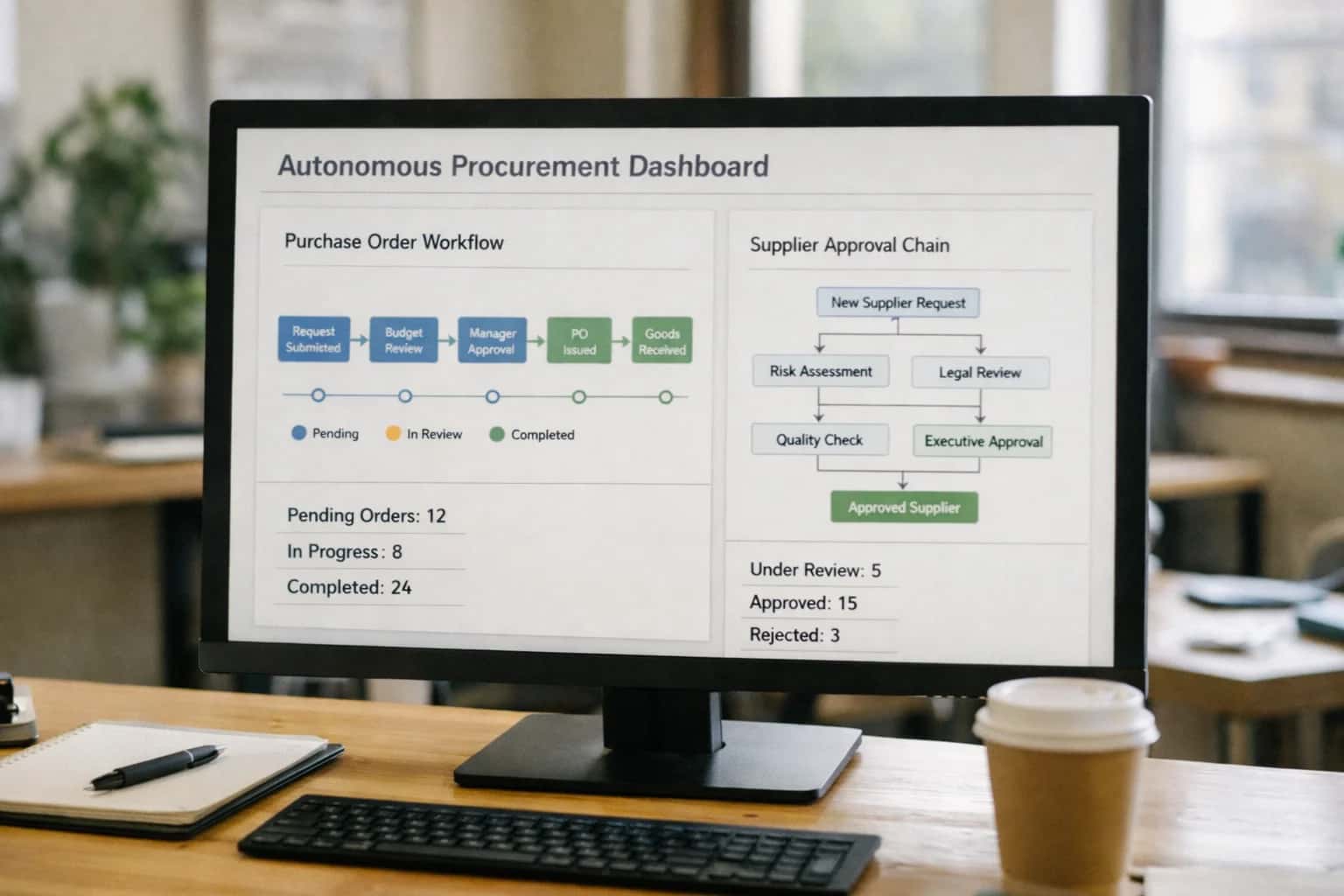
AUTONOMOUS APP DEPLOYMENT FOR CRM EXTENSIONS
Where Replit Agent Fits in Your Zoho CRM Stack
Integrate Replit Agent to autonomously build and deploy microservices that extend Zoho CRM's native capabilities, automating data workflows and creating custom functions without manual DevOps overhead.
The high-value fit is for rapid, data-aware extension development. Common patterns include:
- Custom Data Enrichment Services: Deploy an Agent-built service that calls external APIs (e.g., Clearbit, Apollo) to append firmographic data to
Leadrecords and posts the results back to Zoho CRM via webhook. - Scheduled Report Generators: Create and host a cron-like service that queries Zoho CRM's
Reportsmodule, transforms the data, and emails a formatted summary or posts to a Slack channel daily. - Workflow Webhook Handlers: Build a lightweight API endpoint that receives
Workflow RulesorBlueprintswebhooks from Zoho CRM, applies custom logic (like complex lead scoring or territory assignment), and returns an action for Zoho to execute.
Each service is a standalone, containerized application the Agent generates, complete with the necessary OAuth 2.0 client setup, error handling, and environment variables for secure API access.
Governance and rollout require a structured approach. We recommend starting with a sandbox Zoho CRM environment and using Zoho's client_id and client_secret for a dedicated "Integration" user with role-based permissions. The Replit Agent can be directed to include audit logging for all data operations and to structure code for easy review. For production, these services are typically deployed to a private cloud or Replit's infrastructure, with API rate limits and webhook retry logic built-in. This model shifts CRM extension development from a multi-day manual coding and deployment task to an on-demand, specification-driven process, allowing operations teams to prototype and iterate on Zoho CRM automations in hours instead of weeks.
AUTONOMOUS DEVELOPMENT WORKFLOWS
Zoho CRM Touchpoints for Replit Agent Services
Building Zoho CRM API Clients
Replit Agent can autonomously generate and deploy microservices that act as robust API clients for Zoho CRM. This is foundational for any integration, handling OAuth 2.0 authentication, token refresh cycles, and rate limiting.
Typical Agent-Generated Workflow:
- The agent reads Zoho CRM API documentation (REST, SOAP for older modules).
- It generates a Python/Node.js service with functions for core operations:
get_lead(),update_contact(),create_deal(). - The service is deployed as a serverless function (e.g., on Replit's infrastructure) with environment variables for
client_id,client_secret, andrefresh_token. - This becomes a reusable backend-for-frontend (BFF) for other automations.
Use Case: Sync Zoho CRM Contacts with an external e-commerce platform nightly, handling pagination and field mapping automatically.
REPLIT AGENT INTEGRATION PATTERNS
High-Value Use Cases for Autonomous Zoho Extensions
Replit Agent can autonomously generate and deploy microservices, scripts, and small applications that connect directly to Zoho CRM's APIs. These extensions automate complex workflows, enrich data, and create custom functions without extensive manual development cycles.
01
Automated Lead & Contact Data Enrichment
Deploy a Replit Agent-built microservice that triggers on new Zoho CRM record creation. It calls external enrichment APIs (Clearbit, Apollo) to append firmographic data, technographics, and social profiles to Lead and Contact modules, then updates the records via Zoho's REST API. Operational value: Eliminates manual research, ensures reps have complete context for first outreach.
Batch -> Real-time
Enrichment mode
02
Custom Quote & Invoice Generation Engine
Use Replit Agent to create a standalone service that consumes Zoho CRM Deal data and product catalogs via API. It generates polished PDF quotes or invoices with dynamic pricing logic, applies approved templates, and posts the document back to the Deal's Notes & Attachments. Operational value: Automates a manual, error-prone process for sales ops, ensuring brand consistency.
1 sprint
Build time saved
03
Cross-Module Sync & Deduplication Service
Build an autonomous agent that periodically scans Zoho CRM modules (Leads, Contacts, Accounts) for duplicate records based on configurable rules. It merges duplicates, preserves valuable field data, and logs actions for audit. The service runs as a scheduled Zoho CRM function or external cron job. Operational value: Maintains data hygiene automatically, improving report accuracy and outreach efficiency.
Hours -> Minutes
Cleanup time
04
Real-Time Notification & Alerting Hub
Develop a lightweight application that subscribes to Zoho CRM webhooks for critical events (large deal stage change, high-priority support ticket). It processes the event, applies business logic, and dispatches tailored alerts to Slack, Microsoft Teams, or email. Operational value: Ensures teams act on time-sensitive events without constantly monitoring the CRM.
Same day
Implementation
05
Ad-Hoc Reporting & Data Export Automation
Empower business users by using Replit Agent to create a secure web interface. Users select filters and modules, triggering an agent-generated script that queries Zoho CRM's reports API or Zoho Analytics, processes the data, and delivers formatted CSV/Excel files to a shared drive or via email. Operational value: Reduces dependency on admins for one-off data pulls, freeing IT resources.
06
Third-Party Service Integration Gateway
Deploy Replit Agent-built middleware that sits between Zoho CRM and other SaaS tools (e.g., accounting software, marketing platforms). It handles authentication, data transformation, and error handling for bi-directional sync of customer, invoice, or campaign data. Operational value: Creates robust, maintainable integrations without deep expertise in both platforms' APIs.
Weeks -> Days
Integration timeline
AUTONOMOUS CRM EXTENSION
Example Workflows: From Trigger to Deployed Service
These workflows illustrate how Replit Agent can be used to autonomously build, test, and deploy microservices that extend Zoho CRM's native capabilities. Each example starts with a business trigger and ends with a live, API-driven service.
Trigger: A new lead is created in Zoho CRM via a web form or API.
Agent Action & Build:
- Replit Agent is triggered via a webhook from Zoho CRM's
Leadsmodule. - The agent pulls the lead's context (industry, company size, form data) and uses Zoho's API to fetch related data (e.g., existing account matches).
- It writes and deploys a Python/Node.js microservice that:
- Calls an external enrichment API (e.g., Clearbit) for firmographic data.
- Runs a pre-configured scoring model (e.g., points for target industry, employee count).
- Determines the appropriate sales territory based on location and product interest.
- The service is deployed to a serverless platform (e.g., Vercel, AWS Lambda) with a secure endpoint.
System Update: The deployed service calls back to Zoho CRM's API to:
- Update the lead record with a
Lead_Scorecustom field. - Set the
Ownerfield to the assigned sales rep based on routing logic. - Add a note to the lead's timeline with the scoring rationale.
Human Review Point: The scoring model's logic and thresholds are defined in a configuration file within the Replit project, which can be reviewed and updated by a developer or RevOps manager before the agent commits the code.
FROM REPLIT AGENT TO ZOHO CRM DATA
Implementation Architecture: How the Integration is Wired
A practical blueprint for connecting Replit Agent's autonomous coding capabilities to Zoho CRM's operational data and APIs.
The integration is built on a secure, event-driven architecture where Replit Agent acts as an autonomous developer. It is triggered via a webhook from Zoho CRM (e.g., on a new Lead creation or a scheduled cron job) or via a direct API call from a custom Zoho Deluge script. The Agent receives a task specification—such as "create a microservice to sync Contacts with an external marketing platform"—along with necessary API credentials scoped to specific Zoho CRM modules (Leads, Contacts, Deals, Accounts). Using its understanding of Zoho's REST API and OAuth 2.0 flows, the Agent then generates, containerizes, and deploys a Node.js or Python microservice to a cloud provider like Replit Deployments or AWS Lambda.
The deployed service interacts directly with Zoho CRM's API endpoints. For example, a generated script might poll the Deals module for records where Stage equals 'Negotiation', enrich them with data from a third-party financial API, and post the results back to a custom field or a Zoho Analytics dataset. The architecture includes a logging and audit layer, where all code generated by the Agent and its subsequent API calls are logged with correlation IDs back to the originating Zoho CRM record ID, ensuring traceability. For governance, the integration can be designed to require a human-in-the-loop approval step in Zoho Creator or via email before the Agent deploys any code that performs write operations.
Rollout typically follows a phased approach: starting with read-only reporting bots, then moving to controlled data enrichment scripts, and finally graduating to autonomous workflow agents for non-critical tasks like data hygiene. This minimizes risk while demonstrating value through concrete outcomes like reducing manual data entry for sales ops or automating the generation of custom Zoho CRM functions for territory management. For teams managing this, we provide the foundational Replit Agent prompt libraries and secure credential management patterns, ensuring the AI operates within a sandboxed, observable framework connected to your Zoho ecosystem.
AUTONOMOUS CRM EXTENSION
Code Patterns and Payload Examples
Building a Replit Agent-Powered API Client
Replit Agent can autonomously generate a secure, production-ready Python client for Zoho CRM's REST API. This client handles OAuth 2.0 token management, rate limiting, and error retries, allowing subsequent agents to focus on business logic.
Key generated components include:
- A
ZohoCRMClientclass with methods for core operations (create, read, update, query). - Automatic refresh of access tokens using stored refresh tokens.
- Structured logging for all API interactions for audit trails.
- Modular design to easily extend for custom modules like
CustomModule1.
This foundational client is deployed as a Replit package, enabling other Agent-created services to import and use it seamlessly, ensuring consistent authentication and governance across all Zoho integrations.
python# Example of Agent-generated client method class ZohoCRMClient: def __init__(self, client_id, client_secret, refresh_token): self.base_url = "https://www.zohoapis.com/crm/v2" self.tokens = self._refresh_access_token(refresh_token) def create_record(self, module_name, data): """Creates a record in the specified Zoho CRM module.""" endpoint = f"{self.base_url}/{module_name}" headers = { "Authorization": f"Zoho-oauthtoken {self.tokens['access_token']}", "Content-Type": "application/json" } response = requests.post(endpoint, json={"data": [data]}, headers=headers) response.raise_for_status() return response.json()
ZOHO CRM AUTOMATION
Realistic Time Savings and Operational Impact
How integrating Replit Agent to build and deploy custom automations impacts common Zoho CRM development and operational tasks.
| Metric | Before AI | After AI | Notes |
|---|---|---|---|
Custom API integration script | 2-3 days development | 2-4 hours generation + review | Agent drafts full script; engineer reviews logic and security. |
Data sync microservice deployment | 1 week (provisioning, coding, testing) | Same-day (generated code, automated deploy) | Agent handles boilerplate; team focuses on Zoho module mapping and error handling. |
Ad-hoc report generation utility | Manual SQL/API exploration (4-6 hours) | Agent-built script in <1 hour | Describe need in natural language; Agent generates Zoho Analytics API calls. |
New Zoho CRM module scaffolding | Manual field & layout setup (1-2 days) | Automated via generated metadata scripts (2-4 hours) | Agent reads schema spec, produces Zoho Creator/Deluge code for rapid prototyping. |
Workflow-triggered external alert | Manual webhook development & testing (1 day) | Pre-built, deployable function (1-2 hours) | Agent creates serverless endpoint; integrate directly into Zoho Blueprint. |
Bulk data migration/cleanup job | Complex script writing, risk of data loss (3-5 days) | Assisted script generation with validation steps (1-2 days) | Agent suggests chunking and error logging; human oversees dry runs. |
Ongoing script maintenance & updates | Full re-audit and manual edits | Change-diff and assisted refactoring | Agent helps update API versions and modify logic, reducing regression risk. |
ARCHITECTING FOR ENTERPRISE CONTROL
Governance, Security, and Phased Rollout
Deploying an autonomous AI agent like Replit Agent into a mission-critical CRM requires a deliberate approach to security, data governance, and risk-managed adoption.
A production integration connects the Replit Agent to Zoho CRM's REST API v2 and OAuth 2.0 framework, with all generated code and microservices executing in a secure, isolated cloud environment (e.g., a dedicated VPC). The agent's access is scoped to specific Zoho CRM modules—like Contacts, Accounts, Deals, and Custom Modules—using role-based API tokens. All data flows are logged for audit, and any script that performs write operations (like creating a record or updating a field) is first routed through an approval queue or a human-in-the-loop step during initial rollout.
A phased rollout mitigates risk and builds confidence. Phase 1 focuses on read-only operations and internal reporting: the agent autonomously builds scripts to sync Zoho CRM data to a data warehouse or generate daily pipeline summaries. Phase 2 introduces controlled writes, such as a microservice that creates Tasks or Notes based on deal stage changes, with each execution requiring a manual review of the agent's proposed code and payload before deployment. Phase 3 enables fully autonomous, event-driven workflows—like a service that listens for new Leads via Zoho CRM webhooks and automatically enriches them with external data—but only after governance rules for data quality and error handling are codified into the agent's instructions.
Governance is enforced through the agent's instruction set and the surrounding infrastructure. Prompts include strict guardrails: "Do not modify Sales Orders or Invoices," "Always validate email format before updating the Email field," and "Include try-catch blocks and log all API errors to our monitoring system." The deployment pipeline for any agent-generated code includes automated security scanning and peer review. This layered approach ensures the Replit Agent accelerates development within Zoho CRM without compromising data integrity or operational control, turning a powerful AI tool into a reliable, governed extension of your tech stack.
Enabling Efficiency, Speed & Accuracy
Intelligent Analysis, Decision & Execution
We build AI systems for teams that need search across company data, workflow automation across tools, or AI features inside products and internal software.
Talk to Us
Search across company data
Give teams answers from docs, tickets, runbooks, and product data with sources and permissions.
Useful when people spend too long searching or get different answers from different systems.
Enterprise searchRAGPermissions
Read more
Automate internal workflows
Use AI to route work, draft outputs, trigger actions, and keep approvals and logs in place.
Useful when repetitive work moves across multiple tools and teams.
AI agentsWorkflow automationGovernance
Read more
Add AI to products and internal tools
Build assistants, guided actions, or decision support into the software your team or customers already use.
Useful when AI needs to be part of the product, not a separate tool.
AI integrationDecision supportModel routing
Read moreIMPLEMENTATION AND WORKFLOWS
Frequently Asked Questions
Practical questions for architects and developers planning to integrate Replit Agent's autonomous coding capabilities with Zoho CRM's data and automation layer.
Authentication and secure access are foundational. The typical pattern involves:
- Create a Zoho OAuth Client: Register a "Self Client" in the Zoho Developer Console for server-to-server flows, scoped to the specific Zoho CRM modules (e.g.,
ZohoCRM.modules.ALL,ZohoCRM.settings.ALL). - Manage Secrets in Replit: Store the generated
client_id,client_secret, andrefresh_tokenas Replit Secrets. Never hardcode these in your agent's instructions or generated code. - Agent-Generated Auth Handler: Instruct Replit Agent to build a microservice with a secure token management layer. The agent can write code that:
- Uses the refresh token to obtain a short-lived
access_token. - Caches and auto-refreshes the token before API calls.
- Attaches the token as a
Bearertoken in theAuthorizationheader for all Zoho CRM REST API requests.
- Uses the refresh token to obtain a short-lived
- Network Security: Deploy the generated service within a secure environment (e.g., Replit Deployments with private networking) and restrict outbound calls to Zoho's API endpoints (
*.zoho.com).

About the author
Prasad Kumkar
CEO & MD, Inference Systems
Prasad Kumkar is the CEO & MD of Inference Systems and writes about AI systems architecture, LLM infrastructure, model serving, evaluation, and production deployment. Over 5+ years, he has worked across computer vision models, L5 autonomous vehicle systems, and LLM research, with a focus on taking complex AI ideas into real-world engineering systems.
His work and writing cover AI systems, large language models, AI agents, multimodal systems, autonomous systems, inference optimization, RAG, evaluation, and production AI engineering.
LinkedIn
Limited slotsGet a Free AI Consultation
Partnered with leading AI, data, and software stack.





How We Work
Custom AI workflows for your Business
One-fit-all AI don't work for modern businesses. At Inferensys, we aim to understand your business & custom requirements; which we use to define most efficient agentic workflows, the data, and the tools for your business.
01
Review the use case
We understand the task, the users, and where AI can actually help.
Read more02
Pick the right approach
We define what needs search, automation, or product integration.
Read more03
Build the first useful version
We implement the part that proves the value first.
Read more04
Improve from there
We add the checks and visibility needed to keep it useful.
Read moreThe first call is a practical review of your use case and the right next step.
Talk to Us