A successful pilot in a single team—like an IT helpdesk agent in Microsoft Teams—often reveals critical gaps for enterprise rollout. Scaling requires moving beyond the low-code canvas to address single sign-on (SSO) with Microsoft Entra ID, data loss prevention (DLP) policies for tool calling, and centralized monitoring of conversation logs and agent performance. Your architecture must treat each Copilot Studio agent as a production service, with defined SLAs, RBAC for topic management, and secure API connections to systems like SAP, ServiceNow, or Salesforce.

Integration
Enterprise AI Agent Integration for Microsoft Copilot Studio
A technical blueprint for deploying, securing, and governing Microsoft Copilot Studio agents at enterprise scale. Covers SSO, data loss prevention, compliance, centralized monitoring, and production architecture.
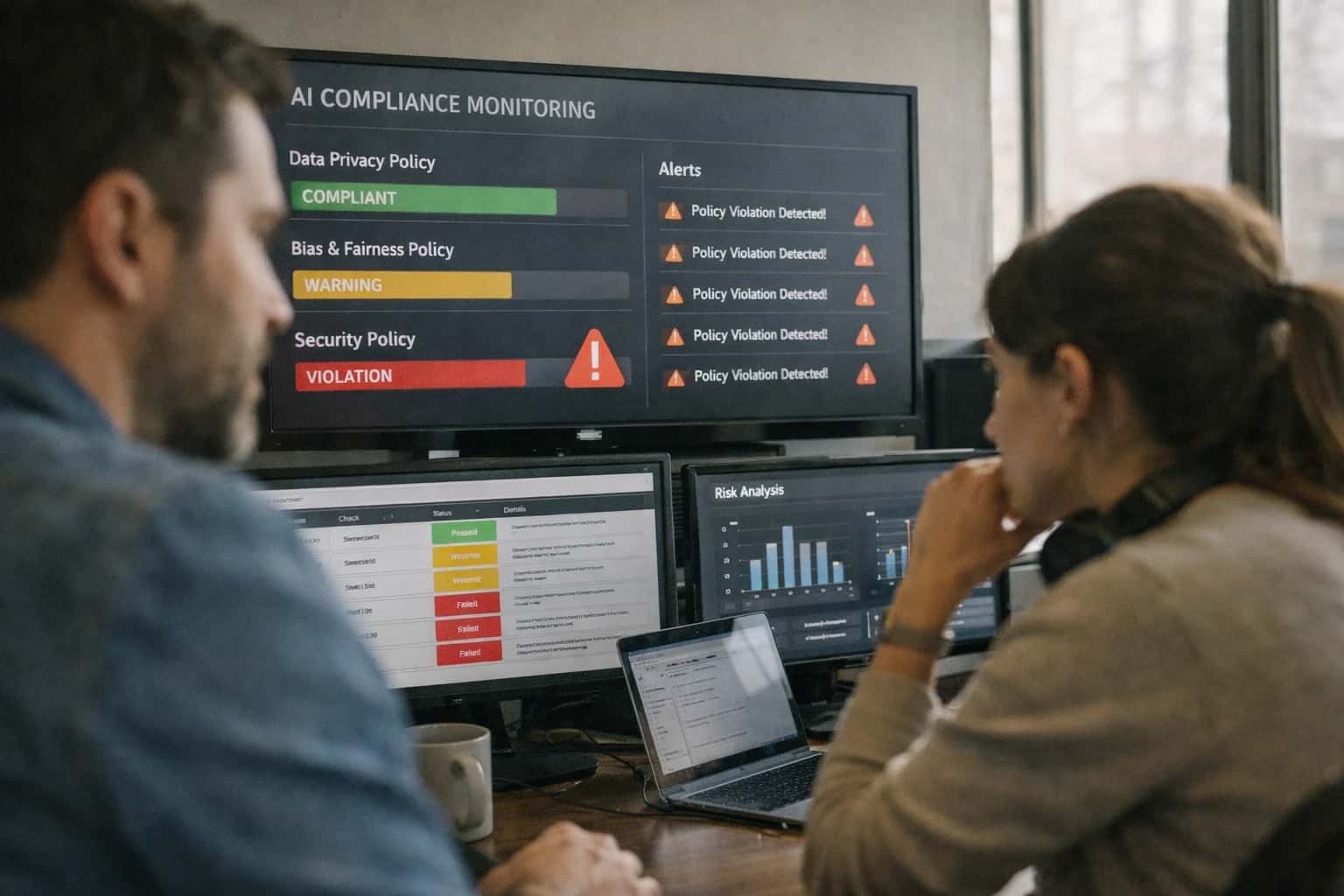
ENTERPRISE ARCHITECTURE
From Prototype to Production: Scaling Copilot Studio for the Enterprise
A blueprint for moving Microsoft Copilot Studio agents from departmental pilots to governed, organization-wide services.
Implementation requires a layered approach. The core agent, built in Copilot Studio, handles natural language understanding and dialog management. Critical business logic and secure data retrieval are delegated to Azure Functions or Power Automate cloud flows acting as middleware. This pattern keeps sensitive credentials out of Copilot Studio, enforces API rate limits, and integrates with your existing Azure Key Vault for secrets management. For example, an agent for sales enablement would use a secured flow to fetch live opportunity data from Dynamics 365, ensuring compliance with field-level security.
Governance is non-negotiable. Establish a center of excellence to manage prompt libraries, knowledge source versioning (e.g., SharePoint sites, Azure AI Search indexes), and approval workflows for agent publishing. Use Azure Monitor and custom logging to track usage metrics, detect prompt injection attempts, and measure deflection rates for support scenarios. Rollout should follow a phased, use-case-driven model: start with high-volume, low-risk informational agents before progressing to agents that execute write-backs, each with clear human-in-the-loop approval steps defined in the connected Power Automate flows.
ARCHITECTURE BLUEPRINT
Critical Integration Surfaces for Enterprise Copilot Studio
The Gateway to Enterprise Data
Copilot Studio agents primarily act through Power Platform Connectors. This is the primary surface for integrating with external SaaS, databases, and internal APIs. For enterprise-scale implementations, focus on:
- Custom Connectors: Build authenticated, governed connectors for internal REST APIs, enabling agents to query SAP, ServiceNow, or proprietary systems.
- Premium Connectors: Utilize Microsoft's certified connectors for platforms like Salesforce, SharePoint, and SQL Server, which offer managed authentication and compliance.
- Data Loss Prevention (DLP) Policies: Enforce DLP at the connector level to prevent sensitive data from flowing to unauthorized external services, a critical governance control.
Implementation involves defining actions (e.g., GetCustomerRecord, CreateSupportTicket) with clear input/output schemas. These become the agent's "tools," callable within conversation topics using Power Fx expressions or directly via the Call an action node.
MICROSOFT COPILOT STUDIO INTEGRATION
High-Value Enterprise Use Cases for Governed Agents
Move beyond simple chatbots to deploy governed, multi-step agents that automate complex workflows across Microsoft 365 and external systems. These patterns address scale, security, and operational control for enterprise-wide deployment.
01
IT Service Desk Agent
Deploy a Copilot Studio agent as a Tier-1 support assistant in Microsoft Teams. It authenticates users via Entra ID, queries the ServiceNow CMDB via a custom connector, creates and updates incidents, and retrieves relevant knowledge articles. Governance is enforced through DLP policies on connector outputs and audit logging of all interactions.
Tier-1 deflection
Primary outcome
02
HR Onboarding Orchestrator
An agent guides new hires through a multi-day onboarding workflow in Teams. It triggers Power Automate flows to provision accounts in Entra ID, assign training in Viva Learning, create tasks in Planner, and submit equipment requests. The workflow includes human-in-the-loop approval nodes for manager review and integrates with Workday for data synchronization.
Days -> Hours
Process acceleration
03
Procurement Assistant with Approval Routing
Employees describe a purchase need via a Teams chat. The agent uses a custom connector to SAP Ariba or Coupa to validate budgets, draft a requisition, and attach it to a Power Automate approval flow routed to the correct manager based on cost center. All approvals, revisions, and final PO generation are tracked within the agent's conversation history for audit.
Batch -> Real-time
Request handling
04
Sales Enablement & CRM Agent
A proactive agent for sales reps that monitors a shared Outlook folder or Teams channel for RFP requests. It uses the Microsoft Graph API to access the document, summarizes key requirements via Azure OpenAI, and creates a corresponding opportunity in Salesforce or Dynamics 365 via a Power Platform connector. Access to CRM data is scoped by the user's Entra ID group membership.
1 sprint
Implementation timeline
05
Compliance & Policy Query Agent
A read-only agent connected to a RAG-enabled knowledge base of internal policies, contracts, and compliance manuals stored in SharePoint. Employees ask natural language questions, and the agent provides grounded answers with citations. Governance is central: all queries are logged, and the underlying vector index is updated via a controlled CI/CD pipeline from authoritative sources.
Same-day answers
For complex queries
06
Facilities & Operations Workflow Trigger
Employees report issues (e.g., broken equipment, maintenance needs) via a Teams message to the agent. It classifies the request, extracts location and details, and creates a work order in a system like FMX or IBM Maximo. For urgent issues, it can also trigger an immediate alert to an on-call Teams channel. Integration uses service accounts with least-privilege access, and all actions are mirrored to a SharePoint list for operations review.
Hours -> Minutes
Ticket creation
IMPLEMENTATION PATTERNS
Enterprise-Grade Workflow Examples
These are production-ready agent workflows designed for Microsoft Copilot Studio, focusing on security, governance, and integration with enterprise systems of record. Each pattern includes triggers, data handling, agent actions, and human oversight points.
Trigger: An employee asks a Copilot Studio agent in Microsoft Teams, "My laptop won't connect to the VPN."
Context/Data Pulled:
- The agent authenticates the user via Microsoft Entra ID (SSO).
- It queries the user's device record from Microsoft Intune using a secured Power Platform connector, checking for compliance status and last check-in time.
- It searches the ServiceNow Knowledge Base via a custom connector, using the error context to find relevant resolution articles.
Model/Agent Action:
- The agent, using a grounded Azure OpenAI model, synthesizes the device status and knowledge articles.
- It provides a step-by-step resolution guide tailored to the user's OS version.
- If the device is non-compliant, it instructs the user to run a specific Company Portal action and offers to create a ServiceNow incident automatically.
System Update/Next Step:
- If the user confirms, the agent uses a ServiceNow connector with a service account to create an incident, pre-populating the description, user CI, and suggested resolution from the KB.
- The incident is assigned to the appropriate support queue based on device type.
Human Review Point:
- The agent's suggested resolution is tagged as "AI-generated guidance" in the incident notes. All incident creation actions are logged to a centralized audit trail for compliance (e.g., SOC 2). The human agent reviewing the ticket can see the AI's reasoning.
SCALE, SECURITY, AND GOVERNANCE FOR COPLILOT STUDIO
Implementation Architecture: The Enterprise Integration Layer
A blueprint for deploying Microsoft Copilot Studio agents across a large organization with enterprise-grade controls.
Enterprise deployment of Microsoft Copilot Studio requires a secure integration layer that sits between the conversational agent and your core systems. This layer manages authentication, data loss prevention, and audit logging. Key components include: a reverse proxy for enforcing SSO via Microsoft Entra ID, a policy enforcement point that scans outbound prompts and responses for sensitive data patterns (PII, PHI, financials), and a centralized logging service that captures all agent interactions, tool calls, and user identities for compliance (e.g., SOC 2, HIPAA). This ensures your Copilot Studio topics can safely call internal APIs or Power Platform connectors without exposing raw credentials or leaking data.
The architecture typically involves deploying custom connectors within a dedicated, isolated Azure environment. These connectors act as the agent's 'hands,' but they are wrapped with logic to check user permissions against your HRIS or IAM system (like Workday or Okta) before executing actions like creating a ServiceNow ticket or updating a Salesforce record. For multi-step workflows that span systems, Azure Logic Apps or Power Automate flows orchestrate the sequence, with the Copilot Studio agent initiating the process and receiving status updates. This separation keeps the agent lightweight and delegates complex, stateful operations to a more robust workflow engine.
Rollout and governance are managed through a centralized admin portal (often built with Power Apps) where IT can monitor agent health, review conversation logs, manage topic versions, and control feature flags. New agents or topics undergo a prompt review and testing cycle in a sandbox tenant before promotion to production. By implementing this integration layer, you move from isolated, departmental Copilot Studio bots to a governed portfolio of AI agents that operate with consistent security, observable performance, and clear ownership aligned to business processes like IT support, HR onboarding, or sales enablement.
ENTERPRISE DEPLOYMENT
Code & Configuration Patterns
Implementing Centralized Identity
For enterprise-scale deployment, you must federate Copilot Studio authentication with your corporate identity provider (e.g., Microsoft Entra ID). This ensures single sign-on (SSO) and enforces existing conditional access policies.
Key Configuration Steps:
- Register your Copilot Studio bot as an enterprise application in your IdP.
- Configure OAuth 2.0 or OpenID Connect (OIDC) flows, mapping user attributes (like
departmentorcostCenter) to Power Platform environment variables. - Implement token validation and refresh logic within your custom connectors or Azure Functions that agents call, ensuring all downstream API calls are made with the authenticated user's context for audit trails.
pseudocode// Pseudo-code for token validation in a custom connector function validateTokenAndCallAPI(userToken, targetAPI) { const claims = verifyJWT(userToken, IDP_PUBLIC_KEY); // Enforce role-based access from claims if (!hasPermission(claims.roles, targetAPI)) { throw new Error('Unauthorized'); } // Make API call with user context return callAPI(targetAPI, { userId: claims.sub }); }
This pattern centralizes governance, prevents shadow IT access, and integrates agent usage into your existing security fabric.
ENTERPRISE DEPLOYMENT FOCUS
Realistic Operational Impact & Time Savings
This table illustrates the practical efficiency gains and operational improvements when deploying Microsoft Copilot Studio agents at enterprise scale, focusing on governance, security, and workflow automation.
| Operational Area | Before AI | After AI | Key Notes |
|---|---|---|---|
Agent Deployment & Governance | Manual, per-department setup with inconsistent policies | Centralized, templated deployment with unified RBAC and DLP | Reduces rollout time from weeks to days; ensures compliance |
User Authentication & Access | Separate logins or basic key management for bot access | SSO (Entra ID) integration with conditional access policies | Eliminates shadow IT; provides audit trail for all agent interactions |
Data Security & Compliance Review | Manual checklist review for each new agent topic or connector | Automated policy checks and pre-approved data source patterns | Shifts compliance from a gate to an embedded, continuous process |
Multi-Step Workflow Execution | Human-driven process navigation across multiple systems | Agent-guided conversation with automated backend tool calls | Reduces process completion from hours to minutes for guided tasks |
Agent Performance Monitoring | Ad-hoc feedback collection and manual log analysis | Centralized dashboard for conversation analytics, drift, and ROI | Enables data-driven iteration and proactive issue identification |
Cross-Platform Orchestration | Manual copy-paste or swivel-chair data entry between apps | Seamless agent-triggered actions in Power Automate, Dynamics, Azure | Turns the agent into a workflow conductor, not just a Q&A bot |
Scale & Change Management | Brittle, hard-coded topics that are difficult to update at scale | Modular topic design with variables and shared components | Allows global updates (e.g., policy changes) to be pushed once, deployed everywhere |
ENTERPRISE DEPLOYMENT BLUEPRINT
Governance, Compliance, and Phased Rollout
A practical guide to scaling Microsoft Copilot Studio agents with enterprise-grade controls and a low-risk adoption path.
Deploying conversational AI at scale requires more than just building topics. For Microsoft Copilot Studio, governance starts with Azure Active Directory (Entra ID) integration for single sign-on (SSO) and role-based access control (RBAC). This ensures only authorized users can access administrative functions or sensitive agent conversations. Data loss prevention (DLP) policies must be configured within the Power Platform admin center to prevent agents from inadvertently sharing PII or confidential data retrieved from connected systems like SharePoint or Dynamics 365. All agent interactions, including the prompts sent and responses generated, should be logged to Azure Monitor or a SIEM for audit trails, which is critical for regulated industries.
A phased rollout mitigates risk and drives adoption. Start with a pilot agent handling a single, high-volume, low-risk workflow—like answering internal HR policy questions by querying a pre-approved SharePoint site. This validates the integration pattern and user experience. Phase two introduces tool calling via Power Automate or custom connectors, enabling the agent to perform actions like creating a ServiceNow ticket or updating a CRM record, but only after implementing mandatory human-in-the-loop approval nodes for sensitive operations. The final phase expands to proactive, multi-step orchestration, where the agent initiates complex workflows across systems, but only after establishing clear ownership, monitoring for hallucination or drift, and integrating with existing change management processes.
Centralized monitoring is non-negotiable. Use Power Platform analytics and custom dashboards to track agent performance metrics like conversation completion rates, user satisfaction (via embedded surveys), and escalation frequency. Set up alerts for anomalous behavior or a spike in "I don't know" responses, which may indicate a gap in the knowledge base or a broken API connection. For enterprises subject to GDPR, CCPA, or HIPAA, ensure your Copilot Studio implementation includes mechanisms for data subject request (DSR) fulfillment, allowing you to locate and redact an individual's data across all conversation logs. This layered approach—combining technical controls, iterative rollout, and continuous oversight—transforms Copilot Studio from a departmental chatbot into a governed enterprise asset.
Enabling Efficiency, Speed & Accuracy
Intelligent Analysis, Decision & Execution
We build AI systems for teams that need search across company data, workflow automation across tools, or AI features inside products and internal software.
Talk to Us
Search across company data
Give teams answers from docs, tickets, runbooks, and product data with sources and permissions.
Useful when people spend too long searching or get different answers from different systems.
Enterprise searchRAGPermissions
Read more
Automate internal workflows
Use AI to route work, draft outputs, trigger actions, and keep approvals and logs in place.
Useful when repetitive work moves across multiple tools and teams.
AI agentsWorkflow automationGovernance
Read more
Add AI to products and internal tools
Build assistants, guided actions, or decision support into the software your team or customers already use.
Useful when AI needs to be part of the product, not a separate tool.
AI integrationDecision supportModel routing
Read moreMICROSOFT COPILOT STUDIO
Enterprise Integration FAQ
Key questions for IT and AI leaders planning to deploy, secure, and govern Microsoft Copilot Studio agents at enterprise scale.
This is a primary concern for regulated industries. A layered approach is required:
- Pre-Execution Filtering: Implement a middleware proxy or a custom connector that intercepts user queries before they reach Copilot Studio. This layer scans for and redacts PII, PHI, or other sensitive patterns using regex or dedicated classification services.
- Contextual Grounding: Use Azure AI Search or a private vector database to ground the agent's responses strictly in approved, internal documentation. Configure the Copilot Studio topic to only use these sources for its generative answers, preventing it from synthesizing information from its base model training data.
- API & Tool Guardrails: For any custom connectors that call internal APIs (e.g., to SAP or Salesforce), implement strict input validation and output filtering at the API gateway level. Use service principals with the minimum necessary permissions (least privilege) for these connections.
- Audit Logging: Ensure all prompts, responses, and tool call payloads are logged to a secure, immutable audit system (like Azure Log Analytics) for compliance review and forensic analysis.

About the author
Prasad Kumkar
CEO & MD, Inference Systems
Prasad Kumkar is the CEO & MD of Inference Systems and writes about AI systems architecture, LLM infrastructure, model serving, evaluation, and production deployment. Over 5+ years, he has worked across computer vision models, L5 autonomous vehicle systems, and LLM research, with a focus on taking complex AI ideas into real-world engineering systems.
His work and writing cover AI systems, large language models, AI agents, multimodal systems, autonomous systems, inference optimization, RAG, evaluation, and production AI engineering.
LinkedIn
Limited slotsGet a Free AI Consultation
Partnered with leading AI, data, and software stack.





How We Work
Custom AI workflows for your Business
One-fit-all AI don't work for modern businesses. At Inferensys, we aim to understand your business & custom requirements; which we use to define most efficient agentic workflows, the data, and the tools for your business.
01
Review the use case
We understand the task, the users, and where AI can actually help.
Read more02
Pick the right approach
We define what needs search, automation, or product integration.
Read more03
Build the first useful version
We implement the part that proves the value first.
Read more04
Improve from there
We add the checks and visibility needed to keep it useful.
Read moreThe first call is a practical review of your use case and the right next step.
Talk to Us