Moving AutoGen from a Jupyter notebook to a production-grade service requires a shift in architecture. Instead of a single script, you deploy containerized agent teams (e.g., using Docker) that listen to a message queue (like RabbitMQ or Azure Service Bus) for incoming tasks. Each agent role—Researcher, Analyst, Reviewer—becomes a microservice with defined RBAC-scoped permissions to call specific internal APIs. This decouples the conversational logic from the execution environment, enabling scaling, independent updates, and resilience. The core challenge is maintaining conversational state and context across stateless containers, often solved by persisting the GroupChat object to a shared Redis cache or database.

Integration
Enterprise AI Agent Integration for AutoGen
A technical blueprint for deploying, governing, and scaling conversational AI agent networks built with AutoGen in regulated enterprise environments. Focus on security, compliance, and integration with existing systems.
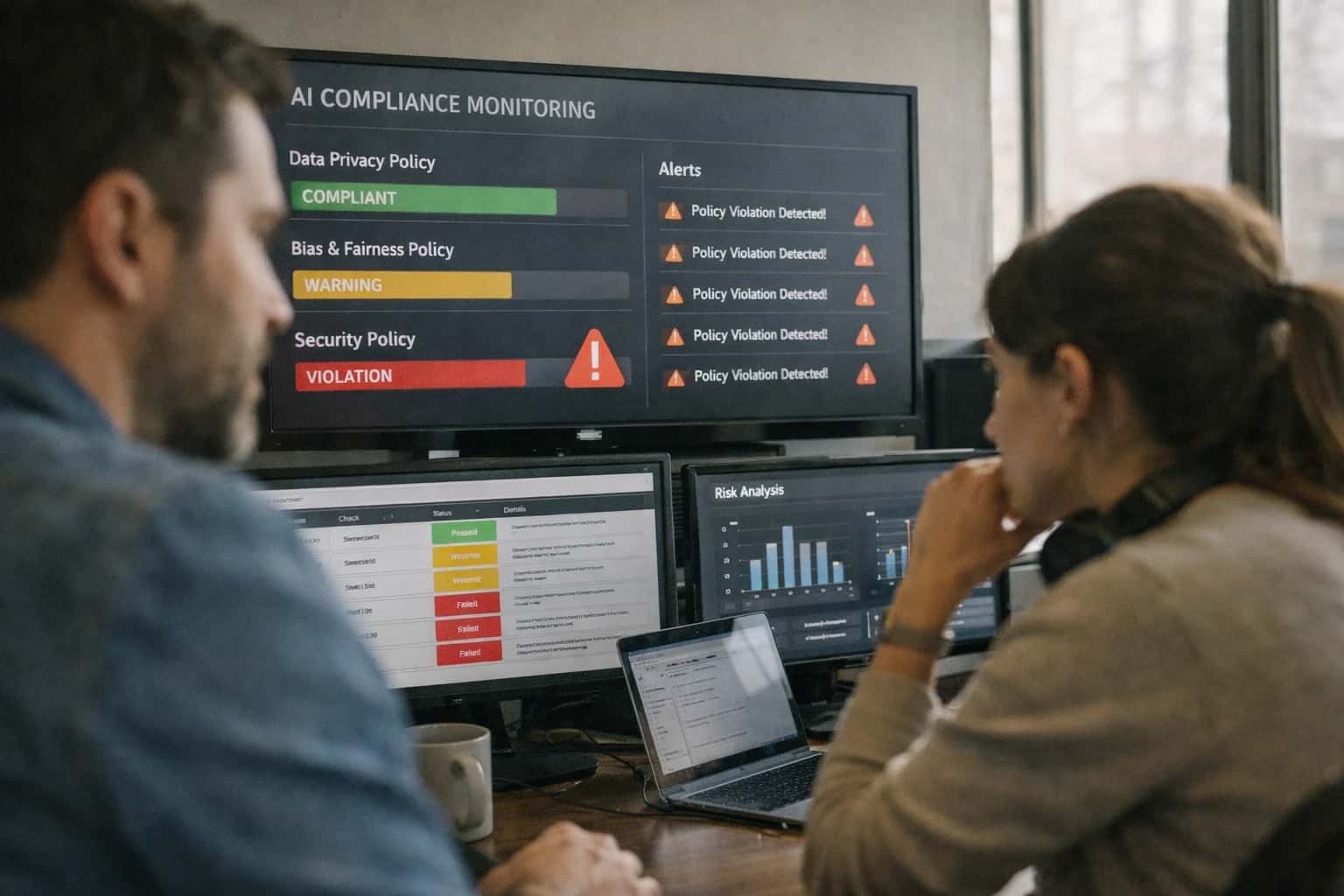
ENTERPRISE DEPLOYMENT PATTERNS
From Prototype to Production: Scaling AutoGen in the Enterprise
A technical blueprint for deploying and governing AutoGen multi-agent systems in regulated, high-stakes environments.
Governance is non-negotiable. Every agent interaction must be logged to an immutable audit trail, capturing the full conversation history, tool calls made, data retrieved, and the final output. For regulated workflows (e.g., financial reporting, patient data), you implement a human-in-the-loop proxy agent that pauses execution to seek approval via a ticketing system (ServiceNow) or chat (Microsoft Teams) before taking irreversible actions like updating a CRM record or sending a customer communication. Model usage must be governed by a central LLM gateway to enforce policies, manage costs, and route requests to approved models (Azure OpenAI, Anthropic Claude) with proper data handling.
Rollout follows a phased, use-case-driven approach. Start with a single, internal-facing agent team for a bounded process like daily competitive intelligence summarization or IT incident report drafting. Instrument the workflow with detailed metrics: latency per agent step, tool call success rate, and human correction rate. Use this data to refine prompts and error handling before scaling to customer-facing or mission-critical processes. The final architecture typically integrates with your existing identity provider (Okta, Entra ID) for authentication and secrets management (HashiCorp Vault, Azure Key Vault) for API credentials, ensuring the AutoGen platform operates within the enterprise security perimeter.
PRODUCTION DEPLOYMENT PATTERNS
Key Integration Surfaces for Enterprise AutoGen
Secure Model Access for Regulated Data
Enterprise AutoGen deployments require private, governed access to LLMs. This involves hosting models within your own cloud environment (Azure, AWS, GCP) or using a secure, compliant API gateway to approved providers.
Key integration surfaces include:
- Azure OpenAI Service: Deploy within your Azure tenant for private endpoints, role-based access control (RBAC), and data residency compliance. AutoGen agents connect via the
AzureOpenAIclient. - AWS Bedrock or SageMaker: Host open-source models (like Llama 2 or Mistral) in isolated VPCs. AutoGen agents use Bedrock's API or a custom inference endpoint.
- Self-hosted open-source models: Deploy models using vLLM or TGI on GPU instances. AutoGen connects via a local
OpenAI-compatible endpoint.
Implementation ensures all prompts, completions, and fine-tuning data never leave the corporate boundary, meeting strict data governance and regulatory requirements (e.g., HIPAA, FINRA).
AUTONOMOUS AGENT NETWORKS FOR REGULATED WORKFLOWS
High-Value Enterprise Use Cases for AutoGen
AutoGen excels at orchestrating multi-agent conversations to solve complex problems. In enterprise contexts, this translates to deploying persistent, collaborative agent teams that automate multi-step processes, enforce governance, and integrate with existing RBAC and approval systems. Below are key patterns for regulated environments.
01
Financial Report Generation & Variance Analysis
A three-agent team automates month-end commentary. An Extractor Agent pulls trial balances from the ERP API. An Analyst Agent identifies material variances against forecast and flags anomalies. A Writer Agent drafts the management summary, citing specific GL accounts. The workflow pauses at a Human Proxy Agent for controller review before final submission.
Days -> Hours
Report cycle time
02
IT Major Incident Triage & Comms
Deploy an AutoGen group chat for incident response. A Gatherer Agent ingests alerts from Splunk/ServiceNow. A Diagnostician Agent queries runbooks and CMDB for root cause. A Communicator Agent drafts stakeholder updates. The Group Chat Manager orchestrates the conversation, escalating to the on-call engineer via the proxy agent for critical decisions.
Batch -> Real-time
Response coordination
03
Regulated Document Review Workflow
For contracts or compliance documents, create a review chain. A Parser Agent extracts clauses and obligations. A Compliance Agent checks text against a policy knowledge base (via RAG). A Redline Agent suggests edits. The entire conversation, including all agent reasoning, is logged to an immutable audit trail before a Human-in-the-Loop Agent presents the final recommendation for legal sign-off.
Full audit trail
Governance built-in
04
Supply Chain Exception Management
A persistent agent team monitors purchase order and shipment feeds. A Monitor Agent watches for delays or quantity mismatches. A Resolver Agent checks alternate suppliers in the vendor portal and calculates cost impact. A Workflow Agent creates a Jira ticket or ServiceNow RFC with all context, pausing for procurement manager approval via the proxy before auto-sending the vendor communication.
Same day
Exception resolution
05
Clinical Trial Data Reconciliation
In life sciences, deploy agents to handle sensitive trial data. A Fetch Agent securely pulls EDC (e.g., Medidata) and lab data. A QC Agent runs statistical checks for discrepancies. A Query Agent formulates questions for the trial manager. All agent interactions occur within a private cloud VPC, with data never leaving the boundary, and outputs are routed through a Proxy Agent with RBAC tied to the user's study role.
Private cloud
Data boundary enforcement
06
Code Review & Security Scanning Automation
Integrate AutoGen into the CI/CD pipeline. A Reviewer Agent analyzes pull request diffs for logic and style. A Security Agent calls SAST/SCA tools via their API. A Summarizer Agent generates a plain-language report for the developer. The Group Chat allows agents to debate findings, with the final approval to merge gated by a senior engineer via the human proxy. All tool calls are logged for compliance.
1 sprint
Review backlog reduction
PRODUCTION PATTERNS
Example Enterprise Workflows with AutoGen
These workflows illustrate how AutoGen's multi-agent conversation framework can be deployed to automate complex, regulated business processes. Each pattern includes human-in-the-loop controls and integration with existing enterprise APIs.
Trigger: Scheduled task at month-end close.
Agent Team:
- Data Extractor Agent: Connects to the ERP (e.g., SAP S/4HANA) via secure API to pull trial balances and prior period data.
- Analyst Agent: Receives data, calculates key variances (actual vs. budget, prior period), and uses an LLM to draft narrative explanations for material differences.
- Reviewer Agent: Acts as a human proxy, presenting the draft report and analysis to a designated controller via a secure web interface for review and edits.
System Update: After human approval, the Reviewer Agent submits the final report to the corporate reporting system (e.g., Workiva) and logs the activity with a full audit trail of the agent conversation.
Key Integration Points: ERP APIs, corporate reporting platform API, enterprise authentication (RBAC) to control data access per agent.
GOVERNANCE AND SCALE
Reference Architecture for Enterprise AutoGen Deployment
A production blueprint for deploying AutoGen multi-agent systems in regulated environments, focusing on private hosting, audit trails, and integration with enterprise RBAC.
Enterprise AutoGen deployments require a private, containerized runtime isolated from public LLM APIs. We typically deploy a dedicated Kubernetes cluster or Azure Container Instances to host the AutoGen framework, with agents packaged as individual services. This cluster connects to your approved model endpoints—such as Azure OpenAI, AWS Bedrock, or a private Hugging Face inference server—via a secure service mesh. All tool calls to internal systems (e.g., Salesforce, SAP) are routed through an API gateway that enforces authentication, rate limiting, and logs every request for the audit trail.
Governance is enforced at three layers: 1) Model Governance, using a proxy layer to enforce allowed models, track token usage per department, and inject system prompts for compliance; 2) Conversation Auditing, where every agent interaction—including intermediate steps, tool calls, and code execution—is captured in a structured log (e.g., to Azure Cosmos DB or Elasticsearch) with user and session IDs for traceability; 3) Human-in-the-Loop Gates, implemented via a dedicated UserProxyAgent that pauses workflows requiring approval, sending requests to a configured system like ServiceNow, Jira, or a Power Automate flow for manager sign-off before proceeding.
Rollout follows a phased approach: start with a single assistive agent team in a low-risk domain (e.g., a data analysis pod for finance), running in a monitored sandbox. After validating governance controls and performance, expand to cross-functional agent networks that orchestrate workflows across systems, such as a procurement team where one agent checks SAP inventory, another drafts a purchase requisition in Coupa, and a third seeks approval via Teams. The final architecture includes centralized monitoring (Prometheus/Grafana for agent health), secret management (Azure Key Vault/HashiCorp Vault for API keys), and integration with your existing RBAC system (e.g., Okta, Entra ID) to control which users or groups can initiate specific agent teams or tools.
ENTERPRISE DEPLOYMENT BLUEPRINTS
Code Patterns for Governed AutoGen Agents
Enforcing Role-Based Access in Agent Actions
In regulated environments, agents must only call tools permitted for the user's role. This pattern uses a middleware layer to validate permissions before execution, logging all attempts for audit.
pythonfrom autogen import AssistantAgent, UserProxyAgent from your_rbac_service import check_permission class GovernedUserProxyAgent(UserProxyAgent): def execute_function(self, func_call): # Validate user context against RBAC policy user_role = self.context.get("user_role") tool_name = func_call.get("name") if not check_permission(user_role, tool_name): return "ERROR: Permission denied for tool '" + tool_name + "'." # Log the authorized execution audit_log(event="tool_execution", agent=self.name, tool=tool_name, user=user_role) return super().execute_function(func_call) # Initialize the governed agent user_proxy = GovernedUserProxyAgent( name="Governed_User_Proxy", human_input_mode="NEVER", code_execution_config=False, context={"user_role": "sales_analyst"} )
This ensures agents operate within a defined security perimeter, critical for accessing CRM, ERP, or financial systems.
FROM PILOT TO PRODUCTION
Realistic Operational Impact of Enterprise AutoGen
A phased view of how deploying governed AutoGen agent teams shifts operational workflows, focusing on realistic time-to-value and control.
| Workflow Phase | Before AI (Manual/Ad-hoc) | After AI (Governed AutoGen) | Implementation & Governance Notes |
|---|---|---|---|
Multi-step Data Analysis & Reporting | Analyst manually queries DB, exports to Excel, creates charts, writes summary (4-8 hours) | Orchestrated agent team queries, analyzes, visualizes, and drafts narrative (20-40 minutes) | Human reviews final report; agents execute with RBAC-enforced data access and full audit trail. |
Customer Support Ticket Enrichment | Agent reads ticket, manually searches KB, pastes links (5-10 minutes per ticket) | AutoGen 'Research Agent' fetches relevant articles, suggests solutions (1-2 minutes) | Suggestions appended to ticket for agent approval; no autonomous ticket modification. |
Scheduled Business Process Monitoring | Manager runs daily report, scans for exceptions, manually emails stakeholders (1 hour daily) | Persistent agent team monitors data source, flags anomalies, drafts alert (Runs autonomously) | Agents deployed as microservices; alerts require human acknowledgment before action. |
Code Review & Documentation | Developer submits PR, senior engineer manually reviews, updates docs (30-60 minutes) | AutoGen 'Reviewer' & 'Tech Writer' agents provide initial feedback and draft changelog (10 minutes) | Human engineer makes final approval; agents use sandboxed execution for security. |
Complex Vendor Onboarding Workflow | Coordinator emails 5 departments, tracks spreadsheets, follows up manually (3-5 business days) | Agent team routes forms, pings stakeholders, consolidates data into a single dossier (Same-day completion) | Workflow pauses for legal/finance sign-offs at defined stages; full conversation log retained. |
Pilot Deployment Timeline | Custom integration project: 3-6 months for scoping, development, and security review | First governed agent team live in 2-4 weeks using existing APIs and private model endpoints | Initial pilot focuses on a single, internal workflow with no customer-facing autonomy. |
Ongoing Model & Prompt Governance | Ad-hoc prompt changes in notebooks; no version control or performance tracking | Centralized registry for agent definitions, prompts, and tools; automated evaluation and drift detection | Changes promoted through dev/staging/prod environments with approval gates. |
ENTERPRISE DEPLOYMENT PATTERNS
Governance, Security, and Phased Rollout Strategy
A practical guide to deploying AutoGen agent networks in regulated environments with controlled access, auditable conversations, and incremental value delivery.
Production AutoGen deployments require a private, governed infrastructure layer. This typically involves hosting the agent runtime in a private cloud (e.g., Azure Kubernetes Service or Amazon EKS) with strict network policies, ensuring all calls to foundational models (like Azure OpenAI or Anthropic Claude) stay within your VPC. Agent tools—functions that call internal APIs or databases—must be secured with service principals or managed identities, never hard-coded keys. A central conversation audit log captures the full multi-agent dialogue, including tool calls, code execution outputs, and human inputs, which is essential for compliance, debugging, and model performance evaluation.
Rollout follows a phased, use-case-first strategy. Phase 1 (Pilot): Deploy a single, focused agent team (e.g., a data analysis trio) in a sandbox environment with a closed user group. Use this to validate tool reliability, cost profiles, and establish human-in-the-loop patterns via the UserProxyAgent. Phase 2 (Departmental): Integrate the agent network with one core system-of-record, such as a data warehouse or CRM API, and expand to a full department. Implement RBAC at the agent level, ensuring agents only have access to tools and data scoped to their defined role (e.g., a 'Sales Analyst' agent can query but not update CRM opportunities).
Phase 3 (Enterprise Scale): Operationalize the architecture with centralized LLM gateway for usage tracking and policy enforcement, integrate with existing SIEM for security monitoring, and establish a prompt registry for version control. Critical workflows, such as those that could trigger financial transactions or customer communications, are designed with mandatory approval gates, where the UserProxyAgent pauses execution and routes a decision to a designated human or approval system (like ServiceNow). This controlled, iterative approach de-risks adoption while delivering tangible automation wins, from reducing manual report generation from hours to minutes to providing 24/7 analytical support for global teams.
Enabling Efficiency, Speed & Accuracy
Intelligent Analysis, Decision & Execution
We build AI systems for teams that need search across company data, workflow automation across tools, or AI features inside products and internal software.
Talk to Us
Search across company data
Give teams answers from docs, tickets, runbooks, and product data with sources and permissions.
Useful when people spend too long searching or get different answers from different systems.
Enterprise searchRAGPermissions
Read more
Automate internal workflows
Use AI to route work, draft outputs, trigger actions, and keep approvals and logs in place.
Useful when repetitive work moves across multiple tools and teams.
AI agentsWorkflow automationGovernance
Read more
Add AI to products and internal tools
Build assistants, guided actions, or decision support into the software your team or customers already use.
Useful when AI needs to be part of the product, not a separate tool.
AI integrationDecision supportModel routing
Read moreIMPLEMENTATION & GOVERNANCE
Enterprise AutoGen Integration: Frequently Asked Questions
Practical answers for deploying and managing AutoGen agent networks in regulated enterprise environments, focusing on security, operations, and integration with existing systems.
AutoGen agents execute code and call APIs, which requires strict access control. Our implementation patterns include:
1. Principle of Least Privilege via Service Accounts:
- Agents do not use individual user credentials. They authenticate via dedicated service accounts with scoped permissions (e.g., a "Sales Reader" service account for CRM queries).
- These service accounts are managed in your existing Identity Provider (e.g., Okta, Entra ID).
2. Tool-Level Authorization:
- Each function/tool an agent can call is wrapped with a permission check. For example:
pythondef update_salesforce_opportunity(opp_id, stage): # Check if the agent's context (user, role) is allowed if not authorize_agent_action("sfdc.opportunity.write"): return "Error: Insufficient permissions to update opportunity." # Proceed with API call return sfdc_api.update(opp_id, {"StageName": stage})
3. Integration with Enterprise RBAC:
- Agent permissions are mapped to existing Active Directory groups or role definitions. An agent acting on behalf of a "Sales Manager" inherits that role's access.
- All tool calls are logged with user, agent, timestamp, and payload for audit trails in your SIEM (e.g., Splunk).

About the author
Prasad Kumkar
CEO & MD, Inference Systems
Prasad Kumkar is the CEO & MD of Inference Systems and writes about AI systems architecture, LLM infrastructure, model serving, evaluation, and production deployment. Over 5+ years, he has worked across computer vision models, L5 autonomous vehicle systems, and LLM research, with a focus on taking complex AI ideas into real-world engineering systems.
His work and writing cover AI systems, large language models, AI agents, multimodal systems, autonomous systems, inference optimization, RAG, evaluation, and production AI engineering.
LinkedIn
Limited slotsGet a Free AI Consultation
Partnered with leading AI, data, and software stack.





How We Work
Custom AI workflows for your Business
One-fit-all AI don't work for modern businesses. At Inferensys, we aim to understand your business & custom requirements; which we use to define most efficient agentic workflows, the data, and the tools for your business.
01
Review the use case
We understand the task, the users, and where AI can actually help.
Read more02
Pick the right approach
We define what needs search, automation, or product integration.
Read more03
Build the first useful version
We implement the part that proves the value first.
Read more04
Improve from there
We add the checks and visibility needed to keep it useful.
Read moreThe first call is a practical review of your use case and the right next step.
Talk to Us