This integration moves beyond simple post-meeting summaries. By connecting Microsoft Copilot Studio to the Zoom Meetings API, you deploy an AI agent that can join a scheduled meeting as a participant. Once present, the agent operates in two key modes: real-time assistance and post-meeting synthesis. For real-time support, the agent listens to the audio stream (via transcription) and can be invoked by a host or specific keyword to perform on-demand lookups—for example, pulling the latest Q3 sales figures from a Power BI dataset or checking a SharePoint project timeline without anyone leaving the call. This turns the meeting from a discussion into a decision-making session with instant data access.

Integration
AI Integration for Microsoft Copilot Studio and Zoom
A technical blueprint for connecting Microsoft Copilot Studio conversational agents to Zoom meetings, enabling real-time data retrieval, live Q&A, and automated post-meeting synthesis.
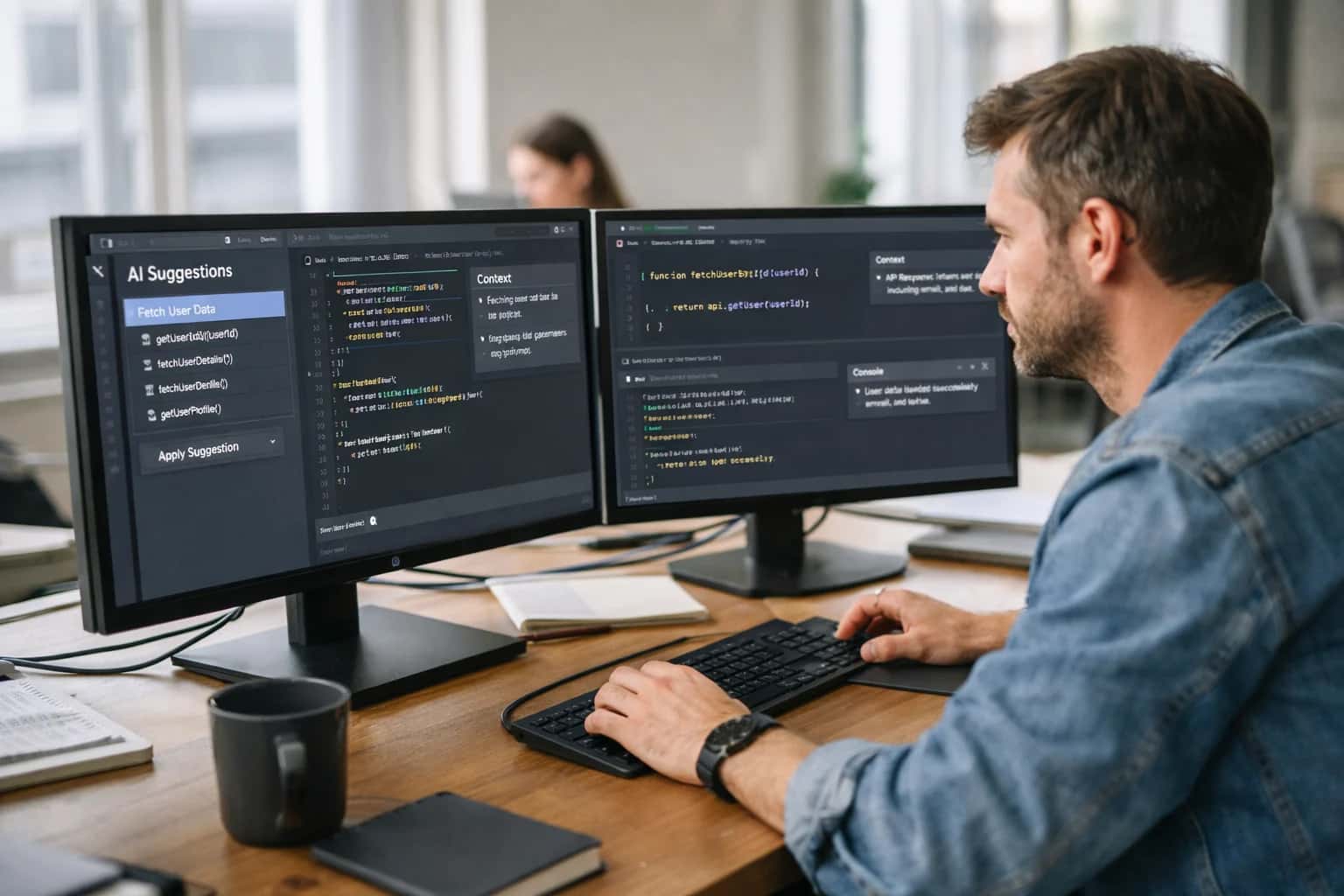
ARCHITECTING ACTIVE AGENTS
Where AI Fits: From Passive Chatbots to Active Meeting Participants
Integrating Microsoft Copilot Studio with Zoom transforms AI from a reactive chatbot into an active, data-aware participant in live meetings.
The implementation hinges on a secure orchestration layer. A Power Automate flow or a custom Azure Function typically acts as the broker. It is triggered by the meeting start (via Zoom webhook), authenticates the agent bot user into the Zoom session, and manages the bidirectional flow: sending transcribed dialogue to Copilot Studio for intent recognition and executing tool calls to backend systems like Dynamics 365 or SQL databases based on recognized queries. All agent speech or on-screen text responses are routed back through the Zoom API. Critically, this requires configuring OAuth 2.0 scopes for the Zoom bot (meeting:write, meeting:read) and ensuring the agent operates within a defined RBAC boundary to access only permitted data.
Post-meeting, the same agent shifts to synthesis mode. Leveraging the full transcript, it uses a configured post-meeting topic in Copilot Studio to generate a structured summary, extract action items with owners, and identify unresolved decisions. This output can be automatically posted to a Microsoft Teams channel, saved as a OneNote page, or used to create follow-up tasks in Planner. Governance is paramount: meetings involving the agent should be clearly indicated to all participants, and transcripts should be stored in compliance with data retention policies. Rollout often starts with pilot teams for internal strategy meetings or vendor reviews, where the value of instant data access and automated follow-up is highest.
ARCHITECTURE BLUEPRINT
Integration Touchpoints: Zoom APIs and Copilot Studio Connectors
Core API Surfaces for Agent Integration
Integrating an AI agent with Zoom requires connecting to specific APIs that enable meeting participation and data access. The primary surfaces are:
- Zoom Meeting SDK / Webhooks: For agent "joining" as a participant. This involves using the Meeting SDK to create a virtual participant or listening to webhooks (
meeting.started,meeting.ended) to trigger agent workflows. - Zoom Reports API: To fetch post-meeting artifacts like participant lists, meeting duration, and recording metadata for summary generation.
- Zoom Cloud Recording API: To securely retrieve MP4 files or audio streams for transcription and analysis. This is critical for generating accurate, grounded summaries.
A production implementation typically uses a serverless function or containerized service that authenticates via OAuth 2.0, listens for Zoom events, and manages the agent's meeting lifecycle.
COPILOT STUDIO + ZOOM
High-Value Use Cases for AI-Enhanced Meetings
Integrate Microsoft Copilot Studio agents with Zoom's API to create intelligent meeting participants that provide real-time support, automate follow-ups, and extract actionable insights, turning meetings into structured workflows.
01
Real-Time Data Lookup Agent
Deploy a Copilot Studio agent as a silent participant in Zoom sales or account review meetings. The agent listens via transcription, identifies requests for data (e.g., 'What was Q3 revenue for Acme Corp?'), and uses its connected tools to query CRM or ERP systems via API. It posts the answer directly into the Zoom chat, providing reps with instant, accurate information without leaving the call.
Minutes -> Seconds
Data retrieval time
02
Automated Post-Meeting Synthesis
At the end of a Zoom call, the Copilot Studio agent automatically processes the full transcript and recording. Using a multi-step orchestration workflow, it generates a structured summary with key decisions, action items (with owners), and open questions. This summary is then posted to a Teams channel, emailed to participants, and logged as a note in the associated CRM opportunity or project record.
1 sprint
Implementation timeline
03
Compliance & Policy Guardrail Agent
For regulated industries, deploy an agent that monitors meeting conversations in real-time for non-compliant language, undisclosed forward-looking statements, or discussions of confidential information. The agent can provide gentle, private reminders to participants via Zoom chat or trigger an alert to a compliance officer. All alerts and transcripts are logged to an audit trail in a system like SharePoint or a compliance platform.
Batch -> Real-time
Compliance monitoring
04
Intelligent Meeting Facilitator
Configure a Copilot Studio agent to actively guide structured meetings like sprint retrospectives, project kick-offs, or brainstorming sessions. Based on the agenda, the agent can ask pre-defined questions via Zoom chat, collect and anonymize participant input, run sentiment analysis on responses, and synthesize the collective feedback into themes. It turns a passive transcript into a facilitated, outcome-driven conversation.
Hours -> Minutes
Feedback synthesis
05
Action Item Tracking & Follow-Up
Transform verbal commitments into tracked tasks. The agent identifies action items from the meeting dialogue (e.g., 'John will update the proposal by Friday'), confirms details with the assignee via chat, and then uses tool calling integration to create a task in Microsoft Planner, Asana, or a CRM like Salesforce. It can also send automated, personalized follow-up reminders as the deadline approaches, closing the loop between conversation and execution.
06
Customer Support Escalation Triage
In customer success or technical support Zoom calls, an agent can listen for specific escalation triggers like 'I need to speak to a manager' or 'this is a P1 issue.' It can instantly retrieve the customer's history from a service desk like ServiceNow, provide the rep with relevant context, and simultaneously open a high-priority ticket or alert a manager in Teams—all while the conversation is still live, accelerating resolution.
Same day
Issue escalation
INTEGRATION BLUEPRINT
Example Workflows: From Meeting Start to Follow-Up
These workflows demonstrate how to connect a Microsoft Copilot Studio agent to Zoom's API, creating an intelligent meeting participant that provides real-time support and automates post-meeting tasks. Each flow outlines the trigger, data exchange, agent actions, and system updates.
Trigger: A new Zoom meeting is scheduled in a user's calendar, detected via Microsoft Graph API webhook.
Context Pulled:
- Meeting title, description, and participants from the calendar event.
- Historical notes from previous meetings with the same participants (queried from SharePoint or a CRM like Salesforce).
- Relevant project documents or briefs tagged with participant names or meeting keywords.
Agent Action: The Copilot Studio agent, acting as a meeting coordinator:
- Sends a proactive Teams message to the meeting organizer with a draft agenda synthesized from the description and historical context.
- Asks for confirmation or additions via an adaptive card.
- Once confirmed, uses the Zoom API to update the meeting description with the final agenda.
System Update: Zoom meeting details are updated. A confirmation is posted in the related Teams channel.
BUILDING A SECURE, REAL-TIME MEETING AGENT
Implementation Architecture: Data Flow, APIs, and Security
A production-ready architecture for connecting Microsoft Copilot Studio to Zoom, enabling AI agents to join meetings, retrieve data, and automate follow-up workflows.
The integration is built on a secure middleware layer that orchestrates the bidirectional flow between Microsoft Copilot Studio and Zoom's Developer Platform. The core data flow begins when a user in Teams invokes the Copilot Studio agent to schedule or join a Zoom meeting. The agent uses a custom connector to call the Zoom API, generating a meeting link and, crucially, a Zoom App OAuth token that grants the agent permission to join as a participant. Once in the meeting, the agent consumes the Zoom Meeting Webhook stream for real-time events (e.g., meeting.started, meeting.ended) and the Live Transcript API to access spoken dialogue. This transcript data is processed in near real-time by an LLM (like Azure OpenAI) hosted within your tenant, where it performs tasks such as live data lookups against approved systems (e.g., CRM, ERP) or identifies action items.
Key implementation details focus on security and state management. The agent's identity and permissions are managed via a Zoom OAuth 2.0 app registered in your Zoom marketplace account, scoped specifically to meeting:write:admin and meeting:read:admin. All API calls are routed through a secure Azure Function or similar backend service that handles token refresh, logging, and role-based access control (RBAC) to ensure only authorized Copilot topics can initiate meetings. The agent's "memory"—context from the transcript and lookup results—is maintained in a session-specific cache (like Azure Cache for Redis) to support multi-turn interactions during the meeting and to compile the final summary. Post-meeting, the architecture triggers a Power Automate flow or a webhook to your system of record, pushing the generated summary and action items to a SharePoint list, a Teams channel, or a work item in Azure DevOps.
Rollout and governance require a phased approach. Start with a pilot group, using Zoom's Meeting SDK in a "listen-only" mode where the agent joins but does not speak, focusing on post-meeting summary generation. Implement comprehensive audit logging for all agent-initiated API calls to Zoom and data systems to meet compliance needs. Critical to success is configuring Data Loss Prevention (DLP) policies in Microsoft Purview to prevent the agent from inadvertently sharing sensitive information from live data lookups into the meeting transcript. Finally, establish a human-in-the-loop approval step for the initial deployment, where summaries are drafted by the agent but reviewed by the meeting organizer before distribution, ensuring quality and control.
ARCHITECTURE PATTERNS
Code and Configuration Examples
Zoom API Authentication & Meeting Join
For a Copilot Studio agent to join a Zoom meeting as a participant, you must first authenticate with Zoom's OAuth 2.0 API and handle the Web SDK for real-time interaction. The agent acts as a "bot" user with a licensed Zoom account.
Key Configuration Steps:
- Create a Zoom App: In the Zoom App Marketplace, create a JWT or OAuth app. For production, OAuth with server-to-server scope (
meeting:write,meeting:read) is recommended for unattended bots. - Store Credentials Securely: Use Azure Key Vault or a similar service to store the
client_id,client_secret, and refresh tokens. Copilot Studio can retrieve these via a Power Platform custom connector. - Join Meeting Logic: The agent workflow triggers on a scheduled time or a "join" command. It calls the Zoom API to get the meeting's join URL or uses the Web SDK to initialize the client.
javascript// Example: Server-side Node.js to generate a meeting join signature const jwt = require('jsonwebtoken'); const payload = { appKey: process.env.ZOOM_SDK_KEY, role: 0, // 0 for participant, 1 for host tokenExp: Math.floor(Date.now() / 1000) + 3600 // 1 hour expiry }; const token = jwt.sign(payload, process.env.ZOOM_SDK_SECRET); // Return token to Copilot Studio for client-side SDK initialization
MEETING INTELLIGENCE AND OPERATIONS
Realistic Time Savings and Operational Impact
How integrating Microsoft Copilot Studio with Zoom transforms meeting preparation, execution, and follow-up for sales, customer success, and project teams.
| Workflow | Before AI | After AI | Implementation Notes |
|---|---|---|---|
Pre-meeting research and briefing | Manual search across CRM, notes, and documents (15-30 mins) | Automated briefing generated from linked systems (2-5 mins) | Agent queries Salesforce/CRM via Copilot Studio connector pre-meeting |
Real-time data lookup during call | Presenter switches screens or promises to follow up | Agent provides answers via in-meeting chat without interrupting flow | Requires Zoom API integration for bot messages and secure tool calling to business APIs |
Action item and decision capture | Relies on manual note-taking; items often missed or misassigned | Automatically extracted from transcript and drafted into tasks | Human review required before syncing to Asana/Jira; uses post-meeting processing workflow |
Post-meeting summary distribution | Manual drafting and distribution next business day | Structured summary with owners and deadlines sent within 1 hour | Summary generated via Copilot Studio, delivered via Teams/email through Power Automate |
CRM/Deal Desk update | Rep manually logs call notes and next steps (10-20 mins) | Draft update pre-populated for rep review and one-click post | Integration with Salesforce CPQ or Dynamics 365; update requires rep approval |
Follow-up email to attendees | Custom drafting for each stakeholder | Personalized first draft generated based on transcript and role | Leverages Copilot Studio's generative capabilities; sent via Outlook connector after review |
Meeting analytics and coaching | Manager reviews random call recordings quarterly | Trends on talk time, questions, and outcomes surfaced weekly | Data from Zoom transcript analytics processed by AI for insights; dashboard in Power BI |
ENTERPRISE DEPLOYMENT PATTERNS
Governance, Compliance, and Phased Rollout
A practical guide to deploying AI meeting agents with security, compliance, and user adoption in mind.
Integrating Microsoft Copilot Studio with Zoom for meeting intelligence introduces new data flows and access patterns that require deliberate governance. Key considerations include Zoom OAuth scopes (like meeting:read, recording:read, user:read), data residency for meeting transcripts and summaries, and access controls determining which meetings the agent can join. The agent's actions—joining calls, querying APIs, generating summaries—should be logged to an audit trail, linking each action to a specific meeting ID and user request for compliance reviews.
A phased rollout is critical for managing risk and refining performance. Start with a pilot group in non-sensitive, internal meetings (e.g., project stand-ups) where the agent's role is limited to post-meeting summarization. Use this phase to validate transcription accuracy, summary quality, and user feedback. Next, expand to real-time data lookups in controlled scenarios, such as pulling Salesforce opportunity data during a sales review, ensuring the agent only accesses records the meeting participants are authorized to view. Finally, enable proactive meeting join for scheduled calls, governed by a pre-defined policy (e.g., only for calls tagged with a specific Zoom label or hosted by pilot users).
For enterprise-scale deployment, integrate the agent's workflow with existing Identity and Access Management (IAM) platforms like Microsoft Entra ID to enforce role-based access. Implement a human-in-the-loop approval step for sensitive actions, such as sharing summaries externally. Use n8n or a similar orchestration layer to manage error handling, retry logic, and to pause workflows if data anomalies are detected. This structured approach ensures the AI integration enhances productivity without compromising security or compliance standards.
Enabling Efficiency, Speed & Accuracy
Intelligent Analysis, Decision & Execution
We build AI systems for teams that need search across company data, workflow automation across tools, or AI features inside products and internal software.
Talk to Us
Search across company data
Give teams answers from docs, tickets, runbooks, and product data with sources and permissions.
Useful when people spend too long searching or get different answers from different systems.
Enterprise searchRAGPermissions
Read more
Automate internal workflows
Use AI to route work, draft outputs, trigger actions, and keep approvals and logs in place.
Useful when repetitive work moves across multiple tools and teams.
AI agentsWorkflow automationGovernance
Read more
Add AI to products and internal tools
Build assistants, guided actions, or decision support into the software your team or customers already use.
Useful when AI needs to be part of the product, not a separate tool.
AI integrationDecision supportModel routing
Read moreIMPLEMENTATION BLUEPRINT
Frequently Asked Questions
Practical questions for architects and IT leaders planning to connect Microsoft Copilot Studio agents with Zoom for intelligent meeting support.
The agent joins as a standard Zoom participant via the Zoom API, requiring a dedicated service account with a licensed Zoom user seat.
Implementation Flow:
- Trigger: A scheduled meeting or an ad-hoc meeting link is provided to the agent via a Copilot Studio topic or a backend workflow (e.g., Power Automate).
- Authentication: The agent uses OAuth 2.0 or a JWT app token from your Zoom developer account to authenticate API calls.
- Join Meeting: The agent calls the
POST /meetings/{meetingId}/registrantsorPOST /meetings/{meetingId}/invite_linksendpoint to add itself as an attendee. - Permissions: The Zoom app must have the
meeting:write:adminscope. For security, the agent's service account should be added to a dedicated Zoom role with minimal privileges, and meeting IDs should be validated against an allowlist. - Data Access: Once joined, the agent can only access the meeting audio transcript (if cloud recording/transcription is enabled) and participant list—it cannot access video feeds or private chat.
Key Governance Point: Establish a clear policy for which meeting types (e.g., internal project syncs, customer QBRs) the agent is authorized to join, enforced by the workflow that triggers the invitation.

About the author
Prasad Kumkar
CEO & MD, Inference Systems
Prasad Kumkar is the CEO & MD of Inference Systems and writes about AI systems architecture, LLM infrastructure, model serving, evaluation, and production deployment. Over 5+ years, he has worked across computer vision models, L5 autonomous vehicle systems, and LLM research, with a focus on taking complex AI ideas into real-world engineering systems.
His work and writing cover AI systems, large language models, AI agents, multimodal systems, autonomous systems, inference optimization, RAG, evaluation, and production AI engineering.
LinkedIn
Limited slotsGet a Free AI Consultation
Partnered with leading AI, data, and software stack.





How We Work
Custom AI workflows for your Business
One-fit-all AI don't work for modern businesses. At Inferensys, we aim to understand your business & custom requirements; which we use to define most efficient agentic workflows, the data, and the tools for your business.
01
Review the use case
We understand the task, the users, and where AI can actually help.
Read more02
Pick the right approach
We define what needs search, automation, or product integration.
Read more03
Build the first useful version
We implement the part that proves the value first.
Read more04
Improve from there
We add the checks and visibility needed to keep it useful.
Read moreThe first call is a practical review of your use case and the right next step.
Talk to Us