The modern HR tech stack is a patchwork of specialized systems: an HRIS like BambooHR or Workday for core employee data, an ATS like Greenhouse for hiring, an LMS like Docebo for training, and communication tools like Slack or Teams. AI integration doesn't replace these systems; it connects them intelligently. With n8n, you can position AI as the orchestration layer that sits between these platforms, listening for events (like a new hire offer acceptance in the ATS) and triggering multi-step, intelligent workflows across the entire stack. The key integration surfaces are the webhooks and REST APIs exposed by each platform, which n8n uses to move data and invoke actions.

Integration
AI Integration for HR Workflows with n8n
Use n8n as a central orchestration engine to embed AI decision-making into employee lifecycle workflows—from personalized onboarding to automated offboarding—connecting HRIS, IT, communications, and learning systems.
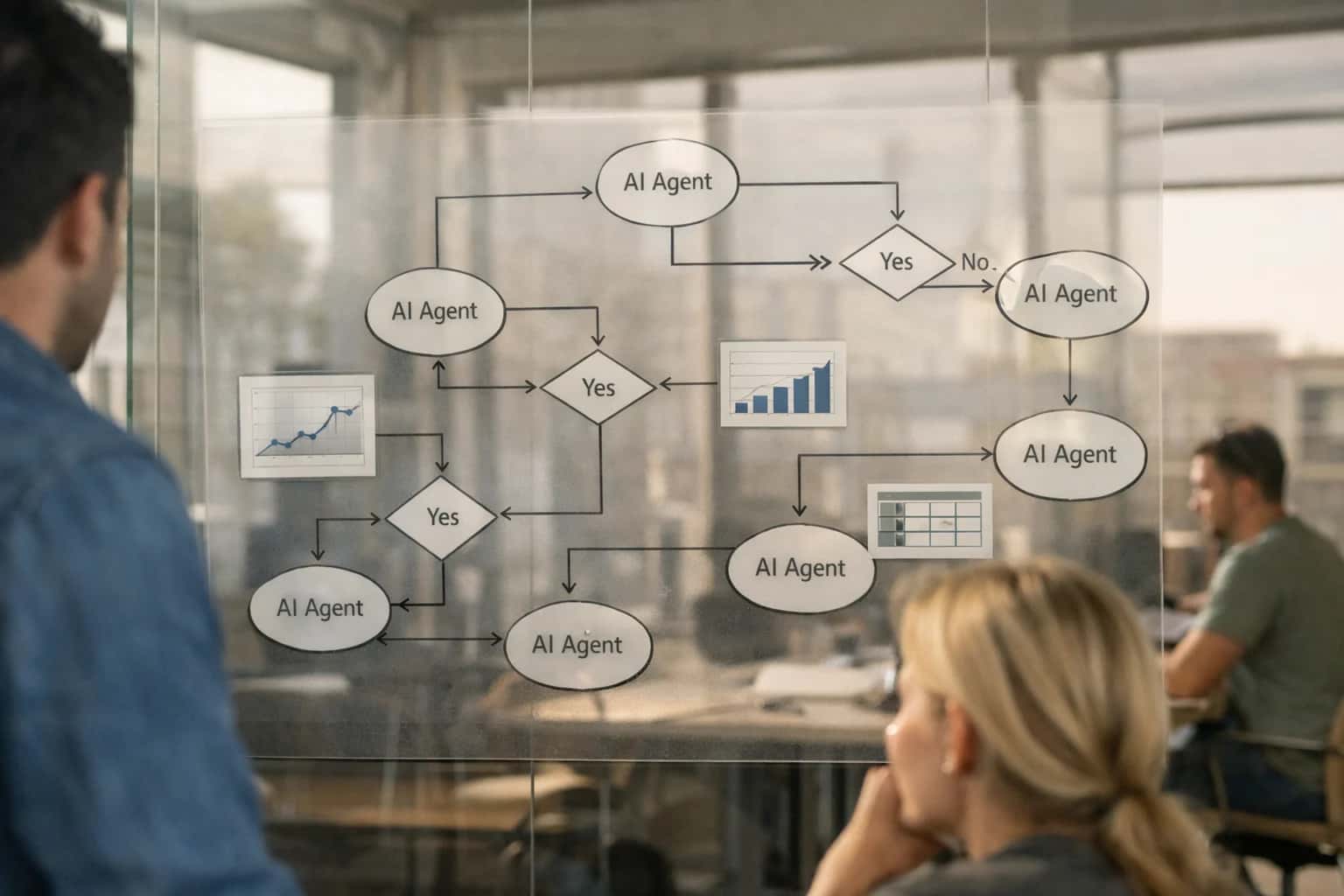
ARCHITECTURE AND ROLLOUT
Where AI Fits in the HR Tech Stack
A practical guide to integrating AI agents into HR workflows using n8n as the central orchestration layer.
For a concrete example, consider the employee onboarding workflow. A typical n8n-powered AI orchestration would: 1) Trigger on a status change in the ATS (e.g., 'Offer Accepted'), 2) Enrich the hire's data by using an AI node to analyze the job description and generate a personalized welcome message draft, 3) Execute parallel actions: create the employee record in the HRIS, provision accounts in IT systems via their APIs, assign role-specific learning paths in the LMS, and post the personalized welcome to the team's Slack channel, 4) Monitor for completion and send a summary report to the hiring manager. This turns a multi-day, manual coordination task into a same-day, auditable automated process.
Rollout and governance are critical. Start with a single, high-volume workflow like onboarding or IT ticket triage. Use n8n's built-in error handling, logging, and credential management. Implement a human-in-the-loop pattern for approvals—for instance, the AI-generated welcome message can be queued for a recruiter's quick review in a Slack interactive message before being sent. For security, ensure n8n is self-hosted or uses a private cloud instance, and that AI model nodes (like OpenAI) are configured to never log sensitive PII. This architecture allows HR and IT Ops teams to maintain control while significantly reducing manual workload and improving new hire experience.
ARCHITECTING AI WORKFLOWS WITH N8N
Key Integration Touchpoints for AI in HR
Automating High-Volume Hiring Workflows
Integrate AI at the initial stages of the employee lifecycle to reduce manual screening and accelerate time-to-productivity. Use n8n to orchestrate data flow between your ATS (like Greenhouse or Lever), communication platforms, and HRIS.
Key n8n Workflow Nodes:
- Webhook Trigger: Capture new applications from your ATS.
- AI Model Node (e.g., OpenAI): Analyze resumes against job descriptions for skill matching and initial ranking.
- Conditional Logic: Route high-scoring candidates to a calendar scheduling node (like Calendly) for interview booking, and lower-scoring ones to a templated rejection email node.
- HTTP Request Node: Upon offer acceptance, trigger a sequence in BambooHR or Workday to create the employee record, which then kicks off provisioning workflows for accounts (Google Workspace, Slack), equipment, and assigned training modules.
This creates a seamless, personalized candidate experience while ensuring all backend systems are updated in sync.
WORKFLOW AUTOMATION
High-Value AI HR Use Cases for n8n
Use n8n's visual workflow builder to embed AI agents and LLM-powered decision nodes directly into your HR operations, automating complex, multi-step processes across your HRIS, ATS, communication tools, and internal systems.
01
Intelligent Resume Screening & Triage
Build a workflow where n8n ingests resumes from your ATS (e.g., Greenhouse) or email, uses an AI node to extract and score skills/experience against a job description, and automatically routes high-potential candidates to a recruiter's queue while sending polite rejections to others.
Batch -> Real-time
Screening speed
02
Personalized Onboarding Orchestration
Orchestrate the entire employee onboarding workflow: trigger from a signed offer in your HRIS (e.g., BambooHR), use AI to generate a personalized welcome message based on role/department, then execute parallel steps for IT provisioning, training assignments, and manager notifications across 10+ integrated apps.
1 sprint
Implementation timeline
03
HR Service Desk Agent
Create an always-on HR support agent. n8n monitors a shared inbox (e.g., Gmail) or Slack channel, uses an LLM node to classify and answer common policy/benefits questions by querying your knowledge base, and only escalates complex, sensitive tickets to an HR specialist.
Hours -> Minutes
Response time
04
Exit Interview Analysis & Insights
Automate the collection and analysis of exit feedback. n8n sends survey links via email, aggregates responses, and uses AI sentiment analysis to identify common themes and risk factors. Results are summarized into a report and pushed to a dashboard (e.g., Power BI) or HRIS for retention planning.
Same day
Insight generation
05
Dynamic Training Path Recommendations
Build a workflow that syncs employee role and skill data from your HRIS/LMS (e.g., Docebo). An AI node analyzes skill gaps against career paths or project needs, then uses n8n to automatically assign relevant courses in the LMS and notify the employee and their manager with a personalized development plan.
06
Compliance Document Review & Audit
Automate periodic compliance checks. n8n fetches employee records (I-9s, certifications) from cloud storage (e.g., SharePoint), uses AI vision/OCR nodes to validate expiration dates and completeness, flags discrepancies, and generates audit trails and task assignments for HR operations.
Batch -> Real-time
Audit frequency
PRACTICAL AUTOMATION PATTERNS
Example AI-Enhanced HR Workflows in n8n
These are production-ready n8n workflows that embed AI agents and LLM decision nodes to automate high-volume, manual HR tasks. Each pattern connects to HRIS, communication, and document systems to create a seamless employee experience.
Trigger: A new candidate application is submitted via your ATS (e.g., Greenhouse) webhook.
Workflow Steps:
- n8n receives the webhook with the candidate's resume and job ID.
- An AI Model node (e.g., OpenAI GPT-4) extracts key skills, years of experience, and education from the unstructured resume text.
- A Function node compares the extracted data against the job description (fetched from the ATS API) and scores the candidate fit (0-100).
- Conditional Logic:
- If score >= 80: The workflow proceeds.
- If score < 80: An automated, polite rejection email is sent via SendGrid node; workflow ends.
- For high-scoring candidates, an AI Agent node drafts a personalized interview invitation email, incorporating role-specific details.
- A Calendly or Google Calendar node checks the hiring manager's availability and sends the candidate a scheduling link.
- The candidate's score and screening summary are written back to the ATS as a private note via API.
Human Review Point: The drafted email is sent to the recruiter's Slack channel for a quick review/approval before being sent to the candidate (optional but recommended for initial rollout).
SECURE ORCHESTRATION FOR SENSITIVE HR DATA
Implementation Architecture: Data Flow & Guardrails
A practical blueprint for connecting n8n, AI models, and HR systems while enforcing data privacy and operational control.
A production-ready architecture for HR workflows typically uses n8n as the central orchestration engine, connecting to your HRIS (like Workday or BambooHR) via its native nodes or custom API calls. The core data flow is event-driven: a webhook from your HRIS triggers an n8n workflow on events like new_hire_created. This workflow then executes a sequence where sensitive employee data (role, department, start date) is passed to an AI model node—like the OpenAI node—only after being stripped of direct identifiers (PII) where possible. The AI generates personalized content, such as a welcome message draft or a tailored onboarding checklist. n8n then uses the results to execute actions across other systems: sending the welcome email via SendGrid, creating training assignments in the LMS (like Docebo), and provisioning accounts in Active Directory via a dedicated connector.
Critical guardrails are implemented directly within the n8n workflow canvas. This includes:
- Conditional Logic & Approval Nodes: Before any system modification (like account creation), the workflow can pause and route a summary of proposed actions to a manager or IT via email or Slack for approval using n8n's Wait node.
- Data Sanitization & Logging: A Function node scrubs incoming employee records of unnecessary PII before the AI call. All prompts, AI responses, and subsequent system actions are logged to a secure audit database (like PostgreSQL) using n8n's Postgres node for compliance review.
- Error Handling & Retries: Each external API call (to HRIS, LMS, etc.) is wrapped in n8n's built-in error handling, with automatic retries for transient failures and a dedicated failure path that alerts an operations team.
Rollout follows a phased approach, starting with a single, low-risk workflow like welcome_message_generation in a sandbox HRIS environment. Governance is maintained by version-controlling n8n workflows in Git and assigning workflow ownership to HR Operations teams, who can modify business logic without touching code. The final architecture ensures AI acts as a controlled assistant within a predefined, auditable process—never making autonomous changes to core HR records without a human or system checkpoint.
HR WORKFLOW AUTOMATION WITH N8N
Code & Configuration Patterns
Core Workflow Triggers & Data Flow
An n8n workflow for employee onboarding typically starts with a webhook from your ATS (like Greenhouse) or a scheduled trigger from your HRIS (like BambooHR). The workflow receives a JSON payload containing the new hire's details: name, email, role, department, start_date, and manager_email.
The first AI node can be an OpenAI or Anthropic node that personalizes a welcome message. It uses a system prompt like: "You are an HR coordinator. Generate a warm, personalized welcome email for a new [role] in the [department] department, starting on [start_date]. Mention their manager, [manager_name]. Keep it under 150 words." The workflow then uses the Email node (SMTP or SendGrid) to send this generated message.
Subsequent nodes handle system provisioning: a Code node can format a JSON request for your IT team's ticketing system (e.g., Jira Service Management) to create accounts in Active Directory, Google Workspace, and Slack. Another branch can use the HTTP Request node to create a project in Asana or Monday.com with a templated task list for the hire's first week.
AI-ORCHESTRATED HR ONBOARDING WITH N8N
Realistic Time Savings & Operational Impact
This table illustrates the measurable efficiency gains and operational improvements when using n8n to orchestrate AI-enhanced HR workflows, focusing on the employee onboarding process.
| Workflow Stage | Before AI & n8n | After AI & n8n Orchestration | Implementation Notes |
|---|---|---|---|
Offer Letter & Document Generation | Manual drafting, version control in email/Word | Automated assembly from templates, AI personalization | Triggers from ATS; uses candidate data for role-specific clauses |
Account & System Provisioning | IT ticket submitted, manual setup across 5-10 systems | Automated API calls to Okta, Google Workspace, HRIS | n8n workflow executes after signed offer; status tracked centrally |
Welcome & Onboarding Schedule | Generic calendar invite, manual task assignment in spreadsheet | AI-generated personalized welcome note, dynamic 30-60-90 day plan | Plan adapts based on role/department; tasks auto-assigned in Asana |
Training Module Assignment | Manual review of job description, bulk assignment in LMS | AI analyzes role & maps to skill-based learning paths in Docebo | Path includes mandatory compliance and optional upskilling modules |
Equipment & Workspace Setup | Manual form submission, follow-up emails to facilities | Automated procurement request in Coupa, shipping label generation | Workflow includes approval node for manager if cost exceeds standard |
Day-1 Buddy & Mentor Matching | HR manual match based on availability, often suboptimal | AI suggests matches based on role, tenure, and shared interests | n8n sends intro email to both parties with suggested icebreakers |
Onboarding Compliance & Tracking | Spreadsheet checklists, manual follow-up for missing items | Centralized dashboard in n8n, automated reminder escalations | Workflow pauses and alerts HR if any critical step (e.g., I-9) is delayed |
ENTERPRISE-READY IMPLEMENTATION
Governance, Security & Phased Rollout
Deploying AI in HR requires a controlled, secure approach that respects employee data and integrates seamlessly with existing governance.
A production n8n workflow for HR must be built with data privacy by design. This means configuring n8n to connect to your HRIS (like Workday or BambooHR) and other systems (like IT for account provisioning) using OAuth or service accounts with principle of least privilege. AI nodes should be configured to never log full PII in model calls; instead, use unique employee IDs and fetch sensitive details only when required for a specific task, such as personalizing a welcome message. All workflow execution logs, including prompts sent to and responses from the LLM, should be written to a secure audit trail for compliance reviews.
Start with a phased rollout to manage risk and gather feedback. Phase 1 could automate a single, high-volume task like sending standardized offer letter packages, using n8n to pull data, generate PDFs, and dispatch emails—without AI. Phase 2 introduces AI for low-risk personalization, such as using a template to draft a welcome message that includes the new hire's name, team, and start date. Phase 3 expands to more complex orchestration, like using an LLM to analyze a job description and automatically assign relevant training modules from your LMS (e.g., Cornerstone) in the onboarding checklist.
Governance is critical for AI-generated content. Implement a human-in-the-loop (HITL) checkpoint for any AI-drafted communication before it's sent. In n8n, this is a simple conditional node that routes the AI-generated welcome email to the hiring manager's Slack or email for approval before the "Send Email" node executes. This ensures tone, accuracy, and policy compliance. Furthermore, establish a regular review cycle of the AI's output quality and the workflow's performance metrics, adjusting prompts and logic as your onboarding process evolves.
Enabling Efficiency, Speed & Accuracy
Intelligent Analysis, Decision & Execution
We build AI systems for teams that need search across company data, workflow automation across tools, or AI features inside products and internal software.
Talk to Us
Search across company data
Give teams answers from docs, tickets, runbooks, and product data with sources and permissions.
Useful when people spend too long searching or get different answers from different systems.
Enterprise searchRAGPermissions
Read more
Automate internal workflows
Use AI to route work, draft outputs, trigger actions, and keep approvals and logs in place.
Useful when repetitive work moves across multiple tools and teams.
AI agentsWorkflow automationGovernance
Read more
Add AI to products and internal tools
Build assistants, guided actions, or decision support into the software your team or customers already use.
Useful when AI needs to be part of the product, not a separate tool.
AI integrationDecision supportModel routing
Read moreIMPLEMENTATION BLUEPRINT
Frequently Asked Questions
Practical questions for engineering and HR teams planning to automate employee lifecycle workflows with n8n and AI.
A production-ready architecture for employee onboarding typically involves n8n as the orchestration engine, connecting to your HRIS, IT systems, and AI models.
Core Components:
- Trigger: A webhook from your HRIS (e.g., Workday, BambooHR) firing on
hire_dateor status change to "Onboarding." - Context Enrichment: n8n nodes fetch the new hire's record (role, department, manager, start date).
- AI Personalization Node: An HTTP Request node calls an LLM API (e.g., OpenAI, Anthropic) with a prompt template and the hire's data to generate a personalized welcome message, first-week agenda, and role-specific resource links.
- Multi-System Orchestration: Parallel n8n branches execute:
- IT Provisioning: Calls APIs to create accounts in Active Directory, Microsoft 365, Slack, and assign software licenses.
- Training Assignment: Enrolls the employee in required compliance and role-specific courses in the LMS (e.g., Docebo, Cornerstone).
- Communications: Sends the AI-generated welcome email, adds the hire to relevant Teams/Slack channels, and schedules intro meetings with the manager.
- Human Review & Exception Handling: A manual workflow node pauses for manager approval if any provisioning step fails or if the hire requires special equipment. Audit logs are written to a database.
This creates a resilient, auditable system where AI handles the variable, personalized content while n8n manages the deterministic system calls.

About the author
Prasad Kumkar
CEO & MD, Inference Systems
Prasad Kumkar is the CEO & MD of Inference Systems and writes about AI systems architecture, LLM infrastructure, model serving, evaluation, and production deployment. Over 5+ years, he has worked across computer vision models, L5 autonomous vehicle systems, and LLM research, with a focus on taking complex AI ideas into real-world engineering systems.
His work and writing cover AI systems, large language models, AI agents, multimodal systems, autonomous systems, inference optimization, RAG, evaluation, and production AI engineering.
LinkedIn
Limited slotsGet a Free AI Consultation
Partnered with leading AI, data, and software stack.





How We Work
Custom AI workflows for your Business
One-fit-all AI don't work for modern businesses. At Inferensys, we aim to understand your business & custom requirements; which we use to define most efficient agentic workflows, the data, and the tools for your business.
01
Review the use case
We understand the task, the users, and where AI can actually help.
Read more02
Pick the right approach
We define what needs search, automation, or product integration.
Read more03
Build the first useful version
We implement the part that proves the value first.
Read more04
Improve from there
We add the checks and visibility needed to keep it useful.
Read moreThe first call is a practical review of your use case and the right next step.
Talk to Us