
Inferensys

Integration

Intelligent Inventory Control for Odoo

Blueprint for implementing AI-powered inventory control in Odoo Manufacturing and Inventory apps, including demand forecasting, safety stock calculation, and warehouse optimization.
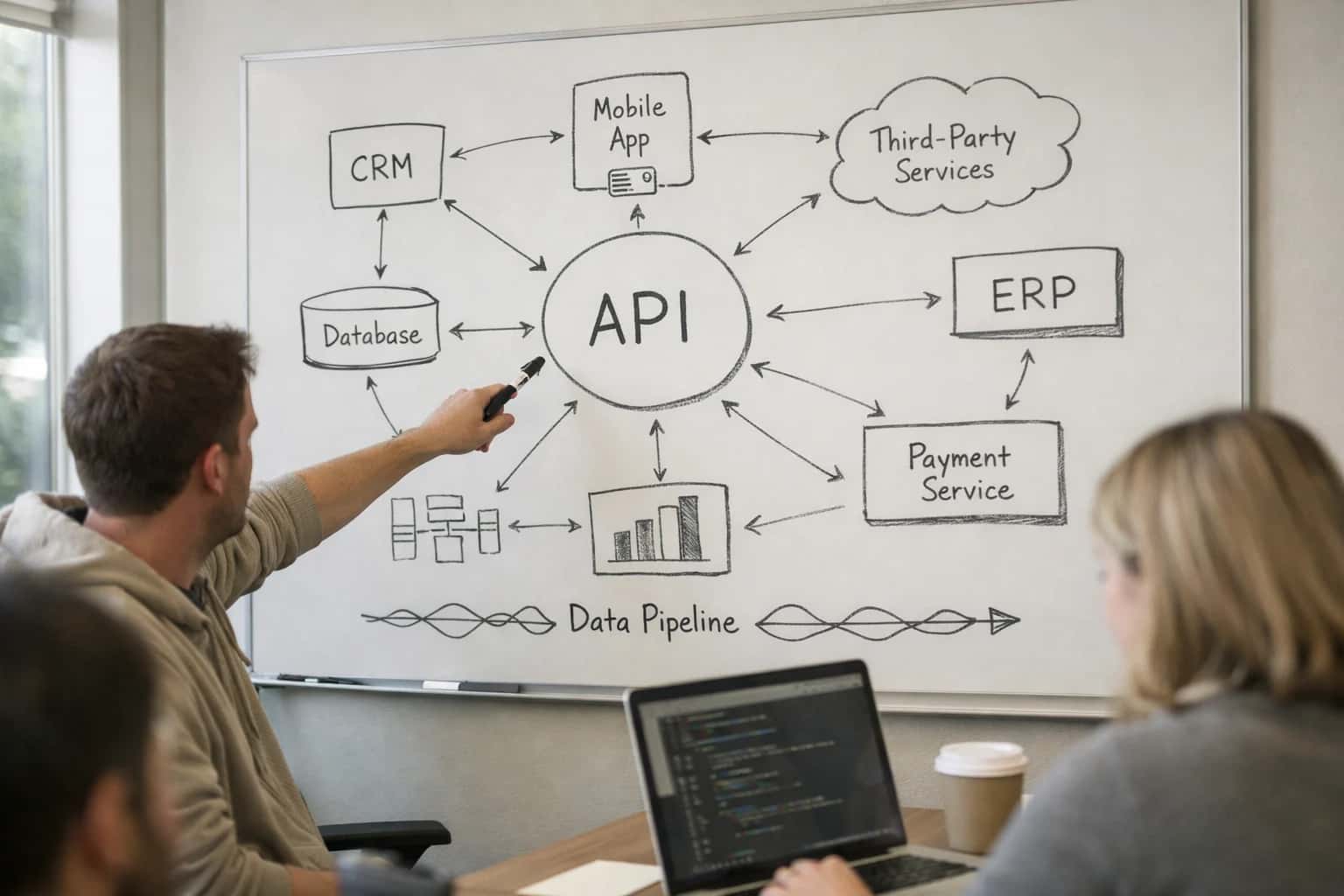
Enterprise integration architect reviewing API connections on laptop, diagram showing systems connecting, modern office setup.
ARCHITECTURE AND ROLLOUT

Where AI Fits in Odoo Inventory and Manufacturing

A blueprint for embedding AI agents into Odoo's core operational modules to automate forecasting, optimize stock, and guide production decisions.

AI integration for Odoo Manufacturing and Inventory targets specific data objects and automation surfaces to create closed-loop intelligence. The primary integration points are:

  • Demand Planning Module (mrp.forecast): AI agents ingest historical sales orders, seasonality, and external signals to generate and update forecast lines, directly influencing Master Production Schedules (MPS).
  • Bill of Materials (mrp.bom) and Routings: AI analyzes component lead times and production yields to suggest optimal BOM levels and routing sequences, reducing waste.
  • Stock Moves (stock.move) and Warehouse Operations (stock.picking): AI monitors real-time move lines to predict delays, suggest dynamic put-away and picking strategies, and trigger reorder points (stock.warehouse.orderpoint) based on probabilistic safety stock models.
  • Work Orders (mrp.workorder): AI copilots provide operators with real-time guidance on quality checks and exception handling by analyzing work center performance data.


Implementation typically involves a middleware layer that subscribes to Odoo's webhooks (e.g., stock.move creation, sale.order confirmation) and uses Odoo's External API (XML-RPC or JSON-RPC) to write back recommendations. For example, an AI service listening to stock.move events can calculate a new safety stock level and update the product.product record via API, or create a procurement suggestion. This keeps the core Odoo database as the system of record while an external AI service handles complex forecasting and optimization logic. Key workflows include:

Automated Replenishment: AI evaluates stock.quant levels, open purchase orders (purchase.order), and manufacturing orders (mrp.production) to generate smart procurement recommendations, moving from static min/max rules to dynamic, demand-aware triggers. Production Scheduling Agent: An AI agent analyzes the mrp.production schedule against component availability (stock.quant) and work center capacity to propose rescheduling or splitting of orders, pushing alerts to the mrp.workcenter dashboard.

Rollout should be phased, starting with a single warehouse or product category to validate forecasts and tune models. Governance is critical: all AI-generated suggestions (like a new forecast quantity or production order date change) should be logged in a custom model (e.g., ai.suggestion.log) with a human-in-the-loop approval step (state='to_approve') before Odoo's native automation executes. This creates an audit trail and allows planners to override AI decisions, building trust. Performance is measured by reduction in stockouts, decrease in carrying costs, and improvement in on-time production completion—realistic targets are 10-30% improvements, not orders of magnitude.

INTELLIGENT INVENTORY CONTROL

Key Odoo Modules and Surfaces for AI Integration

Manufacturing (MRP II)

The Manufacturing module is the core of production planning. AI integration here focuses on optimizing the Master Production Schedule (MPS) and Material Requirements Planning (MRP). An AI agent can analyze historical sales orders, current work orders (mrp.production), and component lead times to generate dynamic, demand-driven production plans.

Key surfaces for integration include:

  • Work Order Scheduling: AI can sequence jobs on work centers (mrp.workcenter) to minimize changeover time and bottlenecks.
  • Bill of Materials (BOM) Analysis: AI can suggest alternative components or flag potential shortages by analyzing BOM (mrp.bom) complexity and supplier reliability.
  • Capacity Planning: By ingesting data from mrp.workcenter.productivity, AI models can forecast capacity constraints and recommend adjustments to labor or machine allocation.

Implementation typically involves listening to webhooks for new sales orders or inventory adjustments, then calling the Odoo API to create or modify manufacturing orders with AI-recommended quantities and dates.

INTELLIGENT INVENTORY CONTROL

High-Value AI Use Cases for Odoo Inventory

Practical AI integration patterns for Odoo's Manufacturing and Inventory apps, designed to automate forecasting, optimize stock levels, and reduce carrying costs for product-based businesses.

01

AI-Powered Demand Forecasting

Integrate AI models with Odoo's sales history and product master data to generate probabilistic demand forecasts. Models consume seasonal trends, promotional calendars, and lead times to update reorder points and safety stock levels in Odoo's product variants automatically, shifting planning from reactive to predictive.

Weeks -> Days
Planning cycle
02

Automated Safety Stock Calculation

Deploy an AI agent that continuously analyzes Odoo's stock moves, supplier performance (delivery variance), and demand variability. It dynamically calculates and updates the product.product safety stock field, preventing stockouts for high-velocity SKUs without over-investing in slow-movers.

Batch -> Real-time
Recalculation
03

Intelligent Purchase Order Suggestion

Build an AI workflow that monitors Odoo's stock.warehouse.orderpoint rules and supplier catalogs. It suggests optimized POs by evaluating bulk discounts, container loads, and supplier reliability, then drafts purchase orders in Odoo's purchase module for buyer review, consolidating orders to minimize freight costs.

Hours -> Minutes
PO drafting
04

Warehouse Slotting & Picking Optimization

Integrate AI with Odoo's stock.picking and warehouse layout data. Analyze pick paths and product affinity (which items are often ordered together) to suggest optimal storage locations (stock.location). This reduces picker travel time and can be implemented via a custom module that updates put-away rules.

1 sprint
Typical POC
05

Dead Stock & Slow-Mover Identification

Create an AI analysis job that runs against Odoo's stock.quant and sale.order.line data. It identifies dead stock and slow-moving inventory by calculating days of cover and turnover rates, then generates actionable reports in Odoo or suggests markdown strategies via the point_of_sale or website_sale modules.

Monthly -> Daily
Insight cadence
06

Production Material Reservation Agent

For manufacturers using Odoo's mrp module, deploy an AI agent that monitors mrp.production orders and raw material availability. It can proactively reserve components from available stock (stock.move), suggest alternative materials from the product.template BOM, or flag potential shortages to planners before production starts.

Next-day -> Same-day
Shortage visibility
ODOO MANUFACTURING & INVENTORY

Example AI-Powered Inventory Workflows

These concrete workflows show how AI agents connect to Odoo's Manufacturing and Inventory apps to automate decision-making, reduce stockouts, and optimize warehouse operations. Each flow is triggered by Odoo events and results in a system update or actionable alert.

Trigger: A new sales order is confirmed in Odoo, or a scheduled daily batch job runs.

Context Pulled: The AI agent fetches:

  • Historical demand for the sold product (from stock.move and sale.order.line).
  • Current on-hand and reserved quantities (from stock.quant).
  • Lead times from active suppliers (from purchase.order and product.supplierinfo).
  • Any upcoming planned production orders (from mrp.production).

Agent Action: A forecasting model analyzes the data to predict demand variability and recalculates the optimal safety stock level for the product, considering a target service level (e.g., 95%).

System Update: The agent updates the product's product.template record via Odoo's API, setting the new reordering_min_qty (safety stock) field. If the new level is significantly higher and current stock is low, it can automatically create a draft Purchase Order or Manufacturing Request.

Human Review Point: A procurement manager receives a notification in Odoo's Chatter for any safety stock change exceeding a pre-defined percentage threshold, allowing for manual override.

BUILDING A PRODUCTION SYSTEM

Integration Architecture: Data Flow and System Design

A practical blueprint for connecting AI agents to Odoo's Manufacturing and Inventory apps to automate demand forecasting, safety stock calculation, and warehouse optimization.

The integration connects to Odoo's core data models via its REST API and ORM (Object-Relational Mapping) layer. Key objects include product.product (items), stock.move (inventory movements), stock.quant (on-hand quantities), stock.picking (transfers), and sale.order (demand signals). An AI agent, hosted externally for compute isolation, subscribes to webhooks for events like stock.move:create and sale.order:confirmed. It processes this stream to maintain a real-time vector index of item velocity, seasonality, and supplier lead times, enabling on-demand forecasting queries.

For demand forecasting, the agent analyzes historical stock.move records and open sale.order lines. It uses this data, enriched with external signals like promotional calendars from Odoo's calendar.event module, to generate probabilistic forecasts. Results are written back to Odoo as product.product fields (e.g., forecasted_qty) or custom stock.warehouse.orderpoint records to trigger automated reordering. Safety stock calculation is dynamic, adjusting based on forecast error and stock.picking delay analytics. The system can propose optimal warehouse slotting by analyzing stock.picking routes and stock.quant locations to minimize travel time.

Rollout is phased, starting with a single warehouse or product category. Governance is critical: all AI-generated proposals (like new order points) are written to a custom ai.suggestion model in Odoo, requiring approval via a approval.request workflow before execution. This creates a full audit trail. The external AI service authenticates via Odoo's OAuth2, with permissions scoped to specific databases and models, ensuring data isolation for multi-tenant deployments common in Odoo hosting.

INTELLIGENT INVENTORY CONTROL FOR ODOO

Code and API Integration Patterns

Integrating AI with Odoo Sales and Inventory Data

Demand forecasting models require clean historical data from Odoo's sale.order.line and stock.move models. The typical integration pattern involves a scheduled action (cron job) that extracts aggregated sales data, enriches it with external signals (e.g., seasonality, promotions), and calls an AI service via REST API.

Key Odoo Models:

  • sale.order & sale.order.line for past demand.
  • product.product for item attributes.
  • stock.quant for current inventory levels.

Example Python payload for model inference:

python
# Payload to AI forecasting service
forecast_request = {
    "product_ids": [1001, 1002],
    "historical_sales": [
        {"product_id": 1001, "date": "2024-01", "qty": 150},
        {"product_id": 1001, "date": "2024-02", "qty": 180}
    ],
    "current_stock": {1001: 45, 1002: 120},
    "forecast_horizon": "next_90_days"
}
# Result updates Odoo's product.replenishment rules

The AI service returns forecasted quantities, which are then written back to Odoo to update product.replenishment rules or create draft purchase orders automatically.

INTELLIGENT INVENTORY CONTROL

Realistic Time Savings and Business Impact

How AI integration transforms core Odoo Manufacturing and Inventory workflows, moving from reactive to proactive operations.

Workflow / MetricBefore AI (Manual)After AI (Intelligent)Implementation Notes

Demand Forecasting

Spreadsheet-based, historical averages

AI-driven multi-factor forecasts

Integrates with Odoo Sales, MRP; accounts for seasonality, promotions

Safety Stock Calculation

Static, rule-of-thumb levels

Dynamic, risk-adjusted calculations

Uses lead time variability, service level targets from Odoo data

Purchase Order Generation

Manual review of stock levels

Automated PO suggestions with rationale

AI proposes POs; buyer reviews/confirms in Odoo Purchase

Excess & Slow-Moving Identification

Monthly report review

Real-time alerts with root-cause analysis

Flags items in Odoo Inventory; suggests markdown or bundle strategies

Warehouse Slotting & Replenishment

Fixed locations, periodic walk-throughs

Dynamic put-away & pick-path optimization

Analyzes Odoo picking data; suggests layout changes in Warehouse app

Production Material Reservation

Manual check of component availability

Automated availability checks & alerts

Integrates with Odoo MRP; alerts planners before order confirmation

Inventory Reconciliation Variance

Post-count investigation

Pre-count anomaly detection

AI reviews transaction history before physical count to flag likely discrepancies

Carrying Cost Analysis

Quarterly financial review

Continuous cost simulation & reporting

Models impact of AI suggestions on storage, insurance, obsolescence costs

OPERATIONALIZING AI INVENTORY CONTROL

Governance, Permissions, and Phased Rollout

A practical guide to deploying AI inventory agents in Odoo with controlled access, audit trails, and incremental value delivery.

AI inventory control in Odoo operates across the Manufacturing, Inventory, and Purchase apps, requiring careful permission scoping. We recommend creating a dedicated Odoo user group (e.g., AI Inventory Manager) with explicit access to key models: stock.move, stock.quant, product.product, purchase.order, and mrp.production. This isolates the AI agent's actions for clear auditability and prevents unintended changes to sensitive fields like cost or lot numbers. All AI-generated suggestions—such as a proposed safety stock adjustment or a purchase order line—should be logged as notes on the relevant record and, for critical actions, routed through Odoo's built-in approval workflows (e.g., a purchase order requiring a manager's validation).

A phased rollout minimizes risk and builds trust. Phase 1 focuses on monitoring and alerting. Deploy AI models for demand forecasting and safety stock calculation in a read-only mode, surfacing insights via Odoo's messaging system or a custom dashboard. This allows warehouse and procurement teams to review AI recommendations without automatic execution. Phase 2 introduces semi-automated workflows. For example, the AI can draft purchase order proposals for low-risk, high-turnover items, but a planner must review and confirm them within Odoo's interface. Phase 3 enables closed-loop automation for predefined, rule-based scenarios, such as auto-creating internal transfers for replenishment between warehouses based on AI-calculated min/max levels, with all actions fully traceable in Odoo's logs.

Governance is maintained through a weekly review of the AI's performance metrics (forecast accuracy, stockout prevention rate) and its audit trail. Establish a clear rollback procedure: any automated rule can be paused instantly via a simple toggle in a custom Odoo module, reverting control to manual processes. This approach ensures the integration enhances Odoo's native capabilities—turning data into proactive inventory decisions—while keeping human oversight firmly in the loop for strategic exceptions and continuous improvement.

IMPLEMENTATION BLUEPRINT

Frequently Asked Questions

Practical questions for operations and IT leaders planning AI-powered inventory control in Odoo Manufacturing and Inventory apps.

The integration connects at the API and database level, primarily using Odoo's external API (XML-RPC or JSON-RPC) and webhooks. Key data objects are pulled for forecasting:

  • Product Data: product.product (SKUs, variants, categories)
  • Stock Moves: stock.move (historical inbound, outbound, internal transfers)
  • Sales Orders: sale.order.line (committed demand)
  • Purchase Orders: purchase.order.line (planned supply)
  • Warehouse Data: stock.warehouse and stock.location (storage logic)

The AI agent queries this data, runs time-series forecasting models (e.g., Prophet, ARIMA), and writes recommendations back to Odoo as:

  • Suggested reorder quantities on product.product
  • Draft purchase orders in purchase.order
  • Alerts in mail.message or custom log models.

Typical Payload for a Forecast Request:

json
{
  "product_ids": [1001, 1002, 1003],
  "warehouse_id": 5,
  "forecast_horizon_days": 90,
  "include_seasonality": true
}
Prasad Kumkar

About the author

Prasad Kumkar

CEO & MD, Inference Systems

Prasad Kumkar is the CEO & MD of Inference Systems and writes about AI systems architecture, LLM infrastructure, model serving, evaluation, and production deployment. Over 5+ years, he has worked across computer vision models, L5 autonomous vehicle systems, and LLM research, with a focus on taking complex AI ideas into real-world engineering systems.

His work and writing cover AI systems, large language models, AI agents, multimodal systems, autonomous systems, inference optimization, RAG, evaluation, and production AI engineering.


