
Inferensys

Integration

Intelligent Bookkeeping for Odoo

A practical guide to integrating AI with Odoo's open-source accounting module to automate transaction entry, categorization, and reconciliation, reducing manual bookkeeping for SMBs.
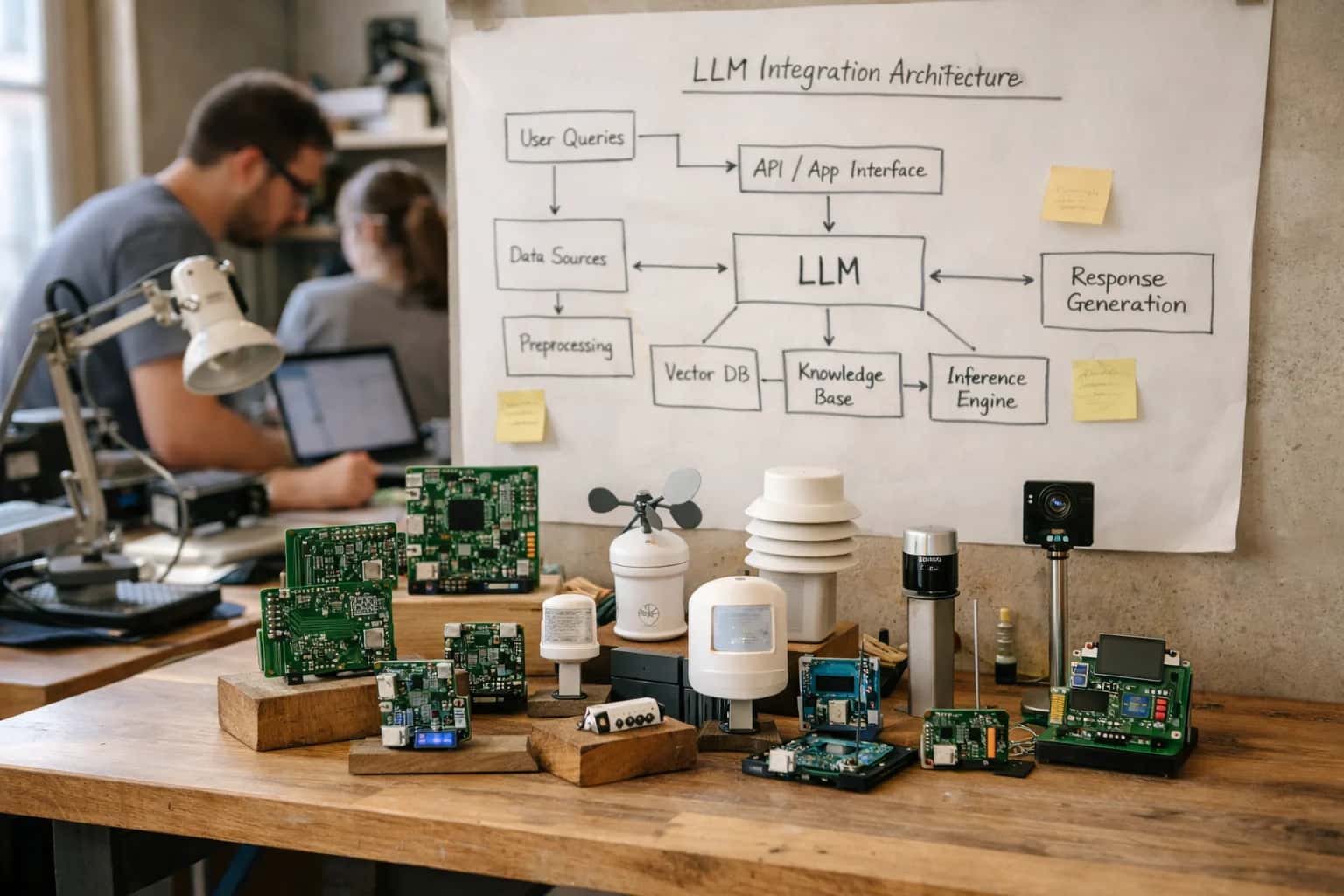
Hardware engineer integrating LLM with IoT sensors, circuit boards on desk, soldering iron nearby, maker lab aesthetic.
INTELLIGENT BOOKKEEPING FOR ODOO

Where AI Fits into Odoo's Accounting Workflow

A practical blueprint for embedding AI agents into Odoo's open-source accounting modules to automate transaction entry, reconciliation, and reporting for SMBs.

AI integration for Odoo focuses on automating the manual data flow between its core operational modules and the General Ledger. The primary surfaces are:

  • Bank Reconciliation: AI agents connect to bank feeds via Odoo's account.bank.statement.line model to match and code transactions, suggesting matches for account.move records.
  • Sales-to-Invoice: From the Sales app (sale.order), AI can draft customer invoices (account.move of type out_invoice) with correct taxes and payment terms.
  • Purchase-to-Bill: From Purchase Orders (purchase.order), AI can generate vendor bills (account.move of type in_invoice), extract data from scanned documents via OCR, and route for approval.
  • Expense Management: AI can process employee-submitted receipts, code them to the correct accounts and analytic tags, and create expense reports (hr.expense).

Implementation typically involves a middleware service that listens to Odoo webhooks (e.g., on sale.order.confirmed or a new bank statement line) and uses Odoo's external API (XML-RPC or JSON-RPC) to create and update records. An AI layer classifies transactions, extracts data from attachments using models like res.partner for vendor/customer matching, and posts suggested journal entries to a staging area like a custom ai.suggestion model. Key workflows include:

Automated Month-End Close: An AI agent sequences tasks—verifying all account.move records are posted, proposing adjusting entries for prepayments or accruals, running reconciliation reports, and finally locking the period via account.period. Intelligent Collections: AI analyzes the account.move (invoice) aging report, segments customers by res.partner payment history, and automates dunning workflows through Odoo's mail.template and scheduled actions.

Rollout should start with a single, high-volume workflow like bank reconciliation for a primary currency. Governance is critical: all AI-suggested entries should be logged in a custom model with an audit trail, require configurable approval (e.g., for entries over a set amount or for new vendors), and be reversible. This ensures the bookkeeper remains in control while offloading repetitive data entry. For SMBs, the impact is operational: reducing manual bookkeeping from hours to minutes per day, catching coding errors before posting, and providing real-time cash flow visibility by keeping the ledger current. For a deeper technical dive on building these agents, see our guide on Intelligent Bookkeeping for Odoo.

INTELLIGENT BOOKKEEPING FOR ODOO

Key Integration Points in Odoo's Accounting Module

Automating Transaction Matching

Odoo's account.bank.statement model is the primary surface for AI integration. An intelligent agent can ingest bank feed data via Odoo's API, then match transactions to existing account.move records (invoices, bills) using semantic similarity, amount, and date logic. For unmatched lines, the AI can suggest journal entries by analyzing vendor names, memo fields, and historical patterns.

Example Workflow:

  1. Webhook triggers on new bank statement line.
  2. AI agent queries Odoo for open invoices/bills and recent journal entries.
  3. Agent uses vector similarity to find the best match or proposes a new entry with a predicted account (e.g., Utilities Expense).
  4. Proposed match is logged in a custom model (ai.reconciliation.suggestion) for human review or auto-post based on confidence score.

This reduces manual reconciliation from hours to minutes for SMBs.

INTEGRATION PATTERNS FOR SMBs

High-Value AI Bookkeeping Use Cases for Odoo

Practical AI integration patterns for Odoo's open-source accounting module, designed to automate core bookkeeping workflows, reduce manual entry, and provide real-time financial insights for growing product and service businesses.

01

Automated Bank Statement Reconciliation

AI agents connect to Odoo's account.bank.statement.line model via API to match incoming transactions against open invoices (account.move), bills, and previous entries. The system learns from manual corrections to improve matching rules, handles multi-currency transactions, and flags unreconciled items for review. This turns a daily manual task into a batch verification process.

Daily -> Batch
Reconciliation cadence
02

Intelligent Bill Entry & Coding

Integrates AI-powered OCR and NLP with Odoo's Vendor Bills (account.move with type in_invoice). The system extracts data from scanned invoices or email attachments, suggests the correct vendor (res.partner), expense account (account.account), and analytic tags based on historical patterns. It then creates draft bills in Odoo for AP clerk review and approval, slashing data entry time.

Hours -> Minutes
Per batch of invoices
03

Sales-to-GL Automation

AI monitors confirmed Sales Orders (sale.order) and Delivery Slips (stock.picking). When goods are delivered, the agent automatically generates Customer Invoices (account.move with type out_invoice), applying the correct product taxes, payment terms, and revenue accounts. This closes the gap between Odoo's Sales and Accounting modules, ensuring real-time revenue recognition.

Real-time
Revenue posting
04

Anomaly Detection for Finance Control

A lightweight ML model runs on Odoo's account.move.line data via scheduled actions. It establishes baselines for vendor payments, customer refunds, and journal entries to flag outliers—like duplicate payments, unusual expense categories, or inventory valuation spikes. Alerts are posted to Odoo's Discuss module or sent via email to the controller, providing continuous audit support.

Proactive
Risk monitoring
05

AI-Powered Period-End Close

An AI orchestrator automates the sequence of closing tasks in Odoo Accounting. It verifies all journal entries are posted, runs reconciliation reports, proposes necessary adjusting entries (e.g., for accruals or prepayments), and can lock past periods. This workflow is managed through a custom module or integrated with Odoo's Studio, providing the owner or accountant with a clear close checklist and audit trail.

1-2 Days Faster
Typical close cycle
06

Narrative Financial Reporting

An AI reporting agent queries Odoo's reporting engine (via account.report or direct SQL to the account_move_line table) for P&L, Balance Sheet, and Cash Flow data. It then generates plain-language summaries in Odoo Notes or PDFs, explaining key variances (e.g., "Sales increased 15% month-over-month, driven by Product X"), making financials accessible to non-accountant managers and owners.

Same-day
Insight generation
INTELLIGENT BOOKKEEPING FOR ODOO

Example AI-Powered Bookkeeping Workflows

These concrete workflows illustrate how AI agents can integrate with Odoo's open-source accounting module to automate high-volume, manual tasks. Each example connects to specific Odoo APIs, models, and user roles.

Trigger: A new bank statement line is imported via Odoo's account.bank.statement.line model, either through a scheduled bank feed or a manual upload.

Context Pulled: The AI agent retrieves the statement line details (amount, date, counterparty name) and queries Odoo's account.move.line (journal items) for the last 90 days, focusing on open customer invoices (account.move with type 'out_invoice') and vendor bills (type 'in_invoice').

Agent Action: A retrieval-augmented generation (RAG) model compares the statement line against historical matches and Odoo's partner records. It suggests the most probable match, classifying it as:

  • Full Match: To an open invoice/bill (suggesting payment).
  • Partial Match: To a partner with similar past transactions (suggesting a payment on account).
  • Expense Candidate: Based on counterparty name, suggesting a new bill or expense.

System Update: The agent creates a draft reconciliation proposal in Odoo via the account.bank.statement.line API, linking the suggested journal items. It flags low-confidence matches for human review by the accountant.

Human Review Point: The accountant reviews the reconciliation dashboard in Odoo, approves high-confidence matches in bulk, and addresses flagged items, reducing manual line-by-line review by 60-80%.

INTEGRATING AI INTO ODOO'S OPEN-SOURCE MODULES

Implementation Architecture: Data Flow & System Design

A practical architecture for embedding intelligent bookkeeping agents into Odoo's core accounting, sales, and purchase workflows.

The integration connects to three primary Odoo surfaces via its REST API and ORM: the Accounting app (account.move for journal entries), the Sales app (sale.order), and the Purchase app (purchase.order). An AI agent layer, deployed as a separate microservice, listens for webhooks on key events—like a confirmed sale order, a validated vendor bill, or a new bank statement line. The agent processes the associated documents and transaction data, then posts draft journal entries or suggests categorizations back into Odoo via API, where a human bookkeeper or an automated rule can review and post them.

For a typical workflow—automated entry from a sales order—the data flow is: 1) A sale.order is confirmed, triggering a webhook. 2) The AI service fetches the order details and any attached delivery slip. 3) Using a configured prompt and access to product/GL code mappings, the agent determines the correct revenue and COGS accounts, tax treatment, and generates a draft account.move (journal entry) in Odoo. 4) The entry is placed in a dedicated 'AI Review' journal or tagged for approval, maintaining a clear audit trail. This reduces manual coding from minutes to seconds and ensures consistency, especially for businesses with complex product catalogs.

Rollout should be phased, starting with a single, high-volume workflow like bank statement reconciliation. Governance is critical: all AI-suggested entries should be logged with a source_document reference and user ID of the initiating agent. Implement a human-in-the-loop step for the first month, using Odoo's built-in approval workflows (account.move states) to validate AI accuracy. Over time, rules can be configured to auto-post entries below a confidence threshold or amount, while flagging exceptions for review. This architecture ensures the AI augments Odoo's native automation without bypassing its robust financial controls.

INTELLIGENT BOOKKEEPING FOR ODOO

Code & Integration Patterns

Automating Journal Entry Creation from Sales Orders

Odoo's modular design allows AI to intercept the order-to-invoice workflow. The primary integration point is the sale.order model. When a sales order is confirmed and an invoice is generated via account.move, an AI agent can analyze the order lines, taxes, and shipping costs to suggest the correct GL account mapping before posting.

Typical Workflow:

  1. Listen for the sale.order state change to 'sale' or the creation of a related account.move record.
  2. Extract line items (product/service), quantities, taxes, and customer data.
  3. Call an AI classification service to map each line to the appropriate revenue and receivable accounts, especially for complex product categories or services.
  4. Validate or propose the journal entry via Odoo's API before final posting, ensuring audit trails are maintained.

This pattern reduces manual account lookup errors for businesses with diverse product catalogs.

INTELLIGENT BOOKKEEPING FOR ODOO

Realistic Time Savings & Operational Impact

A practical comparison of manual vs. AI-assisted workflows for SMBs using Odoo's accounting module, based on typical implementation outcomes.

MetricBefore AIAfter AINotes

Daily Bank Feed Categorization

30–60 minutes manual review

5–10 minutes exception review

AI suggests codes for 85–95% of transactions; human approves

Supplier Invoice Processing

Manual data entry from PDF/email

Automated data extraction & entry

AI extracts line items, matches to PO; clerk verifies and posts

Customer Invoice Generation

Create from sales order manually

Automated batch creation & delivery

AI triggers from delivered orders, applies payment terms, sends via email

Monthly Bank Reconciliation

4–8 hours matching statements

1–2 hours reviewing suggestions

AI pre-matches transactions; accountant resolves exceptions and posts

Month-End Closing Checklist

Manual tracking across spreadsheets

Automated orchestration & alerts

AI sequences tasks, verifies completeness, prompts for adjustments

Financial Report Generation

Manual data pull and narrative writing

Automated report drafting with insights

AI queries Odoo data, generates P&L summaries and variance explanations

Expense Report Auditing

Manual receipt review and policy checks

Automated compliance scanning & coding

AI validates receipts against policy, suggests GL accounts; manager approves

PRACTICAL IMPLEMENTATION FOR ODOO

Governance, Security & Phased Rollout

A phased, secure approach to deploying AI bookkeeping agents within your Odoo environment.

A production-grade integration requires careful planning around data access, user permissions, and change management. In Odoo, this means configuring the AI system as a dedicated technical user with specific access rights—likely limited to the accounting and purchase modules for reading/writing account.move (journal entries) and account.bank.statement.line objects. All AI-generated entries should be flagged with a custom field (e.g., x_ai_generated=True) and linked to an audit log entry in Odoo's ir.logging or a custom model, creating a clear, immutable trail for review and reversal if needed.

We recommend a three-phase rollout to manage risk and build confidence. Phase 1: Assisted Review deploys the AI as a suggestion engine. It reads bank feeds and sales/purchase documents via Odoo's API, proposes coded entries in a dedicated queue, and requires a bookkeeper's approval before posting. Phase 2: Supervised Automation allows the AI to post entries for high-confidence, rule-based transactions (e.g., recurring vendor payments under a set amount) directly to a staging journal, with daily batch reviews by a controller. Phase 3: Full Automation expands to more complex workflows, using the AI's learned patterns to handle multi-currency transactions and inter-company allocations, with continuous monitoring for anomaly detection.

Security is paramount. The integration should never store raw Odoo credentials; instead, it uses OAuth or long-lived API keys with the principle of least privilege. All data in transit to and from the AI service is encrypted. For businesses handling sensitive data, the AI model can be configured to operate in a data minimization mode, sending only necessary transaction metadata (amount, date, vendor name) rather than full document images, keeping PPI and full financials within your Odoo instance. This layered approach ensures you gain operational efficiency—reducing manual entry from hours to minutes—without compromising control or compliance.

IMPLEMENTATION BLUEPRINT

Frequently Asked Questions

Practical questions for finance leaders and Odoo administrators planning to add AI-driven bookkeeping to their open-source ERP.

The integration primarily connects via Odoo's REST API (JSON-RPC) and leverages its webhook system for real-time automation. Key connection points include:

  • Bank Statement Lines API: To fetch uncleared transactions from connected bank feeds (e.g., via account.bank.statement.line).
  • Account Moves API: To read existing journal entries (account.move) for context and to post suggested entries after review.
  • Partner and Product APIs: To pull master data (customers, vendors, products) for accurate categorization.
  • Mail Thread & Chatter: To log AI actions and proposed entries directly on relevant records (e.g., a vendor bill) for auditability.

A typical pattern uses a middleware service (hosted by Inference Systems) that polls or receives webhooks from Odoo, processes data with AI models, and posts back suggestions or automated updates via API calls authenticated with Odoo user tokens.

Prasad Kumkar

About the author

Prasad Kumkar

CEO & MD, Inference Systems

Prasad Kumkar is the CEO & MD of Inference Systems and writes about AI systems architecture, LLM infrastructure, model serving, evaluation, and production deployment. Over 5+ years, he has worked across computer vision models, L5 autonomous vehicle systems, and LLM research, with a focus on taking complex AI ideas into real-world engineering systems.

His work and writing cover AI systems, large language models, AI agents, multimodal systems, autonomous systems, inference optimization, RAG, evaluation, and production AI engineering.




