A symbolic rule-checking layer is a deterministic logic engine that validates the outputs of a neural network against a formal knowledge base. In clinical AI, this knowledge base encodes medical guidelines, drug contraindications, and institutional policies. This layer acts as a safety guardrail, catching recommendations that violate established rules—such as suggesting a medication to which a patient has a documented allergy—before they reach a clinician. The core technical challenge is translating flexible, often text-based medical knowledge into executable logical statements using frameworks like CLIPS or SWI-Prolog.

Guide
How to Design a Symbolic Rule-Checking Layer for Clinical AI
A technical guide to implementing a deterministic logic layer that validates AI-driven medical recommendations against clinical guidelines, ensuring safety, compliance, and explainability.
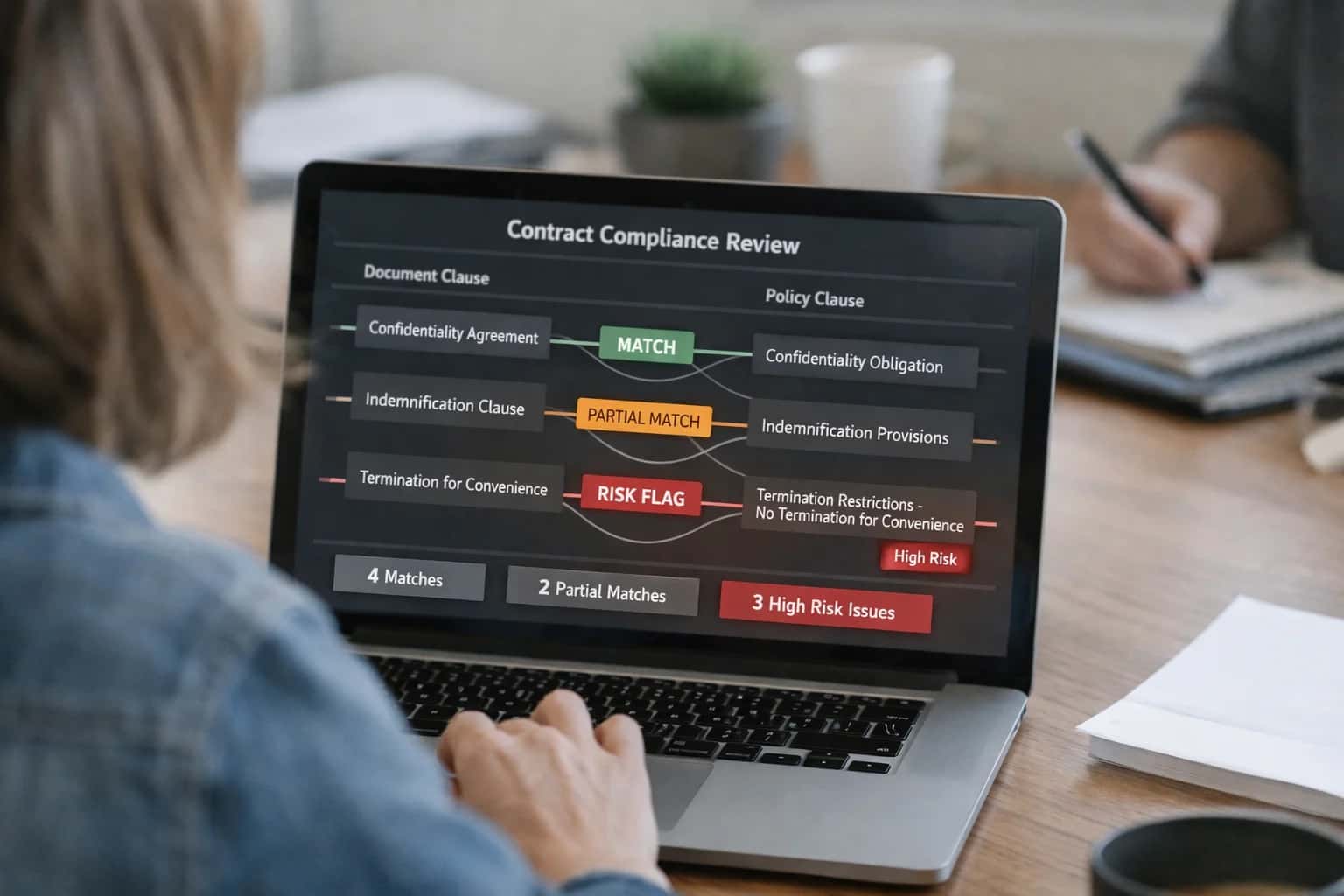
A symbolic rule-checking layer enforces safety and compliance in clinical AI by encoding medical logic into a formal system that validates neural network outputs.
Designing this layer requires a clear integration pattern. The neural component (e.g., a fine-tuned LLM) first analyzes patient data to generate a preliminary recommendation or diagnosis. This output is passed as a set of facts to the symbolic engine, which runs it against its rule set. The engine then either approves the output, rejects it with a specific rule violation alert, or suggests a corrected action. Critically, every validation step produces an auditable reasoning trace, which is essential for clinical trust and compliance with regulations like the EU AI Act. This creates a hybrid, neuro-symbolic AI system where deep learning provides pattern recognition and symbolic logic ensures safety.
IMPLEMENTATION GUIDE
Key Concepts: Symbolic Reasoning in Clinical AI
A symbolic rule-checking layer enforces safety and compliance by applying deterministic logic to a neural network's outputs. This guide covers the core components you need to design one.
01
Formal Logic & Knowledge Representation
Symbolic reasoning requires encoding medical knowledge into a formal logic system. This creates an unambiguous, machine-readable set of rules.
- First-Order Logic (FOL) or Datalog are common choices for representing clinical guidelines and contraindications.
- Knowledge Graphs (e.g., using Neo4j) can model relationships between diseases, symptoms, and treatments for efficient traversal.
- Example: A rule for drug interaction can be encoded as:
contraindicated(Patient, DrugA, DrugB) :- prescribed(Patient, DrugA), prescribed(Patient, DrugB), interacts(DrugA, DrugB).
02
Rule Engine Selection (CLIPS, Prolog, Drools)
A rule engine is the runtime that evaluates logical statements against input data. Your choice dictates integration complexity and performance.
- CLIPS: A mature, high-performance forward-chaining engine ideal for complex event processing.
- SWI-Prolog: Excellent for backward-chaining (goal-driven) reasoning and complex logic queries.
- Drools: A Java-based business rule management system (BRMS) that integrates well with enterprise Java stacks.
- Key Decision: Forward-chaining (data-driven) is best for monitoring streaming patient data; backward-chaining is optimal for diagnostic hypothesis testing.
03
Integration Pattern with Neural Components
The symbolic layer must validate outputs from a neural network (e.g., a diagnostic suggestion). Design a clear handshake protocol.
- Neural Output as Facts: The neural model's structured output (e.g., predicted diagnosis, recommended drug) is translated into logical facts for the rule engine.
- Rule Validation & Alerting: The engine checks facts against the knowledge base. Violations trigger alerts (e.g., 'Contraindication detected').
- Feedback Loop: Rule violations can be fed back to the neural model as reinforcement signals for future learning, creating a neuro-symbolic loop.
04
Explainable & Auditable Reasoning Traces
For clinical trust and regulatory compliance (like the EU AI Act), every decision must have a traceable reasoning path.
- The rule engine must log its inference chain: which rules fired, in what order, and why.
- This trace is the core of your system's explainability. It answers the clinician's question: 'Why was this alert generated?'
- Store these traces immutably alongside the patient record to create an audit trail for compliance officers and regulatory bodies.
05
Common Implementation Mistakes
Avoid these pitfalls that undermine safety and utility.
- Brittle Rule Sets: Encoding rules without exception handling or confidence thresholds leads to excessive false alerts. Use probabilistic soft logic to incorporate uncertainty.
- Ignoring Temporal Logic: Clinical rules often depend on time (e.g., 'do not administer within 24 hours'). Use a rule engine that supports temporal reasoning.
- Treating it as a Black Box: The symbolic layer itself must be transparent. Use tools that allow clinicians to inspect and, with safeguards, modify the rule base.
06
Related Guides & Next Steps
Dive deeper into neuro-symbolic architectures for high-stakes domains.
- Explore our guide on How to Architect a Neuro-Symbolic System for Legal Discovery for parallel patterns in a different domain.
- Learn to build a verifiable system in How to Build a Verifiable Reasoning System for Medical Triage.
- Understand the full context in our pillar: Neuro-Symbolic AI for Legal and Medical Reasoning.
IMPLEMENTATION OPTIONS
Symbolic Framework Comparison
A comparison of popular frameworks for building the symbolic rule-checking layer in a clinical AI system. The choice impacts development speed, performance, and integration complexity.
| Feature / Metric | CLIPS | SWI-Prolog | Custom Python Engine |
|---|---|---|---|
Rule Language Paradigm | Forward-chaining production system | Backward-chaining logic programming | Imperative/declarative hybrid |
Clinical Guideline Encoding | |||
Real-time Inference Speed | < 10 ms | 10-100 ms | < 5 ms |
Native Integration with Python | |||
Built-in Explanation Facility | |||
Audit Log Generation | |||
Learning Curve | Moderate | Steep | Low |
Maintenance Overhead | Low | Moderate | High |
FOUNDATION
Step 1: Define and Formalize Clinical Rules
The first step in building a safe clinical AI is to translate medical knowledge into a formal, machine-executable logic system. This creates the deterministic core for safety and compliance.
Begin by identifying the clinical rules your system must enforce. These are explicit, non-negotiable constraints derived from medical guidelines, drug contraindications, institutional policies, and safety protocols. Examples include checking for drug-drug interactions, validating lab values against diagnostic criteria, or ensuring a procedure's prerequisites are met. The goal is to extract the deterministic logic that underpins safe clinical practice, separating it from probabilistic pattern recognition.
Formalize each rule using a logic programming syntax. For a rule like "Do not prescribe Drug A if creatinine clearance is < 30 mL/min," you would encode it as a logical predicate: contraindicated(DrugA, Patient) :- creatinine_clearance(Patient, CC), CC < 30.. Use frameworks like SWI-Prolog for pure symbolic reasoning or PyKE for Python integration. This formalization creates an auditable knowledge base that serves as the system's source of truth for rule validation.
Enabling Efficiency, Speed & Accuracy
Intelligent Analysis, Decision & Execution
We build AI systems for teams that need search across company data, workflow automation across tools, or AI features inside products and internal software.
Talk to Us
Search across company data
Give teams answers from docs, tickets, runbooks, and product data with sources and permissions.
Useful when people spend too long searching or get different answers from different systems.
Enterprise searchRAGPermissions
Read more
Automate internal workflows
Use AI to route work, draft outputs, trigger actions, and keep approvals and logs in place.
Useful when repetitive work moves across multiple tools and teams.
AI agentsWorkflow automationGovernance
Read more
Add AI to products and internal tools
Build assistants, guided actions, or decision support into the software your team or customers already use.
Useful when AI needs to be part of the product, not a separate tool.
AI integrationDecision supportModel routing
Read moreSYMBOLIC RULE-CHECKING
Common Mistakes
Avoid critical errors that compromise safety, performance, and auditability when building a symbolic rule-checking layer for clinical AI. These pitfalls can lead to unsafe recommendations, system brittleness, and regulatory non-compliance.
This happens when you treat the symbolic layer as a monolithic post-processor that runs the entire rule base on every inference. Batch processing and incremental evaluation are key.
How to fix it:
- Pre-filter rules: Use the neural network's output (e.g., a proposed diagnosis) to select only the relevant subset of rules for evaluation, not the entire knowledge base.
- Implement rule indexing: Structure your knowledge base so rules are indexed by the clinical concepts they govern (e.g.,
drug_interaction,contraindication,dosage_check). - Cache frequent evaluations: For common patient profiles or drug combinations, cache the rule-check result to avoid redundant computation.
Integrating this layer effectively is covered in our guide on Setting Up a Hybrid Reasoning Engine for Medical Diagnosis.

About the author
Prasad Kumkar
CEO & MD, Inference Systems
Prasad Kumkar is the CEO & MD of Inference Systems and writes about AI systems architecture, LLM infrastructure, model serving, evaluation, and production deployment. Over 5+ years, he has worked across computer vision models, L5 autonomous vehicle systems, and LLM research, with a focus on taking complex AI ideas into real-world engineering systems.
His work and writing cover AI systems, large language models, AI agents, multimodal systems, autonomous systems, inference optimization, RAG, evaluation, and production AI engineering.
LinkedIn
Limited slotsGet a Free AI Consultation
Partnered with leading AI, data, and software stack.





How We Work
Custom AI workflows for your Business
One-fit-all AI don't work for modern businesses. At Inferensys, we aim to understand your business & custom requirements; which we use to define most efficient agentic workflows, the data, and the tools for your business.
01
Review the use case
We understand the task, the users, and where AI can actually help.
Read more02
Pick the right approach
We define what needs search, automation, or product integration.
Read more03
Build the first useful version
We implement the part that proves the value first.
Read more04
Improve from there
We add the checks and visibility needed to keep it useful.
Read moreThe first call is a practical review of your use case and the right next step.
Talk to Us