Sustainable cloud architecture for AI is the practice of designing compute, storage, and networking systems to maximize computational output per unit of energy and carbon. This requires a first-principles approach, starting with the energy-to-solution metric as your primary KPI, not just raw accuracy or speed. Your design must integrate three core pillars: workload placement in regions with low-carbon grids, computational density via efficient hardware and cooling, and renewable energy procurement through Power Purchase Agreements (PPAs). This framework treats sustainability as a non-negotiable design constraint from day one.

Guide
How to Design a Sustainable Cloud Architecture for AI Workloads
This guide provides a first-principles framework for architecting cloud infrastructure that prioritizes energy efficiency and carbon reduction for AI training and inference. It covers workload placement strategies, selecting sustainable cloud regions, and integrating renewable energy procurement into your architecture. You will learn to design for computational density while minimizing the environmental footprint of your AI operations.
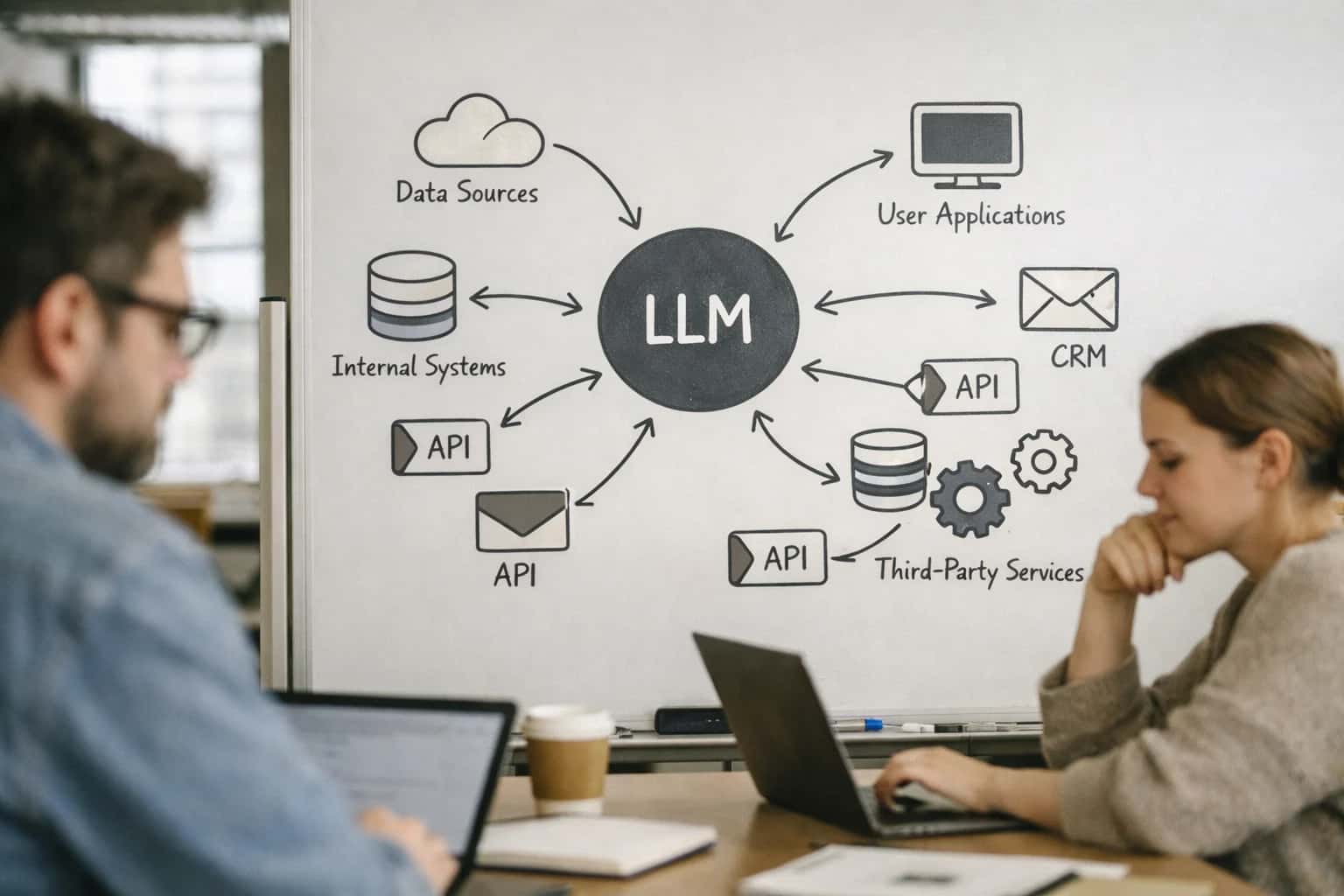
A first-principles guide to building cloud infrastructure that minimizes the environmental impact of AI training and inference.
Begin by instrumenting your infrastructure for real-time energy monitoring to establish a baseline. Next, implement a carbon-aware orchestrator using Kubernetes and tools like Karpenter to schedule training jobs when grid carbon intensity is lowest. Architect for liquid cooling compatibility to enable higher-density racks and heat reuse, as detailed in our guide on Implementing liquid cooling in high-density data centers. Finally, design dynamic power capping policies for GPUs to trade marginal latency for significant energy savings, creating a system that is both high-performance and inherently green.
THERMAL MANAGEMENT
Cooling Technology Comparison for AI Density
A direct comparison of cooling technologies for high-density AI compute racks, based on efficiency, scalability, and integration complexity.
| Metric / Feature | Advanced Air Cooling | Direct-to-Chip Liquid Cooling | Immersion Cooling |
|---|---|---|---|
Typical Power Density Supported | 15-30 kW/rack | 30-70 kW/rack | 50-200+ kW/rack |
Power Usage Effectiveness (PUE) Range | 1.4 - 1.7 | 1.1 - 1.3 | 1.02 - 1.08 |
Heat Reclamation Potential | |||
Retrofit Complexity for Existing Racks | Low | Medium | High |
Coolant Fluid Required | Air | Water/Glycol | Dielectric Fluid |
Water Usage (WUE) | 0.5 - 2.0 L/kWh | 0.1 - 0.5 L/kWh | < 0.01 L/kWh |
Acoustic Noise Level | High | Medium | Low |
Primary Use Case | Low-density inference | High-density training | Extreme-density supercomputing |
ARCHITECTURE STRATEGY
Integrate Renewable Energy Procurement
This step moves beyond infrastructure efficiency to directly power your AI workloads with clean energy, decoupling computational growth from carbon emissions.
Renewable energy procurement is the strategic acquisition of clean power for your AI operations, distinct from simply using a 'green' cloud region. It involves directly contracting for energy via Power Purchase Agreements (PPAs) with wind or solar farms, purchasing Energy Attribute Certificates (EACs) to match grid consumption with renewable generation, or investing in on-site generation. This ensures your architecture's energy source is sustainable, not just its efficiency. Start by calculating your workload's carbon footprint using tools like the Cloud Carbon Footprint project to establish a baseline.
Implement procurement by integrating carbon-aware logic into your orchestration layer. Use APIs from Electricity Maps or WattTime to route non-urgent inference jobs to cloud regions with the lowest grid carbon intensity in real-time. For training, negotiate PPAs to cover the massive, predictable energy draw of your clusters. This approach, combined with liquid cooling and dynamic power capping, creates a holistic sustainable architecture. For a deeper technical implementation, see our guide on How to Build a Carbon-Aware AI Compute Orchestrator.
Enabling Efficiency, Speed & Accuracy
Intelligent Analysis, Decision & Execution
We build AI systems for teams that need search across company data, workflow automation across tools, or AI features inside products and internal software.
Talk to Us
Search across company data
Give teams answers from docs, tickets, runbooks, and product data with sources and permissions.
Useful when people spend too long searching or get different answers from different systems.
Enterprise searchRAGPermissions
Read more
Automate internal workflows
Use AI to route work, draft outputs, trigger actions, and keep approvals and logs in place.
Useful when repetitive work moves across multiple tools and teams.
AI agentsWorkflow automationGovernance
Read more
Add AI to products and internal tools
Build assistants, guided actions, or decision support into the software your team or customers already use.
Useful when AI needs to be part of the product, not a separate tool.
AI integrationDecision supportModel routing
Read moreSUSTAINABLE CLOUD ARCHITECTURE
Common Mistakes
Architecting cloud infrastructure for AI workloads presents unique sustainability challenges. These are the most frequent and costly mistakes teams make when trying to reduce their environmental footprint.
Selecting a region powered by renewable energy is only the first step. The carbon intensity of electricity varies by the hour. If your long-running training job starts during the day when solar is abundant but continues into the evening when the grid relies on fossil fuels, your average footprint spikes.
The Fix: Implement carbon-aware scheduling. Use APIs from Electricity Maps or WattTime to schedule batch workloads for times of low carbon intensity. For continuous inference, design your architecture for geographic workload shifting, moving requests between regions based on real-time grid data. This turns a static choice into a dynamic optimization.

About the author
Prasad Kumkar
CEO & MD, Inference Systems
Prasad Kumkar is the CEO & MD of Inference Systems and writes about AI systems architecture, LLM infrastructure, model serving, evaluation, and production deployment. Over 5+ years, he has worked across computer vision models, L5 autonomous vehicle systems, and LLM research, with a focus on taking complex AI ideas into real-world engineering systems.
His work and writing cover AI systems, large language models, AI agents, multimodal systems, autonomous systems, inference optimization, RAG, evaluation, and production AI engineering.
LinkedIn
Limited slotsGet a Free AI Consultation
Partnered with leading AI, data, and software stack.





How We Work
Custom AI workflows for your Business
One-fit-all AI don't work for modern businesses. At Inferensys, we aim to understand your business & custom requirements; which we use to define most efficient agentic workflows, the data, and the tools for your business.
01
Review the use case
We understand the task, the users, and where AI can actually help.
Read more02
Pick the right approach
We define what needs search, automation, or product integration.
Read more03
Build the first useful version
We implement the part that proves the value first.
Read more04
Improve from there
We add the checks and visibility needed to keep it useful.
Read moreThe first call is a practical review of your use case and the right next step.
Talk to Us