Demand response (DR) automation uses AI to manage the complete program lifecycle without manual intervention. The core system segments customers using clustering algorithms like K-Means on historical usage and contract data. It then predicts baseline consumption for each participant using time-series models (e.g., Prophet or LSTM) to establish what energy use would have been without an event. This automated baseline is critical for accurately measuring and verifying load reductions for settlement. The system integrates via APIs with customer platforms like smart thermostats or building management systems to dispatch event signals.

Guide
How to Implement AI for Demand Response Program Automation
A technical guide to building an AI system that automates the end-to-end lifecycle of a demand response program, from customer targeting to verified settlement.
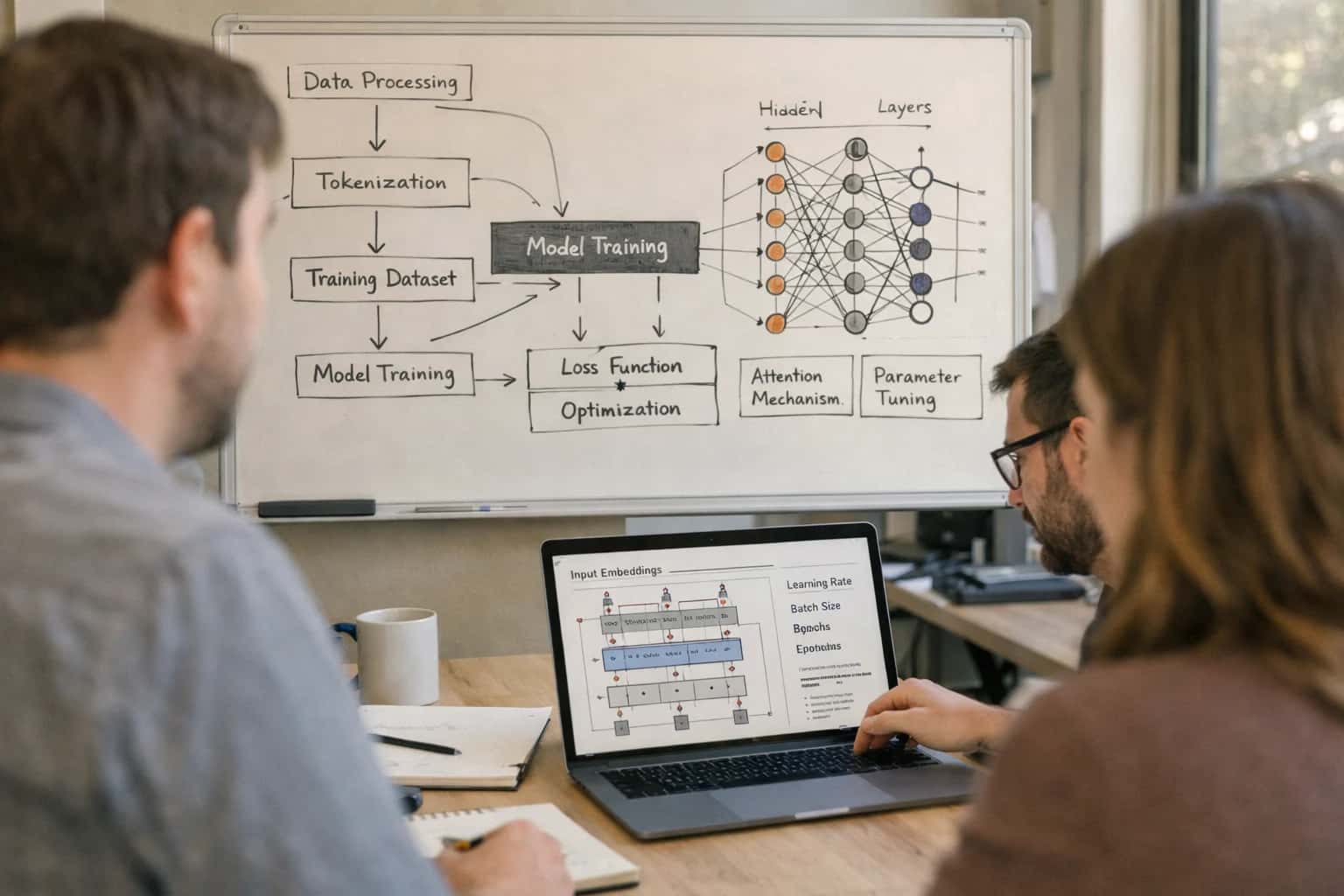
Learn to automate the end-to-end lifecycle of a demand response program using AI, from customer segmentation to automated settlement.
The automation loop closes with verification and settlement. AI compares actual post-event meter data against the predicted baseline to calculate verified load shed. This triggers automated payments or credits, slashing administrative overhead. For a robust foundation, establish a data governance strategy as outlined in our guide on How to Architect a Data Governance Strategy for Grid AI. To ensure operator trust in these autonomous decisions, implement techniques from our guide on How to Build an Explainable AI Framework for Grid Operator Trust.
MODEL SELECTION
AI Model Comparison for DR Components
This table compares the primary AI/ML model types used to automate core functions of a Demand Response (DR) program. Each model type has distinct strengths for specific tasks within the automation lifecycle.
| DR Component & Task | Traditional ML (XGBoost, LightGBM) | Deep Learning (LSTMs, Transformers) | Reinforcement Learning (PPO, DQN) |
|---|---|---|---|
Customer Segmentation & Targeting | ✅ High performance on tabular data (e.g., usage history, demographics). | ❌ Overkill for structured data; poor interpretability. | ❌ Not applicable for static classification. |
Baseline Load Prediction | ✅ Fast, accurate for short-term forecasts with clear features. | ✅ Excels at long-term, multi-variate sequence forecasting (e.g., weather + time series). | ❌ Not designed for pure prediction. |
Event Dispatch Optimization | ❌ Requires separate optimization solver; not end-to-end. | ❌ Can predict outcomes but doesn't natively optimize actions. | ✅ Optimal choice. Learns optimal dispatch policy through simulation. |
Load Reduction Verification (M&V) | ✅ Effective for regression on metered pre/post-event data. | ✅ Can model complex, non-linear savings patterns. | ❌ Not applicable for verification against a baseline. |
Real-Time Anomaly Detection | ⚠️ Requires careful threshold tuning; can miss novel patterns. | ✅ Superior at identifying novel anomalies in high-dimensional sensor streams. | ✅ Can learn adaptive detection policies in dynamic environments. |
Integration Complexity | Low | High | Very High |
Explainability to Operators | High (Feature importance) | Low (Black-box) | Medium (Policy can be analyzed) |
Best For | Structured data tasks, rapid prototyping, and explainable AI frameworks. | Complex temporal patterns, sensor fusion, and hyper-local demand forecasting. | Sequential decision-making, autonomous VPP dispatch, and adaptive control. |
Enabling Efficiency, Speed & Accuracy
Intelligent Analysis, Decision & Execution
We build AI systems for teams that need search across company data, workflow automation across tools, or AI features inside products and internal software.
Talk to Us
Search across company data
Give teams answers from docs, tickets, runbooks, and product data with sources and permissions.
Useful when people spend too long searching or get different answers from different systems.
Enterprise searchRAGPermissions
Read more
Automate internal workflows
Use AI to route work, draft outputs, trigger actions, and keep approvals and logs in place.
Useful when repetitive work moves across multiple tools and teams.
AI agentsWorkflow automationGovernance
Read more
Add AI to products and internal tools
Build assistants, guided actions, or decision support into the software your team or customers already use.
Useful when AI needs to be part of the product, not a separate tool.
AI integrationDecision supportModel routing
Read moreTROUBLESHOOTING
Common Mistakes
Implementing AI for demand response (DR) automation is complex, blending data science, systems integration, and grid operations. These are the most frequent technical pitfalls developers encounter and how to fix them.
Inaccurate baselines lead to incorrect load reduction calculations and faulty customer settlements. The most common mistake is using a simple historical average, which fails to account for variables like weather, day-of-week effects, or holidays.
Fix: Implement a counterfactual baseline model. Use machine learning (e.g., XGBoost, LightGBM) trained on non-event days to predict "what consumption would have been" during the DR event. Key features must include:
- Hour-of-day and day-of-week indicators
- Recent historical consumption (lag features)
- Local temperature, humidity, and weather forecast data
- Holiday and special event flags
Validate the model's accuracy using a holdout period of known non-event days before going live.

About the author
Prasad Kumkar
CEO & MD, Inference Systems
Prasad Kumkar is the CEO & MD of Inference Systems and writes about AI systems architecture, LLM infrastructure, model serving, evaluation, and production deployment. Over 5+ years, he has worked across computer vision models, L5 autonomous vehicle systems, and LLM research, with a focus on taking complex AI ideas into real-world engineering systems.
His work and writing cover AI systems, large language models, AI agents, multimodal systems, autonomous systems, inference optimization, RAG, evaluation, and production AI engineering.
LinkedIn
Limited slotsGet a Free AI Consultation
Partnered with leading AI, data, and software stack.





How We Work
Custom AI workflows for your Business
One-fit-all AI don't work for modern businesses. At Inferensys, we aim to understand your business & custom requirements; which we use to define most efficient agentic workflows, the data, and the tools for your business.
01
Review the use case
We understand the task, the users, and where AI can actually help.
Read more02
Pick the right approach
We define what needs search, automation, or product integration.
Read more03
Build the first useful version
We implement the part that proves the value first.
Read more04
Improve from there
We add the checks and visibility needed to keep it useful.
Read moreThe first call is a practical review of your use case and the right next step.
Talk to Us