A self-healing grid autonomously detects, isolates, and restores faults using AI controllers. This architecture processes real-time data from fault indicators and phasor measurement units (PMUs) to model the network topology and identify the fault location. The core AI component uses reinforcement learning to determine the optimal sequence of switch operations for service restoration, a process known as Fault Detection, Isolation, and Restoration (FDIR). This moves grid management from reactive to proactive, drastically reducing outage duration.

Guide
How to Build a Self-Healing Grid Architecture with AI Controllers
A developer guide to architecting an autonomous system for grid fault detection, isolation, and service restoration using AI controllers, topology modeling, and safe RL.
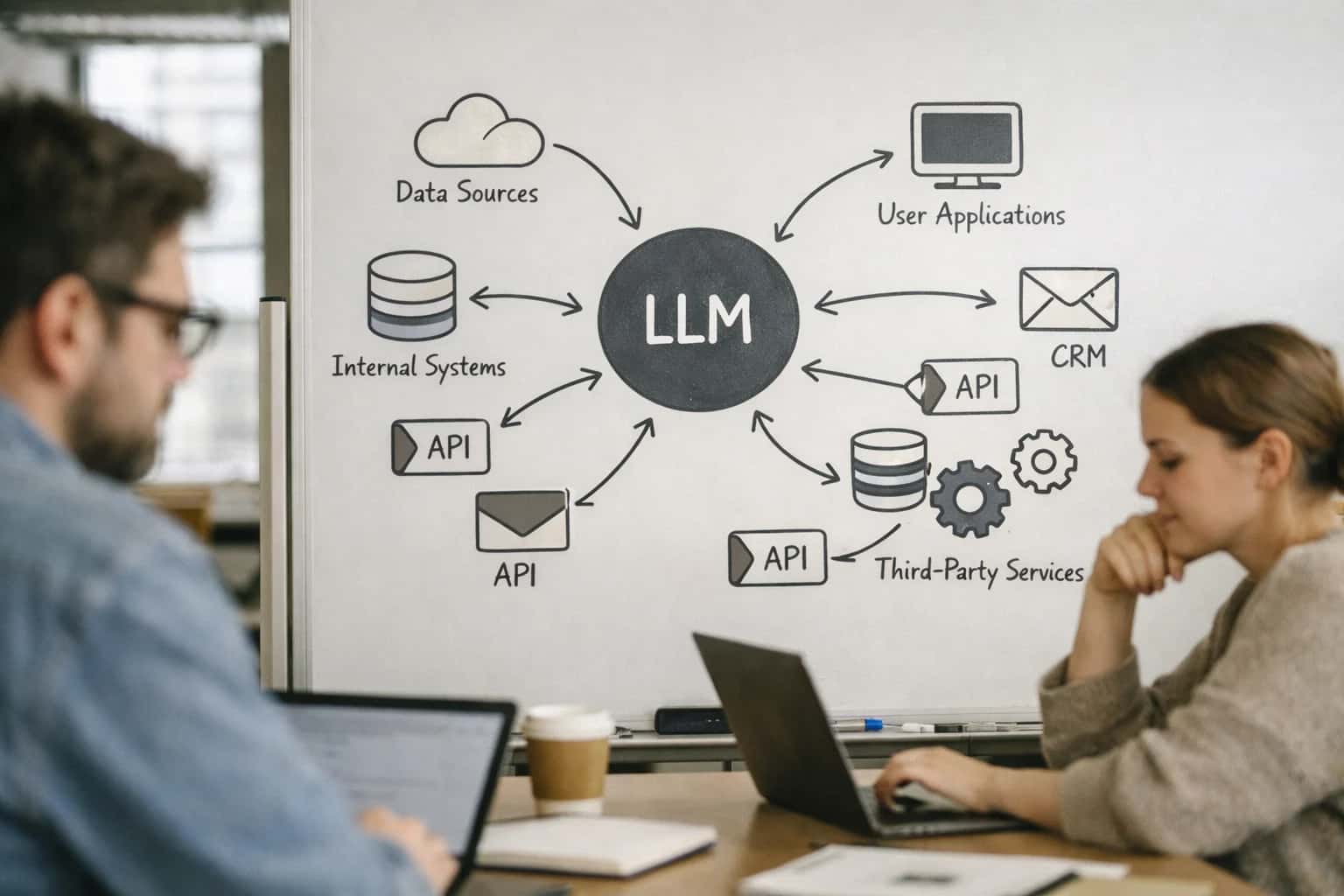
Learn to architect autonomous systems that detect, isolate, and restore power grid faults using AI, ensuring resilience and minimizing outage times.
Implementation requires integrating the AI controller with Supervisory Control and Data Acquisition (SCADA) systems and Distribution Management Systems (DMS). You must encode critical safety constraints—like avoiding islanding or equipment overload—into the AI's decision logic. For critical actions, implement a human-in-the-loop (HITL) approval workflow to maintain operational oversight. This guide provides the blueprint for building this closed-loop system, a foundational element for modern smart grid reliability.
ARCHITECTURE SELECTION
AI Controller Component Comparison
This table compares the core architectural components for building the AI decision engine in a self-healing grid, as detailed in the guide How to Build a Self-Healing Grid Architecture with AI Controllers.
| Component / Metric | Reinforcement Learning (RL) Agent | Graph Neural Network (GNN) Solver | Rule-Based Expert System |
|---|---|---|---|
Core Function | Learns optimal restoration sequences through simulation | Models grid topology to predict fault propagation | Executes pre-defined if-then logic for known faults |
Adaptability to Novel Faults | |||
Required Training Data Volume | High (simulated grid scenarios) | Medium (historical fault & topology data) | Low (expert knowledge) |
Inference Latency | < 2 sec | < 500 ms | < 100 ms |
Explainability of Decisions | Medium (requires post-hoc analysis) | High (visualizes graph attention) | High (explicit rule trace) |
Integration Complexity | High (requires simulation environment) | Medium (requires accurate digital twin) | Low (direct code integration) |
Safety & Constraint Enforcement | Must be explicitly learned/encoded | Built into graph structure | Explicitly coded per rule |
Best For | Dynamic, complex multi-fault scenarios | Understanding cascading failures & topology | Well-defined, high-frequency fault patterns |
Enabling Efficiency, Speed & Accuracy
Intelligent Analysis, Decision & Execution
We build AI systems for teams that need search across company data, workflow automation across tools, or AI features inside products and internal software.
Talk to Us
Search across company data
Give teams answers from docs, tickets, runbooks, and product data with sources and permissions.
Useful when people spend too long searching or get different answers from different systems.
Enterprise searchRAGPermissions
Read more
Automate internal workflows
Use AI to route work, draft outputs, trigger actions, and keep approvals and logs in place.
Useful when repetitive work moves across multiple tools and teams.
AI agentsWorkflow automationGovernance
Read more
Add AI to products and internal tools
Build assistants, guided actions, or decision support into the software your team or customers already use.
Useful when AI needs to be part of the product, not a separate tool.
AI integrationDecision supportModel routing
Read moreSELF-HEALING GRID ARCHITECTURE
Common Mistakes
Building an autonomous self-healing grid is a high-stakes engineering challenge. These are the most frequent technical pitfalls developers encounter when implementing AI controllers for Fault Detection, Isolation, and Restoration (FDIR).
This happens when you treat the grid's operational limits as soft penalties in your reinforcement learning (RL) reward function instead of hard constraints. The AI will learn to violate them if the reward for restoring power is high enough.
Fix: Implement a two-stage decision process. First, use a graph search algorithm (like Dijkstra or A*) to generate only topologically feasible switching sequences that do not create islands or overload lines. Second, let your RL agent select the optimal sequence from this pre-filtered, safe set. Always integrate a final hard-coded rule check before any switch command is sent to the physical SCADA system.

About the author
Prasad Kumkar
CEO & MD, Inference Systems
Prasad Kumkar is the CEO & MD of Inference Systems and writes about AI systems architecture, LLM infrastructure, model serving, evaluation, and production deployment. Over 5+ years, he has worked across computer vision models, L5 autonomous vehicle systems, and LLM research, with a focus on taking complex AI ideas into real-world engineering systems.
His work and writing cover AI systems, large language models, AI agents, multimodal systems, autonomous systems, inference optimization, RAG, evaluation, and production AI engineering.
LinkedIn
Limited slotsGet a Free AI Consultation
Partnered with leading AI, data, and software stack.





How We Work
Custom AI workflows for your Business
One-fit-all AI don't work for modern businesses. At Inferensys, we aim to understand your business & custom requirements; which we use to define most efficient agentic workflows, the data, and the tools for your business.
01
Review the use case
We understand the task, the users, and where AI can actually help.
Read more02
Pick the right approach
We define what needs search, automation, or product integration.
Read more03
Build the first useful version
We implement the part that proves the value first.
Read more04
Improve from there
We add the checks and visibility needed to keep it useful.
Read moreThe first call is a practical review of your use case and the right next step.
Talk to Us