A proactive agentic support system is a collection of specialized AI agents that autonomously monitor legal ecosystems to surface critical information before a human requests it. Unlike reactive tools, these agents are designed for specific tasks—like deadline tracking, research updates, and docket monitoring—and communicate with each other to form a cohesive intelligence layer. This system reduces cognitive load on legal teams by automating vigilance and providing strategic, context-aware recommendations, transforming data into actionable insight.

Guide
Launching a Proactive Agentic Support System for Law Firms
A technical guide to building an autonomous AI system that proactively monitors case dockets, legal updates, and internal deadlines to reduce cognitive load on legal teams.
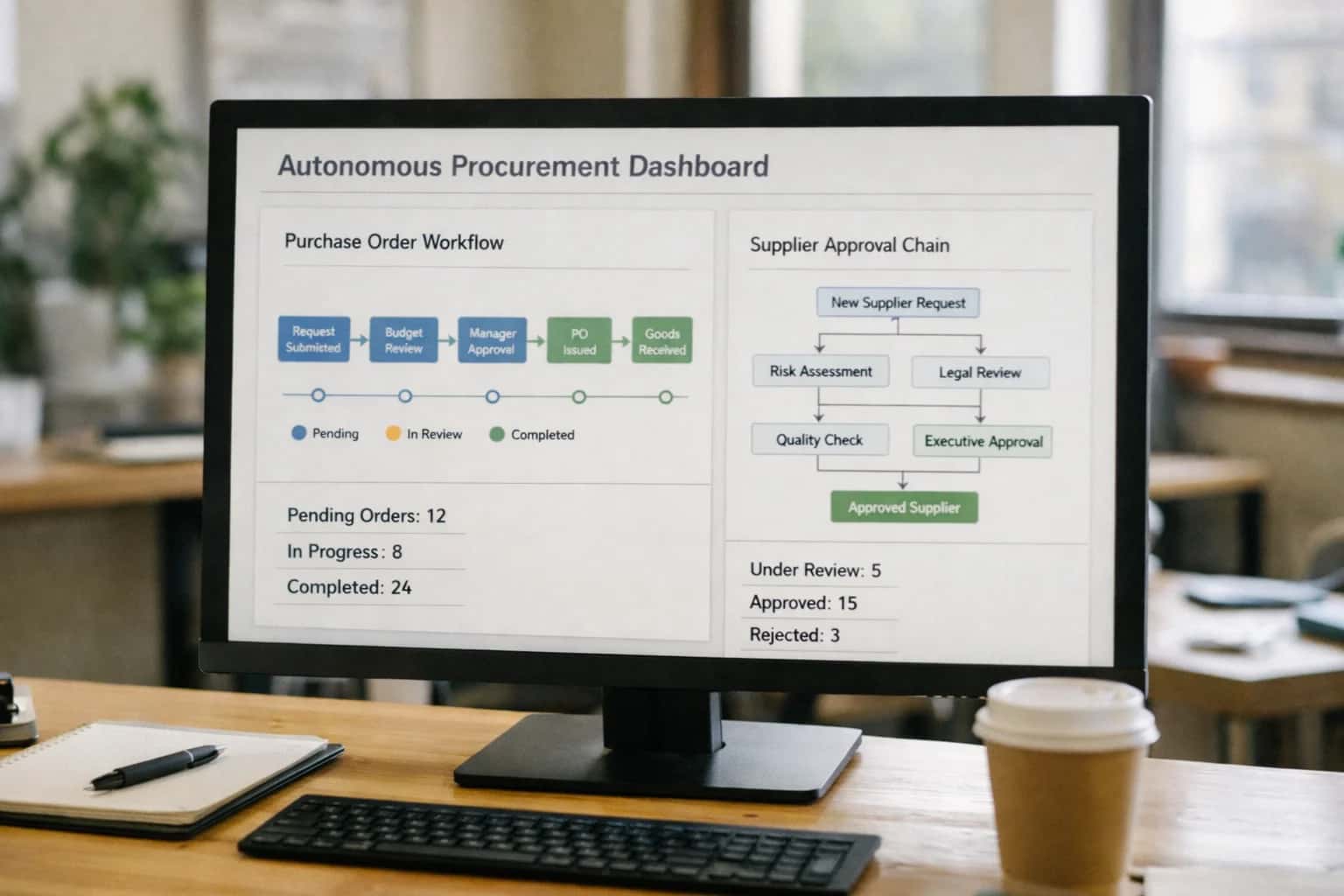
This guide details the launch of an agentic system that proactively monitors case dockets, legal updates, and internal deadlines to provide strategic recommendations.
Launching this system requires designing individual agents with clear objectives, implementing secure agent-to-agent communication protocols, and establishing a feedback loop for continuous improvement. You will integrate with existing case management software, set up governance through Human-in-the-Loop (HITL) checkpoints, and ensure all actions are logged for auditability. The result is a measurable reduction in missed deadlines and strategic oversights, delivering clear ROI by augmenting attorney judgment with persistent, automated oversight.
ARCHITECTURE BLUEPRINT
Agent Specification and Tool Mapping
A comparison of three core agent types required for a proactive legal support system, detailing their primary function, required tools, and communication protocols.
| Agent Specification | Docket Monitor | Deadline Tracker | Research Analyst |
|---|---|---|---|
Primary Function | Monitors court dockets for new filings and updates | Tracks internal and external case deadlines | Synthesizes legal research on case-relevant topics |
Core Tools | Court API integrations, NLP for document classification | Calendar APIs, rule-based deadline calculators | Legal RAG system, case law databases, summarization models |
Trigger Mechanism | Scheduled API polls, webhook listeners | Calendar event triggers, manual entry | Agent request, manual attorney query, scheduled review |
Output Action | Alerts to case channel, summary to research agent | Escalation alerts to managing attorney, calendar updates | Memo draft to attorney, key precedent highlights |
Communication Protocol | Publishes to shared event bus | Listens for deadline creation, publishes alerts | Listens for research requests, queries RAG system |
Human-in-the-Loop (HITL) Gate | Confidence threshold for case relevance < 85% | All deadline changes require attorney approval | All final memos require attorney review and sign-off |
Integration Dependencies | Secure Data Pipeline, Case Management System | Firm Calendar System | RAG System for Case Law Research, Legal Transcript Intelligence Pipeline |
Key Performance Metric | Alert accuracy > 95%, Latency < 5 minutes | Zero missed deadlines, False positive rate < 1% | Citation accuracy 100%, Attorney time saved per query |
Enabling Efficiency, Speed & Accuracy
Intelligent Analysis, Decision & Execution
We build AI systems for teams that need search across company data, workflow automation across tools, or AI features inside products and internal software.
Talk to Us
Search across company data
Give teams answers from docs, tickets, runbooks, and product data with sources and permissions.
Useful when people spend too long searching or get different answers from different systems.
Enterprise searchRAGPermissions
Read more
Automate internal workflows
Use AI to route work, draft outputs, trigger actions, and keep approvals and logs in place.
Useful when repetitive work moves across multiple tools and teams.
AI agentsWorkflow automationGovernance
Read more
Add AI to products and internal tools
Build assistants, guided actions, or decision support into the software your team or customers already use.
Useful when AI needs to be part of the product, not a separate tool.
AI integrationDecision supportModel routing
Read moreTROUBLESHOOTING
Common Mistakes
Launching a proactive agentic system for legal support is a high-stakes engineering challenge. These are the most frequent technical and strategic pitfalls developers encounter, and how to fix them.
This is typically a failure in agent-to-agent communication and orchestration logic. A single agent, like a deadline tracker, should not be responsible for both detection and resolution.
The Fix: Implement a clear multi-agent system (MAS) architecture with specialized roles:
- Detector Agent: Monitors dockets and identifies a missed deadline.
- Planner Agent: Receives the alert, assesses severity, and creates a task list (e.g., "draft motion for extension").
- Executor Agent: Attempts to auto-draft the document using a RAG system.
- Human Escalation Agent: If the executor's confidence score is below a defined threshold, it immediately routes the task and context to a human via a HITL governance channel.
Use a state machine or workflow engine to manage these hand-offs and prevent loops.

About the author
Prasad Kumkar
CEO & MD, Inference Systems
Prasad Kumkar is the CEO & MD of Inference Systems and writes about AI systems architecture, LLM infrastructure, model serving, evaluation, and production deployment. Over 5+ years, he has worked across computer vision models, L5 autonomous vehicle systems, and LLM research, with a focus on taking complex AI ideas into real-world engineering systems.
His work and writing cover AI systems, large language models, AI agents, multimodal systems, autonomous systems, inference optimization, RAG, evaluation, and production AI engineering.
LinkedIn
Limited slotsGet a Free AI Consultation
Partnered with leading AI, data, and software stack.





How We Work
Custom AI workflows for your Business
One-fit-all AI don't work for modern businesses. At Inferensys, we aim to understand your business & custom requirements; which we use to define most efficient agentic workflows, the data, and the tools for your business.
01
Review the use case
We understand the task, the users, and where AI can actually help.
Read more02
Pick the right approach
We define what needs search, automation, or product integration.
Read more03
Build the first useful version
We implement the part that proves the value first.
Read more04
Improve from there
We add the checks and visibility needed to keep it useful.
Read moreThe first call is a practical review of your use case and the right next step.
Talk to Us