An AI knowledge graph is a structured representation of real-world entities—people, places, concepts—and their relationships. For AI search engines like Google's Gemini or OpenAI's ChatGPT, these graphs are the source of truth for generating answers. Your goal is to ensure your brand, products, and key executives are clearly defined, authoritative nodes within this graph. This process begins with structured data and a coherent information architecture on your website, providing the unambiguous signals AI needs to recognize and map your entities.

Guide
How to Build Entity Signals for AI Knowledge Graphs
A developer-focused guide to structuring your brand, products, and people as distinct entities that AI models can map, trust, and cite in their internal knowledge graphs.
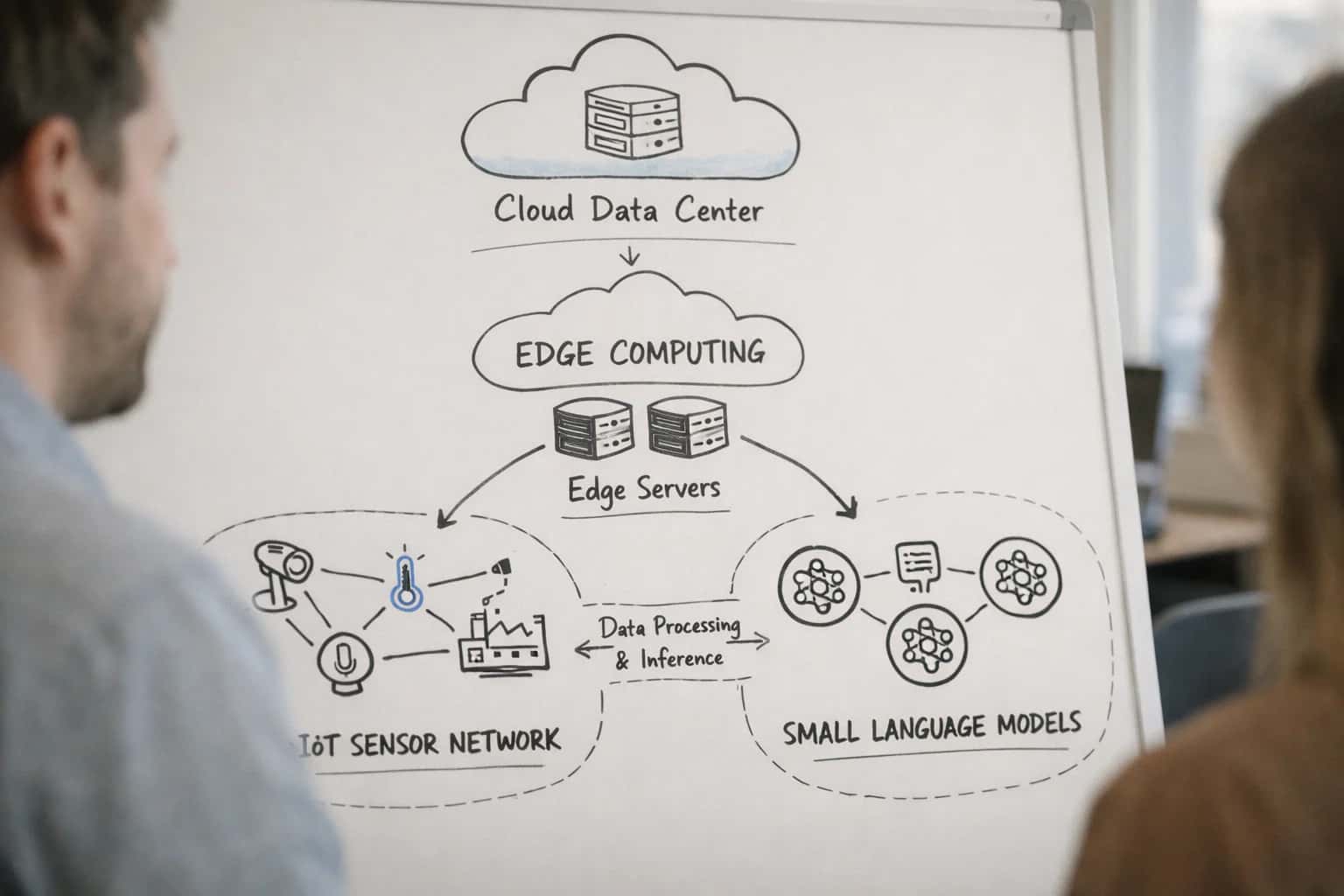
In an AI-first search landscape, visibility depends on how AI models map and trust your brand as a distinct entity within their internal knowledge graphs. This guide explains the foundational steps to build those critical entity signals.
Building entity signals is a technical and strategic exercise. You must implement Schema.org markup (like Organization, Product, and Person) to provide a machine-readable definition. Simultaneously, cultivate an authoritative backlink profile from trusted sources, as AI models use link graphs to validate entity credibility. Finally, structure your site's content to consistently reinforce entity relationships, creating a dense web of context that AI can easily ingest and trust for citations.
STRUCTURED DATA OPTIONS
Schema Type Comparison for Key Entities
Choosing the correct Schema.org type is critical for AI knowledge graphs to accurately map and trust your core entities. This table compares the primary options for defining a company, product, and key person.
| Entity & Key Feature | Organization (Company) | Product | Person |
|---|---|---|---|
Primary Use Case | Defines a corporate entity, brand, or business | Defines a tangible good, software, or service for sale | Defines an individual, such as a founder or executive |
AI Knowledge Graph Mapping | Links to industry, location, founding date, and subsidiaries | Links to brand, reviews, offers, and product category | Links to affiliation, job title, and social profiles |
Critical Properties for Trust |
|
|
|
Citation Potential in AI Answers | High for company facts, history, and leadership | High for product specs, pricing, and availability | High for expert quotes, leadership bios, and authorship |
Backlink Profile Integration | Anchors brand mentions to official entity | Anchors product reviews and comparisons to canonical page | Anchors personal achievements and quotes to authoritative bio |
Common Implementation Mistake | Using | Omitting | Failing to link |
Recommended for E-E-A-T Signals | ✅ Establishes Authoritativeness & Trustworthiness | ✅ Establishes Expertise (for product category) | ✅ Establishes Experience & Expertise |
TROUBLESHOOTING GUIDE
Common Mistakes
Building entity signals is foundational for AI search visibility, but developers often make critical errors that prevent AI models from correctly mapping and trusting their brand. This guide addresses the most frequent technical pitfalls and their solutions.
AI knowledge graphs prioritize structured data that is accurate, comprehensive, and interconnected. The most common reasons for ignored markup are:
- Incomplete Entity Definition: Marking up only a product's name and price is insufficient. You must define the full entity with properties like
brand,manufacturer,review,aggregateRating, andoffers. - Lack of Interlinking: Entities exist in a graph. Your
Organizationentity should link to yourPersonentities (founders, authors) and yourProductentities using properties likememberandbrand. - Validation Errors: Use the Google Rich Results Test and the Schema.org Validator to catch syntax errors. A single malformed
@typecan break parsing.
Fix: Implement JSON-LD scripts that define a complete network of related entities. Start with your core Organization, then link to key People and Products. Ensure all required fields for each type are populated with valid data.
ENTITY SIGNALS & KNOWLEDGE GRAPHS
Tools and Resources
To build strong entity signals for AI knowledge graphs, you need a combination of technical markup, content strategy, and monitoring tools. These resources provide the actionable steps and frameworks to make your brand, products, and key people distinct, trusted entities for AI models.
02
Entity Relationship Mapping
Define how your entities connect. AI knowledge graphs map relationships like manufactures, employs, or isLocatedIn.
- Draw.io or Miro: Create visual maps linking your brand entity to product entities, key people, locations, and supporting content.
- Key Relationship Types: Focus on
brand,founder,product,award, andlocationconnections using properties likebrand,founder, andaward. - Example: Your
Organizationentity should have clearfounderlinks toPersonentities andmanufacturerlinks toProductentities.
04
Knowledge Graph Testing Tools
Validate how AI systems perceive your entities. These tools simulate how search engines and LLMs parse your site's information.
- Google's Rich Results Test: Check if your structured data is eligible for enhanced search results, a proxy for basic entity recognition.
- Diffbot's Knowledge Graph Search: Explore a public knowledge graph to see if and how your entity is already represented.
- Bard / ChatGPT Prompts: Manually test by asking, 'What is [Your Brand] and who founded it?' to see if the AI's internal knowledge is accurate.
05
Content Architecture for Entities
Structure your website's information architecture to reinforce entity clarity. Each entity should have a definitive, canonical page.
- Dedicated Hub Pages: Create authoritative hub pages for core entities (e.g.,
/about/company,/people/leadership,/products/). - Internal Linking Strategy: Use descriptive anchor text (e.g., 'our founder, Jane Doe') to link between entity pages, strengthening the graph.
- Clean URL Structure: Use simple, readable URLs (e.g.,
/brand/history,/product/x-specs) that clearly signal the entity type and name.
06
Monitoring & Citation Tracking
Track your entity's presence and accuracy across AI-generated answers. This is your AI Share of Voice (SOV).
- Mentions in AI Outputs: Manually audit summaries in ChatGPT, Gemini, and Perplexity for citations of your brand facts.
- Building a Baseline: Document where your entity is correctly cited, missing, or misrepresented to guide content updates.
- Integration Point: This data feeds directly into building an Agentic AEO System for automated citation audits and reputation management.
Enabling Efficiency, Speed & Accuracy
Intelligent Analysis, Decision & Execution
We build AI systems for teams that need search across company data, workflow automation across tools, or AI features inside products and internal software.
Talk to Us
Search across company data
Give teams answers from docs, tickets, runbooks, and product data with sources and permissions.
Useful when people spend too long searching or get different answers from different systems.
Enterprise searchRAGPermissions
Read more
Automate internal workflows
Use AI to route work, draft outputs, trigger actions, and keep approvals and logs in place.
Useful when repetitive work moves across multiple tools and teams.
AI agentsWorkflow automationGovernance
Read more
Add AI to products and internal tools
Build assistants, guided actions, or decision support into the software your team or customers already use.
Useful when AI needs to be part of the product, not a separate tool.
AI integrationDecision supportModel routing
Read moreENTITY SIGNALS & AI KNOWLEDGE GRAPHS
Frequently Asked Questions
Direct answers to the most common technical questions developers and SEOs face when building entity signals to strengthen their presence in AI knowledge graphs.
Entity signals are structured data points that define a distinct concept—like your brand, a product, or a key person—as a unique node within an AI's internal knowledge graph. Unlike keywords, which are about matching text, entities are about mapping relationships and attributes.
They are critical because AI models like Gemini and GPT-4 organize the world as a graph of interconnected entities. When an AI answers a query, it traverses this graph. Strong entity signals make your brand a trusted, well-defined node, increasing the likelihood of being cited as a direct source. This is the foundation for Generative Engine Optimization (GEO) and winning in zero-click search.
Without clear entity signals, your content is just unstructured text to an AI, making it harder to be accurately mapped and quoted.

About the author
Prasad Kumkar
CEO & MD, Inference Systems
Prasad Kumkar is the CEO & MD of Inference Systems and writes about AI systems architecture, LLM infrastructure, model serving, evaluation, and production deployment. Over 5+ years, he has worked across computer vision models, L5 autonomous vehicle systems, and LLM research, with a focus on taking complex AI ideas into real-world engineering systems.
His work and writing cover AI systems, large language models, AI agents, multimodal systems, autonomous systems, inference optimization, RAG, evaluation, and production AI engineering.
LinkedIn
Limited slotsGet a Free AI Consultation
Partnered with leading AI, data, and software stack.





How We Work
Custom AI workflows for your Business
One-fit-all AI don't work for modern businesses. At Inferensys, we aim to understand your business & custom requirements; which we use to define most efficient agentic workflows, the data, and the tools for your business.
01
Review the use case
We understand the task, the users, and where AI can actually help.
Read more02
Pick the right approach
We define what needs search, automation, or product integration.
Read more03
Build the first useful version
We implement the part that proves the value first.
Read more04
Improve from there
We add the checks and visibility needed to keep it useful.
Read moreThe first call is a practical review of your use case and the right next step.
Talk to Us