A chain of custody is a verifiable audit trail that logs the creation, modification, and transfer of an asset. For AI-generated content—images, code, documents—this means assigning a unique identifier at birth, cryptographically signing each action, and logging every custodian change. This creates an immutable record of provenance, essential for compliance in regulated industries like finance and healthcare where auditability is non-negotiable. Without it, you cannot prove ownership or defend against claims of AI-generated misinformation.

Guide
Setting Up a Chain of Custody for AI-Generated Assets
A technical guide to building a formal chain of custody protocol for AI-generated assets. Implement unique identifiers, immutable logging, and access controls to ensure legal defensibility and compliance.
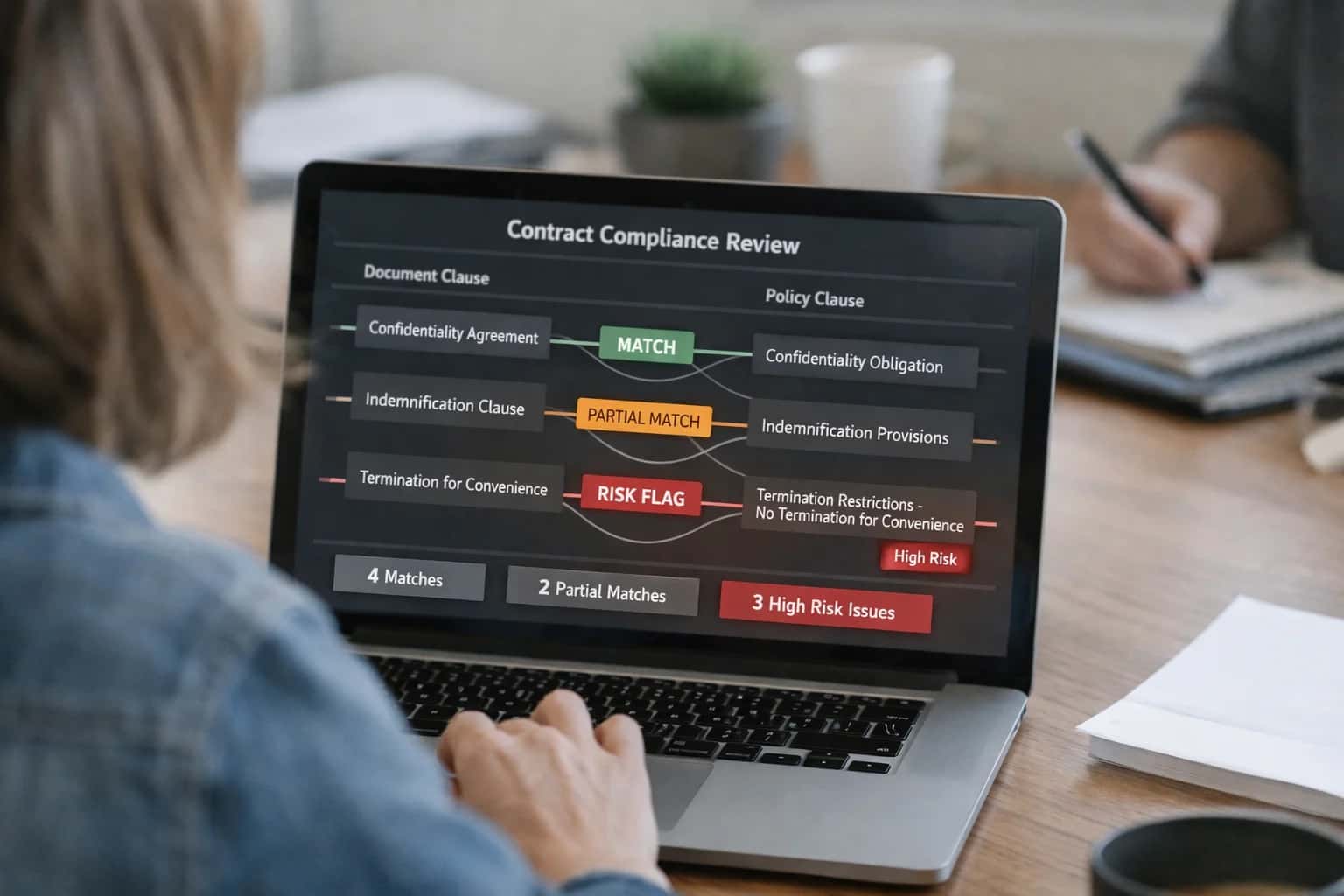
A formal chain of custody is the critical backbone for managing AI-generated content, code, and models. This guide explains how to build a system that provides legal defensibility and intellectual property protection.
Implementing a chain of custody requires integrating tamper-evident logging and access controls into your AI pipelines. Start by instrumenting your generation tools to emit signed events to an append-only ledger. Next, define clear custody transfer protocols for human review and publication stages. Finally, build verification services that allow any stakeholder to confirm an asset's complete history. This system directly supports broader digital provenance goals and integrates with related practices like creating a Software Bill of Materials (SBoM) for AI applications.
DIGITAL PROVENANCE
Key Concepts
Establishing a formal chain of custody for AI assets is foundational for legal defensibility, intellectual property protection, and compliance. These concepts form the technical building blocks of a robust provenance system.
01
Unique Asset Identifiers
Every AI-generated asset must have a globally unique identifier (UID) that persists for its entire lifecycle. This is the primary key for tracking.
- Use UUIDs or Content-Based Identifiers (like cryptographic hashes of the asset) to create immutable references.
- Embed the UID in metadata and, where possible, within the asset itself (e.g., in an image's EXIF data).
- This enables precise tracking, prevents duplication confusion, and is the first step in creating a verifiable audit trail.
02
Immutable Audit Logging
A cryptographically secure, append-only log records every custody event—creation, modification, transfer, and access.
- Each log entry includes a timestamp, actor, action, and the asset's UID, signed with the actor's digital signature.
- Implement using Merkle Trees or ledger technologies to ensure entries cannot be altered or deleted without detection.
- This log provides the legal defensibility required to prove an asset's history in court or during an audit.
03
Cryptographic Signing & Verification
Use public-key cryptography to sign assets and log entries, binding actions to specific individuals or systems.
- When an engineer approves a model checkpoint, they sign it with their private key. The public key verifies their identity.
- Integrate tools like Sigstore's Cosign to automate signing of model artifacts and container images in CI/CD pipelines.
- Verification becomes a gate before deployment, preventing the use of tampered or unauthorized assets.
04
Access Control & Ownership Transfer
Define clear roles and permissions (e.g., Creator, Reviewer, Publisher) and formally log ownership transfers.
- A transfer event in the audit log must include the releasing party's signature and the accepting party's acknowledgment.
- Implement attribute-based access control (ABAC) to govern who can view, modify, or sign assets based on metadata like project phase or classification.
- This formalizes responsibility and prevents unauthorized changes during collaborative workflows.
05
Provenance Metadata Schema
Define a standardized schema to capture all relevant context about an AI asset's creation and lineage.
- Essential fields: training data source hashes, model architecture/version, hyperparameters, toolchain versions, and compliance certifications.
- Adopt or extend existing standards like MLflow Model Registry or OpenLineage to ensure interoperability.
- This structured metadata is queryable and forms the basis for automated compliance checks and supply chain dashboards.
06
Verification Service Endpoint
Build a dedicated service that allows any stakeholder to verify an asset's chain of custody on demand.
- The service takes an asset's UID, fetches its audit log, and cryptographically verifies all signatures and log integrity.
- It returns a simple pass/fail status and a human-readable provenance report.
- This is the user-facing component that turns complex tracking data into actionable trust, crucial for partners and auditors. For a deeper look at verification systems, see our guide on How to Establish a Provenance Verification Framework for Training Data.
FOUNDATION
Step 1: Design Your Custody Data Schema
The first step in establishing a chain of custody is defining the immutable data structure that will track an asset's entire lifecycle. This schema is the single source of truth.
Your custody data schema is the core data model that records every critical event in an AI asset's life. It must be immutable and cryptographically verifiable. Essential fields include a globally unique identifier (GUID), the asset's cryptographic hash, creator identity, creation timestamp, and a log of all subsequent custody events. Each event—such as a transfer of ownership, a modification, or an access review—must be signed by the responsible party and appended to the log. This creates an unforgeable audit trail.
Design for extensibility and integration. Use a structured format like JSON Schema or Protobuf to define the model. Key event types to plan for are: Creation, Transfer, Modification, Access, and Verification. Ensure your schema can link to external proofs, such as entries in a tamper-evident logging system or a digital provenance system. This foundational step enables all subsequent tracking, querying, and compliance reporting.
IMPLEMENTATION OPTIONS
Tool Comparison for Chain of Custody
A comparison of foundational tools for building an immutable, auditable chain of custody for AI-generated assets.
| Feature / Capability | Cryptographic Ledger (e.g., Blockchain) | Immutable Database (e.g., Amazon QLDB) | Specialized Provenance Platform (e.g., OpenLineage) |
|---|---|---|---|
Immutable Append-Only Log | |||
Cryptographic Verification (e.g., Signing) | |||
Decentralized / Trustless Consensus | |||
Native Query Language (SQL-like) | |||
Built-in Data Lineage Visualization | |||
Integration with MLOps Tools (MLflow, Kubeflow) | |||
Operational Cost (Relative) | $$$ | $ | $$ |
Implementation Complexity | High | Medium | Low-Medium |
Enabling Efficiency, Speed & Accuracy
Intelligent Analysis, Decision & Execution
We build AI systems for teams that need search across company data, workflow automation across tools, or AI features inside products and internal software.
Talk to Us
Search across company data
Give teams answers from docs, tickets, runbooks, and product data with sources and permissions.
Useful when people spend too long searching or get different answers from different systems.
Enterprise searchRAGPermissions
Read more
Automate internal workflows
Use AI to route work, draft outputs, trigger actions, and keep approvals and logs in place.
Useful when repetitive work moves across multiple tools and teams.
AI agentsWorkflow automationGovernance
Read more
Add AI to products and internal tools
Build assistants, guided actions, or decision support into the software your team or customers already use.
Useful when AI needs to be part of the product, not a separate tool.
AI integrationDecision supportModel routing
Read moreCHAIN OF CUSTODY
Common Mistakes
A robust chain of custody is critical for legal defensibility and IP management of AI assets. Developers often undermine its integrity with technical oversights. This section addresses the most frequent and costly mistakes.
A standard database log lacks the immutability and tamper-evidence required for legal admissibility. An adversary with database access can alter timestamps or delete entries without a trace.
For a defensible chain, you must implement cryptographic verification. This involves:
- Using append-only logs (like a Merkle tree) where each new entry includes a hash of the previous one.
- Cryptographically signing each custody event (e.g., asset creation, transfer) with a private key.
- Storing the log's root hash in an immutable system, such as a public blockchain or a private ledger service like Trinsic or Immudb.
This creates a verifiable audit trail where any alteration breaks the cryptographic chain, providing the non-repudiation needed for compliance and litigation.

About the author
Prasad Kumkar
CEO & MD, Inference Systems
Prasad Kumkar is the CEO & MD of Inference Systems and writes about AI systems architecture, LLM infrastructure, model serving, evaluation, and production deployment. Over 5+ years, he has worked across computer vision models, L5 autonomous vehicle systems, and LLM research, with a focus on taking complex AI ideas into real-world engineering systems.
His work and writing cover AI systems, large language models, AI agents, multimodal systems, autonomous systems, inference optimization, RAG, evaluation, and production AI engineering.
LinkedIn
Limited slotsGet a Free AI Consultation
Partnered with leading AI, data, and software stack.





How We Work
Custom AI workflows for your Business
One-fit-all AI don't work for modern businesses. At Inferensys, we aim to understand your business & custom requirements; which we use to define most efficient agentic workflows, the data, and the tools for your business.
01
Review the use case
We understand the task, the users, and where AI can actually help.
Read more02
Pick the right approach
We define what needs search, automation, or product integration.
Read more03
Build the first useful version
We implement the part that proves the value first.
Read more04
Improve from there
We add the checks and visibility needed to keep it useful.
Read moreThe first call is a practical review of your use case and the right next step.
Talk to Us