Explainable AI (XAI) is a non-negotiable requirement for safety-critical sensing in autonomous vehicles. Unlike standard models, sensor fusion AI must provide a clear, auditable reasoning trace for every decision—such as identifying a pedestrian or initiating an emergency brake. This traceability is mandated by regulations like the EU AI Act and is essential for functional safety certification (e.g., ISO 26262). Without XAI, debugging complex failures in multi-modal systems becomes impossible, eroding trust with engineers and regulators alike.

Guide
How to Architect a System for Explainable AI (XAI) in Safety-Critical Sensing
A technical guide to designing and implementing explainable AI systems for automotive sensor fusion and perception. Learn to generate actionable explanations for debugging, certification, and regulatory compliance.
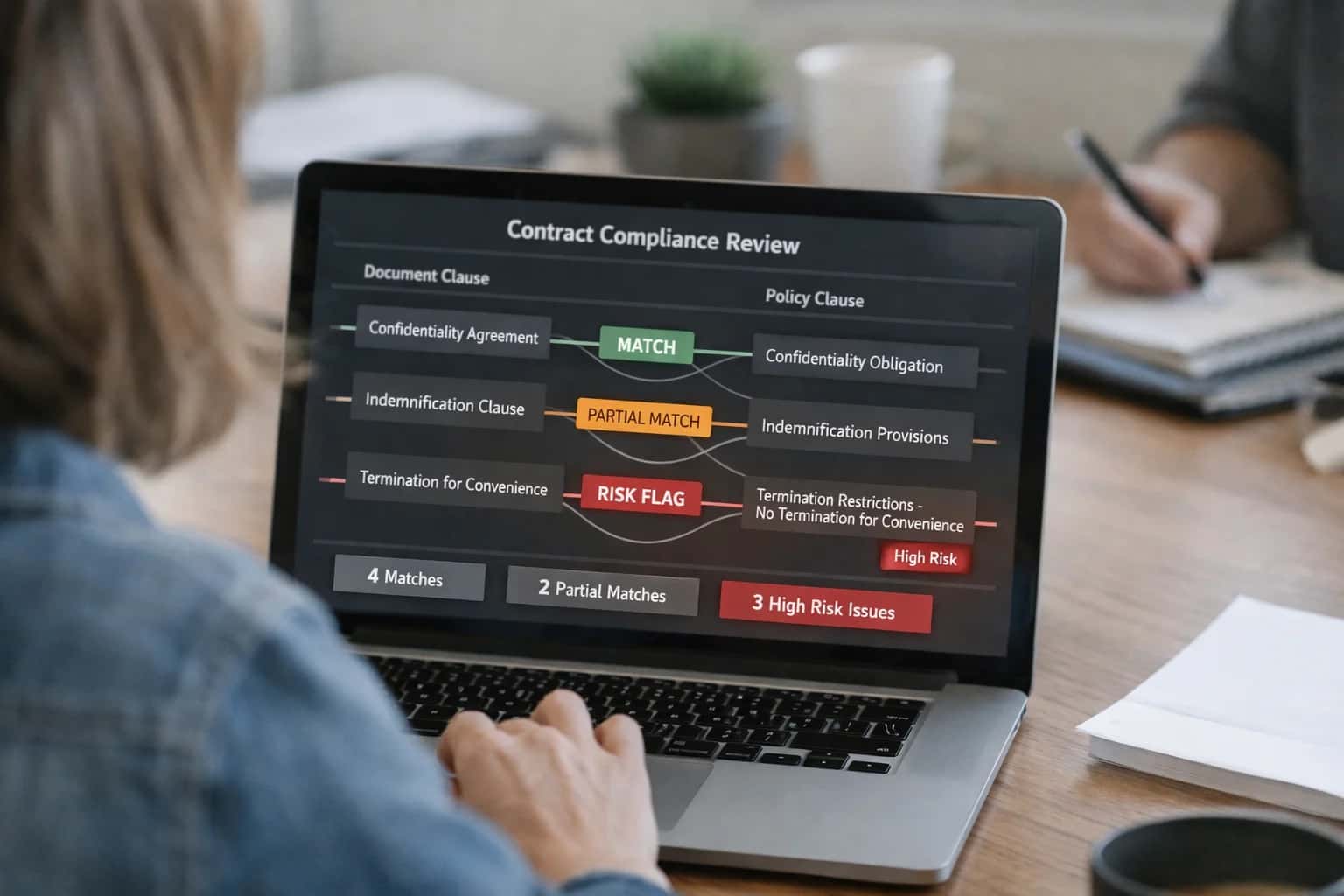
This guide details methods for making the decisions of complex sensor AI models interpretable to engineers and regulators. You will learn to implement techniques like attention visualization, counterfactual explanations, and generating natural language reports for sensor fusion outcomes. This is critical for debugging, certification, and building trust in autonomous systems, aligning with requirements for [Explainability and Traceability for High-Risk AI](/explainability-and-traceability-for-high-risk-ai).
Architecting for XAI requires integrating explainability techniques directly into your model and system design. Core methods include attention visualization to show which sensor inputs (e.g., LiDAR point, camera pixel) the model focused on, counterfactual explanations to illustrate how a small change in input would alter the output, and natural language report generation to translate model logic into human-readable summaries. Your system architecture must log these explanations alongside raw sensor data to create a complete, verifiable chain of causality for every critical event.
ARCHITECTURE GUIDE
Core XAI Concepts for Sensing
Essential techniques to make your sensor AI's decisions interpretable and auditable for safety-critical applications like autonomous driving.
02
Counterfactual Explanations
Generate a minimal, realistic change to the input sensor data that would have led to a different AI output. This answers the question, "What would need to be different for the system to see a safe path instead of an obstacle?"
- Use Case: Critical for understanding decision boundaries in sensor fusion. For a fused camera-LiDAR detection, a counterfactual might show that a 10% increase in LiDAR point cloud density would change the classification from 'unknown debris' to 'pedestrian'.
- Method: Use gradient-based search or generative models (like GANs) to create plausible alternative sensor readings.
03
Natural Language Report Generation
Translate complex, multi-sensor fusion outcomes into structured, human-readable reports. This bridges the gap between raw model confidence scores and engineer/regulator understanding.
- Architecture: Pair your sensor fusion model with a lightweight, deterministic report generator. Use templates filled with key facts:
"Fused object at [coordinates] classified as [class] with [confidence]%. Primary evidence: [Sensor A] provided strong shape contour; [Sensor B] corroborated velocity. Conflicting data from [Sensor C] was discounted due to [reason]." - Value: Creates an auditable trail for certification processes like ISO 26262.
04
Saliency Maps for Time-Series Signals
Identify the specific timestamps or frequency bands in a temporal sensor signal (e.g., radar, vibration acoustics) that were most influential for the model's prediction.
- Application: Explaining why a predictive maintenance model flagged a bearing as faulty. The saliency map might show high attention on a specific 200Hz harmonic in the audio spectrum that emerged 48 hours prior.
- Tools: Extend gradient-based methods (Grad-CAM) for 1D signals or use model-specific techniques for architectures like LSTMs and Transformers.
05
Concept Activation Vectors (CAVs)
Test for the presence of human-understandable concepts (e.g., 'sensor occlusion', 'glare', 'multi-path reflection') within the model's internal representations. This moves explanations beyond pixels to higher-level reasoning.
- Process: Train a linear classifier to detect a concept using a small set of labeled examples. The CAV is the vector orthogonal to the classifier's decision boundary.
- Safety Benefit: You can quantitatively test if a false positive detection was triggered by the concept of 'rain streak' versus actual object features, directly addressing Explainability and Traceability for High-Risk AI requirements.
06
Local Interpretable Model-agnostic Explanations (LIME)
Approximate the complex sensor AI model locally with a simple, interpretable model (like linear regression) to explain individual predictions.
- How it works: Perturb the input sensor data (e.g., super-pixel masking for images, window masking for signals) and observe changes in the output. LIME then identifies which input segments are most important.
- Best For: Providing quick, post-hoc explanations for specific incidents during testing, especially for black-box models where internal weights are inaccessible. It's a foundational tool for building trust before deploying more integrated methods like attention visualization.
FOUNDATION
Step 1: Define Explanation Requirements and Stakeholders
The first and most critical step in building an explainable AI (XAI) system for safety-critical sensing is to explicitly define what needs to be explained, to whom, and why. This establishes the functional and regulatory guardrails for your entire architecture.
Begin by identifying the stakeholders who require explanations. For automotive sensing, this includes safety engineers debugging a false positive, regulators certifying the system, and potentially the driver during a critical event. Each group needs a different explanation type—a software engineer may need a feature attribution heatmap, while a regulator requires a traceable logic path for audit. This directly aligns with mandates for Explainability and Traceability for High-Risk AI.
Next, formalize the explanation requirements. Define the specific AI decisions that must be explained, such as "Why did the object classifier label this radar return as a pedestrian?" Establish performance metrics for the explanations themselves, like fidelity (how accurately the explanation reflects the model's reasoning) and latency (must be real-time for operational use). This requirements document becomes the benchmark for selecting XAI techniques like LIME, SHAP, or counterfactual generators in later steps.
METHOD SELECTION
XAI Technique Comparison for Sensor AI
A comparison of post-hoc and intrinsic explainability methods for debugging and certifying sensor fusion models in safety-critical systems.
| Technique / Feature | Attention Visualization | Counterfactual Explanations | Layer-Wise Relevance Propagation (LRP) | Natural Language Reports |
|---|---|---|---|---|
Explanation Type | Intrinsic (Model-Specific) | Post-Hoc (Model-Agnostic) | Post-Hoc (Model-Specific) | Post-Hoc (Model-Agnostic) |
Computational Overhead | Low (< 10 ms) | High (1-5 sec) | Medium (100-500 ms) | Medium (200-800 ms) |
Output for Engineers | Heatmaps / Saliency | Perturbed Input Samples | Per-Feature Relevance Scores | Structured Text Summary |
Regulatory Suitability | Medium | High | High | High |
Handles Multi-Modal Data | ||||
Identifies Spurious Correlations | ||||
Integrates with MLOps for Agents | ||||
Critical for Explainability in High-Risk AI |
SYSTEM OPERATIONS
Step 6: Integrate with Validation and MLOps
This final step ensures your XAI system is robust, auditable, and continuously improving by embedding it within rigorous validation pipelines and MLOps frameworks.
Integrate XAI outputs directly into your validation and verification (V&V) pipeline. For each safety-critical inference, log the generated explanation—such as an attention map or counterfactual scenario—alongside the prediction. This creates an auditable trail for certification bodies like ISO 26262. Use these logs to automatically flag predictions where the model's reasoning contradicts known physical laws or sensor constraints, triggering a fail-safe or human review. This process is foundational for Explainability and Traceability for High-Risk AI.
Treat XAI as a first-class component in your MLOps lifecycle. Version your explanation generators alongside your core models. Implement automated tests that check for explanation consistency, latency, and completeness after each model update. Monitor for explanation drift, where the rationale for correct predictions changes inexplicably over time, which can signal underlying model degradation. This operational rigor, detailed in our guide on MLOps and Model Lifecycle Management for Agents, transforms XAI from a debugging tool into a core system reliability feature.
Enabling Efficiency, Speed & Accuracy
Intelligent Analysis, Decision & Execution
We build AI systems for teams that need search across company data, workflow automation across tools, or AI features inside products and internal software.
Talk to Us
Search across company data
Give teams answers from docs, tickets, runbooks, and product data with sources and permissions.
Useful when people spend too long searching or get different answers from different systems.
Enterprise searchRAGPermissions
Read more
Automate internal workflows
Use AI to route work, draft outputs, trigger actions, and keep approvals and logs in place.
Useful when repetitive work moves across multiple tools and teams.
AI agentsWorkflow automationGovernance
Read more
Add AI to products and internal tools
Build assistants, guided actions, or decision support into the software your team or customers already use.
Useful when AI needs to be part of the product, not a separate tool.
AI integrationDecision supportModel routing
Read moreEXPLAINABLE AI (XAI)
Common Mistakes
Architecting for explainability in safety-critical sensing is non-negotiable. These are the most frequent and costly errors developers make, from confusing interpretability with explainability to failing to design for real-time constraints.
Interpretability is an intrinsic model property—how easily a human can understand its internal mechanics (e.g., a decision tree). Explainability is a functional outcome—the ability to generate post-hoc, human-understandable reasons for a specific decision or prediction, even for a complex 'black-box' model like a deep neural network.
In safety-critical sensing, you cannot rely on interpretable models alone because they often lack the required accuracy. The architectural mistake is assuming a simple model is sufficient. The correct approach is to use a high-performance complex model (e.g., for sensor fusion) and wrap it with dedicated explainability techniques like LIME, SHAP, or attention visualization to generate the required explanations for engineers and regulators. This aligns with the core requirements for Explainability and Traceability for High-Risk AI.

About the author
Prasad Kumkar
CEO & MD, Inference Systems
Prasad Kumkar is the CEO & MD of Inference Systems and writes about AI systems architecture, LLM infrastructure, model serving, evaluation, and production deployment. Over 5+ years, he has worked across computer vision models, L5 autonomous vehicle systems, and LLM research, with a focus on taking complex AI ideas into real-world engineering systems.
His work and writing cover AI systems, large language models, AI agents, multimodal systems, autonomous systems, inference optimization, RAG, evaluation, and production AI engineering.
LinkedIn
Limited slotsGet a Free AI Consultation
Partnered with leading AI, data, and software stack.





How We Work
Custom AI workflows for your Business
One-fit-all AI don't work for modern businesses. At Inferensys, we aim to understand your business & custom requirements; which we use to define most efficient agentic workflows, the data, and the tools for your business.
01
Review the use case
We understand the task, the users, and where AI can actually help.
Read more02
Pick the right approach
We define what needs search, automation, or product integration.
Read more03
Build the first useful version
We implement the part that proves the value first.
Read more04
Improve from there
We add the checks and visibility needed to keep it useful.
Read moreThe first call is a practical review of your use case and the right next step.
Talk to Us