A swarm intelligence system is a decentralized AI approach where simple agents, like individual drones, follow local rules to produce complex, emergent group behaviors. For logistics, this means a fleet can dynamically optimize delivery routes, balance workloads, and adapt to disruptions—such as weather or new orders—without a central controller. Core algorithms include ant colony optimization for pathfinding and Boids for flocking and collision avoidance. This design is the foundation for scalable, resilient autonomous drone navigation and fleet coordination.

Guide
How to Design a Swarm Intelligence System for Logistics
A practical guide to implementing decentralized swarm algorithms for autonomous drone fleets. Learn to encode mission objectives, simulate emergent behaviors, and deploy cooperative logistics systems.
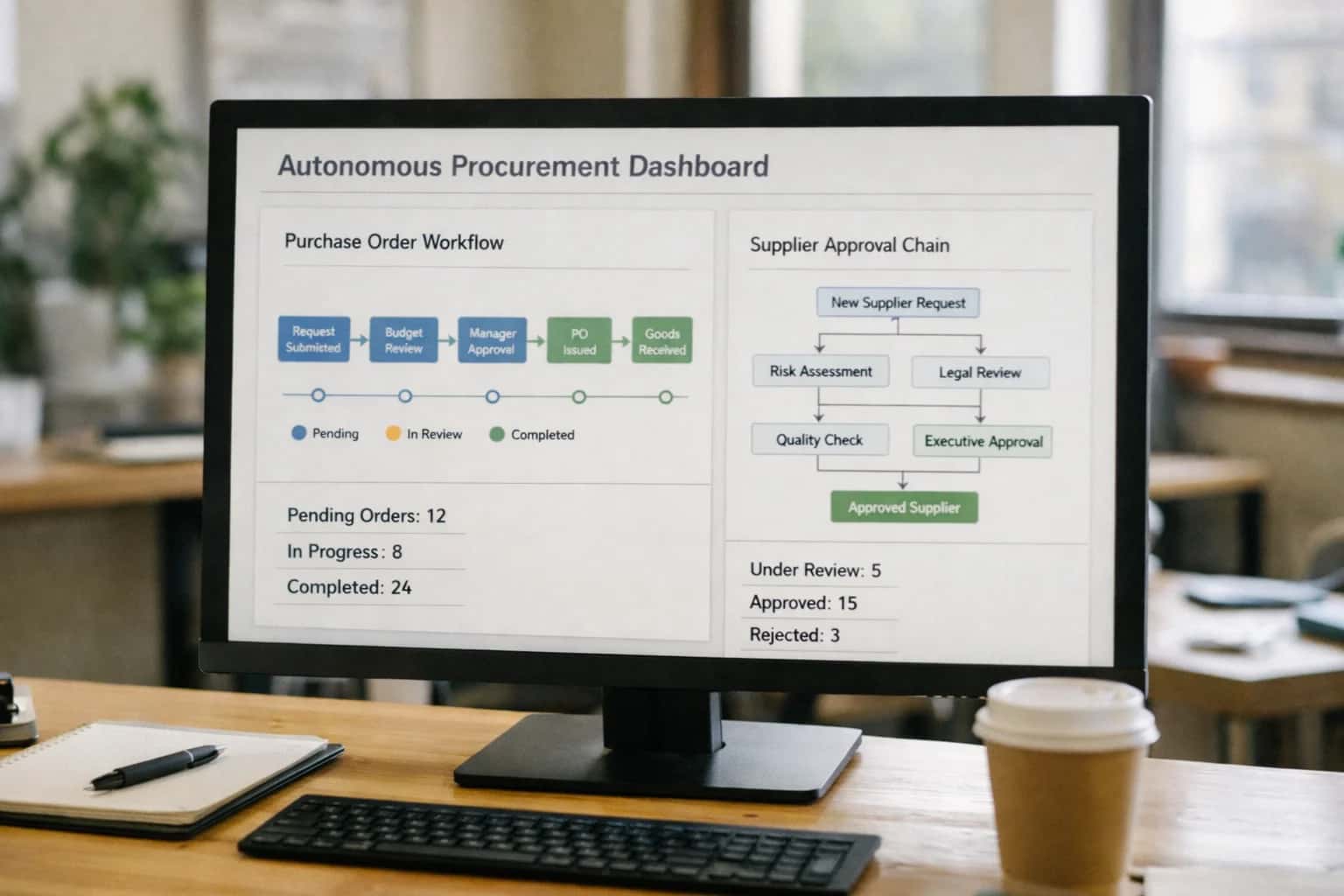
This guide details the implementation of decentralized swarm algorithms, such as ant colony optimization or flocking rules (Boids), for coordinating drone fleets in logistics.
Designing this system requires three key steps. First, encode mission objectives into agent rules, like a preference for shorter paths. Second, establish a lightweight communication protocol, such as digital pheromone trails or direct state broadcasting, for agents to influence each other. Third, rigorously simulate the swarm's performance using tools like NetLogo or custom Python scripts before real-world deployment. This process ensures the emergent behavior reliably achieves the global logistics goal.
LOGISTICS FLEET COORDINATION
Swarm Algorithm Comparison
A comparison of decentralized swarm intelligence algorithms for optimizing drone fleet logistics, focusing on key operational features for route planning and load distribution.
| Algorithm Feature | Ant Colony Optimization (ACO) | Flocking (Boids) | Particle Swarm Optimization (PSO) |
|---|---|---|---|
Primary Optimization Goal | Pathfinding & shortest route discovery | Collision-free formation flying | Continuous variable optimization (e.g., load distribution) |
Communication Model | Stigmergy (environmental pheromone trails) | Local neighbor-based rules (separation, alignment, cohesion) | Global best position sharing within swarm |
Best For Dynamic Environments | |||
Handles Discrete Decision Points (e.g., warehouse nodes) | |||
Computational Load per Agent | Low to Medium | Very Low | Medium |
Convergence Speed | Slower, improves with iterations | Immediate, rule-based | Fast for convex problems |
Emergent Behavior Complexity | Self-organizing shortest paths | Realistic flocking, schooling | Efficient search space exploration |
Integration Difficulty with Central Planner | Medium (for initial pheromone seeding) | Low (acts as decentralized controller) | High (requires objective function mapping) |
IMPLEMENTATION
Step 4: Integrate a Communication Layer
A swarm's intelligence emerges from local interactions. This step builds the decentralized communication layer that enables those interactions, allowing drones to share state and coordinate without a central controller.
The communication layer is the swarm's nervous system. You must select a protocol that balances low latency, high reliability, and scalability. For logistics swarms, MAVLink is the industry standard for drone telemetry and command. Implement a publish-subscribe pattern using a lightweight broker like MQTT or a Data Distribution Service (DDS) to allow drones to broadcast their position, battery status, and detected obstacles. This creates a shared situational awareness, a prerequisite for the emergent behaviors defined in your swarm algorithms like ant colony optimization.
In practice, each drone runs a local agent that subscribes to relevant state topics and publishes its own data. Code this layer in Python using pymavlink for MAVLink parsing and paho-mqtt for the broker connection. Ensure messages include a timestamp and sender ID. This decentralized mesh allows the fleet to perform dynamic task allocation—if one drone's battery dips, others can adjust their routes to cover its delivery zone. Test this network in your simulation environment before physical deployment to validate latency and packet loss under load.
Enabling Efficiency, Speed & Accuracy
Intelligent Analysis, Decision & Execution
We build AI systems for teams that need search across company data, workflow automation across tools, or AI features inside products and internal software.
Talk to Us
Search across company data
Give teams answers from docs, tickets, runbooks, and product data with sources and permissions.
Useful when people spend too long searching or get different answers from different systems.
Enterprise searchRAGPermissions
Read more
Automate internal workflows
Use AI to route work, draft outputs, trigger actions, and keep approvals and logs in place.
Useful when repetitive work moves across multiple tools and teams.
AI agentsWorkflow automationGovernance
Read more
Add AI to products and internal tools
Build assistants, guided actions, or decision support into the software your team or customers already use.
Useful when AI needs to be part of the product, not a separate tool.
AI integrationDecision supportModel routing
Read moreDESIGN PITFALLS
Common Mistakes
Designing a decentralized swarm intelligence system for drone logistics is a paradigm shift from centralized control. These are the most frequent technical and conceptual errors that lead to fragile, inefficient, or unsafe systems.
This is often caused by poorly tuned or conflicting local interaction rules. In swarm intelligence, global order emerges from simple agent-level behaviors. Common mistakes include:
- Over-tuning for a single scenario: Rules optimized for a dense urban environment may cause deadlock in an open field.
- Ignoring emergent pathologies: Rules that work for 10 drones can cause traffic jams or oscillations with 100. You must simulate at scale.
- Missing a feedback damping term: Agents overreact to neighbors, causing the swarm to 'ring' like a bell instead of settling.
Fix: Implement a parameter sweep in your simulation (e.g., NetLogo or a custom Python script) to find stable regimes across different swarm densities and mission types. Use phase diagrams to visualize the relationship between rule parameters and swarm coherence.

About the author
Prasad Kumkar
CEO & MD, Inference Systems
Prasad Kumkar is the CEO & MD of Inference Systems and writes about AI systems architecture, LLM infrastructure, model serving, evaluation, and production deployment. Over 5+ years, he has worked across computer vision models, L5 autonomous vehicle systems, and LLM research, with a focus on taking complex AI ideas into real-world engineering systems.
His work and writing cover AI systems, large language models, AI agents, multimodal systems, autonomous systems, inference optimization, RAG, evaluation, and production AI engineering.
LinkedIn
Limited slotsGet a Free AI Consultation
Partnered with leading AI, data, and software stack.





How We Work
Custom AI workflows for your Business
One-fit-all AI don't work for modern businesses. At Inferensys, we aim to understand your business & custom requirements; which we use to define most efficient agentic workflows, the data, and the tools for your business.
01
Review the use case
We understand the task, the users, and where AI can actually help.
Read more02
Pick the right approach
We define what needs search, automation, or product integration.
Read more03
Build the first useful version
We implement the part that proves the value first.
Read more04
Improve from there
We add the checks and visibility needed to keep it useful.
Read moreThe first call is a practical review of your use case and the right next step.
Talk to Us