Designing an Autonomous Customer Support Resolution (ACSR) system for regulated industries requires a zero-trust architecture from the ground up. The core challenge is enabling end-to-end automation while enforcing data isolation, PII handling, and confidential computing to meet standards like HIPAA, GDPR, and SOC 2. Your architecture must treat every component—from the intent recognition engine to the action execution framework—as a potential attack surface, implementing strict access controls and encryption both in transit and at rest.

Guide
How to Design a Secure ACSR Architecture for Regulated Industries
A security-first, step-by-step guide to architecting an Autonomous Customer Support Resolution (ACSR) system that meets SOC 2, HIPAA, and GDPR requirements. Learn to implement data isolation, confidential computing, and immutable audit trails.
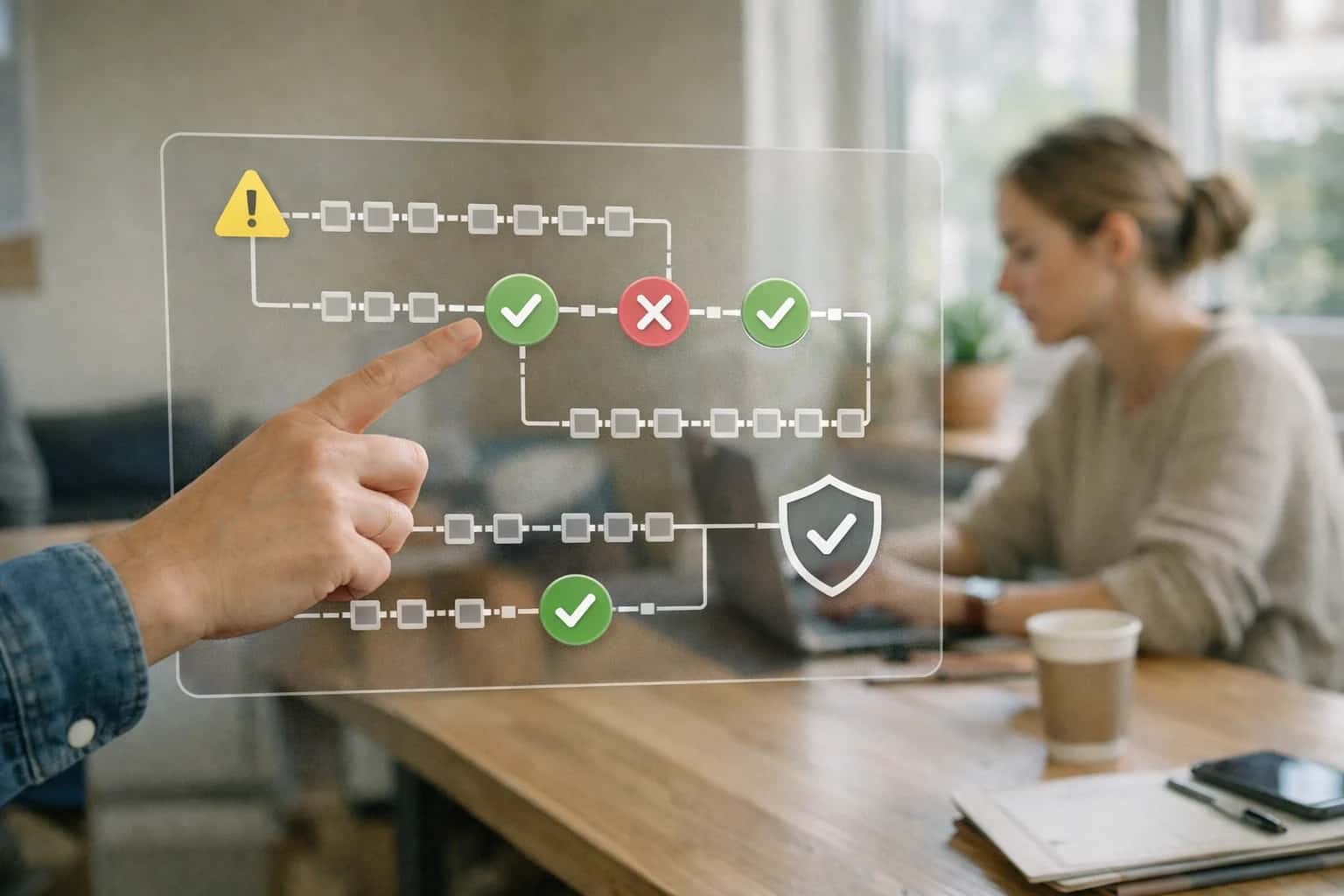
A security-first guide for deploying autonomous support in finance, healthcare, or other regulated sectors.
Practical implementation starts with secure multi-tenancy to silo customer data and deploying sensitive workloads within Trusted Execution Environments (TEEs). Integrate a policy-aware reasoning layer that performs symbolic logic checks against regulatory rules before any action. Crucially, you must design for auditability, logging every agent decision in an immutable ledger to provide a defensible reasoning trace. This foundational security enables the scalability covered in our guide on How to Architect an Autonomous Customer Support Resolution System.
ARCHITECTURAL REQUIREMENTS
Security Control Mapping for Compliance Standards
This table maps core security controls to common regulatory standards, showing which architectural patterns are required for compliance in regulated industries.
| Security Control | HIPAA (Healthcare) | GDPR (Data Privacy) | SOC 2 (Trust Services) | PCI DSS (Payments) |
|---|---|---|---|---|
Data Encryption at Rest | ||||
Data Encryption in Transit (TLS 1.3+) | ||||
Hardware-Based Isolation / TEEs | Required for ePHI processing | Recommended for sensitive data | Optional | Required for cryptographic key material |
Immutable Audit Logs for All Actions | ||||
Automated PII Detection & Redaction | Required | Required | Optional | Required for PAN data |
Strict Access Controls (RBAC/ABAC) | ||||
Data Residency / Sovereignty Guarantees | Required | Customer-specific | Region-specific rules may apply | |
Right to Erasure / Data Deletion Automation | Required | Optional | Required per retention policy |
Enabling Efficiency, Speed & Accuracy
Intelligent Analysis, Decision & Execution
We build AI systems for teams that need search across company data, workflow automation across tools, or AI features inside products and internal software.
Talk to Us
Search across company data
Give teams answers from docs, tickets, runbooks, and product data with sources and permissions.
Useful when people spend too long searching or get different answers from different systems.
Enterprise searchRAGPermissions
Read more
Automate internal workflows
Use AI to route work, draft outputs, trigger actions, and keep approvals and logs in place.
Useful when repetitive work moves across multiple tools and teams.
AI agentsWorkflow automationGovernance
Read more
Add AI to products and internal tools
Build assistants, guided actions, or decision support into the software your team or customers already use.
Useful when AI needs to be part of the product, not a separate tool.
AI integrationDecision supportModel routing
Read moreSECURITY & COMPLIANCE
Common Mistakes
Designing an Autonomous Customer Support Resolution (ACSR) system for regulated industries introduces unique security and architectural pitfalls. This guide addresses the most frequent and critical mistakes developers make, providing actionable solutions to ensure your system is robust, compliant, and trustworthy.
A common mistake is treating the ACSR system as a monolithic application with shared data access. In regulated environments like finance or healthcare, you must enforce data isolation at the architectural level from day one.
The Fix: Implement a strict microservices or domain-driven design pattern. Each service (e.g., PII handling, policy reasoning, action execution) should have its own isolated data store with strict access controls. Use network segmentation and private subnets to prevent lateral movement. For multi-tenant scenarios (serving different clients or departments), enforce hard multi-tenancy using separate database schemas or even separate database instances, never relying solely on application-level tenant_id filters.

About the author
Prasad Kumkar
CEO & MD, Inference Systems
Prasad Kumkar is the CEO & MD of Inference Systems and writes about AI systems architecture, LLM infrastructure, model serving, evaluation, and production deployment. Over 5+ years, he has worked across computer vision models, L5 autonomous vehicle systems, and LLM research, with a focus on taking complex AI ideas into real-world engineering systems.
His work and writing cover AI systems, large language models, AI agents, multimodal systems, autonomous systems, inference optimization, RAG, evaluation, and production AI engineering.
LinkedIn
Limited slotsGet a Free AI Consultation
Partnered with leading AI, data, and software stack.





How We Work
Custom AI workflows for your Business
One-fit-all AI don't work for modern businesses. At Inferensys, we aim to understand your business & custom requirements; which we use to define most efficient agentic workflows, the data, and the tools for your business.
01
Review the use case
We understand the task, the users, and where AI can actually help.
Read more02
Pick the right approach
We define what needs search, automation, or product integration.
Read more03
Build the first useful version
We implement the part that proves the value first.
Read more04
Improve from there
We add the checks and visibility needed to keep it useful.
Read moreThe first call is a practical review of your use case and the right next step.
Talk to Us