A Human-in-the-Loop (HITL) Governance System is a technical architecture that inserts human approval into autonomous AI cycles to mitigate risk and ensure quality. It moves beyond simple post-generation review by designing review queues, setting confidence score thresholds for automated escalation, and creating auditable approval logs. This system is critical for high-stakes content in regulated industries like finance, healthcare, and legal, where AI outputs require ethical scrutiny and factual verification before publication. It transforms oversight from a bottleneck into a scalable, integrated design constraint.

Guide
How to Implement a Human-in-the-Loop Content Review System
A technical guide for developers to architect and deploy a Human-in-the-Loop (HITL) system for governing AI-generated content, ensuring quality and compliance.
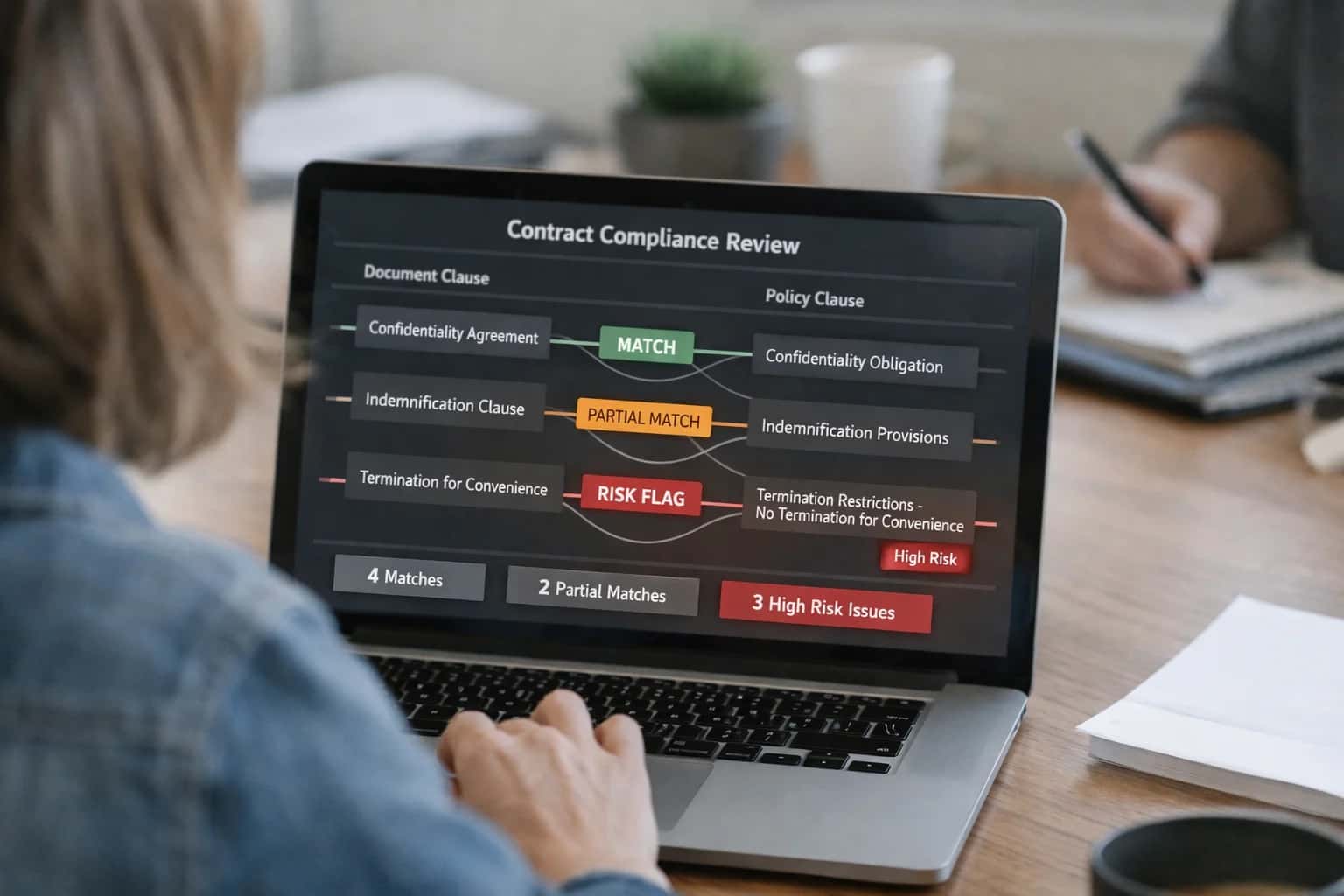
This guide details the technical integration of human reviewers into autonomous AI content workflows, ensuring ethical alignment and quality control for high-stakes content.
Implementation begins by defining clear escalation triggers—such as low confidence scores, flagged sensitive topics, or high-risk outputs—that automatically route content to platforms like Labelbox or Scale AI for human review. You must integrate these triggers directly into your content generation pipeline using APIs. The second step is to build the audit trail, logging every action from prompt and model version to reviewer decision and final approval state. This creates a defensible compliance record, essential for frameworks like the EU AI Act, and closes the loop for continuous model improvement.
REVIEW ESCALATION TRIGGERS
Confidence Threshold Matrix for Content Types
Recommended minimum confidence scores for automated approval before escalating to human review. Scores are based on content risk, brand impact, and regulatory exposure.
| Content Type & Risk Level | Automated Approval (Green) | Human Review Recommended (Yellow) | Mandatory Human Review (Red) |
|---|---|---|---|
Internal Documentation (Low Risk) | 0.85 | 0.70 - 0.84 | < 0.70 |
Marketing Blog Post (Medium Risk) | 0.9 | 0.80 - 0.89 | < 0.80 |
Product Support Answer (Medium-High Risk) | 0.92 | 0.85 - 0.91 | < 0.85 |
Financial/ Legal Advisory (High Risk) | 0.95 - 0.99 | ≤ 0.95 | |
Medical/ Health Information (Critical Risk) | Always Required | ||
Executive Communications (High Brand Impact) | 0.93 | 0.88 - 0.92 | < 0.88 |
Social Media Reply (Variable Risk) | 0.88 | 0.75 - 0.87 | < 0.75 |
Enabling Efficiency, Speed & Accuracy
Intelligent Analysis, Decision & Execution
We build AI systems for teams that need search across company data, workflow automation across tools, or AI features inside products and internal software.
Talk to Us
Search across company data
Give teams answers from docs, tickets, runbooks, and product data with sources and permissions.
Useful when people spend too long searching or get different answers from different systems.
Enterprise searchRAGPermissions
Read more
Automate internal workflows
Use AI to route work, draft outputs, trigger actions, and keep approvals and logs in place.
Useful when repetitive work moves across multiple tools and teams.
AI agentsWorkflow automationGovernance
Read more
Add AI to products and internal tools
Build assistants, guided actions, or decision support into the software your team or customers already use.
Useful when AI needs to be part of the product, not a separate tool.
AI integrationDecision supportModel routing
Read moreHUMAN-IN-THE-LOOP REVIEW
Common Mistakes
Implementing a human-in-the-loop (HITL) system is critical for governing autonomous AI content, but common technical oversights can undermine its effectiveness. This section addresses the key pitfalls developers encounter when building review queues, setting thresholds, and creating audit logs.
A confidence score threshold is the probability level at which an AI-generated content piece is automatically approved or escalated for human review. Setting it incorrectly is the most common mistake.
How it works: Your AI model (e.g., GPT-4, Claude 3) assigns a confidence score to each output. If the score is above the threshold, the content auto-publishes. If it's below, it routes to a review queue in a platform like Labelbox or Scale AI.
How to set it correctly:
- Don't use a static number like 0.8 for all content types. High-stakes content (medical, legal) needs a higher threshold (e.g., 0.95) than marketing copy (e.g., 0.7).
- Calibrate with historical data: Analyze past outputs. What score did clearly correct content have? What score did erroneous content have? Set your threshold in the gap.
- Implement tiered thresholds: Design logic that routes content based on risk category, a core principle of Human-in-the-Loop (HITL) Governance Systems. For a complete framework, see our guide on How to Build an AI Content Governance Roadmap.

About the author
Prasad Kumkar
CEO & MD, Inference Systems
Prasad Kumkar is the CEO & MD of Inference Systems and writes about AI systems architecture, LLM infrastructure, model serving, evaluation, and production deployment. Over 5+ years, he has worked across computer vision models, L5 autonomous vehicle systems, and LLM research, with a focus on taking complex AI ideas into real-world engineering systems.
His work and writing cover AI systems, large language models, AI agents, multimodal systems, autonomous systems, inference optimization, RAG, evaluation, and production AI engineering.
LinkedIn
Limited slotsGet a Free AI Consultation
Partnered with leading AI, data, and software stack.





How We Work
Custom AI workflows for your Business
One-fit-all AI don't work for modern businesses. At Inferensys, we aim to understand your business & custom requirements; which we use to define most efficient agentic workflows, the data, and the tools for your business.
01
Review the use case
We understand the task, the users, and where AI can actually help.
Read more02
Pick the right approach
We define what needs search, automation, or product integration.
Read more03
Build the first useful version
We implement the part that proves the value first.
Read more04
Improve from there
We add the checks and visibility needed to keep it useful.
Read moreThe first call is a practical review of your use case and the right next step.
Talk to Us