
Guides
AI-Driven Performance Insights and Content-Assisted Revenue
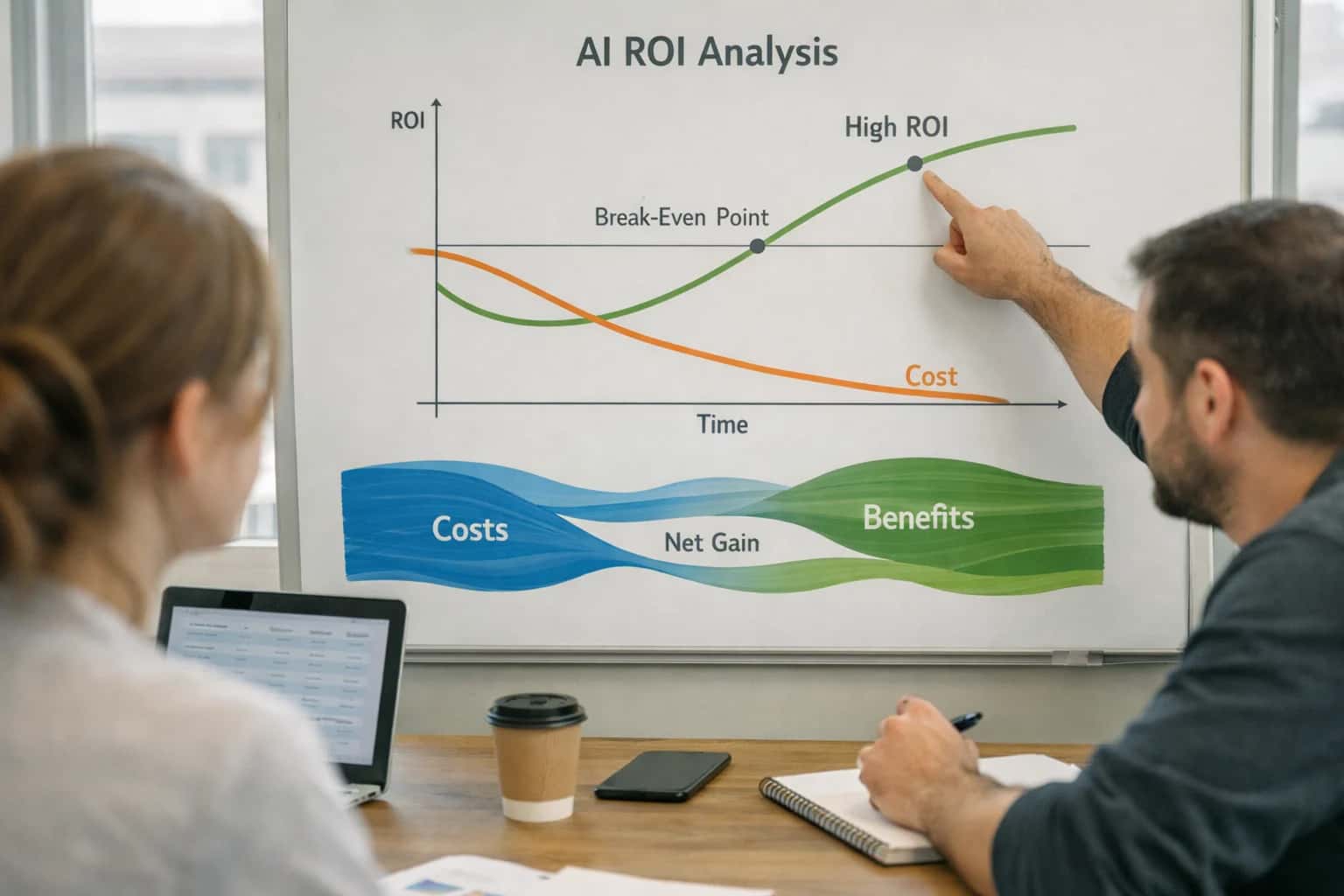
AI-Driven Performance Insights and Content-Assisted Revenue
Traffic is no longer the only metric; AI now provides a richer picture of engagement depth, scroll behavior, and how content contributes directly to revenue. Sub-guides include 'How to track content-assisted revenue with AI,' 'Using AI for deep engagement behavior analysis,' and 'Predicting content performance before publication' for the ROI-focused marketer.
How to Architect an AI System for Content-Assisted Revenue Attribution
This guide provides a technical blueprint for building an AI system that attributes revenue to specific content pieces, moving beyond last-click attribution. You'll learn how to integrate data from CRM platforms like Salesforce, analytics tools like Google Analytics 4, and payment gateways to create a unified attribution model. The guide covers designing feature stores, implementing multi-touch attribution algorithms, and setting up a feedback loop for model retraining using tools like Metaflow and Weights & Biases.
Setting Up an AI-Powered Engagement Depth Analytics Platform
This guide explains how to build a platform that uses AI to analyze user engagement beyond pageviews, focusing on scroll depth, time-on-page, and interaction heatmaps. You'll implement a data pipeline to capture behavioral events, use computer vision or heuristic models to process scroll maps, and build predictive models to score engagement. The guide includes integrating with platforms like Hotjar or building custom collectors, and using scikit-learn or PyTorch for model development.
Launching a Predictive Content Performance Scoring System
Learn how to build a system that predicts the potential performance of content before it's published. This guide covers feature engineering using historical performance data, topic modeling with BERT or GPT embeddings, and social signal scraping. You'll train a regression or classification model to output a performance score, deploy it via an API using FastAPI, and integrate the scoring into your CMS workflow for editorial decision support.
How to Design an AI Framework for Scroll Behavior Analysis
This guide details the architecture for a specialized AI framework that analyzes user scroll behavior to predict intent and content effectiveness. It covers collecting granular scroll event data, segmenting scroll patterns using clustering algorithms like DBSCAN, and correlating scroll depth with conversion events. You'll learn to build real-time inference endpoints to serve scroll-based insights to personalization engines or content recommendation systems.
Setting Up Multi-Source Data Integration for Revenue Insights
This practical guide walks through the process of building a robust data pipeline that unifies disparate sources—web analytics, ad platforms, CRM, and ERP systems—for holistic revenue insight. You'll use tools like Apache Airflow for orchestration, dbt for transformation, and a cloud data warehouse like Snowflake or BigQuery as the single source of truth. The guide emphasizes schema design, identity resolution, and creating clean, modeled datasets ready for AI analysis.
How to Implement Real-Time Content ROI Tracking with AI
This guide teaches you to build a real-time dashboard that calculates and displays the return on investment for individual content assets. It covers streaming data ingestion with Apache Kafka, calculating cost-per-acquisition and lifetime value metrics on the fly, and using AI to forecast future ROI based on engagement trends. The implementation includes setting up alerting for underperforming content and integrating with business intelligence tools like Tableau or Looker.
Launching an AI-Driven Audience Intent Modeling System
Learn how to deploy a system that models audience intent by analyzing search queries, on-site behavior, and content consumption patterns. This guide covers using transformer models to classify intent from text, building user profiles with vector databases like Pinecone, and creating intent-based content clusters. The system outputs intent signals that can power dynamic content recommendations and personalized marketing campaigns.
How to Build a Unified Dashboard for AI Performance Metrics
This guide provides a step-by-step process for architecting a centralized dashboard that visualizes all AI-driven performance insights. You'll learn to aggregate data from multiple AI models (engagement, attribution, prediction), design effective visualizations using libraries like Plotly or D3.js, and build the backend with a framework like Dash or Streamlit. The guide also covers setting up secure access controls and enabling drill-down capabilities for deep analysis.
Setting Up Governance for AI-Generated Performance Predictions
This guide addresses the critical need for governance when deploying AI models that influence business decisions. It covers establishing confidence thresholds, creating human-in-the-loop review workflows for low-confidence predictions, and implementing audit logs for model decisions. You'll learn to use tools like MLflow for model registry and monitoring, and design processes to ensure predictions are explainable and aligned with business objectives.
How to Architect a Pipeline for Behavioral Signal Processing
This technical guide explains how to design a scalable data pipeline dedicated to processing raw behavioral signals (clicks, hovers, scrolls) into structured features for AI models. It covers event streaming with Apache Flink or Spark Streaming, real-time feature computation, and storing results in a low-latency feature store like Feast or Tecton. The pipeline serves as the foundation for all real-time personalization and engagement analysis systems.
Launching an AI Model for Predicting Content Virality
This guide walks you through building and deploying a model that predicts the viral potential of content based on early engagement signals, semantic features, and network characteristics. You'll collect training data from social platforms using their APIs, engineer features like emotional sentiment and novelty score, and train a gradient boosting or neural network model. The guide also covers operationalizing the model to score new content and trigger amplification campaigns.
How to Design a System for Attribution Modeling with AI
Go beyond rule-based attribution by building a system that uses AI to determine the true contribution of each touchpoint. This guide covers data preparation for customer journey sequences, implementing algorithmic attribution models like Shapley value or Markov chains, and using reinforcement learning to optimize attribution weights dynamically. You'll learn to evaluate model fairness and integrate the results into bid management and budget allocation systems.
Setting Up AI-Powered A/B Testing for Content Optimization
This guide explains how to enhance traditional A/B testing by using AI to dynamically segment audiences, select promising variants, and analyze results with Bayesian methods. You'll integrate a testing platform like Optimizely or Statsig with your AI pipeline, use multi-armed bandit algorithms for real-time traffic allocation, and build models to understand the heterogeneous treatment effect of content changes across different user segments.
How to Implement Cohort Analysis with Machine Learning
Move beyond static cohort reports by implementing machine learning to analyze and predict cohort behavior. This guide covers defining dynamic cohorts based on behavioral clusters, using survival analysis to model retention, and applying time-series forecasting to predict future cohort performance. You'll use libraries like Lifelines and Prophet, and visualize insights in a cohort-centric dashboard to inform content and product strategy.
Launching a Predictive Analytics Engine for Lead Generation
Learn to build an engine that predicts which content will generate the highest-quality leads. This guide covers integrating content engagement data with lead scoring from your CRM, training a classification model to predict lead conversion probability, and ranking content assets by their predicted lead generation efficacy. The engine outputs recommendations for content promotion and helps align editorial strategy with sales objectives.
Partnered with leading AI, data, and software stack.





How We Work
Custom AI workflows for your Business
One-fit-all AI don't work for modern businesses. At Inferensys, we aim to understand your business & custom requirements; which we use to define most efficient agentic workflows, the data, and the tools for your business.
01
Review the use case
We understand the task, the users, and where AI can actually help.
Read more02
Pick the right approach
We define what needs search, automation, or product integration.
Read more03
Build the first useful version
We implement the part that proves the value first.
Read more04
Improve from there
We add the checks and visibility needed to keep it useful.
Read moreThe first call is a practical review of your use case and the right next step.
Talk to Us