An Autonomous Financial Signal Interpreter is an AI agent that continuously processes unstructured financial data—audio transcripts, regulatory filings, news articles—to extract actionable intelligence. You will architect a system that connects to data providers, uses Large Language Models (LLMs) via APIs to perform sentiment analysis and metric extraction, and builds a queryable knowledge graph of interpreted signals. This moves analysis from manual, periodic reviews to a real-time, autonomous capability.

Guide
Setting Up an Autonomous Financial Signal Interpreter
A developer guide to constructing an AI agent that autonomously processes earnings calls, SEC filings, and financial news to extract key metrics, sentiment, and generate actionable insights.
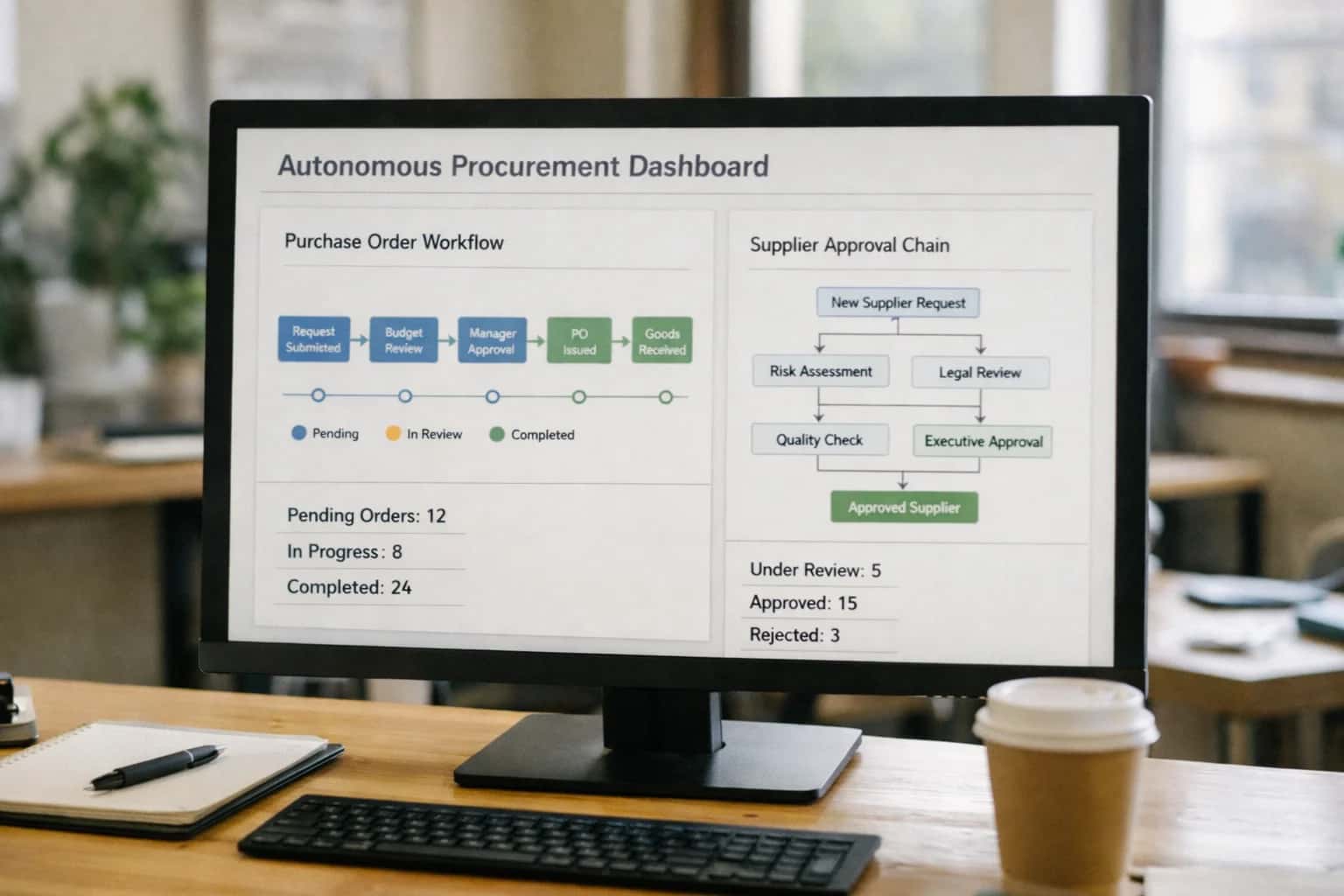
GUIDE
Introduction
This guide details constructing an agent that autonomously analyzes earnings calls, SEC filings, and financial news to generate summarized insights on company performance and risk.
The core workflow involves three stages: data ingestion from sources like SEC EDGAR and financial news APIs, signal processing using LLMs to identify key performance indicators and risk factors, and insight generation that summarizes findings into executive reports. This architecture is a practical application of concepts from our Agentic Retrieval-Augmented Generation (RAG) and Multi-Agent System (MAS) Orchestration pillars, creating a specialized agent for high-stakes financial analysis.
DATA PROCESSING AND ANALYSIS STACK
Tool and Framework Comparison
A comparison of core technologies for building the data ingestion, processing, and reasoning layers of an autonomous financial signal interpreter.
| Feature / Capability | LangChain | LlamaIndex | Custom Python Pipeline |
|---|---|---|---|
Financial Document Chunking | |||
Structured Data Extraction (SEC Forms) | Via third-party tools | Via third-party tools | Direct control with libraries |
Audio Transcript Processing | Requires integration | Requires integration | Native with Whisper/AssemblyAI |
Multi-Source Knowledge Graph Creation | Strong via GraphDB integrations | Core strength with native graph support | Manual implementation required |
LLM Call Orchestration & Reasoning | Core strength | Basic | Full manual control |
Real-Time Data Stream Handling | Limited | Limited | Excellent (Kinesis/Kafka) |
Built-in Financial Data Connectors | Must be built | ||
Operational Overhead (MLOps) | High | Medium | Very High |
Enabling Efficiency, Speed & Accuracy
Intelligent Analysis, Decision & Execution
We build AI systems for teams that need search across company data, workflow automation across tools, or AI features inside products and internal software.
Talk to Us
Search across company data
Give teams answers from docs, tickets, runbooks, and product data with sources and permissions.
Useful when people spend too long searching or get different answers from different systems.
Enterprise searchRAGPermissions
Read more
Automate internal workflows
Use AI to route work, draft outputs, trigger actions, and keep approvals and logs in place.
Useful when repetitive work moves across multiple tools and teams.
AI agentsWorkflow automationGovernance
Read more
Add AI to products and internal tools
Build assistants, guided actions, or decision support into the software your team or customers already use.
Useful when AI needs to be part of the product, not a separate tool.
AI integrationDecision supportModel routing
Read moreTROUBLESHOOTING
Common Mistakes
Building an autonomous financial signal interpreter is complex. These are the most frequent technical pitfalls developers encounter, from data ingestion to reasoning logic, and how to fix them.
Agents hallucinate metrics when the LLM's prompt lacks sufficient grounding in the raw source document. You cannot ask an LLM to "extract the Q3 revenue" from a 100-page SEC filing without first providing the exact, relevant text chunk.
Fix: Implement a two-stage retrieval process.
- Use a vector search to find sections of the document (10-K, transcript) that are semantically related to "revenue" or "quarterly results."
- Feed only those retrieved chunks into the LLM with a strict extraction prompt. This technique, known as Agentic Retrieval-Augmented Generation (RAG), constrains the LLM to the provided context, drastically reducing fabrication.
python# Example: Grounded extraction using retrieved context retrieved_chunks = vector_db.similarity_search("Q3 2024 revenue", filter={doc_id: filing_id}) extraction_prompt = f"""Based ONLY on the text below, extract the Q3 2024 revenue figure. If not present, say 'Not found'. Text: {retrieved_chunks} Revenue:"""

About the author
Prasad Kumkar
CEO & MD, Inference Systems
Prasad Kumkar is the CEO & MD of Inference Systems and writes about AI systems architecture, LLM infrastructure, model serving, evaluation, and production deployment. Over 5+ years, he has worked across computer vision models, L5 autonomous vehicle systems, and LLM research, with a focus on taking complex AI ideas into real-world engineering systems.
His work and writing cover AI systems, large language models, AI agents, multimodal systems, autonomous systems, inference optimization, RAG, evaluation, and production AI engineering.
LinkedIn
Limited slotsGet a Free AI Consultation
Partnered with leading AI, data, and software stack.





How We Work
Custom AI workflows for your Business
One-fit-all AI don't work for modern businesses. At Inferensys, we aim to understand your business & custom requirements; which we use to define most efficient agentic workflows, the data, and the tools for your business.
01
Review the use case
We understand the task, the users, and where AI can actually help.
Read more02
Pick the right approach
We define what needs search, automation, or product integration.
Read more03
Build the first useful version
We implement the part that proves the value first.
Read more04
Improve from there
We add the checks and visibility needed to keep it useful.
Read moreThe first call is a practical review of your use case and the right next step.
Talk to Us