An agentic social signal monitoring platform is an autonomous system that listens to social media APIs, interprets sentiment and intent using real-time NLP, and triggers workflows without human intervention. Unlike basic social listening tools, it uses AI agents to reason about context—distinguishing a minor complaint from a brewing PR crisis—and can autonomously draft responses, escalate alerts, or log opportunities. This moves monitoring from a passive dashboard to an active, intelligent participant in your market strategy, a core concept within Agentic Research and Market Intelligence Systems.

Guide
Launching an Agentic Social Signal Monitoring Platform
A developer guide to building an autonomous platform that monitors social media, analyzes sentiment with NLP, and triggers agentic workflows for real-time crisis detection and opportunity response.
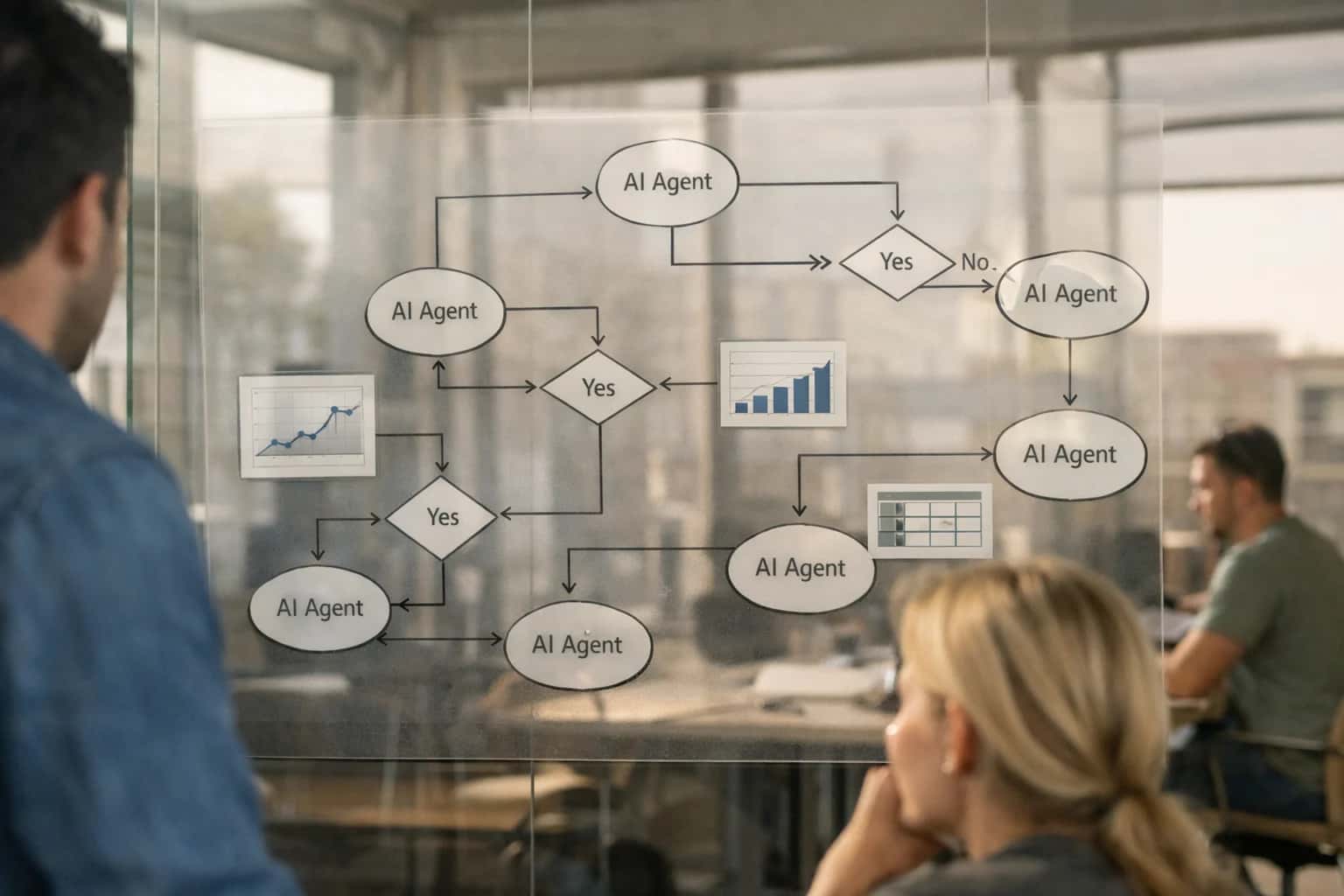
This guide details the construction of an AI-driven platform that autonomously monitors, interprets, and acts on social media signals to protect brand reputation and identify market opportunities.
To build this, you will architect three core components: a data ingestion layer connecting to platforms like X and TikTok, an analysis engine using models from Hugging Face or OpenAI, and an agentic workflow orchestrator. The agent decides when to act based on learned rules, such as triggering a customer support ticket for negative sentiment or alerting marketing to a viral trend. For governance, you must implement confidence scoring and audit trails, concepts detailed in our guides on Human-in-the-Loop (HITL) Governance Systems and MLOps for agentic systems.
CORE COMPONENTS
Tool Comparison for Social Signal Monitoring
A comparison of key technologies for building the data ingestion and analysis layers of an agentic social signal monitoring platform.
| Feature / Metric | Dedicated Social APIs (Twitter/X, TikTok) | Third-Party Aggregators (Brandwatch, Sprout Social) | Open-Source Scraping (Scrapy, Playwright) |
|---|---|---|---|
Real-time Streaming Access | |||
Historical Data Depth | 7-30 days (API limits) | Full archive (vendor-dependent) | Publicly available data only |
Cost Structure | Tiered API pricing | High monthly SaaS fees | Infrastructure & dev time |
Data Normalization & Enrichment | Basic (platform-specific) | Advanced (sentiment, themes) | Manual implementation required |
Rate Limit Handling | Built-in, strict quotas | Managed by vendor | Developer responsibility |
Compliance & ToS Adherence | Guaranteed | Guaranteed | High risk of violation |
Best For | Building custom, real-time agent logic | Rapid prototyping & managed service | Cost-sensitive, public forum monitoring (Reddit) |
Enabling Efficiency, Speed & Accuracy
Intelligent Analysis, Decision & Execution
We build AI systems for teams that need search across company data, workflow automation across tools, or AI features inside products and internal software.
Talk to Us
Search across company data
Give teams answers from docs, tickets, runbooks, and product data with sources and permissions.
Useful when people spend too long searching or get different answers from different systems.
Enterprise searchRAGPermissions
Read more
Automate internal workflows
Use AI to route work, draft outputs, trigger actions, and keep approvals and logs in place.
Useful when repetitive work moves across multiple tools and teams.
AI agentsWorkflow automationGovernance
Read more
Add AI to products and internal tools
Build assistants, guided actions, or decision support into the software your team or customers already use.
Useful when AI needs to be part of the product, not a separate tool.
AI integrationDecision supportModel routing
Read moreTROUBLESHOOTING
Common Mistakes
Launching an agentic social signal monitoring platform presents unique technical pitfalls. This guide addresses the most frequent developer errors, from API integration to agentic workflow design, providing actionable fixes to ensure your platform is robust and reliable.
This is almost always due to rate limit mismanagement and lack of idempotency. Social media APIs (X/Twitter, TikTok, Reddit) enforce strict, often tiered, rate limits that reset at unpredictable intervals.
Common Fixes:
- Implement exponential backoff with jitter in your retry logic, not simple sleep timers.
- Use a persistent key-value store (like Redis) to track quota usage per endpoint per API key.
- Design your ingestion to be idempotent; use unique IDs from the API (like tweet IDs) to deduplicate records before insertion. A failed run should not create duplicate data on retry.
For building a resilient foundation, see our guide on Building a Resilient Data Pipeline for Agentic Research.

About the author
Prasad Kumkar
CEO & MD, Inference Systems
Prasad Kumkar is the CEO & MD of Inference Systems and writes about AI systems architecture, LLM infrastructure, model serving, evaluation, and production deployment. Over 5+ years, he has worked across computer vision models, L5 autonomous vehicle systems, and LLM research, with a focus on taking complex AI ideas into real-world engineering systems.
His work and writing cover AI systems, large language models, AI agents, multimodal systems, autonomous systems, inference optimization, RAG, evaluation, and production AI engineering.
LinkedIn
Limited slotsGet a Free AI Consultation
Partnered with leading AI, data, and software stack.





How We Work
Custom AI workflows for your Business
One-fit-all AI don't work for modern businesses. At Inferensys, we aim to understand your business & custom requirements; which we use to define most efficient agentic workflows, the data, and the tools for your business.
01
Review the use case
We understand the task, the users, and where AI can actually help.
Read more02
Pick the right approach
We define what needs search, automation, or product integration.
Read more03
Build the first useful version
We implement the part that proves the value first.
Read more04
Improve from there
We add the checks and visibility needed to keep it useful.
Read moreThe first call is a practical review of your use case and the right next step.
Talk to Us