A real-time trend forecasting pipeline is an autonomous agentic system that identifies emerging patterns before they become mainstream. It operates on a continuous loop of data ingestion, signal fusion, and predictive modeling. You'll aggregate live data from APIs like Twitter and Reddit, correlate it with historical time-series data, and apply models like Facebook Prophet or scikit-learn regressors to generate probabilistic forecasts. The core architectural challenge is weighting disparate signal sources—news volume, sentiment velocity, search trends—into a unified leading indicator.

Guide
How to Design a Real-Time Trend Forecasting Pipeline
Build a pipeline that detects and forecasts market trends before they peak using time-series analysis, social signal aggregation, and predictive modeling.
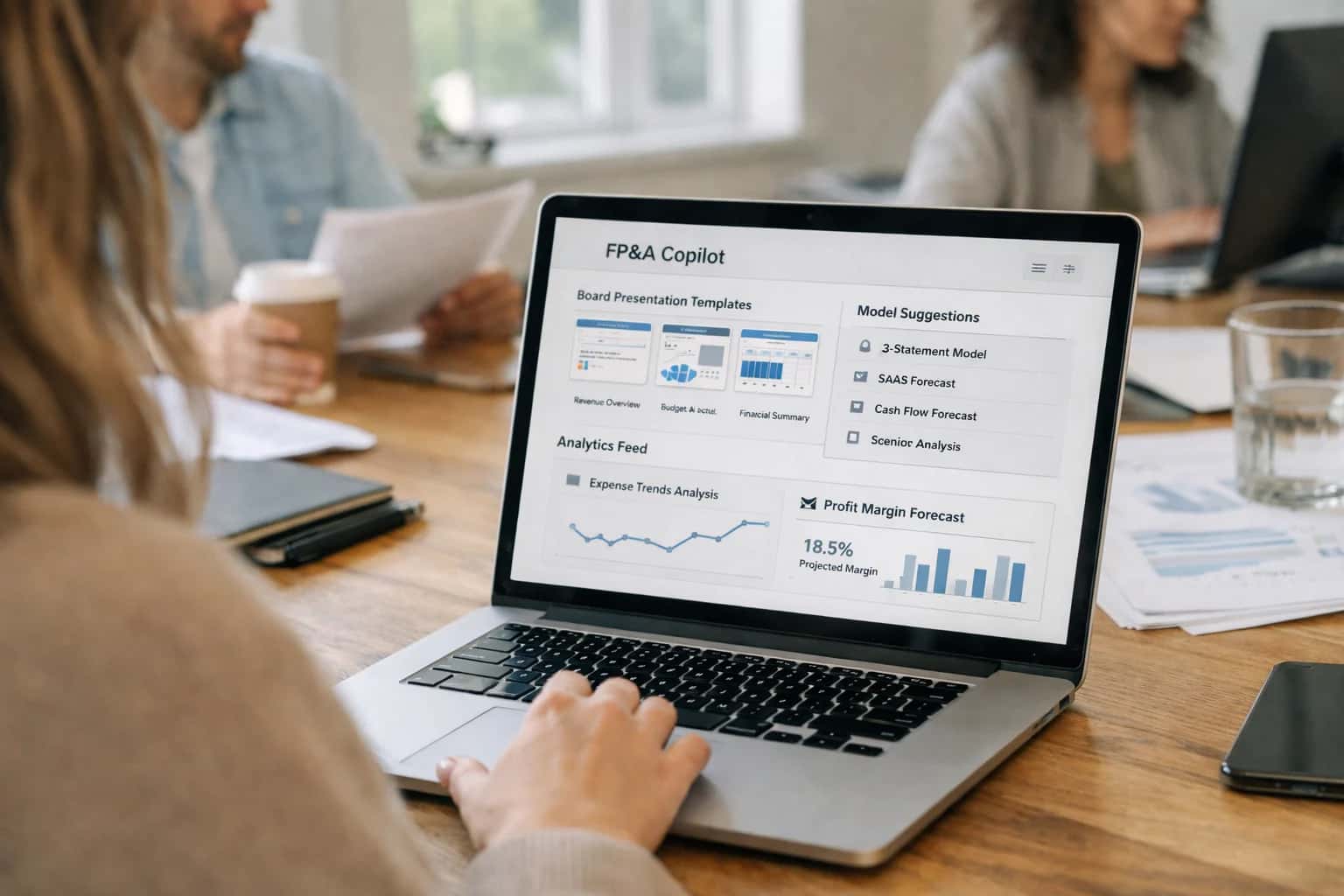
Learn to architect a system that detects and predicts market movements by fusing time-series data with live social signals, enabling proactive strategy.
To build it, you first establish multi-source data ingestion from social, financial, and web sources. Next, you implement a feature engineering layer that calculates metrics like signal strength and anomaly scores. Finally, you deploy a forecasting agent that runs models, assigns confidence scores, and outputs to a dashboard. Critical steps include designing a feedback loop to compare predictions against actual market movements, enabling the system to self-improve, a concept detailed in our guide on How to Build a Self-Improving Market Analysis Agent.
CORE COMPONENTS
Forecasting Tools Comparison
A comparison of key libraries and platforms for building the predictive modeling layer of a real-time trend forecasting pipeline.
| Feature / Metric | Prophet (Meta) | scikit-learn | PyTorch Forecasting | Custom Ensemble (Recommended) |
|---|---|---|---|---|
Primary Use Case | Univariate time-series forecasting | General-purpose ML & regression | Deep learning for multivariate series | Hybrid model combining multiple approaches |
Real-Time Inference Latency | < 100 ms | < 50 ms | 200-500 ms | < 200 ms |
Handles Multivariate Inputs | ||||
Built-in Trend & Seasonality Decomposition | ||||
Confidence Interval Generation | ||||
Integration Ease with Streaming Data | Medium | High | Low | High |
Model Retraining Automation | Manual | Manual | Manual | Fully automated via pipeline |
Primary Advantage | Robust defaults for business trends | Flexibility & vast algorithm library | State-of-the-art accuracy for complex patterns | Resilience & adaptive weighting of signals |
Enabling Efficiency, Speed & Accuracy
Intelligent Analysis, Decision & Execution
We build AI systems for teams that need search across company data, workflow automation across tools, or AI features inside products and internal software.
Talk to Us
Search across company data
Give teams answers from docs, tickets, runbooks, and product data with sources and permissions.
Useful when people spend too long searching or get different answers from different systems.
Enterprise searchRAGPermissions
Read more
Automate internal workflows
Use AI to route work, draft outputs, trigger actions, and keep approvals and logs in place.
Useful when repetitive work moves across multiple tools and teams.
AI agentsWorkflow automationGovernance
Read more
Add AI to products and internal tools
Build assistants, guided actions, or decision support into the software your team or customers already use.
Useful when AI needs to be part of the product, not a separate tool.
AI integrationDecision supportModel routing
Read moreTROUBLESHOOTING
Common Mistakes
Building a real-time trend forecasting pipeline is complex. These are the most frequent technical pitfalls developers encounter, from data handling to model deployment, and how to fix them.
This is almost always a data pipeline architecture issue. Real-time forecasting requires a streaming-first design, not batch processing.
Common Mistake: Using scheduled batch jobs (e.g., a daily cron job) to ingest data and run models. This creates inherent lag.
The Fix:
- Use a streaming framework like Apache Kafka, Apache Flink, or cloud services (AWS Kinesis, Google Pub/Sub).
- Implement incremental model updates. Instead of retraining the entire model on all historical data, use algorithms that support online learning or frequent retraining on sliding windows of recent data.
- Decouple ingestion from inference. Your data ingestion layer should continuously populate a feature store. Your forecasting service pulls the latest features on-demand or on a very short cadence (e.g., every 5 minutes).
For robust pipeline design, see our guide on Building a Resilient Data Pipeline for Agentic Research.

About the author
Prasad Kumkar
CEO & MD, Inference Systems
Prasad Kumkar is the CEO & MD of Inference Systems and writes about AI systems architecture, LLM infrastructure, model serving, evaluation, and production deployment. Over 5+ years, he has worked across computer vision models, L5 autonomous vehicle systems, and LLM research, with a focus on taking complex AI ideas into real-world engineering systems.
His work and writing cover AI systems, large language models, AI agents, multimodal systems, autonomous systems, inference optimization, RAG, evaluation, and production AI engineering.
LinkedIn
Limited slotsGet a Free AI Consultation
Partnered with leading AI, data, and software stack.





How We Work
Custom AI workflows for your Business
One-fit-all AI don't work for modern businesses. At Inferensys, we aim to understand your business & custom requirements; which we use to define most efficient agentic workflows, the data, and the tools for your business.
01
Review the use case
We understand the task, the users, and where AI can actually help.
Read more02
Pick the right approach
We define what needs search, automation, or product integration.
Read more03
Build the first useful version
We implement the part that proves the value first.
Read more04
Improve from there
We add the checks and visibility needed to keep it useful.
Read moreThe first call is a practical review of your use case and the right next step.
Talk to Us