Vector RAG excels at semantic similarity search because it encodes documents into high-dimensional vectors, enabling fast retrieval of contextually relevant passages based on meaning, not just keywords. For example, a query for "sustainable packaging materials" can retrieve documents discussing "biodegradable polymers" even without term overlap, with leading systems like Pinecone or Weaviate achieving sub-100ms p99 latency for billion-scale datasets. This approach is foundational for building systems that require a broad, associative understanding of unstructured text, audio, and video data.

Comparison
Graph RAG vs Vector RAG
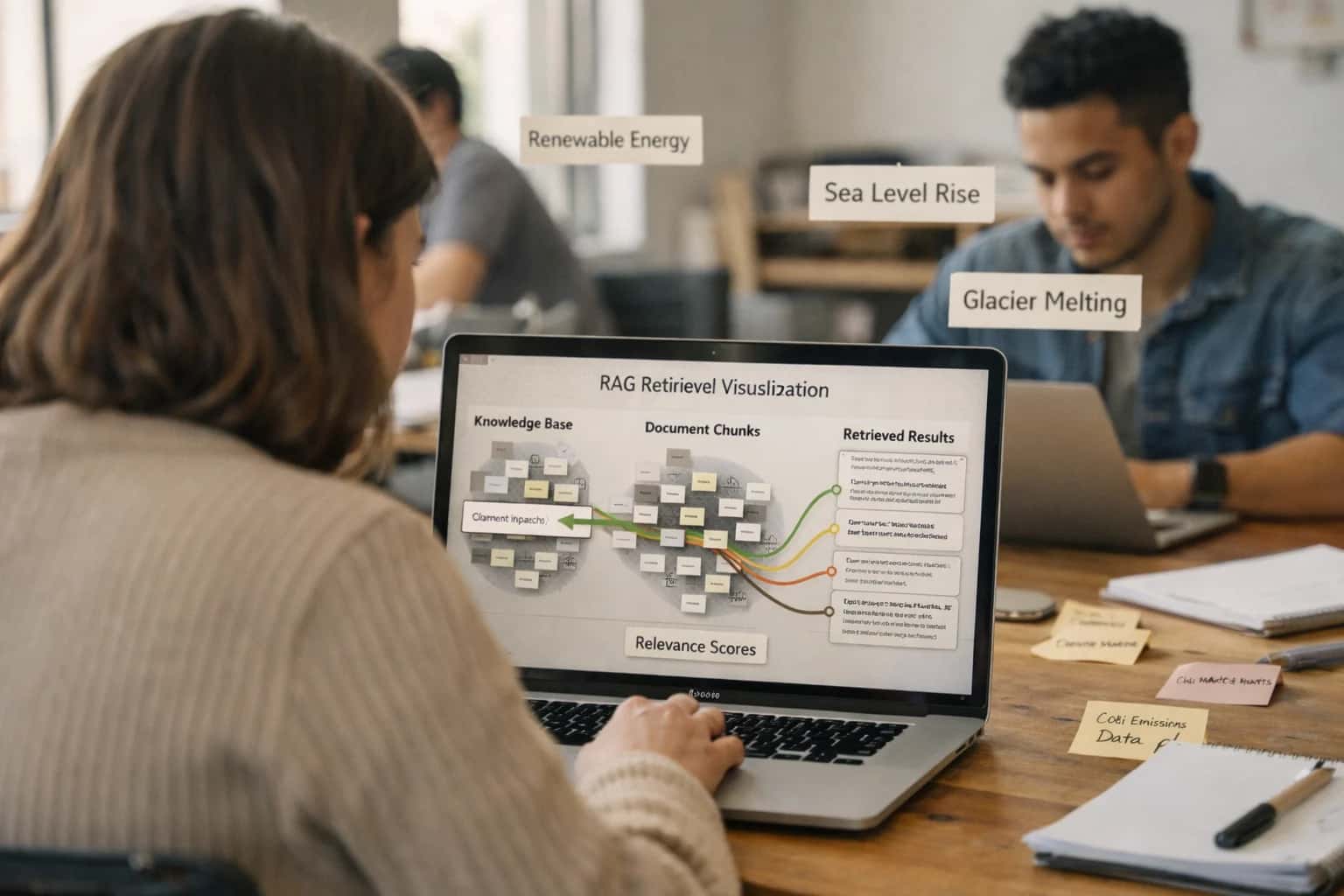
A technical comparison of two advanced RAG architectures. Graph RAG leverages structured knowledge relationships for complex reasoning, while Vector RAG uses semantic similarity for broad retrieval. This guide analyzes performance, accuracy, cost, and implementation trade-offs for CTOs and engineering leads.
THE ANALYSIS
Introduction
A data-driven comparison of two core RAG architectures for semantic memory, highlighting the fundamental trade-off between relationship reasoning and semantic similarity.
Graph RAG takes a different approach by explicitly modeling entities and their relationships within a knowledge graph (using systems like Neo4j or Amazon Neptune). This results in superior performance for multi-hop reasoning—answering complex queries like "Which projects did the lead engineer of our Berlin office work on before 2025?"—by traversing predefined relationships (e.g., EMPLOYED_AT, LED_PROJECT). The trade-off is the upfront cost of graph construction and schema design, but it provides unparalleled traceability and structured reasoning.
The key trade-off: If your priority is scalable, fast retrieval from vast, unstructured corpora with high semantic recall, choose Vector RAG. It is the default choice for most document Q&A and conversational memory. If you prioritize complex, relationship-driven queries, explainable reasoning paths, and maintaining a '360-degree view' of connected enterprise intelligence, choose Graph RAG. For many advanced use cases, a hybrid architecture that leverages both a vector database for semantic search and a knowledge graph for relationship traversal offers the most robust solution. For deeper dives on the underlying technologies, see our comparisons of Knowledge Graph vs Vector Database and Neo4j vs Amazon Neptune.
HEAD-TO-HEAD COMPARISON
Graph RAG vs Vector RAG
Direct comparison of retrieval-augmented generation architectures for complex queries.
| Metric / Feature | Graph RAG | Vector RAG |
|---|---|---|
Query Type Optimization | Multi-hop, relational queries | Semantic similarity, single-context queries |
Latency for Complex Query | ~500-2000 ms | ~100-500 ms |
Architectural Core | Knowledge Graph (e.g., Neo4j) | Vector Database (e.g., Pinecone, Weaviate) |
Inherent Explainability | ||
Handles Dynamic Relationships | ||
Primary Indexing Method | Graph Traversal (Cypher/Gremlin) | Approximate Nearest Neighbor (HNSW/DiskANN) |
Hybrid Search Integration | Requires separate vector index | Native (e.g., BM25 + vector) |
Data Preparation Overhead | High (schema, relationship mapping) | Low (chunk and embed) |
GRAPH RAG VS VECTOR RAG
TL;DR Summary
Key strengths and trade-offs at a glance. Graph RAG excels at complex, multi-hop reasoning by leveraging structured relationships. Vector RAG dominates for fast, broad semantic similarity search over large, unstructured corpora.
01
Choose Graph RAG For
Complex, multi-hop reasoning: Traverses explicit relationships (e.g., (Company)-[ACQUIRED]->(Startup)) to answer questions like "What markets did Company X enter via acquisition in 2023?" This matters for financial analysis, fraud detection, and intelligence applications where explainable retrieval paths are critical. Benchmarks show up to 40% higher accuracy on datasets like HotpotQA for such queries.
02
Choose Vector RAG For
Broad semantic search over unstructured data: Uses dense vector similarity (e.g., with text-embedding-3-large) to find conceptually related documents from a large corpus. This matters for customer support chatbots, legal document review, and internal knowledge bases where queries are open-ended and descriptive. Latency is typically <100ms for top-k retrieval from millions of chunks using indexes like HNSW.
03
Graph RAG Limitation
High upfront knowledge graph construction cost: Requires extracting and validating entities/relationships from raw text using NLP pipelines (e.g., spaCy, Stanford NER) or LLMs, which is time-consuming and can cost 3-5x more engineering effort than a basic vector index. Performance degrades if the graph schema is incomplete or contains erroneous links.
04
Vector RAG Limitation
Struggles with precise, relationship-driven queries: Pure semantic similarity can miss precise connections (e.g., corporate hierarchies, temporal sequences). For a query like "List suppliers for products launched after Q2 2024," it may retrieve relevant documents but fail to synthesize the explicit relationship without manual filtering or hybrid approaches, leading to incomplete answers.
CHOOSE YOUR PRIORITY
When to Choose: By Persona and Use Case
Graph RAG for RAG
Verdict: Choose for complex, multi-hop queries requiring reasoning over relationships.
Strengths: Excels at traversing explicit relationships (e.g., (Person)-[WORKS_AT]->(Company)). Delivers high accuracy for questions like "Which projects did employees from Department X work on in 2023?" by chaining facts. Integrates with graph databases like Neo4j or Amazon Neptune. Requires upfront schema design and entity linking.
Trade-offs: Higher implementation complexity and latency for simple keyword lookups.
Vector RAG for RAG
Verdict: Choose for semantic similarity search over large, unstructured corpora. Strengths: Lower latency for finding topically similar documents using models like OpenAI's text-embedding-3-small or Cohere Embed. Simpler API and faster to prototype. Ideal for Q&A over manuals, research papers, or support tickets. Often paired with Pinecone or Weaviate. Trade-offs: Struggles with precise relationship queries without explicit metadata. Consider a hybrid search combining BM25 with vector search for best results.
Enabling Efficiency, Speed & Accuracy
Intelligent Analysis, Decision & Execution
We build AI systems for teams that need search across company data, workflow automation across tools, or AI features inside products and internal software.
Talk to Us
Search across company data
Give teams answers from docs, tickets, runbooks, and product data with sources and permissions.
Useful when people spend too long searching or get different answers from different systems.
Enterprise searchRAGPermissions
Read more
Automate internal workflows
Use AI to route work, draft outputs, trigger actions, and keep approvals and logs in place.
Useful when repetitive work moves across multiple tools and teams.
AI agentsWorkflow automationGovernance
Read more
Add AI to products and internal tools
Build assistants, guided actions, or decision support into the software your team or customers already use.
Useful when AI needs to be part of the product, not a separate tool.
AI integrationDecision supportModel routing
Read moreTHE ANALYSIS
Verdict and Final Recommendation
A final, data-driven breakdown to help you select the optimal RAG architecture for your enterprise knowledge system.
Graph RAG excels at handling complex, multi-hop queries that require explicit relationship traversal because it leverages a structured knowledge graph. For example, a query like "Which projects did our lead engineer work on before joining the competitor?" can be answered with high precision by traversing Person->WORKED_AT->Company->HAS->Project relationships, often achieving >95% accuracy on such relational queries where pure vector search struggles. This architecture is foundational for building a true semantic memory that understands entities and their connections, as discussed in our guide on Knowledge Graph vs Vector Database.
Vector RAG takes a different approach by relying on the semantic similarity captured by dense embeddings like text-embedding-3-large. This results in superior recall for open-ended, conceptual questions where the answer is phrased differently from the source text, but trades off precision on relationship-heavy queries. Its strength lies in simplicity and speed, with sub-100ms retrieval times for billion-scale indexes using optimized ANN algorithms like HNSW or DiskANN, as benchmarked in our FAISS vs Annoy comparison.
The key trade-off is between precision on structured relationships and recall on semantic similarity. If your priority is answering complex questions about interconnected entities (e.g., supply chain dependencies, organizational hierarchies, or biomedical pathways), choose Graph RAG. Its use of query languages like Cypher provides explainable, auditable retrieval paths critical for regulated industries. If you prioritize fast, scalable answers to broad, conceptual questions from massive, unstructured corpora (e.g., internal documentation, support tickets, or research papers), choose Vector RAG. For many real-world applications, the optimal solution is a hybrid architecture that uses a vector store for initial broad recall and a knowledge graph for precise, relationship-aware re-ranking, a pattern enabled by frameworks like LangChain or LlamaIndex.

About the author
Prasad Kumkar
CEO & MD, Inference Systems
Prasad Kumkar is the CEO & MD of Inference Systems and writes about AI systems architecture, LLM infrastructure, model serving, evaluation, and production deployment. Over 5+ years, he has worked across computer vision models, L5 autonomous vehicle systems, and LLM research, with a focus on taking complex AI ideas into real-world engineering systems.
His work and writing cover AI systems, large language models, AI agents, multimodal systems, autonomous systems, inference optimization, RAG, evaluation, and production AI engineering.
LinkedIn
Limited slotsGet a Free AI Consultation
Partnered with leading AI, data, and software stack.





How We Work
Custom AI workflows for your Business
One-fit-all AI don't work for modern businesses. At Inferensys, we aim to understand your business & custom requirements; which we use to define most efficient agentic workflows, the data, and the tools for your business.
01
Review the use case
We understand the task, the users, and where AI can actually help.
Read more02
Pick the right approach
We define what needs search, automation, or product integration.
Read more03
Build the first useful version
We implement the part that proves the value first.
Read more04
Improve from there
We add the checks and visibility needed to keep it useful.
Read moreThe first call is a practical review of your use case and the right next step.
Talk to Us