A world model is a learned or engineered internal representation of an environment that enables an agent to predict future states and outcomes without direct interaction, serving as the foundation for planning and model-based reinforcement learning (MBRL). It acts as a compressed, often latent, simulation of an agent's surroundings, capturing the essential dynamics and rules that govern state transitions, which allows for mental rehearsal of actions before execution. This predictive capability is central to achieving sample efficiency and sophisticated long-horizon reasoning in autonomous systems.

Glossary
World Model
A world model is a learned or engineered internal representation of an environment that enables an agent to predict future states and outcomes without direct interaction.
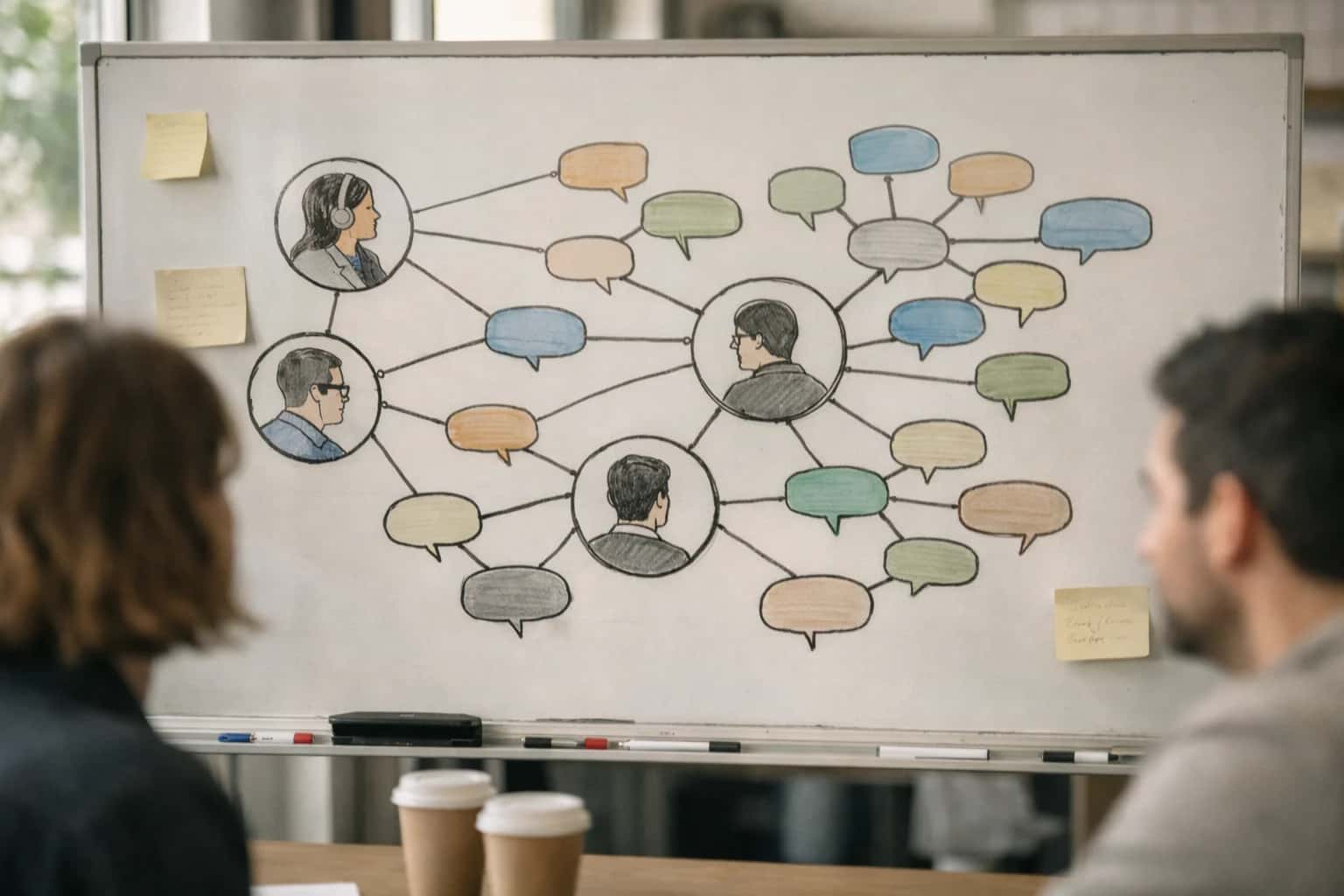
AI & MACHINE LEARNING GLOSSARY
What is a World Model?
A world model is a core concept in artificial intelligence that enables agents to reason, predict, and plan.
In practice, a world model transforms high-dimensional, raw sensory inputs—like pixels from a camera—into a compact state representation that is sufficient for decision-making. Architectures like the Recurrent State-Space Model (RSSM) combine deterministic memory with stochastic latent variables to model uncertainty. By learning a dynamics model, agents such as MuZero can perform lookahead searches using algorithms like Monte Carlo Tree Search (MCTS) to evaluate potential action sequences, effectively 'imagining' their consequences to choose optimal behavior. This approach is critical for bridging the sim2real gap and enabling robust embodied intelligence in robotics and complex game environments.
ARCHITECTURAL ELEMENTS
Core Components of a World Model
A world model is an internal, learned representation of an environment's dynamics. Its core components work together to enable prediction, planning, and sample-efficient learning without direct interaction.
01
State Representation
The state representation is the compressed, informative encoding of the current environment configuration. It transforms high-dimensional raw sensory inputs (e.g., pixels) into a low-dimensional latent vector that captures the essential information for decision-making.
- Purpose: Serves as the agent's internal 'belief' about the world.
- Key Methods: Include deterministic recurrent networks, stochastic latent variables (as in Recurrent State-Space Models), or object-centric representations that decompose scenes into entities.
- Goal: To be Markovian, meaning the current state is sufficient to predict the future, and often disentangled, separating independent factors of variation.
02
Dynamics Model
The dynamics model (or transition model) predicts the next state representation given the current state and a proposed action. It encodes the learned 'physics' or rules of the environment.
- Function: Implements
s_{t+1} = f(s_t, a_t), often with a probabilistic output to account for uncertainty. - Architecture: Typically a neural network trained via prediction error on observed transitions.
- Critical Role: Enables mental simulation or 'imagination.' The agent can roll out possible futures internally without acting in the real world, which is the foundation for planning algorithms like Model-Predictive Control (MPC).
03
Reward Model
The reward model predicts the expected immediate reward for a given state-action pair. It allows the agent to evaluate the desirability of predicted trajectories during internal planning.
- Training: Learned by regressing against observed rewards
r_t = g(s_t, a_t). - Integration with Planning: During simulated rollouts, the cumulative sum of predicted rewards provides an estimate of a trajectory's value. In algorithms like MuZero, the reward model is learned jointly with value and policy predictions.
- Distinction: In some frameworks, this is separate from the value function, which estimates long-term return.
04
Encoder & Decoder
These components handle the interface between the raw perceptual world and the abstract state representation.
- Encoder: A neural network (e.g., CNN) that compresses high-dimensional observations
o_t(like images) into the latent states_t. In Partially Observable MDPs, it integrates history. - Decoder: Reconstructs observations from the latent state. Its training loss (reconstruction error) is a primary driver for learning useful state representations that retain salient information.
- Role: They enforce that the latent state contains enough information about the world, making the representation grounded in sensory reality.
05
Planning & Search Mechanism
This is the algorithmic component that uses the world model (state, dynamics, reward) to select optimal actions. It performs simulation-based search over possible futures.
- Process: Given a current state, the mechanism uses the dynamics and reward models to simulate multiple action sequences (rollouts), evaluates their outcomes, and selects the best initial action.
- Common Algorithms: Include Monte Carlo Tree Search (MCTS) (as used by AlphaZero and MuZero) or gradient-based planners that backpropagate through the model.
- Output: The action with the highest predicted cumulative reward, or a refined policy distribution.
06
Uncertainty Estimation
A robust world model must quantify its own epistemic uncertainty—what it does not know due to limited data. This is crucial for safe exploration and robust planning.
- Methods: Ensemble dynamics (training multiple models) is a common approach. Disagreement among ensemble members signals high uncertainty in a state-action region.
- Applications: Guides exploration (visit uncertain states) and enables pessimistic planning in offline RL (avoid actions where the model is unreliable).
- Relation: Connects to concepts like the sim2real gap, where uncertainty estimation can trigger model adaptation.
MECHANISM
How Does a World Model Work?
A world model is a learned or engineered internal representation of an environment that enables an agent to predict future states and outcomes without direct interaction, serving as a foundation for planning and model-based reinforcement learning.
A world model functions by learning a compressed latent state representation from high-dimensional sensory inputs, such as pixels. This representation captures the essential, actionable dynamics of the environment. The model consists of two core components: a representation model that encodes observations into states, and a dynamics model that predicts the next latent state and reward given the current state and a proposed action. This learned simulator allows the agent to perform planning via internal rollouts.
Internally, the model is trained via self-supervised learning on sequences of observations and actions. Architectures like the Recurrent State-Space Model (RSSM) combine deterministic RNNs with stochastic latent variables to manage uncertainty. The agent uses this internal model for model-predictive control (MPC) or to train a policy entirely in imagination, dramatically improving sample efficiency over model-free methods by reducing the need for costly real-world interactions.
WORLD MODEL IMPLEMENTATIONS
Examples and Architectures
World models are implemented through various computational architectures, each designed to learn or engineer a compact, predictive representation of an environment. These frameworks are foundational for planning in model-based reinforcement learning and robotics.
ARCHITECTURAL COMPARISON
World Model vs. Model-Free RL
A technical comparison of the core architectural paradigms in reinforcement learning, focusing on the use of an internal environment model for planning versus direct policy or value function learning from experience.
| Core Feature | World Model (Model-Based RL) | Model-Free RL |
|---|---|---|
Core Mechanism | Learns an explicit dynamics model (T(s'|s,a)) and optionally a reward model (R(s,a)). Uses this model for planning via simulation (e.g., MCTS, MPC). | Learns a policy (π(a|s)) and/or a value function (V(s), Q(s,a)) directly from interaction experience, without an explicit world model. |
Sample Efficiency | High in theory. Can leverage simulated rollouts for extensive 'mental' planning from limited real experience. | Low to moderate. Requires extensive environmental interaction to learn accurate value estimates or policies through trial and error. |
Computational Cost per Decision | High. Planning involves multiple forward passes through the model to evaluate potential action sequences. | Low. Action selection is typically a single forward pass through the policy network or an argmax over the Q-function. |
Handling of Partial Observability | Inherently suited. The learned state representation often acts as a belief state, compressing history (e.g., using an RSSM). | Requires augmentation. Needs recurrent networks (e.g., LSTMs) or frame stacking to handle POMDPs, adding complexity to the policy/value network. |
Transfer & Adaptation | Strong potential. A general world model can be re-used for new tasks by re-planning with new reward functions. Supports online model adaptation. | Limited. Policies/value functions are typically task-specific. Transfer requires fine-tuning or meta-learning frameworks. |
Exploration Strategy | Can use model uncertainty. Exploration is directed towards states where the dynamics model is uncertain (e.g., via ensemble disagreement). | Relies on intrinsic rewards. Uses heuristics like curiosity (RND) or entropy regularization to encourage state coverage. |
Typical Use Cases | Robotics (MPC), strategic games (MuZero), domains where real interaction is costly or dangerous, and simulation is feasible. | Video games (Atari DQN), continuous control (DDPG, PPO), domains where simulation is fast and abundant experience is available. |
Key Challenge | Model bias & compounding error. Inaccuracies in the learned model compound over long rollouts, leading to flawed plans. | Sample inefficiency & brittle generalization. Requires massive amounts of data and often generalizes poorly to unseen states or task variations. |
WORLD MODEL
Frequently Asked Questions
A world model is a learned or engineered internal representation of an environment that enables an agent to predict future states and outcomes without direct interaction, serving as a foundation for planning and model-based reinforcement learning.
A world model is an agent's internal, learned representation of its environment's dynamics, enabling it to predict future states and the outcomes of potential actions without requiring direct, real-world interaction. This model serves as a simulated environment where the agent can perform planning, imagination rollouts, and counterfactual reasoning to evaluate strategies before execution. In model-based reinforcement learning (MBRL), the world model is the core component that separates these algorithms from their model-free counterparts, which learn policies directly from trial-and-error experience. The primary goal is to achieve sample-efficient learning by replacing costly real-world interactions with cheap internal simulations.
Enabling Efficiency, Speed & Accuracy
Intelligent Analysis, Decision & Execution
We build AI systems for teams that need search across company data, workflow automation across tools, or AI features inside products and internal software.
Talk to Us
Search across company data
Give teams answers from docs, tickets, runbooks, and product data with sources and permissions.
Useful when people spend too long searching or get different answers from different systems.
Enterprise searchRAGPermissions
Read more
Automate internal workflows
Use AI to route work, draft outputs, trigger actions, and keep approvals and logs in place.
Useful when repetitive work moves across multiple tools and teams.
AI agentsWorkflow automationGovernance
Read more
Add AI to products and internal tools
Build assistants, guided actions, or decision support into the software your team or customers already use.
Useful when AI needs to be part of the product, not a separate tool.
AI integrationDecision supportModel routing
Read more
About the author
Prasad Kumkar
CEO & MD, Inference Systems
Prasad Kumkar is the CEO & MD of Inference Systems and writes about AI systems architecture, LLM infrastructure, model serving, evaluation, and production deployment. Over 5+ years, he has worked across computer vision models, L5 autonomous vehicle systems, and LLM research, with a focus on taking complex AI ideas into real-world engineering systems.
His work and writing cover AI systems, large language models, AI agents, multimodal systems, autonomous systems, inference optimization, RAG, evaluation, and production AI engineering.
LinkedIn
Limited slotsGet a Free AI Consultation
Partnered with leading AI, data, and software stack.





How We Work
Custom AI workflows for your Business
One-fit-all AI don't work for modern businesses. At Inferensys, we aim to understand your business & custom requirements; which we use to define most efficient agentic workflows, the data, and the tools for your business.
01
Review the use case
We understand the task, the users, and where AI can actually help.
Read more02
Pick the right approach
We define what needs search, automation, or product integration.
Read more03
Build the first useful version
We implement the part that proves the value first.
Read more04
Improve from there
We add the checks and visibility needed to keep it useful.
Read moreThe first call is a practical review of your use case and the right next step.
Talk to Us