API traffic inspection is the deep packet inspection (DPI) of application programming interface calls, conducted at a Policy Enforcement Point (PEP) like an API gateway. It involves parsing and analyzing the complete request and response—including headers, query strings, authentication tokens, and JSON/XML payloads—against a security and compliance rule set before the traffic reaches backend services. This real-time analysis is foundational to a zero-trust architecture, moving beyond simple authentication to continuous verification of content and intent.

Glossary
API Traffic Inspection
API traffic inspection is the deep analysis of API call contents, including headers, parameters, and payloads, to detect malicious patterns, enforce security policies, and ensure data compliance.
ZERO-TRUST API GATEWAYS
What is API Traffic Inspection?
API traffic inspection is the deep analysis of API call contents, including headers, parameters, and payloads, to detect malicious patterns, enforce security policies, and ensure data compliance.
The inspection process validates structural correctness via API schema validation, detects threats like injection attacks or data exfiltration, and enforces contextual policies such as data masking for compliance. For AI agents, it is critical for secure credential management and preventing prompt injection attacks that could manipulate tool calls. This granular visibility and control transform the API gateway from a simple router into an intelligent, security-aware broker for all north-south traffic.
ZERO-TRUST API GATEWAYS
Key Features of API Traffic Inspection
API traffic inspection is the deep analysis of API call contents to enforce security, detect threats, and ensure compliance. These are its core technical capabilities.
01
Deep Payload Analysis
This feature involves parsing and validating the complete contents of API requests and responses beyond just headers. It inspects JSON, XML, and protobuf payloads against defined schemas (like OpenAPI/Swagger) to enforce data integrity and business logic rules. This prevents attacks like malformed data injection and ensures only valid, expected data shapes reach backend services.
- Example: Blocking a request where a
user_idfield contains SQL code instead of an integer. - Mechanism: Uses streaming parsers to handle large payloads without significant latency impact.
02
Behavioral Anomaly Detection
Moving beyond static rules, this capability uses machine learning to establish a baseline of normal API traffic patterns for each client, endpoint, and user. It then flags deviations that may indicate credential stuffing, data exfiltration, or API abuse.
- Key Metrics Monitored: Request rate, sequence of endpoints called, time-of-day patterns, payload size variance.
- Outcome: Can identify low-and-slow attacks that bypass simple rate limits by detecting subtle shifts in behavioral fingerprints.
03
Structured Logging & Audit Trails
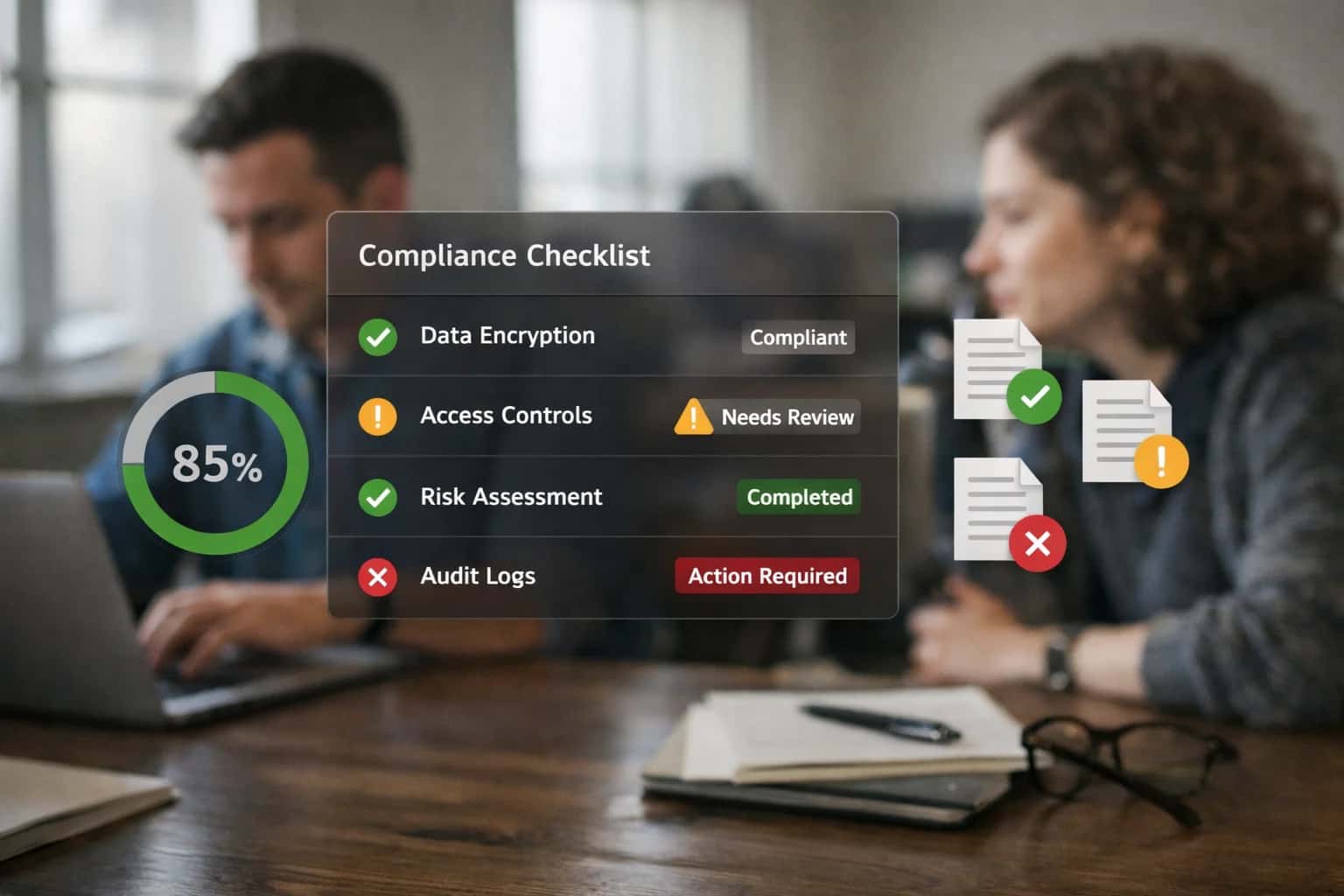
Every inspected API transaction generates a detailed, immutable log record. This is critical for forensic analysis, compliance (e.g., GDPR, PCI-DSS), and debugging. Logs capture the full context: timestamps, source IP, user identity, endpoint, headers, sanitized payload snippets, policy decision (allow/deny), and applied rules.
- Format: Typically structured JSON logs ingested into SIEM (Security Information and Event Management) systems like Splunk or Datadog.
- Use Case: Reconstructing the steps of a security incident or proving data access controls for an audit.
04
Context-Aware Policy Enforcement
Authorization decisions are not based solely on an API key or token. Policies dynamically evaluate a rich set of contextual attributes in real-time to make allow/deny decisions.
- Common Attributes: User role, device security posture (e.g., jailbroken phone), geolocation (geo-fencing), time of day, and the sensitivity of the data being requested.
- Example: A policy could allow
GET /api/v1/transactionsfrom a corporate laptop during work hours but deny the same request from an unrecognized device in a different country.
05
Real-Time Threat Prevention
Inspects traffic for known attack patterns targeting the application layer. This functions as a specialized Web Application Firewall (WAF) for APIs, protecting against:
- OWASP API Security Top 10 threats (e.g., Broken Object Level Authorization, Mass Assignment).
- Injection attacks (SQL, NoSQL, Command).
- Sensitive data exposure (e.g., detecting accidental logging of credit card numbers in responses).
Protection is achieved through a combination of signature-based detection (known bad patterns) and positive security models (allow-listing known good patterns).
06
Data Loss Prevention (DLP)
Scans outbound API responses to prevent unauthorized transmission of sensitive data like Personally Identifiable Information (PII), Protected Health Information (PHI), or intellectual property. Uses pattern matching (e.g., for credit card numbers) and machine learning classifiers to identify sensitive content.
- Actions: Can block, redact, or mask sensitive fields in the response payload before it is sent to the client.
- Example: Automatically masking all but the last four digits of a social security number in a
GET /api/v1/usersresponse for non-HR roles.
ZERO-TRUST API GATEWAYS
Frequently Asked Questions
Deep analysis of API call contents is critical for securing autonomous AI agents. These questions address how API traffic inspection works within a zero-trust framework.
API traffic inspection is the deep, stateful analysis of API call contents—including headers, parameters, payloads, and sequences—to detect malicious patterns, enforce security policies, and ensure data compliance. It works by intercepting all API requests at a Policy Enforcement Point (PEP), such as a zero-trust API gateway, before they reach backend services. The inspection engine parses the traffic, often using the OpenAPI Schema for validation, and applies a series of security checks. These checks can include signature validation for JSON Web Tokens (JWT), payload analysis for injection attacks, behavioral anomaly detection, and data loss prevention scanning for sensitive information like PII. The engine correlates this analysis with contextual signals (user identity, device posture) from a Policy Decision Point (PDP) to make a dynamic allow/deny decision.
Enabling Efficiency, Speed & Accuracy
Intelligent Analysis, Decision & Execution
We build AI systems for teams that need search across company data, workflow automation across tools, or AI features inside products and internal software.
Talk to Us
Search across company data
Give teams answers from docs, tickets, runbooks, and product data with sources and permissions.
Useful when people spend too long searching or get different answers from different systems.
Enterprise searchRAGPermissions
Read more
Automate internal workflows
Use AI to route work, draft outputs, trigger actions, and keep approvals and logs in place.
Useful when repetitive work moves across multiple tools and teams.
AI agentsWorkflow automationGovernance
Read more
Add AI to products and internal tools
Build assistants, guided actions, or decision support into the software your team or customers already use.
Useful when AI needs to be part of the product, not a separate tool.
AI integrationDecision supportModel routing
Read more
About the author
Prasad Kumkar
CEO & MD, Inference Systems
Prasad Kumkar is the CEO & MD of Inference Systems and writes about AI systems architecture, LLM infrastructure, model serving, evaluation, and production deployment. Over 5+ years, he has worked across computer vision models, L5 autonomous vehicle systems, and LLM research, with a focus on taking complex AI ideas into real-world engineering systems.
His work and writing cover AI systems, large language models, AI agents, multimodal systems, autonomous systems, inference optimization, RAG, evaluation, and production AI engineering.
LinkedIn
Limited slotsGet a Free AI Consultation
Partnered with leading AI, data, and software stack.





How We Work
Custom AI workflows for your Business
One-fit-all AI don't work for modern businesses. At Inferensys, we aim to understand your business & custom requirements; which we use to define most efficient agentic workflows, the data, and the tools for your business.
01
Review the use case
We understand the task, the users, and where AI can actually help.
Read more02
Pick the right approach
We define what needs search, automation, or product integration.
Read more03
Build the first useful version
We implement the part that proves the value first.
Read more04
Improve from there
We add the checks and visibility needed to keep it useful.
Read moreThe first call is a practical review of your use case and the right next step.
Talk to Us