The Trusted Computing Base (TCB) is the complete set of hardware, firmware, and software components within a computing system whose correct functioning is essential for enforcing its security policy. A failure or vulnerability in any TCB component can compromise the security of the entire system. The goal of secure system design is to minimize the TCB's size and complexity, thereby reducing its attack surface and making formal verification more feasible. This principle is central to secure enclave execution and confidential computing architectures.

Glossary
Trusted Computing Base (TCB)
The Trusted Computing Base (TCB) is the set of all hardware, firmware, and software components that are critical to a system's security, where a failure or vulnerability in any TCB component can compromise the security of the entire system.
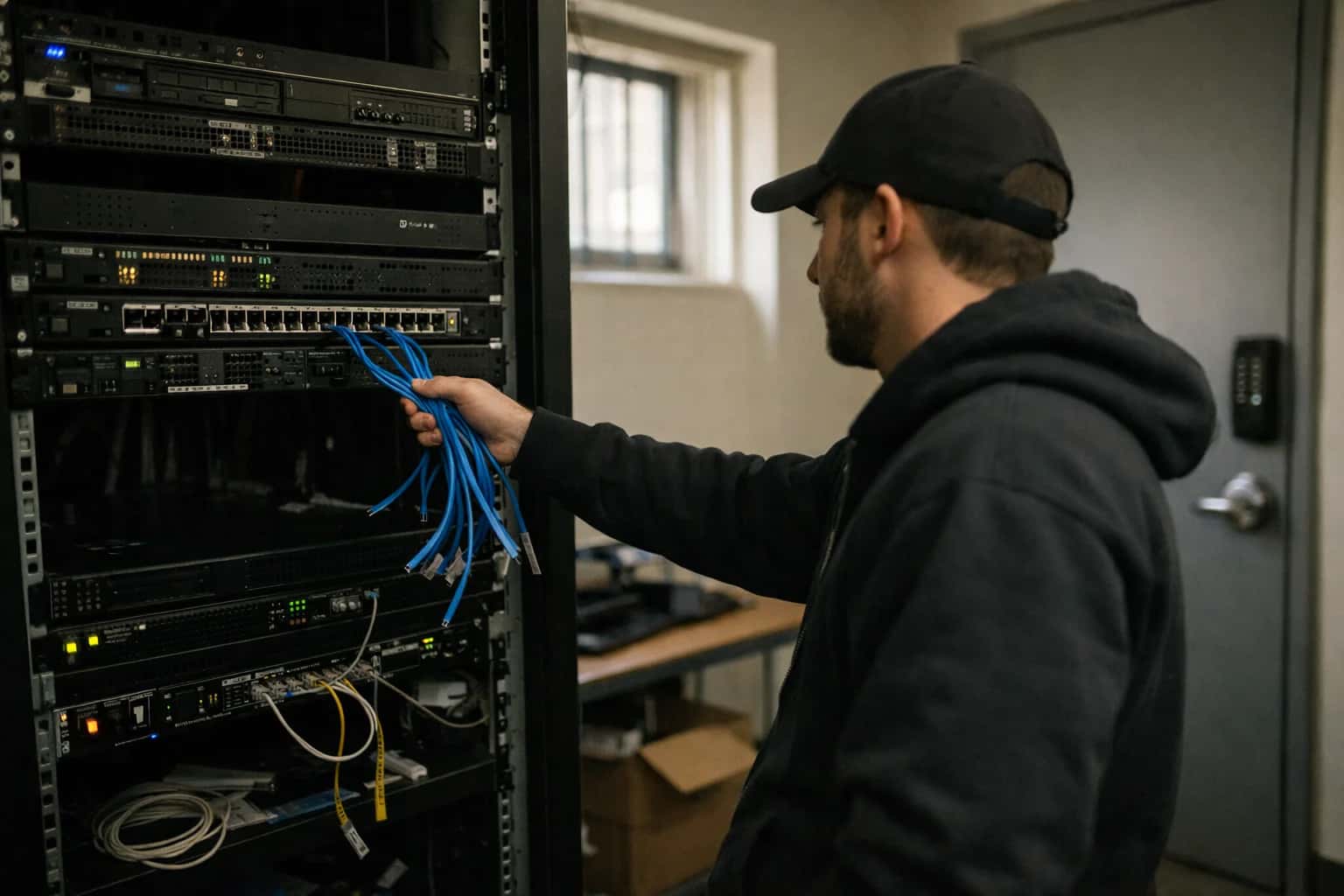
SECURE ENCLAVE EXECUTION
What is Trusted Computing Base (TCB)?
The Trusted Computing Base (TCB) is a foundational security concept that defines the minimal set of components upon which a system's security depends.
In the context of AI agent tool execution, the TCB for a secure enclave includes the CPU's security extensions (e.g., Intel SGX, AMD SEV), the enclave runtime itself, and the critical agent code performing sensitive operations. Components outside the TCB, like the main operating system or hypervisor, are explicitly distrusted. Remote attestation protocols allow external verifiers to cryptographically validate the integrity of the TCB before provisioning secrets. This creates a hardware root of trust that isolates AI agent tool calls from compromised host environments.
TRUSTED COMPUTING BASE
Core Components of a TCB
The Trusted Computing Base (TCB) is the minimal set of hardware, firmware, and software components whose correct operation is essential for enforcing a system's security policy. A failure or compromise in any TCB component can undermine the security of the entire system.
01
Hardware Root of Trust
The foundational, immutable security engine within a silicon chip that provides cryptographically verified measurements of system software. It establishes the initial chain of trust for secure boot and remote attestation. Common implementations include:
- Trusted Platform Module (TPM): A dedicated microcontroller for secure key storage and integrity measurement.
- Hardware Security Modules (HSMs): Tamper-resistant devices for cryptographic key lifecycle management.
- CPU Security Extensions: Features like Intel SGX, AMD SEV, or ARM TrustZone that create hardware-isolated execution environments.
02
Trusted Execution Environment (TEE)
A secure, isolated area within the main processor that guarantees the confidentiality and integrity of code and data loaded inside it. The TEE protects sensitive workloads from the rest of the system, including the operating system and hypervisor. This is a critical TCB component for Confidential Computing. Examples include:
- Intel SGX Enclaves: Hardware-isolated memory regions for application code.
- AMD SEV-SNP: Encryption of virtual machine memory with integrity protection.
- ARM TrustZone: A secure world partition for trusted applications on mobile and embedded systems.
03
Security Kernel / Reference Monitor
The core software component of the TCB that implements and enforces the system's security policy on all access requests. It must be:
- Tamper-proof: Protected from unauthorized modification.
- Non-bypassable: All security-relevant operations must pass through it.
- Verifiable: Sufficiently small and simple to be mathematically analyzed or formally verified. In modern systems, this role is often fulfilled by a combination of the operating system kernel, hypervisor, and Linux Security Modules (LSM) like SELinux or AppArmor that enforce mandatory access control.
04
Authentication & Access Control Modules
The TCB subsystems responsible for verifying identities (authentication) and enforcing rules about what resources they can access (authorization). These modules directly implement the Principle of Least Privilege. Key elements include:
- Authentication Services: Validate user/process credentials (e.g., Kerberos, biometric verifiers).
- Access Control Lists (ACLs) & Capabilities: Define permissions on files, objects, and network ports.
- Policy Decision Points: Components that evaluate requests against security policies. A failure here can lead to privilege escalation or unauthorized data access.
05
Audit & Logging Mechanisms
The immutable recording subsystem within the TCB that captures security-relevant events for accountability, forensic analysis, and intrusion detection. A secure audit mechanism must be:
- Complete: Logs all security-policy-relevant actions.
- Tamper-evident: Protected from unauthorized alteration or deletion.
- Available: Accessible for review by authorized security personnel. This includes logs of login attempts, file accesses, privilege changes, and, in the context of AI agents, audit logging for all tool and API invocations.
06
Cryptographic Primitives & Key Management
The trusted implementation of cryptographic algorithms and the secure storage, generation, and lifecycle management of cryptographic keys. The TCB relies on these for:
- Data Confidentiality: Encryption of data at rest and in transit (e.g., memory encryption).
- Integrity Verification: Hash functions and digital signatures.
- Secure Communication: Protocols like TLS.
- Remote Attestation: Cryptographically proving the TCB's state to a verifier. These functions are often anchored in the Hardware Root of Trust (TPM, HSM) to prevent software-only key extraction.
SECURE ENCLAVE EXECUTION
The Role of TCB in AI Agent and Tool Calling Security
In AI agent systems, the Trusted Computing Base (TCB) defines the critical security perimeter for tool execution, establishing the foundation for secure API calls and external system interactions.
The Trusted Computing Base (TCB) is the minimal set of hardware, firmware, and software components whose correct functioning is essential for a system's overall security policy. For AI agents performing tool calling, the TCB encompasses the agent's core reasoning engine, the orchestration layer managing API sequences, and the secure enclave where credentials are processed and external calls are validated. A vulnerability in any TCB component can compromise the entire agent's execution integrity.
Reducing the TCB's size—a principle called TCB minimization—is critical for AI security. By isolating sensitive operations like credential management and request signing within a hardware Trusted Execution Environment (TEE), the attack surface is drastically reduced. This ensures that even if the primary agent logic is compromised, the security-critical functions for authenticating and executing API calls remain protected within a verifiably secure hardware root of trust.
TRUSTED COMPUTING BASE
Frequently Asked Questions
A glossary of key questions and answers about the Trusted Computing Base (TCB), the foundational set of hardware, firmware, and software components critical to a system's overall security posture.
A Trusted Computing Base (TCB) is the set of all hardware, firmware, and software components within a computing system that are critical to its security, where a failure or vulnerability in any TCB component can compromise the security of the entire system. The TCB enforces the system's security policy and is the foundation upon which all security assurances are built. It includes the security-critical parts of the operating system kernel, hypervisor, trusted execution environments, cryptographic modules, and the hardware that underpins them. The goal is to minimize the TCB's size—a principle known as a small TCB—to reduce the attack surface and make formal verification more feasible. In AI agent security, the TCB for a secure enclave would encompass the enclave's runtime, the attestation mechanism, and the underlying CPU's security extensions.
Enabling Efficiency, Speed & Accuracy
Intelligent Analysis, Decision & Execution
We build AI systems for teams that need search across company data, workflow automation across tools, or AI features inside products and internal software.
Talk to Us
Search across company data
Give teams answers from docs, tickets, runbooks, and product data with sources and permissions.
Useful when people spend too long searching or get different answers from different systems.
Enterprise searchRAGPermissions
Read more
Automate internal workflows
Use AI to route work, draft outputs, trigger actions, and keep approvals and logs in place.
Useful when repetitive work moves across multiple tools and teams.
AI agentsWorkflow automationGovernance
Read more
Add AI to products and internal tools
Build assistants, guided actions, or decision support into the software your team or customers already use.
Useful when AI needs to be part of the product, not a separate tool.
AI integrationDecision supportModel routing
Read more
About the author
Prasad Kumkar
CEO & MD, Inference Systems
Prasad Kumkar is the CEO & MD of Inference Systems and writes about AI systems architecture, LLM infrastructure, model serving, evaluation, and production deployment. Over 5+ years, he has worked across computer vision models, L5 autonomous vehicle systems, and LLM research, with a focus on taking complex AI ideas into real-world engineering systems.
His work and writing cover AI systems, large language models, AI agents, multimodal systems, autonomous systems, inference optimization, RAG, evaluation, and production AI engineering.
LinkedIn
Limited slotsGet a Free AI Consultation
Partnered with leading AI, data, and software stack.





How We Work
Custom AI workflows for your Business
One-fit-all AI don't work for modern businesses. At Inferensys, we aim to understand your business & custom requirements; which we use to define most efficient agentic workflows, the data, and the tools for your business.
01
Review the use case
We understand the task, the users, and where AI can actually help.
Read more02
Pick the right approach
We define what needs search, automation, or product integration.
Read more03
Build the first useful version
We implement the part that proves the value first.
Read more04
Improve from there
We add the checks and visibility needed to keep it useful.
Read moreThe first call is a practical review of your use case and the right next step.
Talk to Us