Policy-as-Code is the practice of defining and managing security, compliance, and operational rules using machine-readable definition files that are version-controlled, tested, and automated like software source code. It shifts policy from static documents and manual checklists into declarative code (e.g., written in Rego, YAML, or JSON) that integrates directly into deployment pipelines and runtime systems. This enables policies to be evaluated automatically by a Policy Decision Point (PDP), ensuring consistent enforcement across cloud infrastructure, API access, and data governance.

Glossary
Policy-as-Code
Policy-as-Code is the practice of defining security, compliance, and operational policies using machine-readable code files that can be version-controlled, tested, and automated like software.
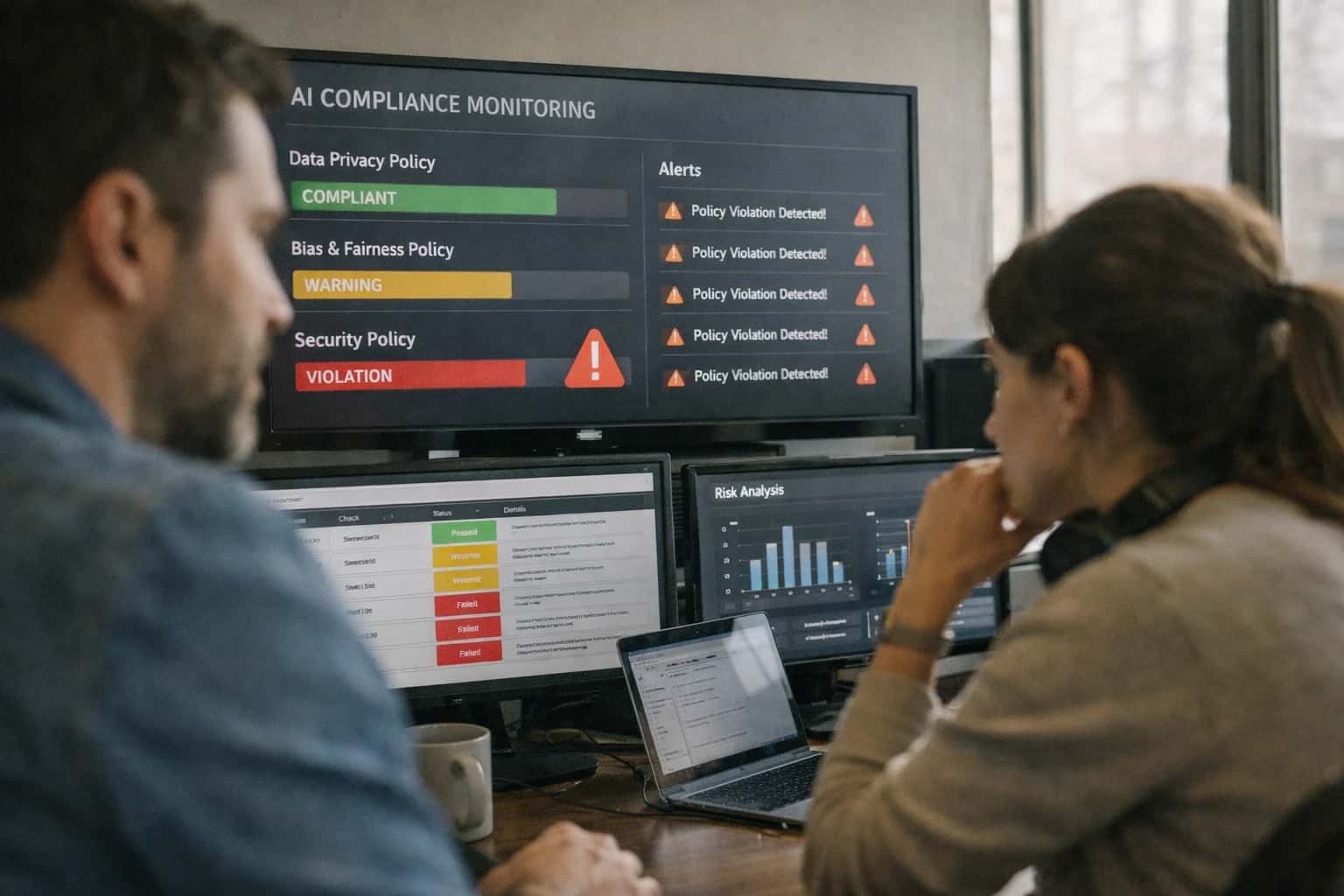
PERMISSION AND SCOPE MANAGEMENT
What is Policy-as-Code?
Policy-as-Code (PaC) is a foundational practice in modern security and infrastructure management, treating authorization rules as executable software artifacts.
The core benefit is deterministic, auditable enforcement. By codifying rules, organizations can implement GitOps workflows for policy, where changes are reviewed via pull requests and automatically validated against test suites. Tools like Open Policy Agent (OPA) provide a unified policy engine, decoupling authorization logic from application code. This is critical for agentic systems, where context-aware authorization for AI tools must be dynamically evaluated based on user identity, resource sensitivity, and environmental context, all defined as code.
PERMISSION AND SCOPE MANAGEMENT
Core Characteristics of Policy-as-Code
Policy-as-Code (PaC) transforms static security and compliance rules into dynamic, programmable logic. This glossary defines its fundamental operational and architectural traits.
01
Declarative and Machine-Readable
Policies are defined in high-level, declarative languages (e.g., Rego for Open Policy Agent, Cedar for AWS Verified Permissions) that specify what the desired security state is, not how to enforce it. This machine-readable format enables:
- Automated evaluation by policy engines.
- Static analysis for logic errors and conflicts.
- Integration into CI/CD pipelines and runtime systems.
02
Version-Controlled and Testable
Policy definitions are treated as source code, stored in version control systems (e.g., Git). This enables:
- Change tracking and audit trails for every policy modification.
- Peer review processes for security policy changes.
- Policy testing using unit and integration tests to validate behavior against known cases before deployment.
- GitOps workflows where policy changes are promoted through environments via pull requests.
03
Decoupled Enforcement Architecture
PaC implements a clear separation of concerns between policy definition and enforcement, following a standard pattern:
- Policy Decision Point (PDP): The engine (e.g., Open Policy Agent) that evaluates policies against an incoming request's context (user, action, resource).
- Policy Enforcement Point (PEP): The component embedded in an application, API gateway, or infrastructure tool that intercepts requests, queries the PDP, and enforces the allow/deny decision. This decoupling allows a single, consistent policy to be enforced across diverse systems.
04
Context-Aware Evaluation
Authorization decisions are not based solely on user identity. Policies evaluate a rich set of attributes from multiple dimensions:
- Subject Attributes: User role, department, clearance level.
- Resource Attributes: File sensitivity tag, database classification, cost center.
- Action Attributes: The specific operation being requested (e.g.,
read,write,delete). - Environmental Context: Time of day, request location, device security posture, IP address. This enables sophisticated models like Attribute-Based Access Control (ABAC).
05
Automated and Continuous Compliance
PaC shifts compliance from manual, periodic audits to continuous, automated validation. Policies encode regulatory requirements (e.g., HIPAA, GDPR) and security benchmarks (e.g., CIS). These policies can be run continuously to:
- Scan infrastructure-as-code (Terraform, CloudFormation) for misconfigurations before deployment.
- Validate runtime state of cloud resources against golden standards.
- Generate evidence for auditors automatically, proving that guardrails are always active and effective.
06
Unified Policy Across the Stack
A core promise of PaC is applying a consistent policy language and enforcement mechanism from infrastructure to application layers. The same policy engine can govern:
- Infrastructure Provisioning: "No storage buckets can be publicly readable."
- Kubernetes Admission Control: "Pods must not run as root."
- Application API Authorization: "Users can only edit documents they own."
- Data Pipeline Access: "This service account can only query PII data if the destination is encrypted." This eliminates security silos and contradictory rules.
PERMISSION AND SCOPE MANAGEMENT
How Policy-as-Code Works for AI Agent Security
Policy-as-Code is the practice of defining and managing security, compliance, and operational policies using machine-readable definition files, which can be version-controlled, tested, and automated like software code.
Policy-as-Code (PaC) is the practice of defining security, compliance, and operational rules in machine-readable, declarative files that are managed and enforced through automated software pipelines. For AI agent security, this translates policies—such as which APIs an agent can call, what data it can access, and under what contextual conditions—into executable code. This code is evaluated by a Policy Decision Point (PDP) at runtime, allowing for dynamic, fine-grained authorization that adapts to the agent's specific task and environment, moving beyond static configuration.
Implementing PaC for autonomous agents involves tools like the Open Policy Agent (OPA) and its Rego language to create rules that evaluate complex attributes. These policies are stored in version control, enabling audit trails, peer review, and continuous integration testing. This ensures that security guardrails evolve alongside the AI system itself, providing a scalable, consistent, and verifiable method to enforce least privilege and context-aware authorization across all agentic tool calls and data interactions, directly mitigating risks like prompt injection and unintended privilege escalation.
POLICY-AS-CODE
Frequently Asked Questions
Policy-as-Code (PaC) is the practice of defining security, compliance, and operational rules in machine-readable code. This FAQ addresses its core mechanisms, implementation, and role in securing autonomous AI systems.
Policy-as-Code (PaC) is the practice of defining and managing security, compliance, and operational policies using machine-readable definition files, which are version-controlled, tested, and automated like software code. It works by decoupling policy logic from application logic. A central policy engine (e.g., Open Policy Agent) evaluates requests against these codified rules written in a declarative language like Rego. When an AI agent attempts an action—like calling an API—the system's Policy Enforcement Point (PEP) intercepts the request, queries the Policy Decision Point (PDP) running the PaC rules, and enforces the resulting allow/deny decision. This transforms static documents into dynamic, executable guardrails.
Enabling Efficiency, Speed & Accuracy
Intelligent Analysis, Decision & Execution
We build AI systems for teams that need search across company data, workflow automation across tools, or AI features inside products and internal software.
Talk to Us
Search across company data
Give teams answers from docs, tickets, runbooks, and product data with sources and permissions.
Useful when people spend too long searching or get different answers from different systems.
Enterprise searchRAGPermissions
Read more
Automate internal workflows
Use AI to route work, draft outputs, trigger actions, and keep approvals and logs in place.
Useful when repetitive work moves across multiple tools and teams.
AI agentsWorkflow automationGovernance
Read more
Add AI to products and internal tools
Build assistants, guided actions, or decision support into the software your team or customers already use.
Useful when AI needs to be part of the product, not a separate tool.
AI integrationDecision supportModel routing
Read more
About the author
Prasad Kumkar
CEO & MD, Inference Systems
Prasad Kumkar is the CEO & MD of Inference Systems and writes about AI systems architecture, LLM infrastructure, model serving, evaluation, and production deployment. Over 5+ years, he has worked across computer vision models, L5 autonomous vehicle systems, and LLM research, with a focus on taking complex AI ideas into real-world engineering systems.
His work and writing cover AI systems, large language models, AI agents, multimodal systems, autonomous systems, inference optimization, RAG, evaluation, and production AI engineering.
LinkedIn
Limited slotsGet a Free AI Consultation
Partnered with leading AI, data, and software stack.





How We Work
Custom AI workflows for your Business
One-fit-all AI don't work for modern businesses. At Inferensys, we aim to understand your business & custom requirements; which we use to define most efficient agentic workflows, the data, and the tools for your business.
01
Review the use case
We understand the task, the users, and where AI can actually help.
Read more02
Pick the right approach
We define what needs search, automation, or product integration.
Read more03
Build the first useful version
We implement the part that proves the value first.
Read more04
Improve from there
We add the checks and visibility needed to keep it useful.
Read moreThe first call is a practical review of your use case and the right next step.
Talk to Us