Root Cause Analysis (RCA) is a structured, retrospective investigative process used to identify the fundamental, underlying reason for an incident, failure, or deviation from expected performance. In the context of AI agent tool use, RCA relies on immutable audit logs and distributed traces to reconstruct the precise sequence of events, API calls, and decisions that led to an undesirable outcome. The goal is to move beyond symptomatic fixes and implement corrective actions that prevent recurrence.

Glossary
Root Cause Analysis (RCA)
Root Cause Analysis (RCA) is a systematic process for identifying the fundamental, underlying cause of an incident or problem by tracing events through logs and traces.
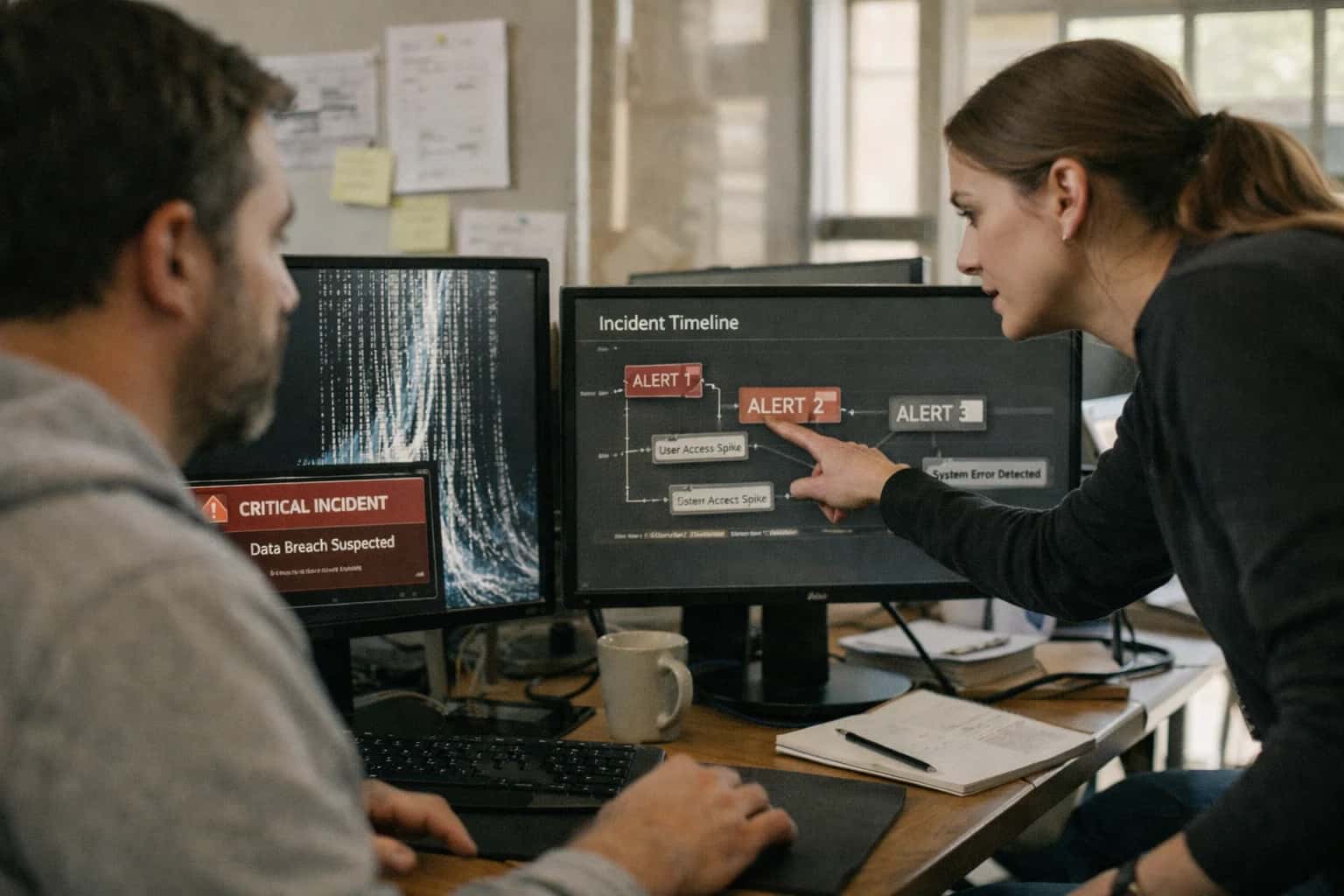
AUDIT LOGGING FOR TOOL USE
What is Root Cause Analysis (RCA)?
A systematic process for identifying the fundamental cause of an incident by analyzing immutable audit logs and execution traces.
Effective RCA for autonomous systems involves tracing failures through the orchestration layer, examining structured logging from each tool invocation, and validating inputs against API schemas. This process is critical for compliance logging, forensic readiness, and improving system reliability by addressing flaws in agent logic, error handling, or external system connectors. It transforms raw telemetry into actionable engineering insights.
AUDIT LOGGING FOR TOOL USE
Core Principles of Effective RCA
Root Cause Analysis (RCA) is a systematic process for identifying the fundamental cause of an incident. In the context of AI tool execution, effective RCA relies on immutable, detailed audit logs to trace the precise sequence of events.
01
Preserve Event Chronology
Effective RCA depends on an immutable, timestamped sequence of all tool invocations, parameters, and outcomes. This chronological log provides the definitive timeline needed to reconstruct the incident. Without a verifiable order of events, analysts cannot distinguish cause from effect.
- Example: A failed API call logged at
2024-01-15T14:30:02.123Zwith its exact request payload and the resulting error code.
02
Maintain Causal Links with Tracing
Isolated logs are insufficient. Distributed tracing techniques, such as those provided by OpenTelemetry (OTel), are essential. They inject unique Trace IDs and Span IDs into log metadata, creating a causal chain that links a user's initial request through every subsequent AI agent action and external API call.
- Critical for: Understanding how a single malformed prompt led to a cascading series of erroneous tool executions across microservices.
03
Log Context, Not Just Events
The root cause is often hidden in context. Logs must be enriched with the full operational state. This includes the agent's session memory, the specific model parameters used, the user's identity and permissions, and the environmental variables active at the time of execution.
- Without this: An error appears random; with it, you can see it only occurs for users in a specific geographic region or under a certain load threshold.
04
Enforce Immutability for Forensic Integrity
For RCA findings to be credible, the underlying evidence must be tamper-evident. Logs should be written to Write-Once, Read-Many (WORM) storage or secured via cryptographic hashing (e.g., a hash chain or Merkle tree). This guarantees the chain of custody and provides non-repudiation, preventing any alteration that could obscure the true root cause.
05
Correlate Across Telemetry Pillars
The root cause may span different data types. Effective RCA correlates logs with metrics and traces. A spike in error logs (logs) should be cross-referenced with a latency increase (metrics) and a specific slow database query span (traces). This holistic view, central to Agentic Observability, moves analysis from symptom (an error) to underlying system cause (a resource exhaustion).
06
Structure for Automated Analysis
Manual log review is impractical at scale. Logs must use structured logging (e.g., JSON) with a consistent log schema. This enables automated anomaly detection systems to identify deviations from normal patterns and log aggregation platforms to perform complex queries, rapidly surfacing potential root causes from petabytes of data.
AUDIT LOGGING FOR TOOL USE
Root Cause Analysis (RCA) for AI Agent Tool Execution
A systematic process for identifying the fundamental cause of an incident by tracing events through immutable logs and distributed traces.
Root Cause Analysis (RCA) is a structured, post-incident investigation methodology that identifies the underlying, fundamental reason for a failure in an AI agent's tool execution, moving beyond symptoms to the core system or logic flaw. In the context of audit logging for tool use, RCA relies on an immutable log of all tool invocations, parameters, and outcomes, cross-referenced with distributed tracing data to reconstruct the exact execution path and state that led to the error. This process is critical for compliance logging and ensuring deterministic, debuggable agent behavior.
The RCA process begins by isolating a specific failure event within the audit trail. Analysts then work backward through the chronological log, examining preceding tool calls, context changes, and system responses. By correlating logs with OpenTelemetry traces, they map the failure to specific spans in the agent's workflow. The goal is to pinpoint a root cause—such as a malformed API request, a data validation error, or a flawed orchestration logic—enabling a permanent fix that prevents recurrence and strengthens the overall agentic observability posture.
AUDIT LOGGING FOR TOOL USE
Frequently Asked Questions
Root Cause Analysis (RCA) is a cornerstone of reliable AI operations. These questions address how RCA leverages audit logs to systematically diagnose failures in autonomous systems.
Root Cause Analysis (RCA) is a systematic, retrospective process of identifying the fundamental, underlying reason for an incident or failure in an AI system by tracing the sequence of events recorded in audit logs and distributed traces. Unlike simply fixing symptoms, RCA aims to discover the original point of failure—be it a flawed prompt, a tool execution error, a data anomaly, or a model hallucination—to implement corrective actions that prevent recurrence. In the context of agentic systems and tool calling, RCA is critical for debugging non-deterministic behaviors, ensuring compliance, and building trust in autonomous operations.
Enabling Efficiency, Speed & Accuracy
Intelligent Analysis, Decision & Execution
We build AI systems for teams that need search across company data, workflow automation across tools, or AI features inside products and internal software.
Talk to Us
Search across company data
Give teams answers from docs, tickets, runbooks, and product data with sources and permissions.
Useful when people spend too long searching or get different answers from different systems.
Enterprise searchRAGPermissions
Read more
Automate internal workflows
Use AI to route work, draft outputs, trigger actions, and keep approvals and logs in place.
Useful when repetitive work moves across multiple tools and teams.
AI agentsWorkflow automationGovernance
Read more
Add AI to products and internal tools
Build assistants, guided actions, or decision support into the software your team or customers already use.
Useful when AI needs to be part of the product, not a separate tool.
AI integrationDecision supportModel routing
Read more
About the author
Prasad Kumkar
CEO & MD, Inference Systems
Prasad Kumkar is the CEO & MD of Inference Systems and writes about AI systems architecture, LLM infrastructure, model serving, evaluation, and production deployment. Over 5+ years, he has worked across computer vision models, L5 autonomous vehicle systems, and LLM research, with a focus on taking complex AI ideas into real-world engineering systems.
His work and writing cover AI systems, large language models, AI agents, multimodal systems, autonomous systems, inference optimization, RAG, evaluation, and production AI engineering.
LinkedIn
Limited slotsGet a Free AI Consultation
Partnered with leading AI, data, and software stack.





How We Work
Custom AI workflows for your Business
One-fit-all AI don't work for modern businesses. At Inferensys, we aim to understand your business & custom requirements; which we use to define most efficient agentic workflows, the data, and the tools for your business.
01
Review the use case
We understand the task, the users, and where AI can actually help.
Read more02
Pick the right approach
We define what needs search, automation, or product integration.
Read more03
Build the first useful version
We implement the part that proves the value first.
Read more04
Improve from there
We add the checks and visibility needed to keep it useful.
Read moreThe first call is a practical review of your use case and the right next step.
Talk to Us