A Side-Channel Attack is a security exploit that extracts secret information from a cryptographic system by analyzing indirect, physical emissions such as power consumption, electromagnetic radiation, sound, or timing variations during its operation. Unlike traditional software attacks, it targets the physical implementation of an algorithm, exploiting data-dependent variations in hardware behavior that leak information about internal states and secret keys.

Glossary
Side-Channel Attack
A side-channel attack is a security exploit that extracts secret information from a system by analyzing indirect physical emissions like power consumption, electromagnetic radiation, sound, or timing variations.
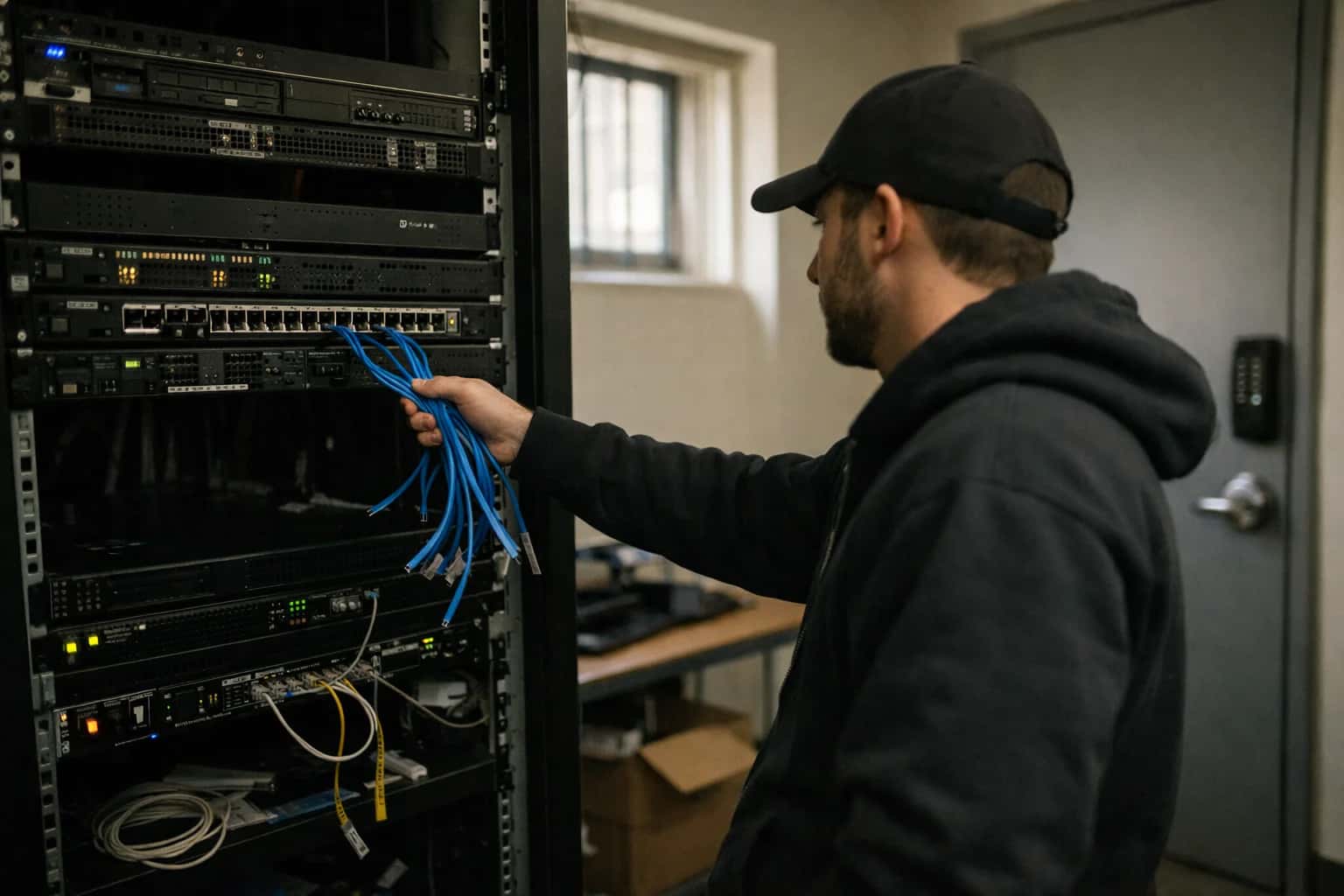
EMBEDDED SECURITY FOR TINYML
What is a Side-Channel Attack?
A security exploit targeting cryptographic systems by analyzing indirect physical emissions.
In TinyML deployment, these attacks are particularly critical as microcontrollers often lack physical shielding and execute predictable operations. Common techniques include Simple Power Analysis (SPA) for visual inspection of power traces and Differential Power Analysis (DPA) using statistical methods. Defenses involve constant-time algorithms, power/electromagnetic shielding, and masking techniques to decorrelate secret data from measurable physical outputs.
SIDE-CHANNEL ATTACK VECTORS
Primary Attack Channels
Side-channel attacks exploit physical emissions or operational characteristics of a cryptographic system, rather than targeting its mathematical algorithms directly. These are the primary channels adversaries analyze to extract secrets.
SECURITY EXPLOIT
How a Side-Channel Attack Works
A side-channel attack bypasses cryptographic algorithms by analyzing indirect physical emissions from a device during operation.
A Side-Channel Attack is a security exploit that extracts secret information from a system by analyzing indirect, physical emissions rather than targeting the algorithm's mathematical strength. Attackers measure power consumption, electromagnetic radiation, acoustic noise, or timing variations while the device performs cryptographic operations like encryption or digital signatures. These unintentional data leaks form a side channel that can be statistically analyzed to deduce secret keys or sensitive internal states.
In TinyML and embedded systems, these attacks are a critical threat due to direct physical access to devices. Defenses include constant-time programming to eliminate timing leaks, power and electromagnetic shielding, noise injection, and deploying cryptographic operations within a Trusted Execution Environment (TEE). For microcontroller deployment, implementing lightweight cryptography designed to be resistant to such analysis is a core component of a robust hardware security posture.
ATTACK VECTORS
Types of Side-Channel Attacks
A comparison of primary side-channel attack methodologies based on the physical or temporal property exploited to infer secret information from a cryptographic system.
| Attack Channel | Physical Property Measured | Typical Attack Complexity | Primary Mitigation Strategies | Relevance to TinyML |
|---|---|---|---|---|
Timing Attack | Execution time variations of cryptographic operations | Low to Medium | Constant-time programming, algorithmic blinding | High (MCU timing is often predictable) |
Simple Power Analysis (SPA) | Direct visual inspection of a single power consumption trace | Low | Power balancing circuits, masking, secure logic styles | High (MCUs have simple power profiles) |
Differential Power Analysis (DPA) | Statistical correlation of many power traces with predicted intermediate values | High | Randomized clock/power, masking, hiding, DPA-resistant algorithms | Critical (statistical methods are powerful) |
Electromagnetic (EM) Analysis | Electromagnetic radiation emitted during computation | Medium to High | EM shielding, spatial/temporal masking, low-emission design | Medium (compact MCUs emit less but are still vulnerable) |
Acoustic / Sound Emission | High-frequency sound from component vibrations (e.g., capacitors) | High | Acoustic dampening, constant-time algorithms, mechanical isolation | Low (less relevant for typical MCU workloads) |
Cache Attack | Timing variations due to CPU cache hits/misses | Medium | Cache partitioning, constant-time algorithms, disabling shared caches | Low to Medium (some advanced MCUs have caches) |
Optical / Photonic Emission | Light emitted from semiconductor junctions during switching | Very High | Light-blocking packaging, tamper-evident seals | Low (requires specialized lab equipment) |
Fault Injection (Glitch) | Induced computational errors via voltage, clock, or laser manipulation | High | Voltage/clock monitors, redundancy, error-detection codes | High (MCUs are susceptible to environmental glitches) |
Template Attack | Profiling-based attack using pre-characterized 'templates' of device leakage | Very High | Device-specific countermeasures, randomization, profile obfuscation | Medium (becomes relevant for mass-produced devices) |
MITIGATION STRATEGIES
Key Defense Techniques
Defending against side-channel attacks requires a multi-layered approach, combining hardware countermeasures, cryptographic algorithm modifications, and software-level protections to eliminate or obfuscate the exploitable physical leakage.
02
Masking & Secret Sharing
A cryptographic blinding technique that splits each sensitive intermediate value into multiple, randomized shares. The original secret is only revealed when all shares are combined, making individual power traces statistically independent of the secret.
- First-Order Masking: Splits a variable
xinto two shares:x = m ⊕ r, whereris a random mask. Operations are performed on shares separately. - Higher-Order Masking: Extends protection against attackers who can probe multiple points simultaneously, increasing security at the cost of computational overhead.
03
Noise Injection & Desynchronization
Active techniques to degrade the signal-to-noise ratio of the side-channel, making it computationally infeasible to extract the secret.
- Clock Jitter: Randomly varying the processor clock frequency desynchronizes successive power traces, complicating trace alignment for Differential Power Analysis (DPA).
- Random Delays: Inserting dummy operations or idle loops of random length between critical operations.
- Power Noise Generators: Actively switching on/off internal circuit elements (e.g., dummy ALUs, memory) to create uncorrelated electrical noise.
04
Secure Hardware Primitives
Utilizing dedicated hardware features designed at the silicon level to provide inherent resistance.
- Hardware Security Modules (HSMs) & Secure Elements: Tamper-resistant chips with built-in countermeasures like internal voltage regulators, shielded layouts, and active detection meshes.
- Dual-Rail Pre-charge Logic (DPL): A circuit design style where each logic bit is represented by a complementary wire pair (
(d, d_not)). Power consumption becomes constant because one wire always charges while the other discharges, independent of data. - True Random Number Generators (TRNGs): Essential for generating high-quality randomness for masking and nonces.
05
Algorithmic & Protocol-Level Defenses
Modifying the cryptographic implementation itself to reduce or eliminate leakage points.
- Point Blinding in ECC: Adding a secret random point to the input of a scalar multiplication to randomize the computational chain.
- Exponent Blinding in RSA: Computing
d' = d + r * φ(n)for decryption, whereris random, to randomize the exponent bits used. - Use of Side-Channel Resistant Algorithms: Preferring algorithms with inherently regular structures, such as the AES algorithm in a bitsliced implementation, over those with data-dependent operations.
SIDE-CHANNEL ATTACKS
Frequently Asked Questions
Side-channel attacks exploit unintended physical emissions from hardware to steal secrets. In TinyML, where models and data reside on exposed microcontrollers, these attacks pose a critical threat to intellectual property and system integrity.
A side-channel attack is a security exploit that extracts secret information from a cryptographic system or a machine learning model by analyzing indirect, physical emissions generated during its operation, rather than targeting mathematical weaknesses in the algorithm itself.
These attacks are particularly dangerous for TinyML deployments on microcontrollers because the physical device is often accessible. Attackers can measure:
- Power Consumption: Variations as the device processes different data.
- Electromagnetic (EM) Emissions: Leaked from the chip's circuitry.
- Timing Information: How long specific computations take.
- Acoustic Noise: From voltage regulators or capacitors.
- Cache Access Patterns: In processors with shared cache memory.
By statistically analyzing these signals, an adversary can infer secret keys, model parameters, or even the private input data being processed.
Enabling Efficiency, Speed & Accuracy
Intelligent Analysis, Decision & Execution
We build AI systems for teams that need search across company data, workflow automation across tools, or AI features inside products and internal software.
Talk to Us
Search across company data
Give teams answers from docs, tickets, runbooks, and product data with sources and permissions.
Useful when people spend too long searching or get different answers from different systems.
Enterprise searchRAGPermissions
Read more
Automate internal workflows
Use AI to route work, draft outputs, trigger actions, and keep approvals and logs in place.
Useful when repetitive work moves across multiple tools and teams.
AI agentsWorkflow automationGovernance
Read more
Add AI to products and internal tools
Build assistants, guided actions, or decision support into the software your team or customers already use.
Useful when AI needs to be part of the product, not a separate tool.
AI integrationDecision supportModel routing
Read more
About the author
Prasad Kumkar
CEO & MD, Inference Systems
Prasad Kumkar is the CEO & MD of Inference Systems and writes about AI systems architecture, LLM infrastructure, model serving, evaluation, and production deployment. Over 5+ years, he has worked across computer vision models, L5 autonomous vehicle systems, and LLM research, with a focus on taking complex AI ideas into real-world engineering systems.
His work and writing cover AI systems, large language models, AI agents, multimodal systems, autonomous systems, inference optimization, RAG, evaluation, and production AI engineering.
LinkedIn
Limited slotsGet a Free AI Consultation
Partnered with leading AI, data, and software stack.





How We Work
Custom AI workflows for your Business
One-fit-all AI don't work for modern businesses. At Inferensys, we aim to understand your business & custom requirements; which we use to define most efficient agentic workflows, the data, and the tools for your business.
01
Review the use case
We understand the task, the users, and where AI can actually help.
Read more02
Pick the right approach
We define what needs search, automation, or product integration.
Read more03
Build the first useful version
We implement the part that proves the value first.
Read more04
Improve from there
We add the checks and visibility needed to keep it useful.
Read moreThe first call is a practical review of your use case and the right next step.
Talk to Us