A digital twin is a dynamic, virtual representation of a physical object, system, or process that is synchronized with its real-world counterpart via continuous data streams. This bidirectional link enables real-time monitoring, predictive simulation, and what-if analysis. In computer vision and AI, digital twins are foundational for generating high-fidelity synthetic data, creating perfectly annotated virtual environments to train robust perception models for scenarios where real-world data is scarce, dangerous, or expensive to collect.

Glossary
Digital Twin
A digital twin is a dynamic, virtual representation of a physical object, system, or process that is synchronized with its real-world counterpart via data streams, used for simulation, analysis, monitoring, and control.
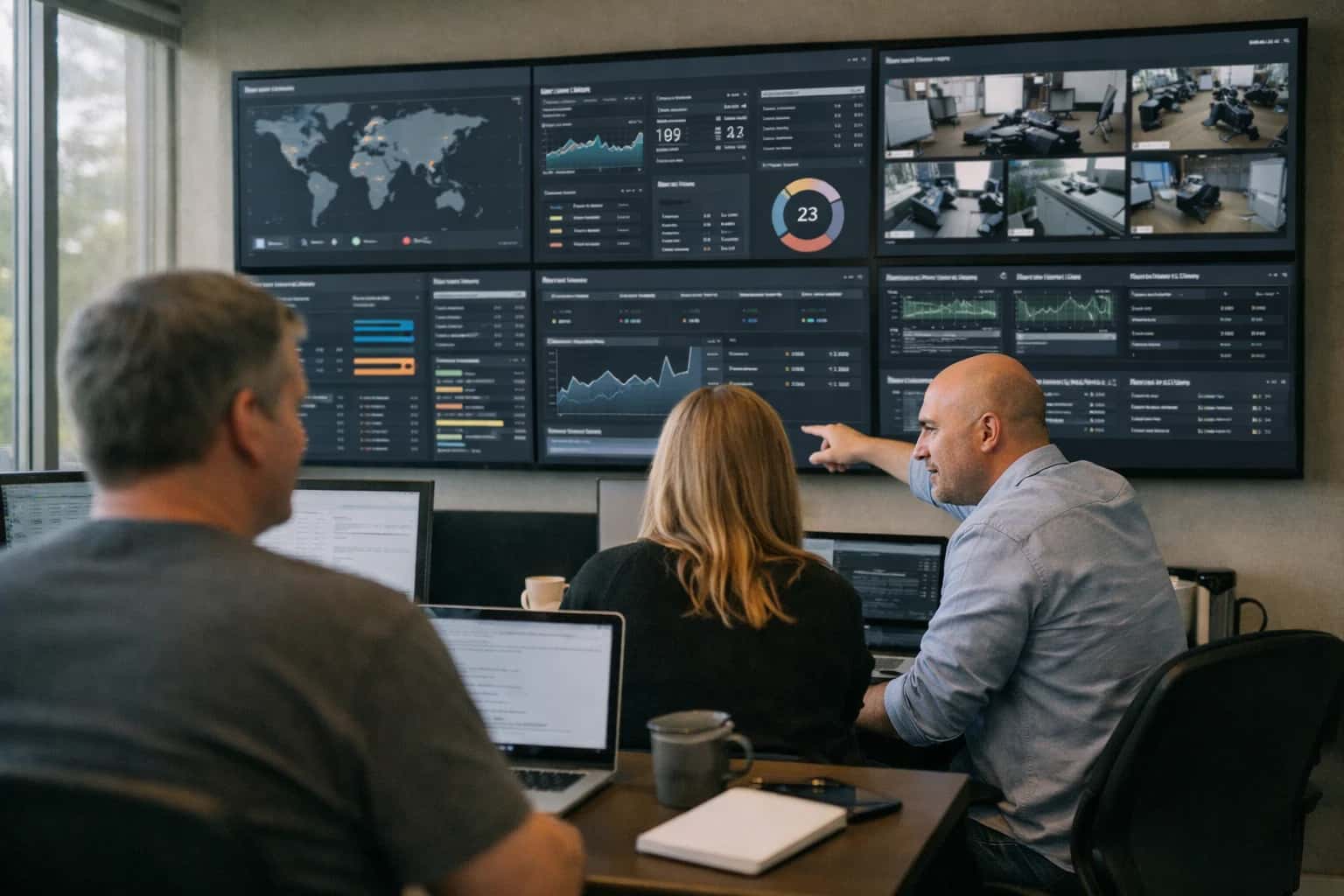
SYNTHETIC DATA FOR COMPUTER VISION
What is a Digital Twin?
A digital twin is a dynamic, virtual representation of a physical object, system, or process that is synchronized with its real-world counterpart via data streams, used for simulation, analysis, monitoring, and control.
The creation of a digital twin relies on a stack of technologies including physics-based simulation engines, 3D modeling, and sensor emulation. For vision systems, this involves physically based rendering (PBR) and techniques like Neural Radiance Fields (NeRF) to achieve photorealism. The twin serves as a closed-loop testbed for sim-to-real transfer, allowing algorithms to be trained and validated in simulation before deployment, thereby accelerating development and improving safety for applications like autonomous vehicles and robotics.
SYNTHETIC DATA FOR COMPUTER VISION
Core Characteristics of a Digital Twin
A digital twin is a dynamic, virtual representation synchronized with a physical counterpart via data streams. Its core characteristics define its utility for simulation, analysis, and control.
01
Bi-Directional Data Synchronization
The defining feature of a digital twin is a continuous, two-way data flow between the physical entity and its virtual model. This involves:
- Real-time telemetry ingestion from IoT sensors, control systems, and operational logs.
- Feedback loops where insights or commands from the virtual model (e.g., a predicted maintenance need) are sent back to influence the physical system.
- This synchronization creates a living model that evolves with its twin, enabling accurate monitoring and closed-loop control.
02
High-Fidelity Geometric & Behavioral Modeling
A digital twin is more than a 3D CAD model; it encapsulates both form and function. This includes:
- Geometric fidelity: Accurate spatial representation, often built from photogrammetry, LiDAR, or Neural Radiance Fields (NeRF).
- Physics-based simulation: Integration of Physically Based Rendering (PBR), kinematics, thermodynamics, and fluid dynamics to model real-world behavior.
- System dynamics: Modeling of software logic, business processes, and human interactions within the system. This holistic modeling allows for predictive "what-if" analysis.
03
Primary Use Case: Simulation & Predictive Analytics
The core value of a digital twin lies in its use as a risk-free sandbox for simulation. Key applications are:
- Predictive maintenance: Running models to forecast component failures before they occur.
- Operational optimization: Simulating different control strategies to maximize efficiency or throughput.
- Training and testing: Serving as a synthetic data pipeline for training AI models (e.g., for autonomous systems) in a safe, scalable virtual environment. This enables Sim-to-Real Transfer.
04
Integration with AI/ML for Autonomous Operation
Modern digital twins are AI-native platforms. They integrate machine learning to enable autonomous capabilities:
- Anomaly detection: Using telemetry data to train models that identify deviations from normal operation.
- Reinforcement learning: Training agents within the simulated twin to learn optimal control policies.
- Generative design: Using AI to propose new, optimized system configurations that are then validated in simulation. This transforms the twin from a diagnostic tool into a proactive, cognitive system.
05
Scalability & Composability (System-of-Systems)
Digital twins are architected to scale from components to entire ecosystems. This involves:
- Component twins: Representing individual assets (e.g., a single jet engine).
- System/Unit twins: Aggregating components into a functional unit (e.g., the entire aircraft).
- Process twins: Modeling the interaction of multiple system twins within an operational workflow (e.g., an airport's ground operations).
- This hierarchy, often managed via frameworks like NVIDIA Omniverse and Pixar USD, allows for complex, multi-agent system orchestration across an enterprise.
06
Foundation for Synthetic Data Generation
For computer vision and robotics, a digital twin is a premier synthetic data generation engine. It automatically produces:
- Perfect ground truth: Pixel-perfect annotations for segmentation, depth, 3D pose, and optical flow.
- Edge case coverage: The ability to simulate rare, dangerous, or costly scenarios (e.g., sensor failure in a storm).
- Domain randomization: Systematically varying textures, lighting, and weather to create robust datasets that improve domain adaptation. This bypasses data scarcity and privacy constraints inherent in real-world data collection.
SYSTEM ARCHITECTURE
How Does a Digital Twin Work?
A digital twin operates through a continuous, bidirectional data flow between a physical entity and its virtual counterpart, enabling simulation, monitoring, and control.
A digital twin functions via a closed-loop data pipeline. Sensors on the physical asset stream real-time telemetry—such as temperature, vibration, and operational state—to the virtual model. This model, built using physics-based simulation and 3D rendering engines like those in NVIDIA Omniverse, updates its state to mirror reality. The synchronized virtual environment then runs predictive simulations and what-if analyses to forecast performance, detect anomalies, or optimize processes.
The virtual model's insights are fed back to the physical world through actuation commands. This can involve adjusting a manufacturing robot's speed, recalibrating a wind turbine's pitch, or triggering maintenance alerts. The core enabling technologies are a unified data schema (like USD for 3D scenes), a high-fidelity simulation engine, and secure IoT connectivity. This bidirectional flow creates a living model used for everything from predictive maintenance to training AI agents in a risk-free synthetic environment before real-world deployment.
SYNTHETIC DATA GENERATION
Digital Twin Use Cases in AI & Engineering
A digital twin is a dynamic, virtual representation of a physical object, system, or process synchronized with its real-world counterpart via data streams. Its primary use cases in AI and engineering center on simulation, analysis, monitoring, and control.
CONCEPTUAL COMPARISON
Digital Twin vs. Related Concepts
This table clarifies the distinct purpose, data flow, and primary use cases of a Digital Twin compared to other simulation and modeling paradigms used in synthetic data generation and autonomous systems.
| Feature / Dimension | Digital Twin | Simulation Model | CAD / BIM Model | Agent World Model |
|---|---|---|---|---|
Core Definition | A dynamic, data-synchronized virtual representation of a specific physical counterpart. | A computational model of a system or process, often abstracted, used for analysis and prediction. | A static, high-fidelity geometric and semantic model of a physical asset or environment. | A learned neural network that predicts future environment states for reinforcement learning planning. |
Primary Data Flow | Bidirectional, real-time or near-real-time synchronization with physical sensors/actuators. | Unidirectional; inputs are provided, outputs (predictions) are generated. No live feedback loop. | Unidirectional; serves as a design blueprint. No operational data ingestion. | Unidirectional internal prediction; the model generates its own synthetic rollouts for the agent. |
Temporal Coupling | Tightly coupled to the operational timeline of its physical twin. | Decoupled; can run faster, slower, or explore hypothetical scenarios independent of real time. | Atemporal; represents a design state, not an operational timeline. | Self-contained; generates its own synthetic temporal sequences for planning. |
Primary Use Case | Monitoring, diagnostics, predictive maintenance, real-time optimization, and remote control. | Design validation, "what-if" scenario analysis, stress testing, and theoretical exploration. | Design, engineering, construction, and asset management documentation. | Enabling an RL agent to plan and train by imagining future states and rewards without interacting with the real environment. |
Fidelity & Scope | High operational fidelity for a specific instance; includes real-world degradation and faults. | Variable fidelity, often simplified for computational efficiency; represents a class of systems. | High geometric and semantic fidelity; represents the intended, as-designed state. | Learned fidelity; may be inaccurate or incomplete (a "hallucinated" simulation). |
Foundation in Synthetic Data | Often built using synthetic data (from simulation/CAD) for initial model training, then continuously updated with real data. | Is a primary source of synthetic data for training models (e.g., for sim-to-real transfer). | Serves as a foundational asset for building high-fidelity simulations and digital twins. | Generates its own internal stream of synthetic experience data for the agent's policy training. |
Instance Specificity | Inherently instance-specific (Twin of Turbine #A-101). | Typically generalized (a model of a type of turbine). | Instance-specific for the asset, but not its live state. | Agent-specific; the model is unique to the agent's experience and objectives. |
Dynamic Adaptation | Continuously adapts to reflect the changing state and condition of its physical twin. | Static; parameters are changed manually for different simulation runs. | Static until the design is revised. | Adapts through learning as the agent gathers more experience. |
DIGITAL TWIN
Frequently Asked Questions
A digital twin is a dynamic, virtual representation of a physical object, system, or process that is synchronized with its real-world counterpart via data streams, used for simulation, analysis, monitoring, and control. This FAQ addresses common technical questions about its architecture, applications, and relationship to synthetic data.
A digital twin is a dynamic, virtual representation of a physical object, system, or process that is synchronized with its real-world counterpart via continuous data streams. It works by ingesting real-time telemetry (e.g., sensor data, operational logs) and historical data from the physical asset into a computational model. This model, often built using physics-based simulation or machine learning, mirrors the asset's behavior, state, and lifecycle. The synchronization is typically bidirectional: data flows from the physical to the digital for monitoring and analysis, and insights or control commands can flow back to optimize the physical asset's operation. The core components are the physical entity, the virtual model, the data connection layer, and the analytics & insight engine.
Enabling Efficiency, Speed & Accuracy
Intelligent Analysis, Decision & Execution
We build AI systems for teams that need search across company data, workflow automation across tools, or AI features inside products and internal software.
Talk to Us
Search across company data
Give teams answers from docs, tickets, runbooks, and product data with sources and permissions.
Useful when people spend too long searching or get different answers from different systems.
Enterprise searchRAGPermissions
Read more
Automate internal workflows
Use AI to route work, draft outputs, trigger actions, and keep approvals and logs in place.
Useful when repetitive work moves across multiple tools and teams.
AI agentsWorkflow automationGovernance
Read more
Add AI to products and internal tools
Build assistants, guided actions, or decision support into the software your team or customers already use.
Useful when AI needs to be part of the product, not a separate tool.
AI integrationDecision supportModel routing
Read more
About the author
Prasad Kumkar
CEO & MD, Inference Systems
Prasad Kumkar is the CEO & MD of Inference Systems and writes about AI systems architecture, LLM infrastructure, model serving, evaluation, and production deployment. Over 5+ years, he has worked across computer vision models, L5 autonomous vehicle systems, and LLM research, with a focus on taking complex AI ideas into real-world engineering systems.
His work and writing cover AI systems, large language models, AI agents, multimodal systems, autonomous systems, inference optimization, RAG, evaluation, and production AI engineering.
LinkedIn
Limited slotsGet a Free AI Consultation
Partnered with leading AI, data, and software stack.





How We Work
Custom AI workflows for your Business
One-fit-all AI don't work for modern businesses. At Inferensys, we aim to understand your business & custom requirements; which we use to define most efficient agentic workflows, the data, and the tools for your business.
01
Review the use case
We understand the task, the users, and where AI can actually help.
Read more02
Pick the right approach
We define what needs search, automation, or product integration.
Read more03
Build the first useful version
We implement the part that proves the value first.
Read more04
Improve from there
We add the checks and visibility needed to keep it useful.
Read moreThe first call is a practical review of your use case and the right next step.
Talk to Us