A Trusted Execution Environment (TEE) establishes a hardware-enforced isolation zone, often called an enclave, that runs in parallel with the rich operating system. Unlike purely software-based security, the TEE protects data in use—during computation in memory—by shielding it from the host OS, hypervisor, and even physical memory probes. This is achieved through hardware-backed memory encryption and access control mechanisms baked into the processor silicon.

Glossary
Trusted Execution Environment (TEE)
A secure area of a main processor that guarantees code and data loaded inside is protected with respect to confidentiality and integrity, isolating sensitive computations from the main operating system.
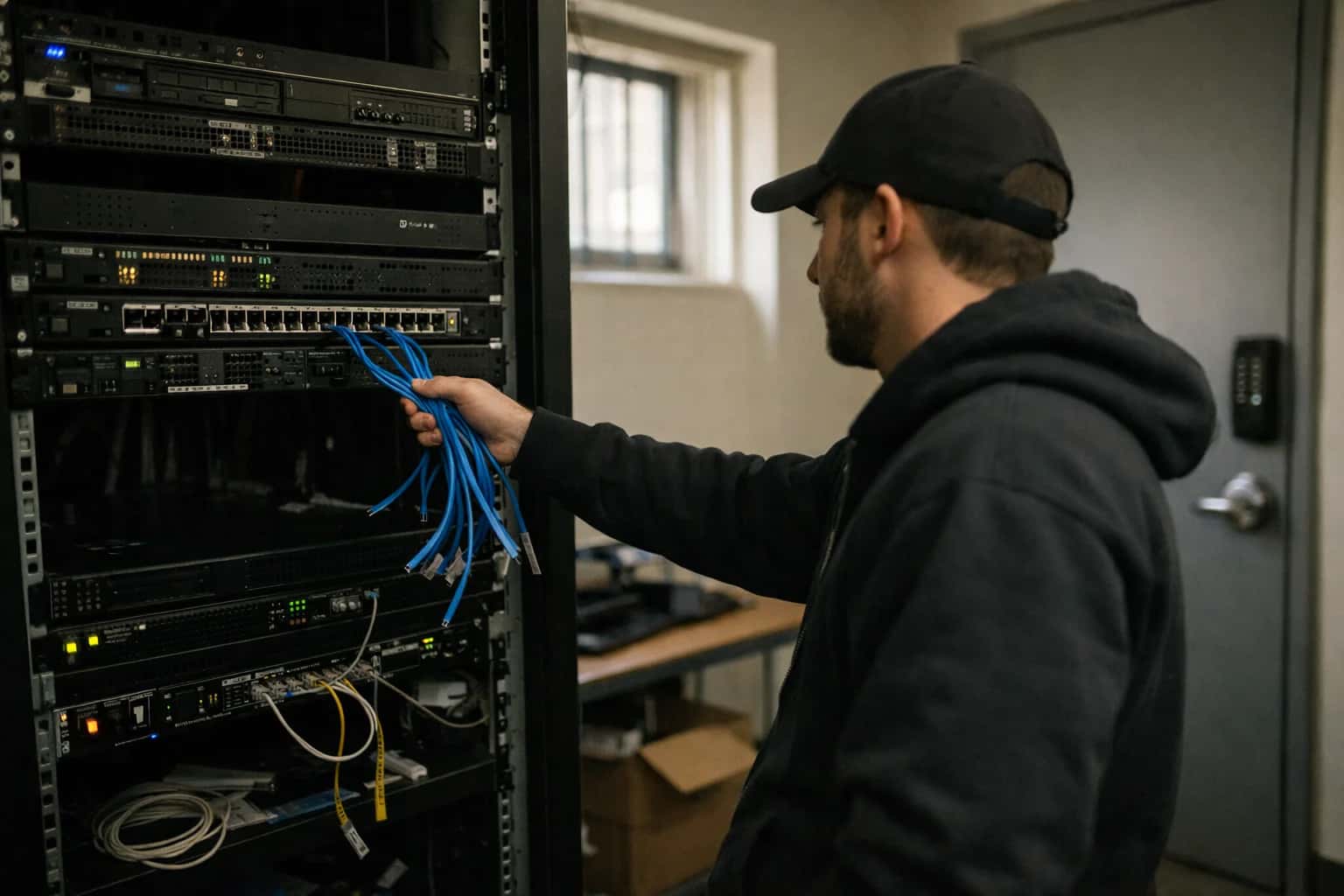
HARDWARE-BASED ISOLATION
What is a Trusted Execution Environment (TEE)?
A Trusted Execution Environment (TEE) is a secure area within a main processor that guarantees the confidentiality and integrity of code and data loaded inside it, isolating sensitive computations from the main operating system, applications, and other privileged software.
The integrity of a TEE is verifiable through remote attestation, a cryptographic process where the enclave proves to a remote party that it is running unmodified, trusted code on a genuine hardware platform. This creates a minimal trusted computing base, ensuring that even if the main operating system is fully compromised, the secrets and logic within the TEE remain inaccessible, making it foundational for confidential computing and sovereign data processing.
HARDWARE-GRADE ISOLATION
Core Architectural Properties of a TEE
A Trusted Execution Environment is defined by a set of mandatory hardware-enforced security properties that distinguish it from standard software-based isolation. These architectural guarantees form the basis for confidential computing and sovereign AI infrastructure.
01
Hardware-Enforced Isolation
The TEE establishes a strict boundary between the secure world and the non-secure world at the silicon level. This is not a software abstraction; the memory management unit (MMU) and bus fabric enforce access controls. The host operating system, hypervisor, and even DMA-capable peripherals are cryptographically prevented from reading or writing to the protected memory region. This isolation is the foundational property that protects sensitive AI model weights and inference data in multi-tenant cloud environments.
Hardware
Enforcement Level
02
Memory Encryption Engine
All data within the TEE's protected memory is encrypted while in DRAM using a dedicated Memory Encryption Engine (MEE) integrated into the memory controller. The MEE transparently encrypts and decrypts cache lines as they move between the processor cache and main memory, using ephemeral keys generated at boot. This protects against cold-boot attacks, DRAM probing, and physical bus sniffing. The encryption is performed at line speed with negligible latency overhead, ensuring that even a physical attacker with access to the memory bus only sees ciphertext.
AES-XTS
Typical Cipher
04
Sealed Storage
Data sealing binds encrypted data to a specific TEE identity and platform state. When a TEE seals a secret, it encrypts it with a key derived from the fused device root key and the Platform Configuration Registers (PCRs) that represent the enclave's identity. The sealed blob can only be decrypted by the exact same TEE on the exact same device, and only when the platform is in the correct state. This allows a TEE to persist sensitive state to untrusted storage while guaranteeing confidentiality and integrity across power cycles.
Device-Unique
Key Derivation
05
Secure Scheduling
The TEE must protect its state during context switches. When the processor transitions between the secure and non-secure worlds, the hardware automatically saves and restores the secure register state to a protected memory area inaccessible to the normal world. This prevents the host OS scheduler from leaking enclave state through register inspection. Additionally, the TEE's runtime integrity is maintained by ensuring that interrupts and exceptions are handled within the secure boundary, preventing a malicious host from manipulating the enclave's control flow through timed interrupts.
06
Minimal Trusted Computing Base
A defining architectural principle of a well-designed TEE is a minimal Trusted Computing Base (TCB). The TCB includes only the hardware, the verified firmware, and the application code inside the enclave. Critically, it explicitly excludes the host operating system, hypervisor, BIOS, and all other system software. By reducing the TCB to a few thousand lines of auditable code, the attack surface is dramatically minimized. For sovereign AI deployments, this means that even a fully compromised cloud provider's infrastructure cannot violate the confidentiality of the enclave's computation.
Excluded
Host OS from TCB
UNDERSTANDING TRUSTED EXECUTION ENVIRONMENTS
Frequently Asked Questions About TEEs
Clear, technically precise answers to the most common questions about how Trusted Execution Environments isolate and protect sensitive computations from the rest of the system.
A Trusted Execution Environment (TEE) is a secure area within a main processor that guarantees the confidentiality and integrity of code and data loaded inside it. It operates as an isolated enclave, physically separated from the main operating system, hypervisor, and other applications. The TEE uses hardware-enforced memory encryption and access controls to create a private computation space. Even if the host OS is compromised with root-level malware, an attacker cannot read or modify the data inside the enclave. The processor verifies the enclave's identity and integrity through a process called remote attestation, which generates a cryptographically signed measurement of the enclave's initial code and state, allowing a remote party to verify it is running unmodified, trusted software on genuine hardware.
HARDWARE ISOLATION COMPARISON
TEE vs. Secure Enclave vs. HSM
Comparative analysis of three distinct hardware-based isolation technologies for protecting sensitive computations and cryptographic material.
| Feature | Trusted Execution Environment | Secure Enclave | Hardware Security Module |
|---|---|---|---|
Primary Function | Isolates workloads in encrypted memory regions on main processor | Dedicated coprocessor for key management and sensitive operations | Tamper-resistant external device for cryptographic operations and key lifecycle management |
Physical Form Factor | Integrated into main CPU die | Separate subsystem on same SoC package | Discrete external appliance, PCIe card, or USB device |
Attack Surface | Shared DRAM, CPU cores, and cache hierarchy | Isolated processor, encrypted memory, dedicated bus | Fully independent hardware with physical tamper barriers |
Protection Scope | Code and data in use within enclave memory | Key material, biometric data, authentication logic | High-value private keys, signing operations, crypto acceleration |
Side-Channel Resistance | |||
Physical Tamper Resistance | |||
FIPS 140-3 Level Target | Level 1-2 | Level 2-3 | Level 3-4 |
Typical Latency Overhead | < 5% for enclave transitions | < 1 ms for key retrieval | 1-10 ms per cryptographic operation |
Scalability Model | Per-process or per-VM enclaves on every server | One per device, fixed at manufacture | Centralized appliance serving multiple clients over network |
Enabling Efficiency, Speed & Accuracy
Intelligent Analysis, Decision & Execution
We build AI systems for teams that need search across company data, workflow automation across tools, or AI features inside products and internal software.
Talk to Us
Search across company data
Give teams answers from docs, tickets, runbooks, and product data with sources and permissions.
Useful when people spend too long searching or get different answers from different systems.
Enterprise searchRAGPermissions
Read more
Automate internal workflows
Use AI to route work, draft outputs, trigger actions, and keep approvals and logs in place.
Useful when repetitive work moves across multiple tools and teams.
AI agentsWorkflow automationGovernance
Read more
Add AI to products and internal tools
Build assistants, guided actions, or decision support into the software your team or customers already use.
Useful when AI needs to be part of the product, not a separate tool.
AI integrationDecision supportModel routing
Read more
About the author
Prasad Kumkar
CEO & MD, Inference Systems
Prasad Kumkar is the CEO & MD of Inference Systems and writes about AI systems architecture, LLM infrastructure, model serving, evaluation, and production deployment. Over 5+ years, he has worked across computer vision models, L5 autonomous vehicle systems, and LLM research, with a focus on taking complex AI ideas into real-world engineering systems.
His work and writing cover AI systems, large language models, AI agents, multimodal systems, autonomous systems, inference optimization, RAG, evaluation, and production AI engineering.
LinkedIn
Limited slotsGet a Free AI Consultation
Partnered with leading AI, data, and software stack.





How We Work
Custom AI workflows for your Business
One-fit-all AI don't work for modern businesses. At Inferensys, we aim to understand your business & custom requirements; which we use to define most efficient agentic workflows, the data, and the tools for your business.
01
Review the use case
We understand the task, the users, and where AI can actually help.
Read more02
Pick the right approach
We define what needs search, automation, or product integration.
Read more03
Build the first useful version
We implement the part that proves the value first.
Read more04
Improve from there
We add the checks and visibility needed to keep it useful.
Read moreThe first call is a practical review of your use case and the right next step.
Talk to Us