A Trusted Execution Environment (TEE) is a secure area inside a main processor that ensures code and data loaded within it are protected with respect to confidentiality and integrity. Unlike software-only security, a TEE isolates sensitive computation from the host OS, hypervisor, and other applications, preventing unauthorized access even if the main system is compromised.

Glossary
Trusted Execution Environment (TEE)
A hardware-enforced secure area within a main processor that guarantees the confidentiality and integrity of code and data loaded inside it, isolating sensitive computation from the host operating system.
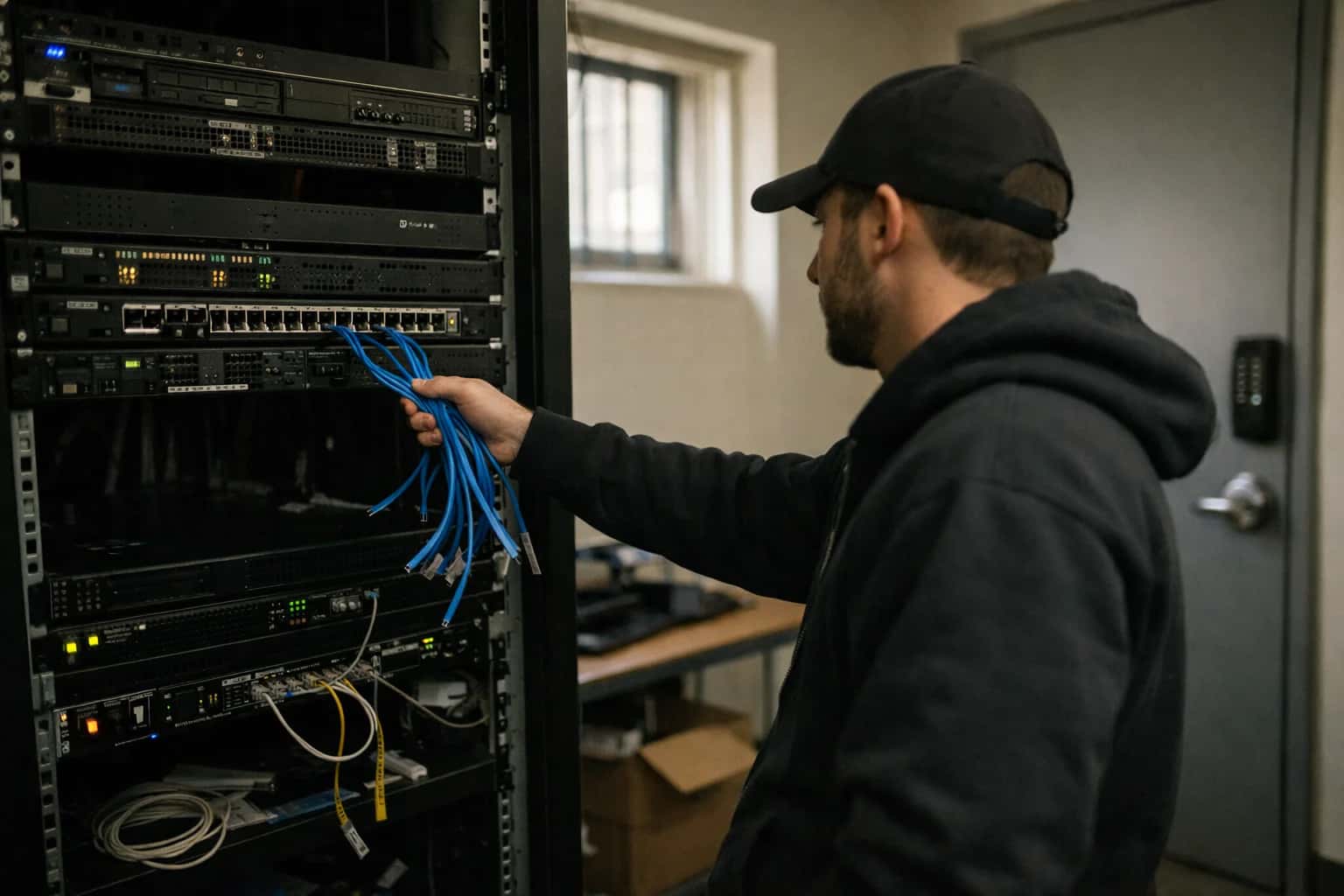
HARDWARE-GRADE ISOLATION
What is a Trusted Execution Environment (TEE)?
A hardware-enforced secure area within a main processor that guarantees the confidentiality and integrity of code and data loaded inside it, isolating sensitive computation from the host operating system.
TEEs provide hardware-based attestation, cryptographically proving to remote parties the exact identity and integrity of the software stack running inside the enclave. This mechanism is critical for sovereign AI infrastructure, enabling encrypted vector database queries and model inference on untrusted cloud platforms while guaranteeing data remains invisible to the infrastructure provider.
HARDWARE-GRADE ISOLATION
Key Features of a TEE
A Trusted Execution Environment provides a hardware-enforced secure area within a main processor. It guarantees the confidentiality and integrity of code and data loaded inside it, isolating sensitive computation from the host operating system, hypervisor, and other applications.
01
Hardware-Enforced Isolation
The TEE creates a strictly bounded enclave in the CPU that is isolated at the hardware level. Code and data within the enclave are inaccessible to the host OS, hypervisor, BIOS, and System Management Mode (SMM). Even a compromised kernel cannot read enclave memory. This is enforced by the processor's memory controller, which blocks non-enclave access attempts at the bus level.
- Intel SGX: Uses Enclave Page Cache (EPC) with hardware encryption
- AMD SEV: Encrypts entire VM memory with per-VM keys
- ARM TrustZone: Splits the system into Secure and Normal worlds
02
Memory Encryption Engine
All data within the TEE is transparently encrypted by a dedicated hardware engine before being written to DRAM. The encryption keys are generated at boot time and never exposed to software. This protects against cold-boot attacks, DRAM probing, and physical bus sniffing. The memory encryption operates at line speed with negligible latency overhead.
- Total Memory Encryption (TME): Encrypts all memory with a single ephemeral key
- Multi-Key TME (MKTME): Supports multiple encryption keys for different VMs or enclaves
- Integrity protection: Detects replay and splicing attacks via MAC verification
03
Remote Attestation
Remote attestation allows a remote client to cryptographically verify the exact software stack running inside a TEE before provisioning secrets. The enclave produces a signed measurement (a hash of its initial code and data) that is signed by a hardware-derived attestation key. A third-party attestation service validates this quote against known good measurements.
- DCAP (Data Center Attestation Primitives): Intel's flexible attestation framework
- EPID (Enhanced Privacy ID): Group signature scheme for anonymous attestation
- Verifiable claims: Includes enclave identity, code version, and security flags
04
Sealed Storage
The TEE provides a mechanism to encrypt data for persistent storage such that it can only be decrypted by the same enclave on the same platform. Sealing binds data to the enclave's identity (MRENCLAVE) or the signing authority (MRSIGNER). This ensures that even if an attacker steals the storage medium, the sealed data remains cryptographically inaccessible.
- Seal to MRENCLAVE: Ties data to the exact enclave binary version
- Seal to MRSIGNER: Allows data migration across version updates from the same author
- Monotonic counters: Prevents rollback attacks on sealed data
05
Side-Channel Resistance
Modern TEEs incorporate hardware and microcode mitigations against side-channel attacks that attempt to leak secrets through timing, power consumption, or cache access patterns. While no TEE is perfectly resistant, continuous microcode updates and architectural defenses raise the bar significantly.
- Cache partitioning: Isolates enclave cache lines from untrusted code
- Speculation barriers: LFENCE and VERW instructions mitigate Spectre-class attacks
- Constant-time crypto: Hardware-accelerated AES and SHA run in fixed cycles
- Page fault hardening: Prevents controlled-channel attacks via address translation monitoring
06
Minimal Trusted Computing Base
The TEE model drastically reduces the Trusted Computing Base (TCB). In a traditional stack, trust extends to the OS, hypervisor, and cloud provider. With a TEE, only the enclave code and the processor package must be trusted. The OS and VMM are treated as hostile entities. This reduction in TCB minimizes the attack surface for sensitive workloads.
- TCB components: CPU silicon, enclave application, attestation service
- Excluded from TCB: Host OS, hypervisor, firmware, cloud administrator
- Formal verification: Some TEE designs undergo mathematical proof of isolation guarantees
CONFIDENTIAL COMPUTING COMPARISON
TEE vs. Other Security Approaches
Comparing Trusted Execution Environments against alternative cryptographic and isolation techniques for protecting data in use during AI computation.
| Feature | Trusted Execution Environment (TEE) | Homomorphic Encryption (HE) | Secure Multi-Party Computation (SMPC) |
|---|---|---|---|
Protection Scope | Data in use (CPU/memory) | Data in use (computation on ciphertext) | Data in use (distributed computation) |
Computational Overhead | 2-10% | 10,000-1,000,000x | 100-10,000x |
Hardware Dependency | |||
Supports Arbitrary Code | |||
Multi-Party Input Privacy | |||
Side-Channel Resistance | Hardware-level with mitigations | Mathematically inherent | Protocol-dependent |
Maturity for ML Inference | Production-ready | Research to early production | Limited production |
Attestation Capability |
TRUSTED EXECUTION ENVIRONMENTS
Frequently Asked Questions
Clear, technically precise answers to the most common questions about hardware-enforced secure enclaves and their role in protecting sensitive AI workloads from privileged system software.
A Trusted Execution Environment (TEE) is a hardware-enforced secure area within a main processor that guarantees the confidentiality and integrity of code and data loaded inside it, isolating sensitive computation from the host operating system, hypervisor, and other privileged software. TEEs operate by creating a hardware-protected memory region called an enclave. When an application launches an enclave, the CPU verifies the code's identity through a process called attestation, then encrypts the enclave's memory pages using a key burned into the processor during manufacturing. Any attempt by the OS, a malicious driver, or even a physical attacker with a DRAM probe to read or modify enclave memory is blocked at the silicon level. The processor decrypts data only when it is inside the CPU cache and actively being processed, ensuring that plaintext never appears on the system bus or in main memory. This model protects data in use, complementing encryption at rest and in transit. Major implementations include Intel SGX, AMD SEV, and Arm TrustZone, each with different threat models and performance characteristics.
Enabling Efficiency, Speed & Accuracy
Intelligent Analysis, Decision & Execution
We build AI systems for teams that need search across company data, workflow automation across tools, or AI features inside products and internal software.
Talk to Us
Search across company data
Give teams answers from docs, tickets, runbooks, and product data with sources and permissions.
Useful when people spend too long searching or get different answers from different systems.
Enterprise searchRAGPermissions
Read more
Automate internal workflows
Use AI to route work, draft outputs, trigger actions, and keep approvals and logs in place.
Useful when repetitive work moves across multiple tools and teams.
AI agentsWorkflow automationGovernance
Read more
Add AI to products and internal tools
Build assistants, guided actions, or decision support into the software your team or customers already use.
Useful when AI needs to be part of the product, not a separate tool.
AI integrationDecision supportModel routing
Read more
About the author
Prasad Kumkar
CEO & MD, Inference Systems
Prasad Kumkar is the CEO & MD of Inference Systems and writes about AI systems architecture, LLM infrastructure, model serving, evaluation, and production deployment. Over 5+ years, he has worked across computer vision models, L5 autonomous vehicle systems, and LLM research, with a focus on taking complex AI ideas into real-world engineering systems.
His work and writing cover AI systems, large language models, AI agents, multimodal systems, autonomous systems, inference optimization, RAG, evaluation, and production AI engineering.
LinkedIn
Limited slotsGet a Free AI Consultation
Partnered with leading AI, data, and software stack.





How We Work
Custom AI workflows for your Business
One-fit-all AI don't work for modern businesses. At Inferensys, we aim to understand your business & custom requirements; which we use to define most efficient agentic workflows, the data, and the tools for your business.
01
Review the use case
We understand the task, the users, and where AI can actually help.
Read more02
Pick the right approach
We define what needs search, automation, or product integration.
Read more03
Build the first useful version
We implement the part that proves the value first.
Read more04
Improve from there
We add the checks and visibility needed to keep it useful.
Read moreThe first call is a practical review of your use case and the right next step.
Talk to Us