A compliance zone is a logically isolated segment of a cloud network—such as a specific AWS Region or Availability Zone—explicitly designated for hosting workloads that are subject to a specific regulatory framework. It functions as a technical enforcement boundary where all underlying infrastructure, from compute instances to block storage, is physically located within an approved jurisdiction, preventing accidental cross-border data spillage.

Glossary
Compliance Zone
A logically isolated segment of a cloud network, such as a specific AWS Region or Availability Zone, designated for hosting workloads that are subject to a specific regulatory framework.
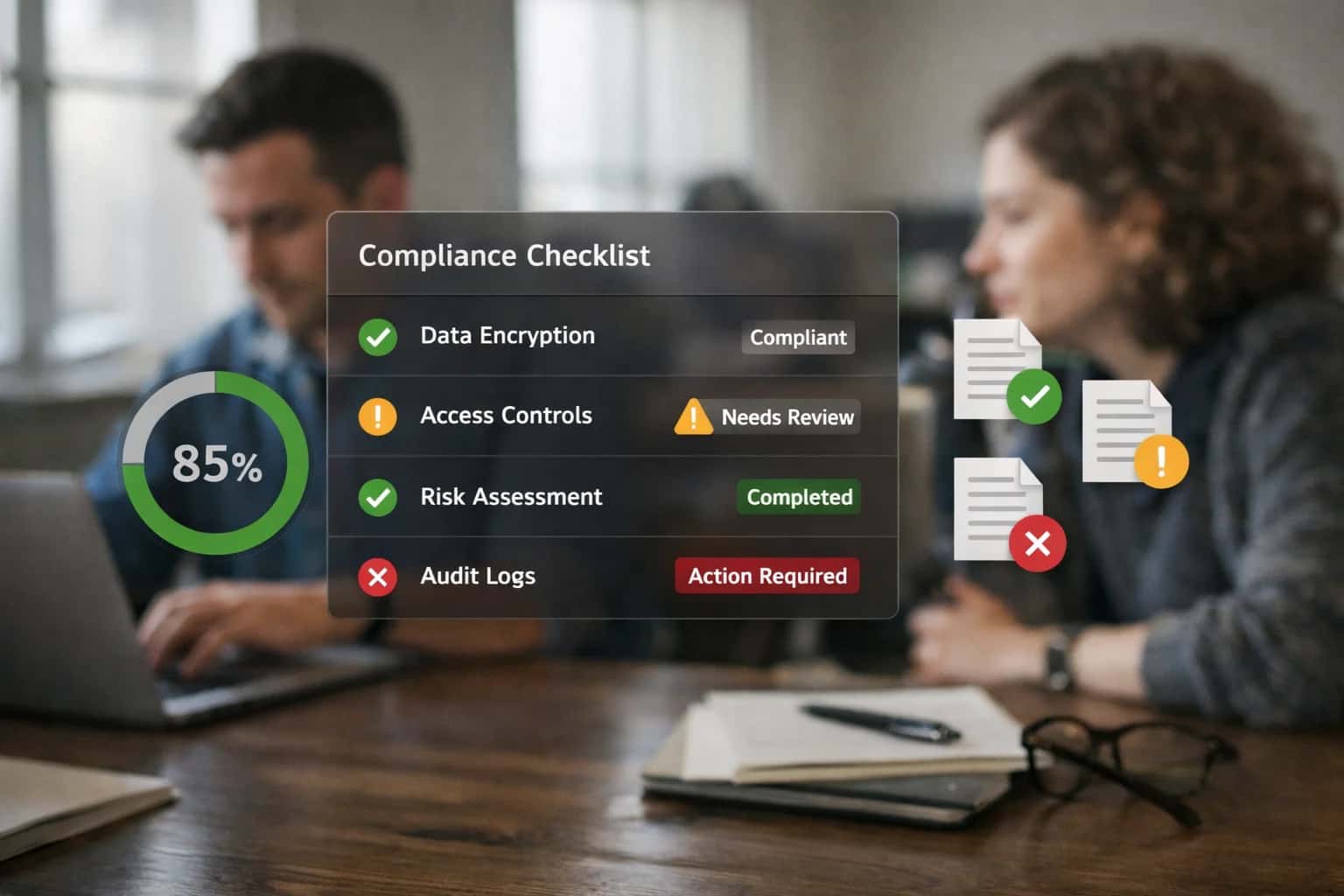
REGULATORY ISOLATION
What is a Compliance Zone?
A compliance zone is a logically isolated segment of a cloud network designated for hosting workloads subject to a specific regulatory framework, ensuring data remains within authorized geographic and jurisdictional boundaries.
Unlike broader data residency concepts, a compliance zone combines geofencing, IAM policies, and residency-aware routing to create a hardened enclave. This ensures that the control plane, metadata, and encryption keys never leave the designated sovereign perimeter, satisfying strict mandates like GDPR or sector-specific financial regulations.
ARCHITECTURAL FOUNDATIONS
Core Characteristics of a Compliance Zone
A Compliance Zone is a logically isolated segment of cloud infrastructure—typically an AWS Region, Availability Zone, or dedicated VPC—engineered to guarantee that data processing and storage remain within a specific legal jurisdiction. It combines network segmentation, identity policies, and cryptographic controls to satisfy regulatory mandates.
01
Logical Network Isolation
The foundational mechanism of a Compliance Zone is strict network segmentation. This is achieved through dedicated Virtual Private Clouds (VPCs) with no default route to the public internet or other regions. Private subnets, NAT gateways localized to the zone, and VPC peering restricted to approved local services ensure that packets never traverse unapproved geographic boundaries. This prevents data leakage via the network layer.
02
Geographic Control Plane Pinning
Beyond data plane isolation, a true Compliance Zone restricts the control plane—the APIs used to manage resources. This means pinning administrative actions to a specific Regional Endpoint (e.g., eu-west-1.amazonaws.com). By disabling global control plane access, you prevent a foreign administrator from accidentally or maliciously modifying security groups, IAM roles, or replication configurations that could exfiltrate data across a border.
03
Jurisdictional Data Tagging
Automated metadata classification is critical for enforcement. Resources within the zone are tagged with Jurisdiction Tags (e.g., data-origin: DE or compliance: GDPR). These tags are evaluated by Geo-Aware Policies in the IAM system. For example, an S3 bucket policy can deny any PutObject request if the aws:RequestedRegion tag does not match the bucket's jurisdictional tag, creating a programmatic residency lock.
04
Localized Encryption Key Management
Encryption keys must reside and operate exclusively within the Compliance Zone. Using AWS KMS with a single-region key or an on-premises Hardware Security Module (HSM) ensures that ciphertext cannot be decrypted outside the jurisdiction. This enforces a Hardware Root of Trust where the key material is physically bound to the local geography, rendering any accidentally replicated data useless without the local decryption service.
05
Residency-Aware Routing
Application-layer traffic management must be jurisdictionally aware. Residency-Aware Routing uses DNS Geolocation to resolve user requests to the nearest compliant endpoint. However, unlike standard geo-routing, this logic explicitly excludes regions that are not authorized for that user's data classification, even if they are physically closer. This ensures a user in a border city is routed to the correct legal zone, not just the nearest server.
06
Immutable Audit Logging
A Compliance Zone requires tamper-proof logging to prove residency to regulators. AWS CloudTrail logs for the zone must be stored in a local S3 bucket with Object Lock enabled in governance mode. This prevents anyone, even a root account holder, from deleting logs that prove data never left the zone. These immutable trails are essential for passing a Transfer Impact Assessment (TIA) or a Data Protection Impact Assessment (DPIA).
CLOUD ARCHITECTURE & REGULATORY CONTROLS
Frequently Asked Questions About Compliance Zones
A compliance zone is a logically isolated segment of cloud infrastructure specifically designated to host regulated workloads. These zones enforce technical controls that guarantee data remains within authorized geographic boundaries and under specific governance frameworks.
A compliance zone is a logically isolated segment of a cloud network—such as a specific AWS Region, Availability Zone, or a dedicated subnet—designated for hosting workloads subject to a specific regulatory framework. It operates by combining data residency enforcement, identity and access management (IAM) policies, and network segmentation to create a hardened boundary. Within this zone, all compute, storage, and metadata processing are confined to authorized geographic locations. Technical controls like geofencing, IP geolocation, and residency-aware routing ensure that data never traverses unauthorized jurisdictions. The zone is typically governed by a unified policy that dictates encryption standards, audit logging requirements, and approved services, ensuring that every resource deployed within it automatically inherits the necessary compliance posture for frameworks such as GDPR, HIPAA, or FedRAMP.
Enabling Efficiency, Speed & Accuracy
Intelligent Analysis, Decision & Execution
We build AI systems for teams that need search across company data, workflow automation across tools, or AI features inside products and internal software.
Talk to Us
Search across company data
Give teams answers from docs, tickets, runbooks, and product data with sources and permissions.
Useful when people spend too long searching or get different answers from different systems.
Enterprise searchRAGPermissions
Read more
Automate internal workflows
Use AI to route work, draft outputs, trigger actions, and keep approvals and logs in place.
Useful when repetitive work moves across multiple tools and teams.
AI agentsWorkflow automationGovernance
Read more
Add AI to products and internal tools
Build assistants, guided actions, or decision support into the software your team or customers already use.
Useful when AI needs to be part of the product, not a separate tool.
AI integrationDecision supportModel routing
Read more
About the author
Prasad Kumkar
CEO & MD, Inference Systems
Prasad Kumkar is the CEO & MD of Inference Systems and writes about AI systems architecture, LLM infrastructure, model serving, evaluation, and production deployment. Over 5+ years, he has worked across computer vision models, L5 autonomous vehicle systems, and LLM research, with a focus on taking complex AI ideas into real-world engineering systems.
His work and writing cover AI systems, large language models, AI agents, multimodal systems, autonomous systems, inference optimization, RAG, evaluation, and production AI engineering.
LinkedIn
Limited slotsGet a Free AI Consultation
Partnered with leading AI, data, and software stack.





How We Work
Custom AI workflows for your Business
One-fit-all AI don't work for modern businesses. At Inferensys, we aim to understand your business & custom requirements; which we use to define most efficient agentic workflows, the data, and the tools for your business.
01
Review the use case
We understand the task, the users, and where AI can actually help.
Read more02
Pick the right approach
We define what needs search, automation, or product integration.
Read more03
Build the first useful version
We implement the part that proves the value first.
Read more04
Improve from there
We add the checks and visibility needed to keep it useful.
Read moreThe first call is a practical review of your use case and the right next step.
Talk to Us