Offline token generation is a high-assurance cryptographic process where digital authentication tokens are created within a physically isolated Hardware Security Module (HSM) or air-gapped workstation. By keeping the private signing key permanently disconnected from any network, the process mathematically eliminates the risk of remote exfiltration. The generated token is then manually transferred to an online system via a sneakernet protocol or unidirectional data diode for consumption.

Glossary
Offline Token Generation
The process of creating authentication tokens using a physically isolated device, often a hardware security module, to ensure the signing keys are never connected to a network-accessible system.
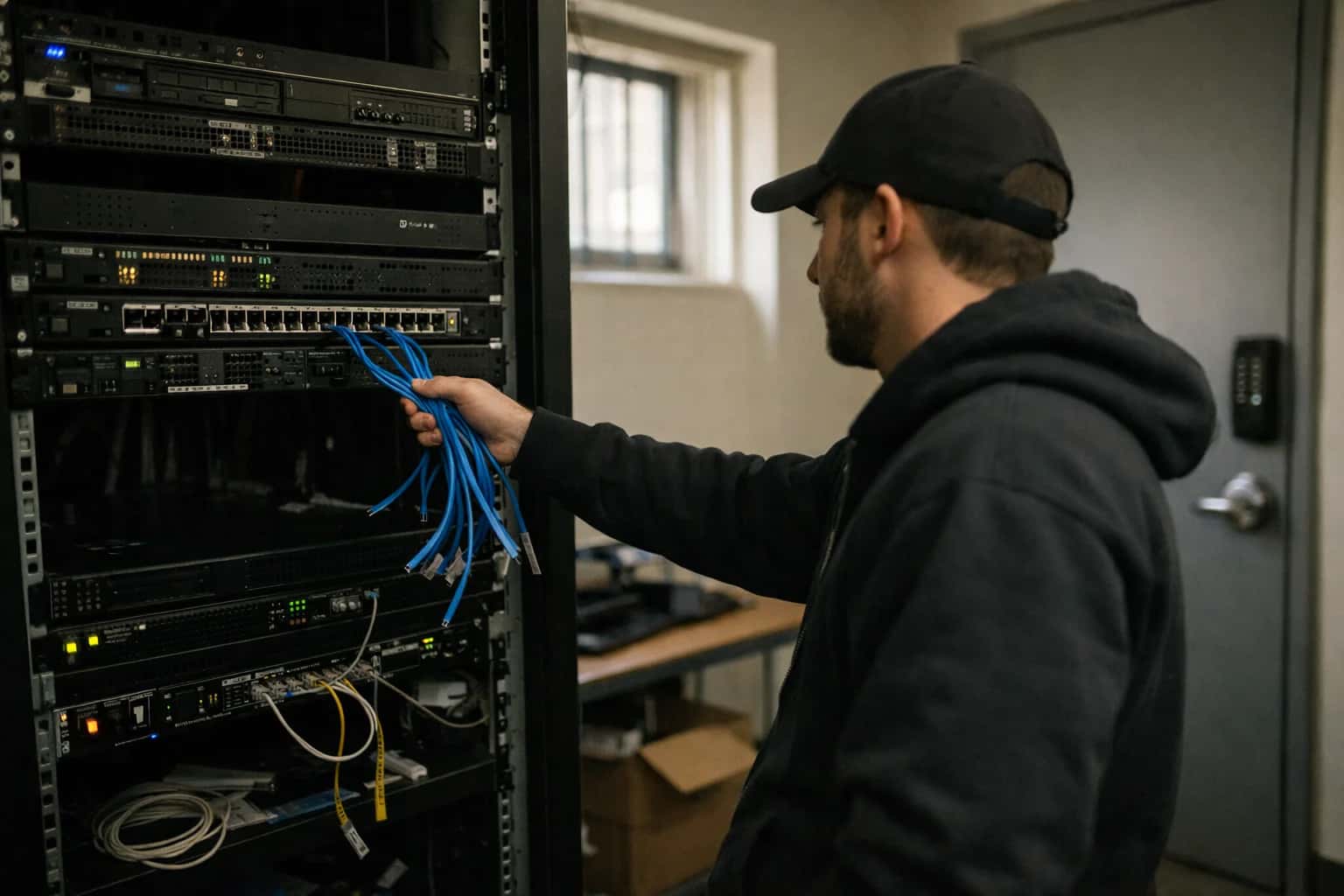
CRYPTOGRAPHIC SECURITY
What is Offline Token Generation?
Offline token generation is the process of creating authentication tokens using a physically isolated device, ensuring the signing keys are never connected to a network-accessible system.
This architecture is foundational to Zero Trust Architecture (ZTA) in defense and critical infrastructure environments. It relies on a strict chain of custody where the Offline Certificate Authority (CA) is only powered on within a secured, access-controlled room. The resulting tokens, often leveraging Mutual TLS (mTLS) or JWTs, provide cryptographically verifiable identity assertions without ever exposing the root of trust to internet-based attack vectors.
CRYPTOGRAPHIC ISOLATION
Core Characteristics of Offline Token Generation
Offline token generation ensures that the private signing keys used to create authentication assertions are never exposed to a network-connected system, eliminating an entire class of remote exfiltration attacks.
01
Hardware Security Module (HSM) Anchoring
The private key material is generated, stored, and used exclusively within a tamper-resistant HSM. The HSM performs the cryptographic signing operation internally and outputs only the signed token. The key is bound to the physical silicon and cannot be extracted in plaintext, even by a root user. This satisfies FIPS 140-2 Level 3 requirements for high-assurance environments.
FIPS 140-2 L3
Minimum Security Level
02
Air-Gapped Signing Ceremony
Token generation follows a strict manual protocol known as a signing ceremony. A physically isolated workstation, often booted from a read-only operating system, communicates with the HSM via a direct serial or USB connection. The process requires multi-person integrity—two or more operators must be physically present to insert smart cards or enter split passphrases, enforcing a dual-control security model.
M-of-N
Quorum Control
03
Unidirectional Data Diode Transfer
Once signed, the token is transferred to the operational network through a data diode—a physical device that enforces one-way data flow. This hardware guarantees that no malicious packet can travel back to the signing enclave. The diode typically converts the electrical signal to an optical signal and back, creating a physical air gap in the transmission path that is immune to software bypass.
100%
Reverse Path Blocked
04
Short-Lived Token Validity
Tokens generated offline are configured with an extremely constrained Time-To-Live (TTL). A typical offline token may be valid for only 60 to 300 seconds. This limits the blast radius if a token is somehow intercepted post-issuance. The token often includes a nonce or a monotonically increasing counter to prevent replay attacks, ensuring each assertion is unique and single-use.
< 300s
Typical TTL
05
Offline Certificate Authority (CA) Hierarchy
The signing keys for the tokens are derived from a Root CA that is kept permanently offline and stored in a vault or safe. This root certifies an intermediate issuing CA, which is the only key activated during the signing ceremony. If the intermediate key is ever suspected of compromise, the offline root can revoke it without exposing the root material, preserving the trust chain.
2-Tier
PKI Hierarchy
06
Tamper-Evident Audit Logging
Every token generation event is recorded in a write-once, read-many (WORM) log signed by the HSM. This creates a cryptographically verifiable audit trail that proves exactly which tokens were generated and when. The log is transferred alongside the tokens via the data diode to the operational side, allowing security information and event management (SIEM) systems to detect any anomalous issuance patterns.
WORM
Log Integrity
OFFLINE TOKEN GENERATION
Frequently Asked Questions
Explore the critical security mechanisms behind generating authentication tokens in physically isolated environments, where signing keys never touch a network-connected system.
Offline token generation is the process of creating cryptographically signed authentication tokens using a physically isolated device, typically a Hardware Security Module (HSM), that has no network connectivity whatsoever. The signing keys are generated, stored, and used entirely within the tamper-resistant boundary of the isolated hardware. The workflow involves preparing a token request on a networked system, physically transferring it via sneakernet (e.g., USB drive) to the air-gapped signing device, performing the cryptographic signature operation, and then manually transporting the signed token back to the online system for distribution. Because the private key material never exists in a network-accessible memory space, it is immune to remote exfiltration, making this the gold standard for root certificate authorities and high-assurance identity systems.
Enabling Efficiency, Speed & Accuracy
Intelligent Analysis, Decision & Execution
We build AI systems for teams that need search across company data, workflow automation across tools, or AI features inside products and internal software.
Talk to Us
Search across company data
Give teams answers from docs, tickets, runbooks, and product data with sources and permissions.
Useful when people spend too long searching or get different answers from different systems.
Enterprise searchRAGPermissions
Read more
Automate internal workflows
Use AI to route work, draft outputs, trigger actions, and keep approvals and logs in place.
Useful when repetitive work moves across multiple tools and teams.
AI agentsWorkflow automationGovernance
Read more
Add AI to products and internal tools
Build assistants, guided actions, or decision support into the software your team or customers already use.
Useful when AI needs to be part of the product, not a separate tool.
AI integrationDecision supportModel routing
Read more
About the author
Prasad Kumkar
CEO & MD, Inference Systems
Prasad Kumkar is the CEO & MD of Inference Systems and writes about AI systems architecture, LLM infrastructure, model serving, evaluation, and production deployment. Over 5+ years, he has worked across computer vision models, L5 autonomous vehicle systems, and LLM research, with a focus on taking complex AI ideas into real-world engineering systems.
His work and writing cover AI systems, large language models, AI agents, multimodal systems, autonomous systems, inference optimization, RAG, evaluation, and production AI engineering.
LinkedIn
Limited slotsGet a Free AI Consultation
Partnered with leading AI, data, and software stack.





How We Work
Custom AI workflows for your Business
One-fit-all AI don't work for modern businesses. At Inferensys, we aim to understand your business & custom requirements; which we use to define most efficient agentic workflows, the data, and the tools for your business.
01
Review the use case
We understand the task, the users, and where AI can actually help.
Read more02
Pick the right approach
We define what needs search, automation, or product integration.
Read more03
Build the first useful version
We implement the part that proves the value first.
Read more04
Improve from there
We add the checks and visibility needed to keep it useful.
Read moreThe first call is a practical review of your use case and the right next step.
Talk to Us