A Secure Enclave is a dedicated, hardware-isolated execution environment integrated directly into the main processor die. It functions as a cryptographically sealed vault, ensuring that proprietary model weights, encryption keys, and inference code remain encrypted in memory and inaccessible to any process outside the enclave—including a compromised operating system kernel or a malicious container escape. This isolation is enforced by the CPU's memory management unit, which blocks direct memory access attempts from non-enclave processes.

Glossary
Secure Enclave
A hardware-isolated region within a processor that protects sensitive code and data, such as proprietary model weights, from unauthorized access even if the host operating system is compromised.
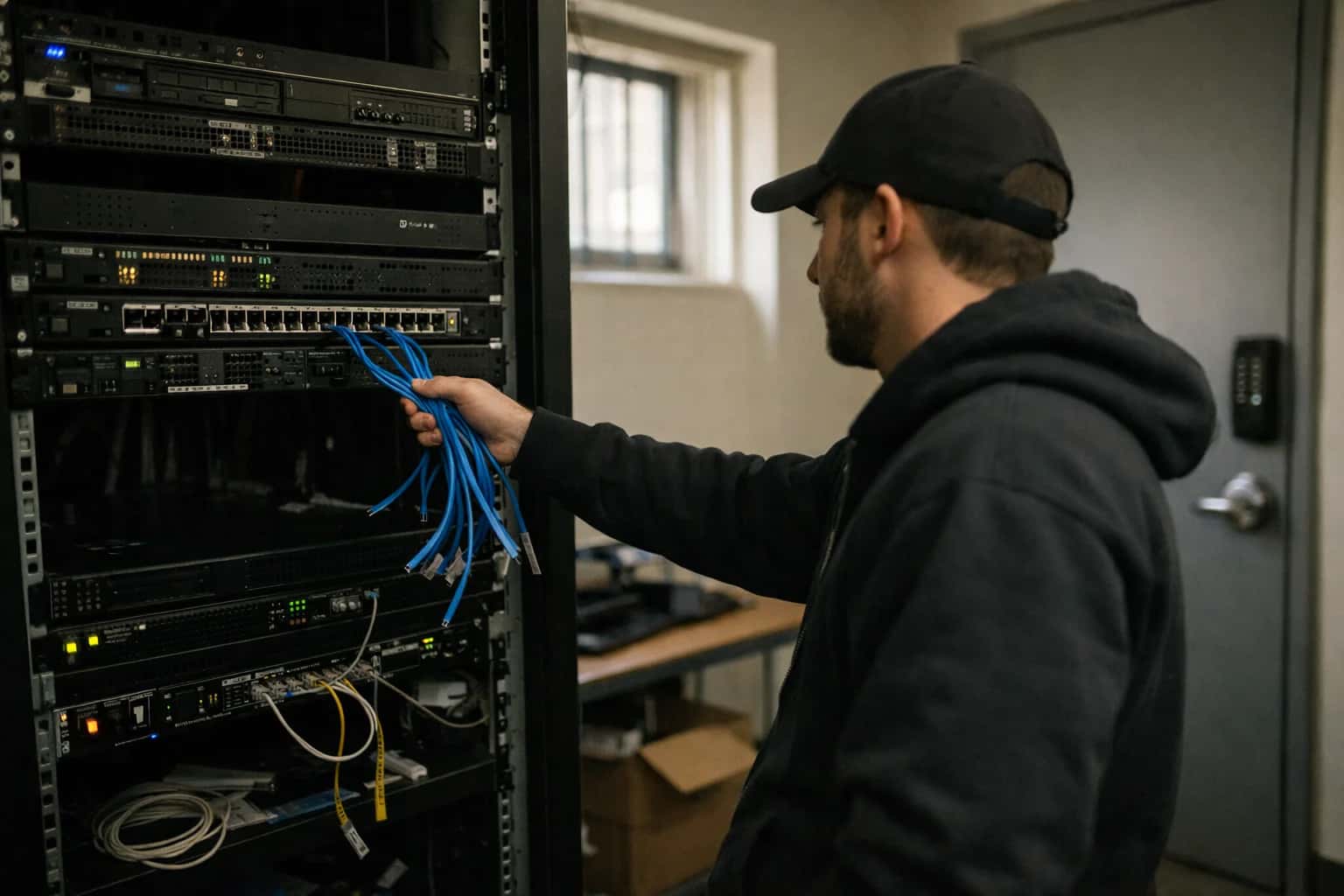
HARDWARE-ISOLATED TRUSTED EXECUTION
What is Secure Enclave?
A secure enclave is a hardware-isolated region within a processor that protects sensitive code and data from unauthorized access, even if the host operating system or hypervisor is fully compromised.
In manufacturing edge AI, secure enclaves protect intellectual property by decrypting a model only within the enclave's boundary during inference, preventing extraction of the plaintext weights. The technology relies on hardware root of trust and remote attestation, allowing a factory-floor edge node to cryptographically prove to a central model registry that it is running an unmodified, authorized software stack before sensitive workloads are deployed.
HARDWARE-ROOTED TRUST
Key Features of Secure Enclaves
A secure enclave establishes a cryptographically isolated trust boundary within a processor, protecting sensitive code and data—such as proprietary model weights or encryption keys—even if the host operating system, hypervisor, or firmware is fully compromised.
01
Hardware-Grade Memory Isolation
The enclave carves out a private region of DRAM that is encrypted and inaccessible to all other software, including the OS kernel and DMA-capable peripherals. This is enforced by the memory management unit (MMU) and an on-die memory encryption engine.
- Encrypted RAM pages are decrypted only inside the CPU package
- Prevents cold-boot attacks and bus snooping on the memory interconnect
- Even a root-level attacker dumping physical memory sees only ciphertext
Hardware
Isolation Level
02
Remote Attestation
A cryptographic mechanism that proves to a remote party that a specific enclave is running unmodified code on genuine hardware. The enclave generates a signed measurement of its initial state, which a remote server verifies against a known-good hash before provisioning secrets.
- Binds trust to the hardware root of trust, not the OS
- Enables secure model distribution: the inference server only releases proprietary weights after successful attestation
- Defeats man-in-the-middle and impersonation attacks on edge nodes
03
Sealed Storage
Data encrypted by the enclave can be bound to the specific enclave identity and the hash of its code, ensuring it can only be decrypted by the exact same application on the exact same hardware. This is called sealing.
- Seal to enclave identity: Any version of the enclave on the same CPU can decrypt
- Seal to enclave identity + code hash: Only the identical binary can decrypt, preventing downgrade attacks
- Protects model weights at rest on the edge device's persistent storage
04
Side-Channel Resistance
Modern secure enclaves incorporate hardware and microcode defenses against timing attacks, cache-based side channels, and power analysis. Execution within the enclave is designed to minimize observable variance.
- Constant-time cryptographic primitives for enclave operations
- Cache partitioning and flushing on enclave exit to prevent Spectre-class attacks
- Transactional memory buffers that abort on interference detection
05
Minimal Trusted Compute Base (TCB)
The enclave's security relies only on the CPU package and the enclave code itself—not the massive, bug-prone OS or hypervisor stack. This radically shrinks the attack surface.
- TCB excludes the Linux kernel, device drivers, and system libraries
- A vulnerability in the host OS cannot escalate into the enclave
- Critical for industrial edge nodes where physical access by adversaries is a realistic threat
06
Enclave Lifecycle Management
The platform provides strict hardware-enforced state transitions for enclave creation, initialization, and destruction. Once an enclave is finalized, its memory layout is cryptographically locked and no further code can be loaded.
- Creation: Allocate and measure initial code and data
- Initialization: Attest to a remote party, receive secrets, seal them
- Destruction: Hardware guarantees all enclave key material is wiped from on-die storage
- Prevents runtime code injection and hot-patching attacks
Enabling Efficiency, Speed & Accuracy
Intelligent Analysis, Decision & Execution
We build AI systems for teams that need search across company data, workflow automation across tools, or AI features inside products and internal software.
Talk to Us
Search across company data
Give teams answers from docs, tickets, runbooks, and product data with sources and permissions.
Useful when people spend too long searching or get different answers from different systems.
Enterprise searchRAGPermissions
Read more
Automate internal workflows
Use AI to route work, draft outputs, trigger actions, and keep approvals and logs in place.
Useful when repetitive work moves across multiple tools and teams.
AI agentsWorkflow automationGovernance
Read more
Add AI to products and internal tools
Build assistants, guided actions, or decision support into the software your team or customers already use.
Useful when AI needs to be part of the product, not a separate tool.
AI integrationDecision supportModel routing
Read moreSECURE ENCLAVE CLARIFIED
Frequently Asked Questions
Clear, technically precise answers to the most common questions about hardware-isolated trusted execution environments and their role in protecting proprietary AI models on the factory floor.
A Secure Enclave is a hardware-isolated region within a processor's system-on-chip that creates a trusted execution environment (TEE) completely separated from the main operating system and application processor. It operates with its own dedicated memory, encrypted storage, and a unique cryptographic key fused into the silicon at manufacture. Even if an attacker gains root access to the host OS, the enclave's memory pages remain inaccessible due to hardware-enforced memory encryption and access control enforced by the memory management unit. The enclave loads code and data into this protected memory region, verifies its integrity through remote attestation, and executes computations in complete isolation. For manufacturing edge AI, this means proprietary model weights, inference code, and customer production data are decrypted and processed exclusively within the enclave, never exposed in plaintext to the underlying system.

About the author
Prasad Kumkar
CEO & MD, Inference Systems
Prasad Kumkar is the CEO & MD of Inference Systems and writes about AI systems architecture, LLM infrastructure, model serving, evaluation, and production deployment. Over 5+ years, he has worked across computer vision models, L5 autonomous vehicle systems, and LLM research, with a focus on taking complex AI ideas into real-world engineering systems.
His work and writing cover AI systems, large language models, AI agents, multimodal systems, autonomous systems, inference optimization, RAG, evaluation, and production AI engineering.
LinkedIn
Limited slotsGet a Free AI Consultation
Partnered with leading AI, data, and software stack.





How We Work
Custom AI workflows for your Business
One-fit-all AI don't work for modern businesses. At Inferensys, we aim to understand your business & custom requirements; which we use to define most efficient agentic workflows, the data, and the tools for your business.
01
Review the use case
We understand the task, the users, and where AI can actually help.
Read more02
Pick the right approach
We define what needs search, automation, or product integration.
Read more03
Build the first useful version
We implement the part that proves the value first.
Read more04
Improve from there
We add the checks and visibility needed to keep it useful.
Read moreThe first call is a practical review of your use case and the right next step.
Talk to Us