A Digital Control Tower is a cloud-based command center that ingests streaming data from Multi-Agent Orchestration frameworks, ERP systems, and telematics to create a single, real-time version of the truth. Unlike traditional dashboards, it leverages Causal Inference Engines and machine learning to move beyond descriptive analytics, automatically detecting deviations from the plan—such as a shipment delay or a production line stoppage—and calculating the cascading impact on order fulfillment.

Glossary
Digital Control Tower
A centralized, AI-driven visibility platform that aggregates real-time data from agents across the supply chain to provide end-to-end exception monitoring and prescriptive responses.
SUPPLY CHAIN ORCHESTRATION
What is Digital Control Tower?
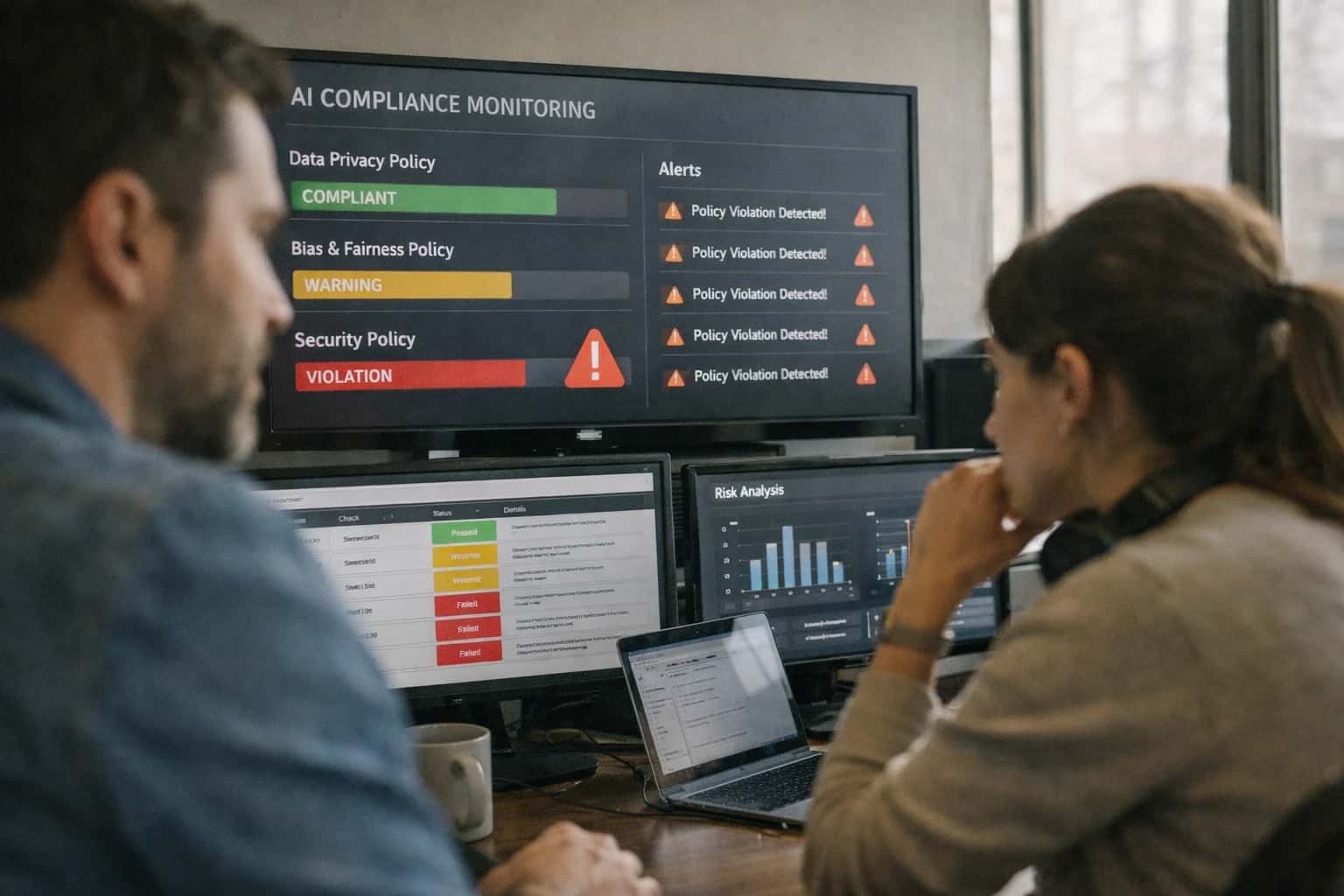
A Digital Control Tower is a centralized, AI-driven visibility platform that aggregates real-time data from autonomous agents and IoT sensors across the supply chain to provide end-to-end exception monitoring and prescriptive responses.
The system functions as a decision-support layer, utilizing a Constraint Satisfaction Problem (CSP) solver to generate prescriptive resolutions. When an agent detects an exception, the control tower simulates corrective scenarios, such as triggering an Auction-Based Scheduling re-bid or rerouting a shipment, and presents the optimal action to a Human-in-the-Loop (HITL) operator for validation, thereby closing the gap between visibility and autonomous execution.
ARCHITECTURAL CAPABILITIES
Key Features of a Digital Control Tower
A Digital Control Tower is not a dashboard; it is an AI-driven decision-intelligence layer. These core features define its ability to move from passive visibility to autonomous orchestration.
01
End-to-End Supply Chain Visibility
Aggregates real-time data from heterogeneous agents across Tier-N suppliers, logistics carriers, and factory floors into a single pane of glass. This breaks down functional silos by ingesting structured telemetry and unstructured documents. The system provides a single source of truth for inventory positions, work-in-process status, and shipment milestones, enabling proactive management rather than reactive firefighting.
< 1 sec
Data Latency
02
AI-Powered Exception Detection
Utilizes causal inference engines and anomaly detection algorithms to automatically identify deviations from the plan. Instead of relying on static thresholds, the system understands the complex interdependencies between nodes. It distinguishes signal from noise by correlating weather events, port congestion, and machine sensor data to predict disruptions before they impact customer order fulfillment.
03
Prescriptive Decision Orchestration
Moves beyond descriptive analytics to recommend and execute optimal resolutions. When an exception is detected, the control tower triggers multi-agent orchestration protocols to simulate alternative scenarios. It evaluates trade-offs between cost, service level, and sustainability, then dispatches corrective actions—such as re-routing a shipment or re-sequencing a production batch—directly to execution systems.
04
Digital Twin Integration
Maintains a live virtual replica of the physical supply chain network. This digital twin allows for stress-testing of 'what-if' scenarios without disrupting live operations. Planners can simulate the ripple effects of a supplier bankruptcy or a sudden demand spike, using the control tower to validate the resilience of the proposed response before committing physical resources.
05
Collaborative Information Sharing
Establishes a federated data architecture that respects organizational boundaries. Through Contract Net Protocols and secure APIs, partners can share critical capacity constraints and forecasts without exposing proprietary cost structures. This stigmergic environment allows the broader ecosystem to self-optimize, dampening the bullwhip effect through radical transparency.
DIGITAL CONTROL TOWER INSIGHTS
Frequently Asked Questions
Clear, technically precise answers to the most common questions about AI-driven supply chain visibility platforms and their role in modern manufacturing orchestration.
A Digital Control Tower is a centralized, AI-driven visibility platform that aggregates real-time data from autonomous agents, IoT sensors, and enterprise systems across the end-to-end supply chain to provide exception monitoring and prescriptive responses. It functions as a command-and-control layer that ingests streaming telemetry—inventory levels, shipment locations, production line status, and demand signals—into a unified data lake. The system applies machine learning models and causal inference engines to detect deviations from plan, such as late shipments or material shortages, and then triggers automated workflows or escalates to human operators via a Human-in-the-Loop (HITL) interface. Unlike traditional dashboards that merely visualize lagging indicators, a true control tower leverages digital twin simulations and multi-agent orchestration to recommend or autonomously execute corrective actions, such as rerouting a shipment or reallocating production capacity, thereby transforming supply chain management from reactive firefighting to proactive, autonomous orchestration.
Enabling Efficiency, Speed & Accuracy
Intelligent Analysis, Decision & Execution
We build AI systems for teams that need search across company data, workflow automation across tools, or AI features inside products and internal software.
Talk to Us
Search across company data
Give teams answers from docs, tickets, runbooks, and product data with sources and permissions.
Useful when people spend too long searching or get different answers from different systems.
Enterprise searchRAGPermissions
Read more
Automate internal workflows
Use AI to route work, draft outputs, trigger actions, and keep approvals and logs in place.
Useful when repetitive work moves across multiple tools and teams.
AI agentsWorkflow automationGovernance
Read more
Add AI to products and internal tools
Build assistants, guided actions, or decision support into the software your team or customers already use.
Useful when AI needs to be part of the product, not a separate tool.
AI integrationDecision supportModel routing
Read more
About the author
Prasad Kumkar
CEO & MD, Inference Systems
Prasad Kumkar is the CEO & MD of Inference Systems and writes about AI systems architecture, LLM infrastructure, model serving, evaluation, and production deployment. Over 5+ years, he has worked across computer vision models, L5 autonomous vehicle systems, and LLM research, with a focus on taking complex AI ideas into real-world engineering systems.
His work and writing cover AI systems, large language models, AI agents, multimodal systems, autonomous systems, inference optimization, RAG, evaluation, and production AI engineering.
LinkedIn
Limited slotsGet a Free AI Consultation
Partnered with leading AI, data, and software stack.





How We Work
Custom AI workflows for your Business
One-fit-all AI don't work for modern businesses. At Inferensys, we aim to understand your business & custom requirements; which we use to define most efficient agentic workflows, the data, and the tools for your business.
01
Review the use case
We understand the task, the users, and where AI can actually help.
Read more02
Pick the right approach
We define what needs search, automation, or product integration.
Read more03
Build the first useful version
We implement the part that proves the value first.
Read more04
Improve from there
We add the checks and visibility needed to keep it useful.
Read moreThe first call is a practical review of your use case and the right next step.
Talk to Us