A digital twin is a dynamic, virtual representation of a physical asset, process, or system—in this context, the electrical distribution grid—that is continuously updated with real-time sensor data from SCADA, IEDs, and PMUs. Unlike a static model, it mirrors the live operational state, enabling network planning engineers to simulate the consequences of feeder reconfiguration, load transfers, and fault responses in a risk-free environment before committing to physical switching actions.

Glossary
Digital Twin
A high-fidelity, real-time virtual replica of the physical distribution grid that simulates the impact of switching operations before they are executed in the field.
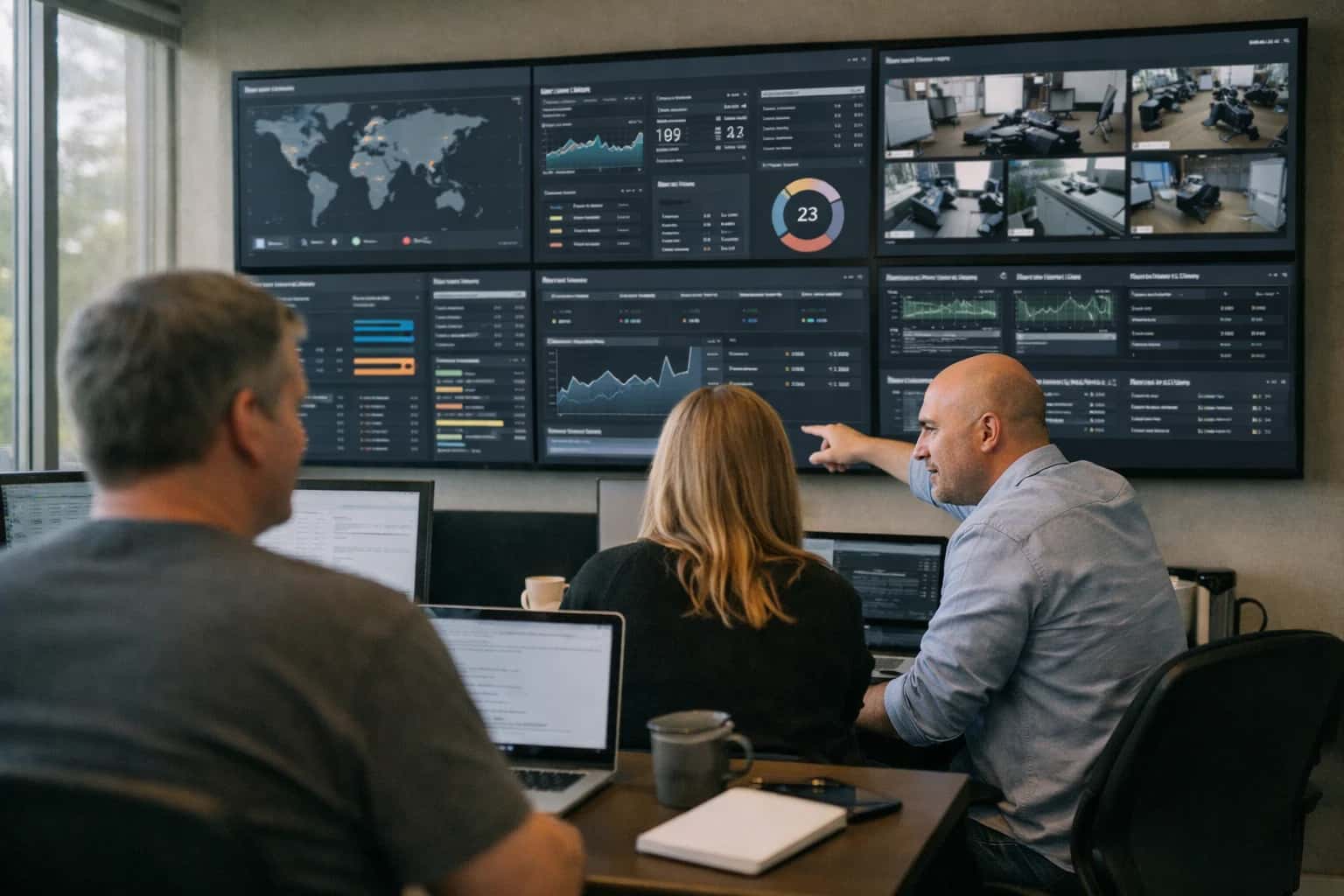
GRID SIMULATION
What is a Digital Twin?
A digital twin is a high-fidelity, real-time virtual replica of a physical distribution grid that simulates the impact of switching operations before they are executed in the field.
The core mechanism involves bidirectional data flow: telemetry streams from the field synchronize the virtual model, while simulation outputs inform control decisions. This allows for precise validation of radiality constraints and voltage profiles during proposed topology changes. By integrating state estimation and physics-based power flow solvers, the digital twin provides a sandbox for testing service restoration sequences and optimizing feeder load balancing without jeopardizing grid stability or customer supply.
VIRTUAL GRID REPLICA
Key Characteristics of a Grid Digital Twin
A high-fidelity, real-time virtual replica of the physical distribution grid that simulates the impact of switching operations before they are executed in the field.
01
Real-Time Data Synchronization
The digital twin maintains a live mirror of the physical grid by ingesting streaming telemetry from field devices. This continuous calibration ensures the virtual model reflects actual conditions.
- Ingests SCADA measurements every 2-4 seconds
- Synchronizes Phasor Measurement Unit (PMU) data at 30-60 samples per second
- Updates switch status from Intelligent Electronic Devices (IEDs) via IEC 61850 GOOSE messaging
- Aligns AMI meter data for load verification at customer endpoints
Without real-time sync, the twin becomes a static model incapable of simulating dynamic switching operations accurately.
< 100 ms
Sync Latency Target
02
Physics-Based Power Flow Engine
At its core, the digital twin runs a three-phase unbalanced load flow solver that models the exact electrical behavior of the distribution network. This engine calculates voltage magnitudes, current flows, and losses for any proposed topology.
- Uses DistFlow equations for efficient radial network computation
- Employs Backward/Forward Sweep algorithms for iterative convergence
- Models unbalanced phases and mutual coupling between lines
- Accounts for Cold Load Pickup (CLPU) behavior during restoration simulations
The physics engine validates that a proposed reconfiguration will not violate thermal limits or ANSI C84.1 voltage standards before field execution.
03
What-If Scenario Simulation
The digital twin enables operators to simulate switching sequences in a risk-free virtual environment. Engineers can test multiple reconfiguration strategies and observe predicted outcomes before committing to field operations.
- Simulates feeder reconfiguration by virtually opening and closing tie switches
- Predicts voltage profiles at every bus under the new topology
- Calculates loss reduction potential for each candidate configuration
- Validates radiality constraints to prevent accidental loop formation
- Estimates restoration time and SAIDI impact for outage scenarios
This capability transforms grid operations from reactive troubleshooting to proactive optimization.
15-30 min
Simulation Time Saved
04
DER and Renewable Integration Modeling
The digital twin incorporates Distributed Energy Resources (DERs) including rooftop solar, battery storage, and electric vehicles. It models their variable output and bidirectional power flows to assess their impact on proposed topology changes.
- Models solar irradiance variability using weather forecast integration
- Simulates battery state-of-charge and dispatch during islanding scenarios
- Accounts for EV charging load shifting under smart charging algorithms
- Evaluates reverse power flow risks when feeders are reconfigured
- Supports intentional islanding feasibility studies with local generation
Accurate DER modeling is essential as distribution networks transition from passive to active systems with unpredictable power injections.
05
Automated Contingency Analysis
The digital twin continuously runs N-1 contingency simulations to verify that the network can withstand any single equipment failure. It pre-computes optimal restoration paths for every credible fault scenario.
- Evaluates transformer failures and identifies alternative supply paths
- Simulates feeder lockout events and calculates load transfer capacity
- Verifies protection coordination settings remain valid after reconfiguration
- Generates pre-approved switching plans for rapid fault response
- Maintains compliance with N-1 criterion for reliability planning
This automated readiness enables self-healing grid functionality where restoration actions execute in seconds rather than minutes.
99.99%
N-1 Compliance Target
06
Visualization and Operator Interface
The digital twin provides a geospatial and schematic visualization layer that renders the grid state and simulation results in an intuitive format for control room operators and planning engineers.
- Displays color-coded feeder loading on geographic maps
- Animates switching sequences step-by-step before execution
- Highlights voltage violations and thermal overloads with alerts
- Overlays outage boundaries and estimated restoration times
- Provides 3D substation views for equipment-level inspection
The interface bridges the gap between complex power flow mathematics and actionable operational decisions, reducing cognitive load during emergency restoration events.
DIGITAL TWIN CLARITY
Frequently Asked Questions
Cut through the complexity of virtual grid replicas. These answers address the most common engineering and operational questions about high-fidelity digital twins for distribution topology optimization.
A digital twin in power systems is a high-fidelity, real-time virtual replica of a physical electrical grid asset, process, or system—such as a distribution feeder or substation—that continuously synchronizes with live sensor data to simulate, predict, and optimize performance. Unlike a static model, a digital twin ingests streaming telemetry from SCADA, Phasor Measurement Units (PMUs), and Intelligent Electronic Devices (IEDs) to mirror the exact dynamic state of the physical grid. This allows engineers to run 'what-if' switching scenarios, test Fault Detection Isolation and Recovery (FDIR) schemes, and validate Distribution Feeder Reconfiguration (DFR) strategies in a risk-free virtual environment before executing commands in the field. The core value lies in closing the loop: the physical grid informs the twin, the twin optimizes the plan, and the plan updates the physical grid.
Enabling Efficiency, Speed & Accuracy
Intelligent Analysis, Decision & Execution
We build AI systems for teams that need search across company data, workflow automation across tools, or AI features inside products and internal software.
Talk to Us
Search across company data
Give teams answers from docs, tickets, runbooks, and product data with sources and permissions.
Useful when people spend too long searching or get different answers from different systems.
Enterprise searchRAGPermissions
Read more
Automate internal workflows
Use AI to route work, draft outputs, trigger actions, and keep approvals and logs in place.
Useful when repetitive work moves across multiple tools and teams.
AI agentsWorkflow automationGovernance
Read more
Add AI to products and internal tools
Build assistants, guided actions, or decision support into the software your team or customers already use.
Useful when AI needs to be part of the product, not a separate tool.
AI integrationDecision supportModel routing
Read more
About the author
Prasad Kumkar
CEO & MD, Inference Systems
Prasad Kumkar is the CEO & MD of Inference Systems and writes about AI systems architecture, LLM infrastructure, model serving, evaluation, and production deployment. Over 5+ years, he has worked across computer vision models, L5 autonomous vehicle systems, and LLM research, with a focus on taking complex AI ideas into real-world engineering systems.
His work and writing cover AI systems, large language models, AI agents, multimodal systems, autonomous systems, inference optimization, RAG, evaluation, and production AI engineering.
LinkedIn
Limited slotsGet a Free AI Consultation
Partnered with leading AI, data, and software stack.





How We Work
Custom AI workflows for your Business
One-fit-all AI don't work for modern businesses. At Inferensys, we aim to understand your business & custom requirements; which we use to define most efficient agentic workflows, the data, and the tools for your business.
01
Review the use case
We understand the task, the users, and where AI can actually help.
Read more02
Pick the right approach
We define what needs search, automation, or product integration.
Read more03
Build the first useful version
We implement the part that proves the value first.
Read more04
Improve from there
We add the checks and visibility needed to keep it useful.
Read moreThe first call is a practical review of your use case and the right next step.
Talk to Us