Smart thermostat integration is the technical architecture enabling direct, automated communication between a utility's Demand Response Management System (DRMS) and internet-connected residential thermostats. This link allows grid operators to remotely adjust temperature setpoints or cycle air conditioner compressors during peak demand events, leveraging residential load flexibility without requiring manual homeowner intervention.

Glossary
Smart Thermostat Integration
The direct communication link between utility demand response systems and residential HVAC controls to cycle compressors or adjust setpoints during peak grid events.
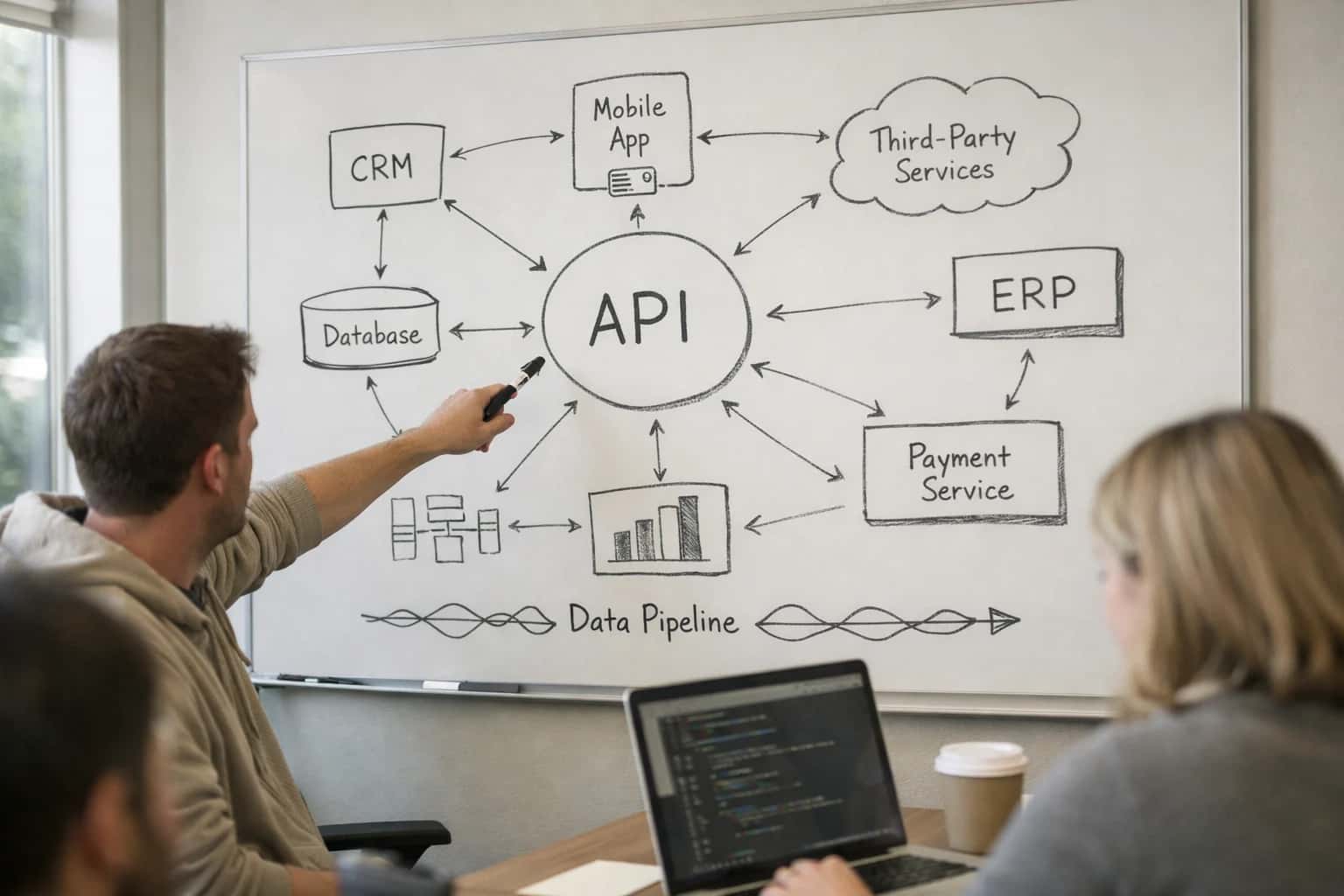
RESIDENTIAL DEMAND RESPONSE
What is Smart Thermostat Integration?
The direct communication link between utility demand response systems and residential HVAC controls to cycle compressors or adjust setpoints during events.
The integration relies on standardized protocols like OpenADR or proprietary APIs to transmit dynamic pricing signals and load shed commands directly to the device. By aggregating thousands of thermostats into a Virtual Power Plant (VPP), utilities can perform peak shaving and provide ancillary services such as frequency regulation, all while maintaining occupant comfort within pre-authorized temperature deadbands.
DEMAND RESPONSE ORCHESTRATION
Key Characteristics of Smart Thermostat Integration
Smart thermostat integration establishes a direct communication link between utility demand response systems and residential HVAC controls, enabling automated load reduction during grid stress events.
01
Direct Load Control Architecture
The foundational mechanism where a utility Demand Response Management System (DRMS) sends a dispatch signal directly to a thermostat via an OpenADR or IEEE 2030.5 compliant gateway. This bypasses manual intervention entirely.
- Signal Flow: DRMS → Aggregator Cloud → Home Gateway → Thermostat API
- Key Protocol: OpenADR 2.0b defines the event payload (start time, duration, shed level)
- Action: Thermostat adjusts setpoint by a predefined offset (e.g., +4°F) or cycles the compressor
Sub-second
Signal Latency
02
Opt-Out and Consumer Override Logic
A critical design constraint ensuring occupant comfort and program participation. The integration must respect local override commands while still logging the event for Measurement and Verification (M&V).
- Graceful Degradation: If a user manually lowers the setpoint during an event, the thermostat reports the override but does not re-engage aggressive cycling
- Baseline Impact: Frequent overrides degrade the Customer Baseline Load (CBL) calculation, reducing financial incentives
- UI/UX Requirement: Clear in-app or on-device notification explaining the event reason (e.g., 'Grid Stress Alert')
03
Telemetry and Settlement Data Pipelines
The integration must stream high-resolution load profile data back to the utility for financial settlement. This is the backbone of the Settlement Engine.
- Data Granularity: Typically 1-minute to 15-minute interval data showing actual HVAC runtime and indoor temperature
- Key Metric: Delta between the Customer Baseline Load (CBL) and actual consumption during the event window
- API Requirement: Secure, timestamped data push to the aggregator's cloud storage for audit and billing
1-15 min
Telemetry Interval
04
Pre-Cooling and Thermal Storage Strategies
An advanced integration tactic where the thermostat pre-cools the home before a peak pricing event, leveraging the building's thermal mass as a Behind-the-Meter Asset (BTM).
- Mechanism: Thermostat lowers setpoint 2-3°F in the hour preceding a Critical Peak Pricing (CPP) event
- Benefit: Shifts energy consumption to lower-cost periods without sacrificing comfort during the event
- Optimization: Algorithms use weather forecasts and home thermal models to calculate the optimal pre-cooling duration
05
Grid-Interactive Efficient Building (GEB) Compliance
Smart thermostat integration is a cornerstone of the Grid-Interactive Efficient Building (GEB) framework, enabling buildings to act as flexible grid resources.
- Core Capability: Continuous load flexibility modulation rather than binary on/off control
- Price Responsiveness: Thermostat autonomously adjusts based on a Real-Time Pricing (RTP) signal without a direct dispatch command
- Standardization: Alignment with the EcoPort (CTA-2045) standard for universal communication between appliances and the grid
06
Cybersecurity and OT Network Segmentation
Connecting residential thermostats to utility SCADA-adjacent systems introduces a significant attack surface requiring rigorous OT security protocols.
- Threat Vector: Compromised thermostat firmware could be used for a botnet attack on the DRMS
- Mitigation: Mutual TLS authentication between the thermostat and the cloud gateway; strict network segmentation from critical substation automation
- Standard: Adherence to IEEE 2030.5 security profiles for certificate management and encrypted payloads
SMART THERMOSTAT INTEGRATION
Frequently Asked Questions
Explore the technical mechanisms and communication protocols that enable residential HVAC systems to function as dispatchable grid assets within demand response orchestration frameworks.
Smart thermostat integration is the direct bidirectional communication link between a utility's Demand Response Management System (DRMS) and residential HVAC controls, enabling automated load modification during grid stress events. This integration allows utilities to remotely cycle compressors, adjust temperature setpoints by 2-4°F, or pre-cool homes ahead of peak periods without requiring manual occupant intervention. The thermostat functions as a behind-the-meter asset that receives standardized dispatch signals—typically via OpenADR 2.0b or IEEE 2030.5 protocols—and executes pre-authorized control strategies. Modern implementations leverage cloud-to-cloud API integrations where the thermostat manufacturer's platform acts as an intermediary aggregator, translating utility signals into device-specific commands across thousands of enrolled devices simultaneously.
Enabling Efficiency, Speed & Accuracy
Intelligent Analysis, Decision & Execution
We build AI systems for teams that need search across company data, workflow automation across tools, or AI features inside products and internal software.
Talk to Us
Search across company data
Give teams answers from docs, tickets, runbooks, and product data with sources and permissions.
Useful when people spend too long searching or get different answers from different systems.
Enterprise searchRAGPermissions
Read more
Automate internal workflows
Use AI to route work, draft outputs, trigger actions, and keep approvals and logs in place.
Useful when repetitive work moves across multiple tools and teams.
AI agentsWorkflow automationGovernance
Read more
Add AI to products and internal tools
Build assistants, guided actions, or decision support into the software your team or customers already use.
Useful when AI needs to be part of the product, not a separate tool.
AI integrationDecision supportModel routing
Read more
About the author
Prasad Kumkar
CEO & MD, Inference Systems
Prasad Kumkar is the CEO & MD of Inference Systems and writes about AI systems architecture, LLM infrastructure, model serving, evaluation, and production deployment. Over 5+ years, he has worked across computer vision models, L5 autonomous vehicle systems, and LLM research, with a focus on taking complex AI ideas into real-world engineering systems.
His work and writing cover AI systems, large language models, AI agents, multimodal systems, autonomous systems, inference optimization, RAG, evaluation, and production AI engineering.
LinkedIn
Limited slotsGet a Free AI Consultation
Partnered with leading AI, data, and software stack.





How We Work
Custom AI workflows for your Business
One-fit-all AI don't work for modern businesses. At Inferensys, we aim to understand your business & custom requirements; which we use to define most efficient agentic workflows, the data, and the tools for your business.
01
Review the use case
We understand the task, the users, and where AI can actually help.
Read more02
Pick the right approach
We define what needs search, automation, or product integration.
Read more03
Build the first useful version
We implement the part that proves the value first.
Read more04
Improve from there
We add the checks and visibility needed to keep it useful.
Read moreThe first call is a practical review of your use case and the right next step.
Talk to Us