A Trusted Execution Environment is a hardware-enforced, isolated execution area within a main processor that guarantees the confidentiality and integrity of code and data loaded inside it, even if the host operating system, hypervisor, or firmware is compromised. It creates a secure enclave where sensitive computations, such as on-device training or inference on private data, can be performed with a high-assurance root of trust anchored in the silicon itself.

Glossary
Trusted Execution Environment
A Trusted Execution Environment (TEE) is a secure, isolated area within a main processor that guarantees the confidentiality and integrity of code and data loaded inside it, even from a compromised operating system.
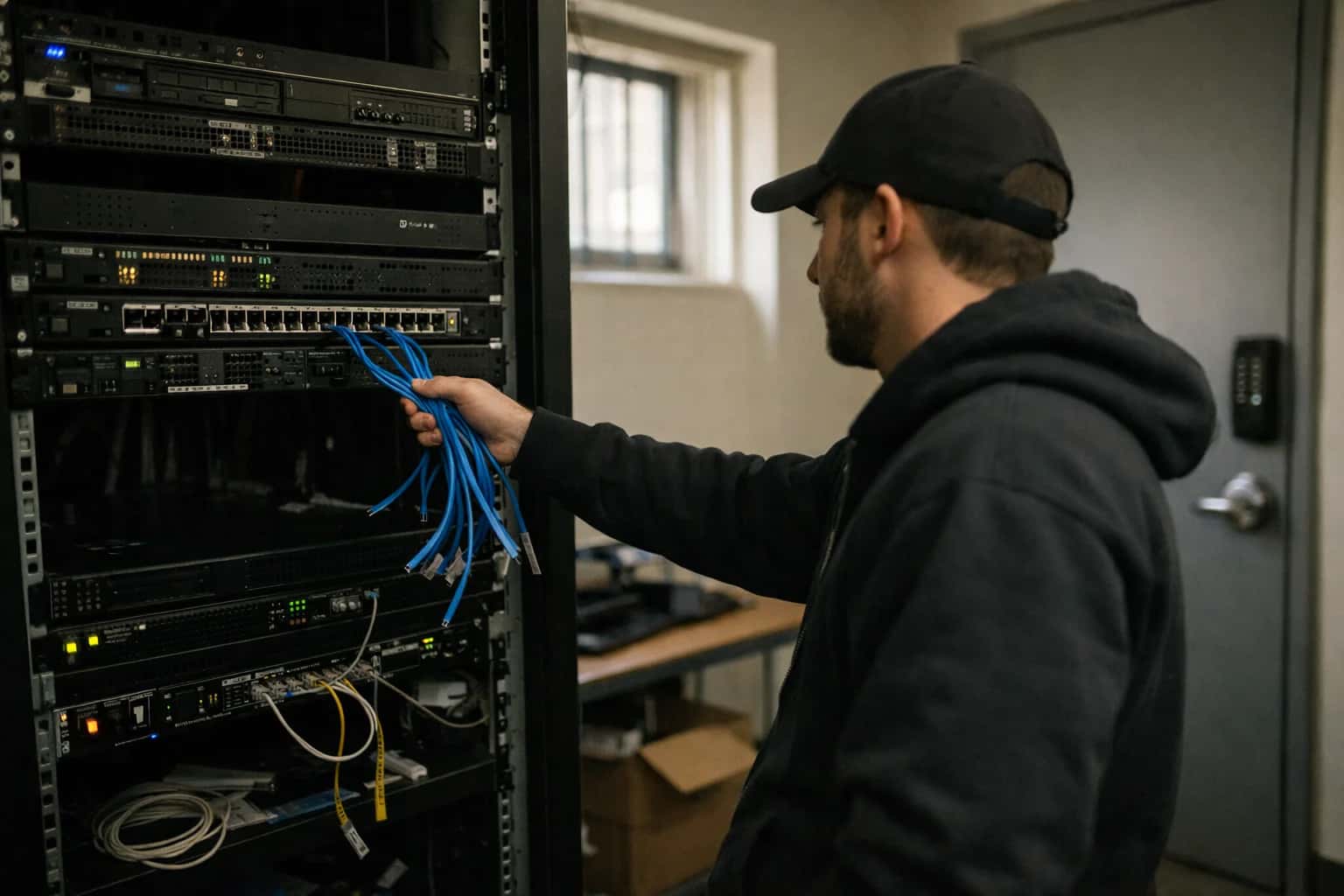
PRIVACY-PRESERVING EDGE TRAINING
What is a Trusted Execution Environment?
A Trusted Execution Environment is a hardware-enforced secure enclave within a processor, providing a critical foundation for privacy-preserving machine learning on edge devices.
In the context of privacy-preserving edge training, a TEE enables secure federated learning aggregation and protects model updates during secure multi-party computation. By isolating the training process from the rest of the system, it mitigates threats like model poisoning and data leakage, allowing edge AI systems to learn from decentralized data while maintaining a strong security posture comparable to air-gapped systems.
ARCHITECTURAL PRINCIPLES
Core Characteristics of a TEE
A Trusted Execution Environment is defined by a set of hardware-enforced security properties that create an isolated, attestable, and protected execution context within a larger, potentially compromised system.
01
Hardware-Enforced Isolation
The TEE provides strong isolation from the rest of the system, including the Rich Execution Environment (REE), which comprises the main operating system and applications. This isolation is enforced at the hardware level by the CPU's memory management unit and access control mechanisms.
- Memory Isolation: Code and data within the TEE reside in a protected memory region inaccessible to the REE, even by a privileged OS kernel or hypervisor.
- CPU State Protection: The processor ensures that execution context (registers, cache lines related to the TEE) is protected from observation or manipulation by non-TEE code.
- Example: Intel SGX creates encrypted memory regions called enclaves. AMD SEV-ES encrypts the VM's register state to protect it from the hypervisor.
02
Integrity & Confidentiality
A TEE guarantees both the integrity (unauthorized modification is prevented) and confidentiality (unauthorized reading is prevented) of the code and data loaded inside it.
- Confidentiality: Data processed inside the TEE is encrypted when at rest in main memory. The CPU decrypts it only within the secure boundaries of the core during computation.
- Integrity: The hardware detects and prevents any attempt to tamper with the TEE's memory contents or its execution flow.
- Real-World Impact: This allows a sensitive workload, like a private inference of a medical AI model on patient data, to run on a shared cloud server without the cloud provider or other tenants being able to see the input data or the model weights.
03
Remote Attestation
This is a cryptographic protocol that allows a remote party (a verifier) to cryptographically verify that the correct, unmodified TEE code is running on a genuine hardware platform.
- Process: The TEE generates a measurement (cryptographic hash) of its initial code and data. This measurement is signed by a hardware-rooted key (unique to the CPU) to create an attestation report.
- Purpose: Enables trusted deployment. A client can verify they are sending encrypted data (e.g., a model update in federated learning) to a genuine, un-tampered TEE before releasing the decryption key.
- Key Standard: The process is often based on the Remote Attestation protocols defined by standards like the IETF's RATS architecture.
04
Sealed Storage
A TEE can persist confidential data to untrusted external storage (like a disk) in a way that the data can only be retrieved and decrypted by the same, or a designated successor, TEE instance on the same platform.
- Mechanism: Data is encrypted using a key derived from the TEE's measurement and a hardware-specific secret. This binds the data to a specific code identity and physical CPU.
- Use Case: Enables stateful TEE applications. For example, a TEE-based encrypted SQLite database can store user preferences or model checkpoints securely across device reboots.
- Differentiation: This is distinct from general disk encryption, as the binding is to the TEE's identity, not a user password.
05
Minimal Trusted Computing Base (TCB)
The Trusted Computing Base is the set of all hardware, firmware, and software components that must be trusted for the system's security to hold. A key goal of TEE design is to keep the TCB as small as possible.
- TCB Includes: The TEE application code itself, the TEE's minimal kernel (if present), and the specific CPU hardware features.
- TCB Excludes: The main host OS, hypervisor, system firmware (BIOS/UEFI), and all other applications. These are considered part of the untrusted REE.
- Security Benefit: A smaller TCB reduces the attack surface. A vulnerability in the host OS does not compromise the TEE's security guarantees.
06
Secure I/O & Binding
Advanced TEEs provide mechanisms for secure input/output to establish a trusted path between the TEE and specific peripherals, and for secure binding of the TEE to a device's unique identity.
- Secure I/O: Allows a TEE to directly receive input from a trusted sensor (e.g., a fingerprint reader) or display output to a protected screen region, bypassing the untrusted OS. This is critical for mobile payment apps.
- Device Binding: The TEE's secrets and attestation identity are cryptographically tied to the physical device's unique hardware key. This prevents cloning a TEE's state to another machine.
- Implementation: Often managed by a dedicated, isolated secure element or a TrustZone-based Trusted OS that handles low-level device driver security.
PRIVACY-PRESERVING EDGE TRAINING
How Does a Trusted Execution Environment Work?
A Trusted Execution Environment (TEE) is a hardware-enforced, secure enclave within a main processor that isolates sensitive code and data from the rest of the system, including a compromised operating system or hypervisor.
A Trusted Execution Environment (TEE) operates by creating a hardware-isolated region of a CPU, known as an enclave. Code and data loaded into this enclave are encrypted in memory and can only be decrypted and executed by the CPU's secure hardware. This ensures confidentiality and integrity even if the host operating system is malicious. Access is controlled by the processor's microcode, which verifies the enclave's identity and contents via remote attestation before allowing sensitive operations.
During execution, the TEE uses memory encryption and integrity trees to protect against physical bus snooping and memory replay attacks. For privacy-preserving edge training, a TEE can safeguard a model's weights or a client's local gradients during federated learning or on-device training. This hardware root of trust enables secure aggregation and computation on encrypted data, forming a critical foundation for deploying confidential AI workloads on untrusted infrastructure or edge devices.
HARDWARE & SOFTWARE ARCHITECTURES
TEE Implementations and Use Cases
A Trusted Execution Environment is implemented through a combination of hardware extensions and software attestation protocols. These implementations create secure, isolated enclaves for processing sensitive data and code.
04
Use Case: Privacy-Preserving ML Inference
TEEs enable confidential inference, where a sensitive AI model and input data are protected from the cloud provider or device OS.
- Model Protection: Proprietary model weights are loaded into the enclave, preventing theft or reverse-engineering.
- Data Confidentiality: User queries (e.g., medical images, financial documents) remain encrypted except within the TEE.
- Result Integrity: The inference output is cryptographically signed by the enclave, proving it came from the unaltered, trusted code. This is critical for healthcare diagnostics, financial fraud detection, and enterprise AI services deployed in untrusted environments.
< 5%
Typical TEE Inference Overhead
05
Use Case: Secure Key Management & Cryptography
TEEs provide a root of trust for cryptographic operations, isolating keys and sensitive algorithms.
- Hardware-Bound Keys: Private keys are generated within and never leave the TEE. Operations like signing and decryption are performed inside.
- Key Provisioning: Enables secure remote injection of keys (e.g., from a Hardware Security Module) into the TEE.
- Digital Rights Management (DRM): Decrypts media content keys within the secure environment for playback. This underpins blockchain wallet security, code signing pipelines, and authenticated boot processes.
06
Use Case: Federated Learning Orchestration
In Federated Learning, a TEE on the central aggregation server can act as a trusted coordinator.
- Secure Aggregation: The server's TEE receives encrypted model updates from clients, decrypts them inside the enclave, performs the aggregation (e.g., Federated Averaging), and re-encrypts the new global model.
- Attestation for Clients: Clients can verify they are sending updates to a legitimate, unmodified aggregation server before participating.
- Protection Against Server Compromise: Even if the server OS is breached, the aggregated model and individual client updates remain confidential. This enhances the privacy guarantees of federated learning systems beyond cryptographic protocols alone.
COMPARISON
TEE vs. Other Security & Privacy Techniques
A technical comparison of Trusted Execution Environments against other major cryptographic and distributed techniques used for privacy-preserving machine learning on the edge.
| Core Feature / Attribute | Trusted Execution Environment (TEE) | Federated Learning | Homomorphic Encryption | Differential Privacy |
|---|---|---|---|---|
Primary Goal | Confidentiality & Integrity of Code/Data in Use | Decentralized Training without Data Sharing | Computation on Encrypted Data | Statistical Privacy of Data in Analysis |
Data Privacy Guarantee | Hardware-based isolation from OS/host | Raw data never leaves client device | Mathematical (ciphertext remains encrypted) | Mathematical (bounded privacy loss ε) |
Model Privacy | ||||
Protection from Malicious Host/OS | ||||
Computational Overhead | Low (< 2x native) | Low (distributed compute) | Extremely High (1000-1,000,000x) | Low to Moderate (noise addition) |
Communication Overhead | None (local execution) | High (model updates exchanged) | Extremely High (ciphertext size blowup) | Low (noisy aggregates only) |
Supports Complex Model Training | ||||
Real-Time Inference Latency | Near-native | N/A (training focus) | Prohibitive for most models | N/A (analysis focus) |
Hardware Dependency | High (requires specific CPU features) | None (software protocol) | None (software library) | None (software algorithm) |
Trust Assumption | Trust in CPU manufacturer & enclave code | Trust in central server & honest clients | Trust in cryptographic scheme | Trust in curator implementing algorithm |
Attack Surface | Side-channel attacks, physical attacks | Model poisoning, inference attacks | Cryptanalysis, implementation bugs | Privacy budget composition attacks |
Typical Use Case | Private key management, secure inference, confidential cloud computing | Cross-device/silo training (e.g., mobile keyboards, healthcare) | Simple encrypted queries on highly sensitive, small datasets | Releasing aggregate statistics (e.g., census data, usage metrics) |
TRUSTED EXECUTION ENVIRONMENT
Frequently Asked Questions
A Trusted Execution Environment (TEE) is a hardware-enforced, secure, and isolated area within a main processor. It guarantees the confidentiality and integrity of code and data loaded inside it, even from a compromised operating system or hypervisor. This FAQ addresses core concepts, implementation, and its role in privacy-preserving edge AI.
A Trusted Execution Environment (TEE) is a hardware-enforced, secure, and isolated processing area within a main CPU that protects code and data from all other software on the system, including a compromised operating system. It works by leveraging processor-specific security extensions to create a protected enclave. Code and data are loaded into this enclave in an encrypted form, decrypted only within the secure hardware boundary. The CPU's memory management unit enforces strict isolation, preventing unauthorized access or modification from outside the TEE. Execution is measured and attested, allowing remote parties to cryptographically verify that the correct, unaltered code is running in a genuine TEE before provisioning sensitive data or models.
Enabling Efficiency, Speed & Accuracy
Intelligent Analysis, Decision & Execution
We build AI systems for teams that need search across company data, workflow automation across tools, or AI features inside products and internal software.
Talk to Us
Search across company data
Give teams answers from docs, tickets, runbooks, and product data with sources and permissions.
Useful when people spend too long searching or get different answers from different systems.
Enterprise searchRAGPermissions
Read more
Automate internal workflows
Use AI to route work, draft outputs, trigger actions, and keep approvals and logs in place.
Useful when repetitive work moves across multiple tools and teams.
AI agentsWorkflow automationGovernance
Read more
Add AI to products and internal tools
Build assistants, guided actions, or decision support into the software your team or customers already use.
Useful when AI needs to be part of the product, not a separate tool.
AI integrationDecision supportModel routing
Read more
About the author
Prasad Kumkar
CEO & MD, Inference Systems
Prasad Kumkar is the CEO & MD of Inference Systems and writes about AI systems architecture, LLM infrastructure, model serving, evaluation, and production deployment. Over 5+ years, he has worked across computer vision models, L5 autonomous vehicle systems, and LLM research, with a focus on taking complex AI ideas into real-world engineering systems.
His work and writing cover AI systems, large language models, AI agents, multimodal systems, autonomous systems, inference optimization, RAG, evaluation, and production AI engineering.
LinkedIn
Limited slotsGet a Free AI Consultation
Partnered with leading AI, data, and software stack.





How We Work
Custom AI workflows for your Business
One-fit-all AI don't work for modern businesses. At Inferensys, we aim to understand your business & custom requirements; which we use to define most efficient agentic workflows, the data, and the tools for your business.
01
Review the use case
We understand the task, the users, and where AI can actually help.
Read more02
Pick the right approach
We define what needs search, automation, or product integration.
Read more03
Build the first useful version
We implement the part that proves the value first.
Read more04
Improve from there
We add the checks and visibility needed to keep it useful.
Read moreThe first call is a practical review of your use case and the right next step.
Talk to Us